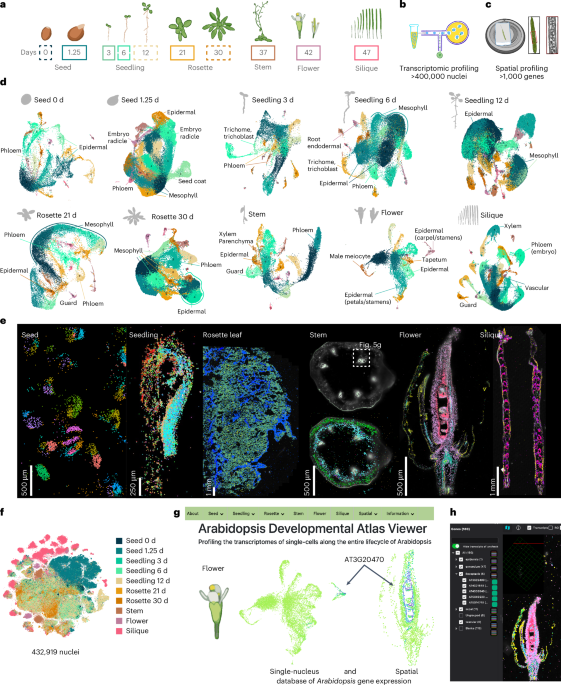
This study presents a comprehensive single-nucleus and spatial transcriptomic atlas of the Arabidopsis plant life cycle, revealing diverse molecular identities, cell types, and states across various organs and developmental stages, and demonstrating the power of combined technologies to uncover cellular complexity and function in plant biology.
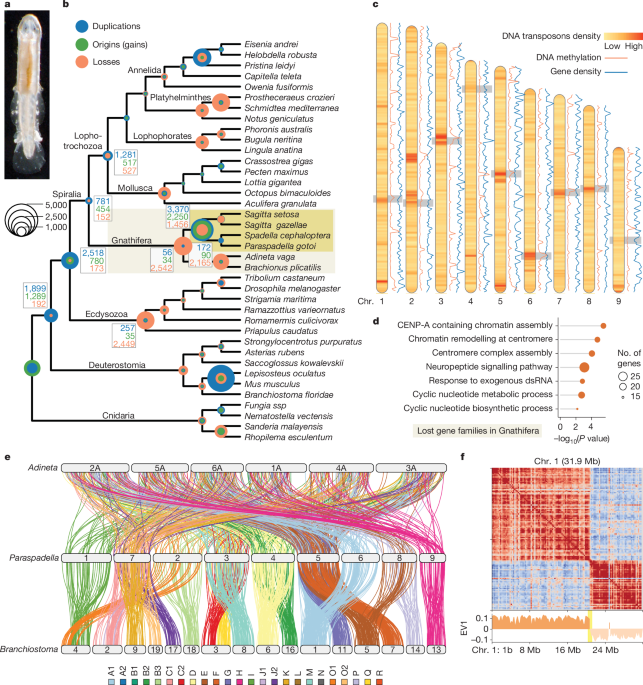
The study investigates the genomic basis of the unique body plan of chaetognaths, revealing extensive gene loss, tandem gene duplications, and a large Hox gene expansion, alongside the evolution of novel cell types and gene regulation strategies like trans-splicing, which together underpin their distinctive morphology and complex sensory systems.
Researchers at Rutgers University have mapped the alignment of different brain cell types with functional networks in the human cortex using post-mortem gene expression atlases. This study links cellular distributions to networks involved in sensory processing and decision-making, enhancing our understanding of brain organization and its implications for cognition and mental health. The findings, published in Nature Neuroscience, provide a framework for future research on the cellular basis of brain function and disorders.
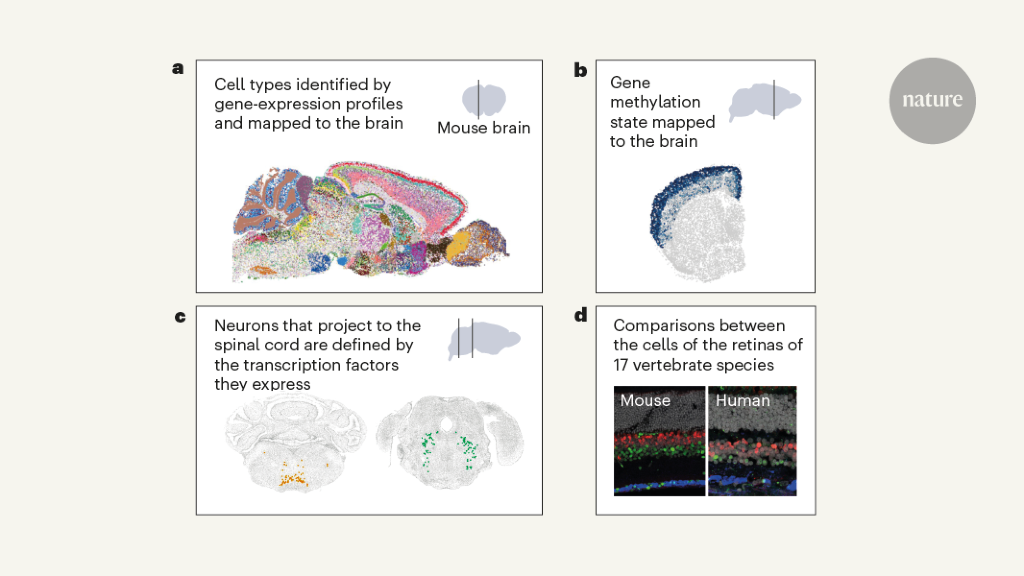
The BRAIN Initiative Cell Census Network (BICCN) has published a series of papers presenting comprehensive cellular maps of the entire mouse brain, providing neuroscientists with unprecedented depth and resolution to explore previously uncharted territories. These brain-wide atlases reveal insights into the diversity and organization of neuron types across different brain regions. The data sets also allow for comparisons between species, shedding light on evolutionary adaptations at the cellular level. Additionally, the BICCN has conducted an in-depth survey of the epigenomic landscapes in thousands of specialized cell types from the adult mouse brain, providing valuable information on gene regulation and potential links to neurological disorders.
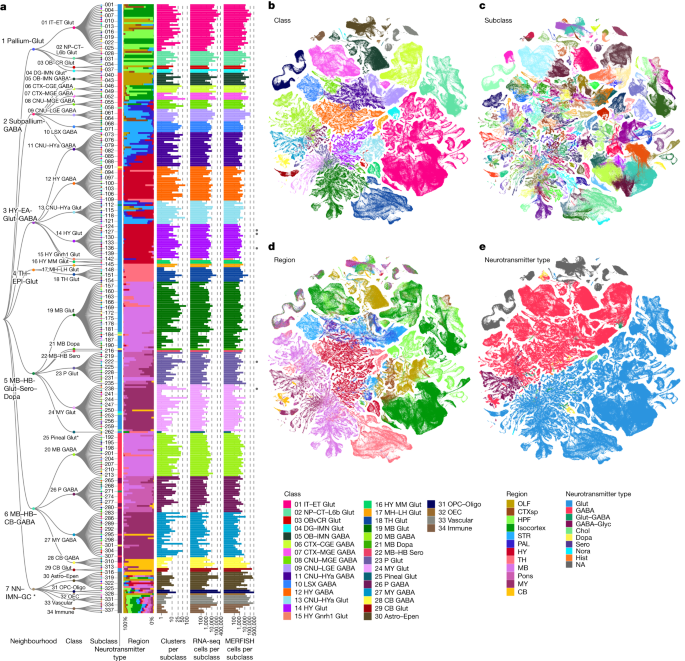
Scientists have created a comprehensive and high-resolution transcriptomic and spatial atlas of cell types in the entire adult mouse brain. Using single-cell RNA sequencing and spatial transcriptomics analysis, they identified 34 classes, 338 subclasses, 1,201 supertypes, and 5,322 clusters or types of cells in the mouse brain. The atlas provides detailed information about the molecular and anatomical properties of different cell types, allowing researchers to study the relationships between cell types and their spatial distribution in the brain. The data is available through the Allen Brain Cell Atlas, an online platform that enables researchers to explore and analyze the cell types in the mouse brain.
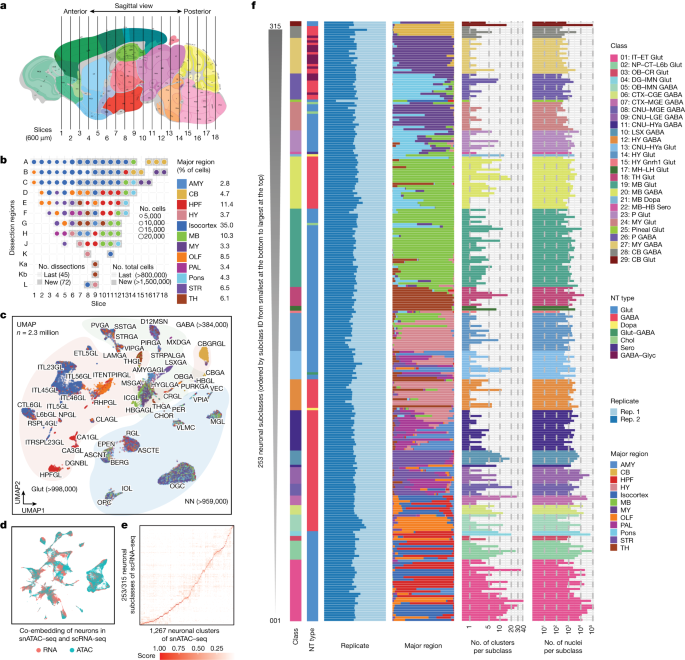
Researchers have conducted a single-cell analysis of chromatin accessibility in the adult mouse brain, aiming to understand the cellular and molecular composition of the mammalian brain. By using the single-nucleus assay for transposase-accessible chromatin followed by sequencing (snATAC-seq), they profiled chromatin accessibility at the single-cell resolution across the entire adult mouse brain. The study identified 1,482 brain cell types and annotated 1 million cis-regulatory elements (cCREs) responsible for gene expression patterns in each cell type. The findings provide insights into gene regulation and function in different brain cell types, advancing our understanding of brain development and neurological disorders.
Scientists have created the largest and most detailed atlas of the human brain, revealing the arrangement and inner workings of 3,300 types of brain cells, many of which were previously unknown. The research, part of the BRAIN Initiative Cell Census Network, used cutting-edge techniques to map the cells found in the brains of humans, mice, and nonhuman primates. The atlas provides insights into the similarities and differences between human and nonhuman primate brains, and opens up new possibilities for understanding neurological diseases and what makes us human.
An international team of scientists has mapped the human brain in unprecedented detail, identifying over 3,300 types of brain cells, significantly more than previously known. However, the researchers have only a limited understanding of what most of these newly discovered cells do. The brain atlas project, funded by the National Institutes of Health, utilized new technologies to probe millions of human brain cells and examine their gene activity. The findings reveal that the brain's diversity extends beyond the cerebral cortex, with many cell types found in deeper regions. The research also compared the human brain to those of other primates, finding that all cell types in human brains matched those in chimpanzees and gorillas, our closest living relatives.
Scientists have discovered a strange mathematical pattern within the cells of the human body. Regardless of the total number of cells, if they are grouped according to their function, the proportions for each individual remain the same. This suggests a whole-organism trade-off between cell size and count, indicating the existence of cell-size homeostasis across cell types. The body produces fewer larger cells and more smaller cells, and any deviation from their scale can indicate the presence of disease. The researchers hope that future studies will uncover how the body naturally regulates cells.
A study published in the journal Cell reveals new insights into the evolution of neurons by examining placozoans, millimeter-sized marine animals. Researchers from the Centre for Genomic Regulation in Barcelona found that specialized secretory cells in placozoans may have given rise to neurons in more complex animals. The study mapped different placozoan cell types and their gene modules, revealing similarities between peptidergic cells in placozoans and neurons in advanced animals. These findings suggest that the building blocks of neurons were forming 800 million years ago in ancestral animals, and the study raises questions about the evolutionary trajectory of neurons.
Scientists have discovered a strange mathematical pattern within the cells of the human body. Regardless of the total number of cells, if they are grouped according to their function, the proportions for each individual remain the same. This suggests a whole-organism trade-off between cell size and count, indicating the existence of cell-size homeostasis across cell types. The body produces fewer larger cells and more smaller cells, and any deviation from their scale can indicate the presence of disease. The researchers hope that future studies will uncover how the body naturally regulates cells.
Researchers at Caltech and the University of Texas Southwestern Medical Center have developed a method to optimize single-cell RNA sequencing (scRNA-seq) analysis, allowing for the recovery of missing cell types and gene expression data. By optimizing the reference transcriptome, which maps DNA sequences and their corresponding genes, the researchers were able to prevent the loss of gene expression information. This improvement in scRNA-seq analysis is crucial for understanding the complexity of biological processes and identifying distinct cell types involved in various diseases.
The Human Cell Atlas (HCA) project, launched in 2016, has enabled researchers to uncover the secrets of the placenta, the temporary organ that supports the unborn child. Understanding the mechanics of its functioning is crucial in ensuring healthy and viable pregnancies. The HCA project has also revealed cellular secrets of the immune system, brain, lungs, and other organs, discovering thousands of new types of cells in humans. The project uses single-cell genomics to sequence and characterise individual cells in tissue samples, enabling the identification of rare cells that are crucial in ensuring the proper functioning of organs in the body.