
Tag

Chromatin Accessibility

All articles tagged with #chromatin accessibility

biology4 months ago

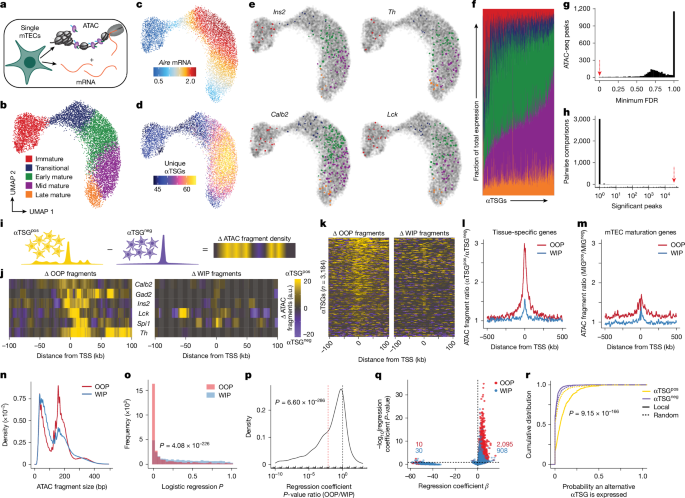
Thymic Cells Enhance Epigenetic Noise to Promote Immune Tolerance

The study reveals that thymic epithelial cells amplify epigenetic noise independently of AIRE, primarily through AT-rich sequences, leading to increased plasticity and ectopic gene expression. This chromatin destabilization is regulated by p53 activity, which suppresses accessibility noise and limits cellular plasticity, thereby maintaining immune tolerance. Enhancing p53 activity reduces this plasticity, but can also cause autoimmunity, and similar mechanisms are observed in cancer models, linking chromatin noise, p53 regulation, and cell fate stability.
neuroscience2 years ago

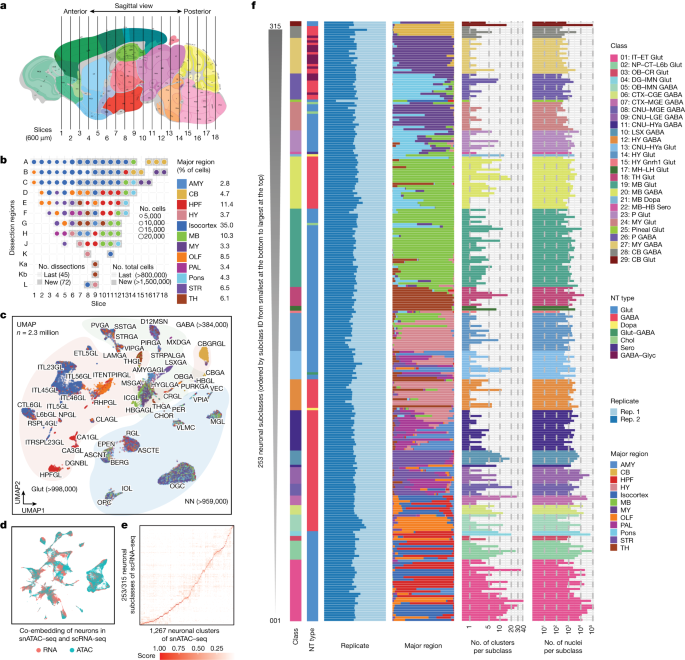
Mapping the Diversity of Cells in the Mouse Brain: Insights from Single-cell Analysis

Researchers have conducted a single-cell analysis of chromatin accessibility in the adult mouse brain, aiming to understand the cellular and molecular composition of the mammalian brain. By using the single-nucleus assay for transposase-accessible chromatin followed by sequencing (snATAC-seq), they profiled chromatin accessibility at the single-cell resolution across the entire adult mouse brain. The study identified 1,482 brain cell types and annotated 1 million cis-regulatory elements (cCREs) responsible for gene expression patterns in each cell type. The findings provide insights into gene regulation and function in different brain cell types, advancing our understanding of brain development and neurological disorders.

medical-research2 years ago

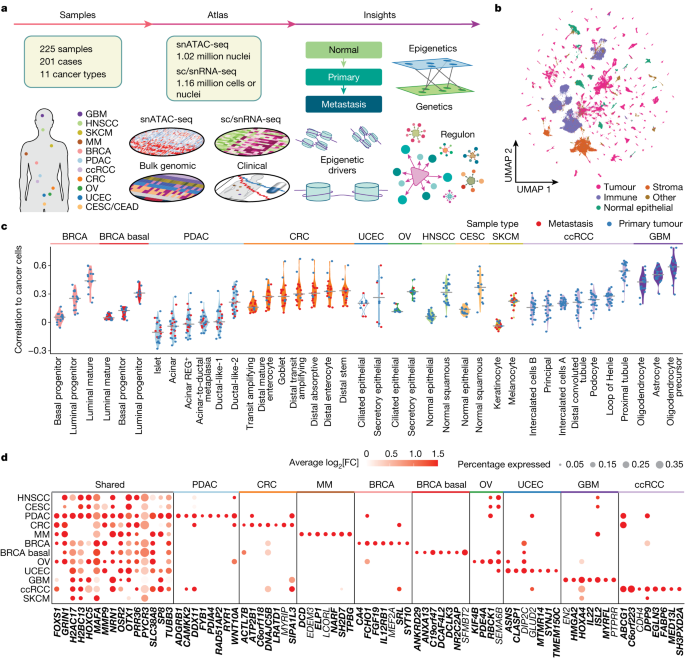
Unveiling Epigenetic Regulation in 11 Tumor Types during Cancer Transitions

A study has constructed an integrative multi-omic atlas of 11 major cancer types, providing a unified map of lineage-specific and cancer-specific cell populations, differentially accessible enhancers and promoters, epigenetically regulated cancer-associated genes, and transcription factors (TFs) that are important across major cancer transitions. The research highlights the potential of TFs as prognostic markers and offers a deeper understanding of the molecular underpinnings driving cancer evolution. The study also identifies epigenetic changes and genetic mutations that cooperate in cancer transition programs, and reveals the regulatory relationships between chromatin accessibility and gene transcription in cancer cells.