Recent advances in neuroscience suggest that memory can be manipulated in lab settings, with potential applications for healing mental health issues, though ethical concerns remain about its use in humans.
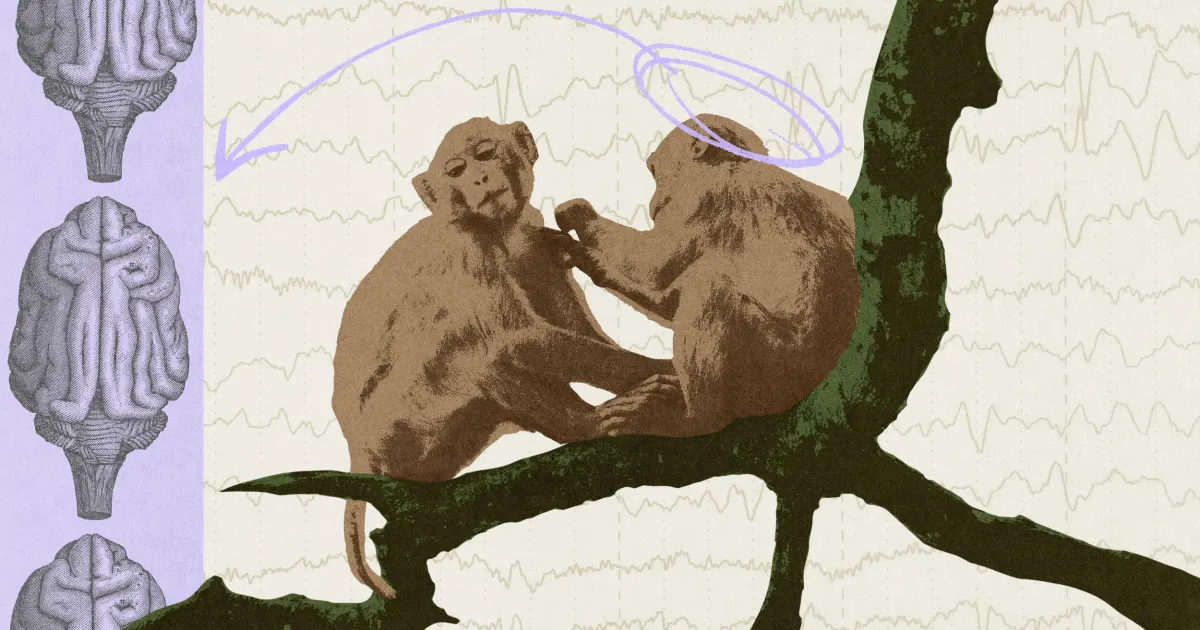
The article discusses a paradigm shift in neuroscience towards neuroethology, which studies animals in naturalistic settings to better understand complex cognitive behaviors like social interactions and decision-making, moving beyond traditional lab-based methods to capture the brain's functioning in real-world contexts.
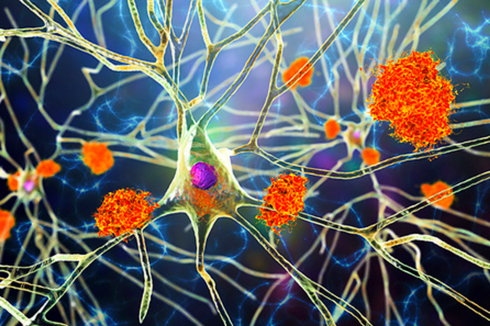
UVA researchers have identified a physiological cause of memory loss in Alzheimer's, involving protective 'nets' around neurons in the hippocampus, and found a drug used for cancer and arthritis that may prevent this loss in mice. Human trials are still years away, but the findings could lead to new treatments for Alzheimer's disease.
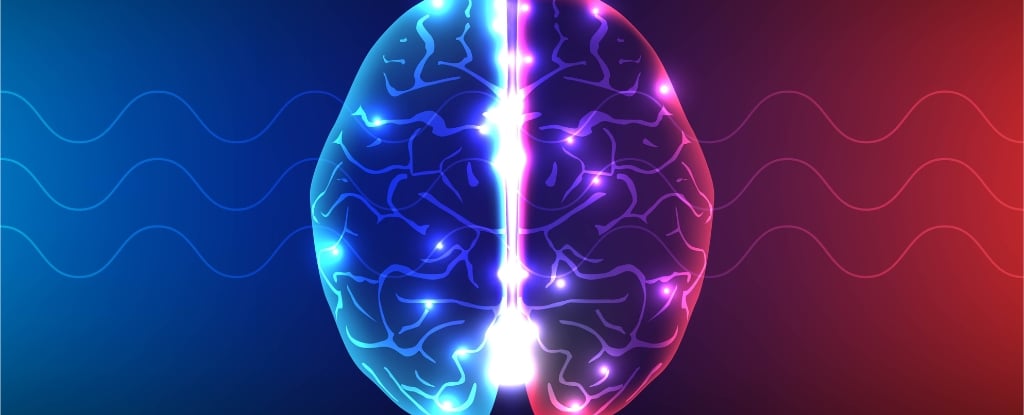
Researchers have developed a novel ultrasound helmet that can non-invasively target and modulate deep-brain structures with high precision, potentially transforming the study and treatment of neurological and psychiatric conditions like Parkinson's disease and depression.
A new study suggests that loss of the sense of smell may be an early warning sign of Alzheimer's disease, linked to damage in the brainstem and immune response, although it is not currently used in diagnosis and could be confused with normal aging changes.
Scientists in Edinburgh found that cats develop dementia similarly to humans with Alzheimer's, including amyloid-beta buildup in the brain, which could lead to better understanding and treatments for both feline and human dementia. The research highlights the potential of cats as natural models for studying Alzheimer's disease, offering hope for improved care and therapies for affected pets and people.
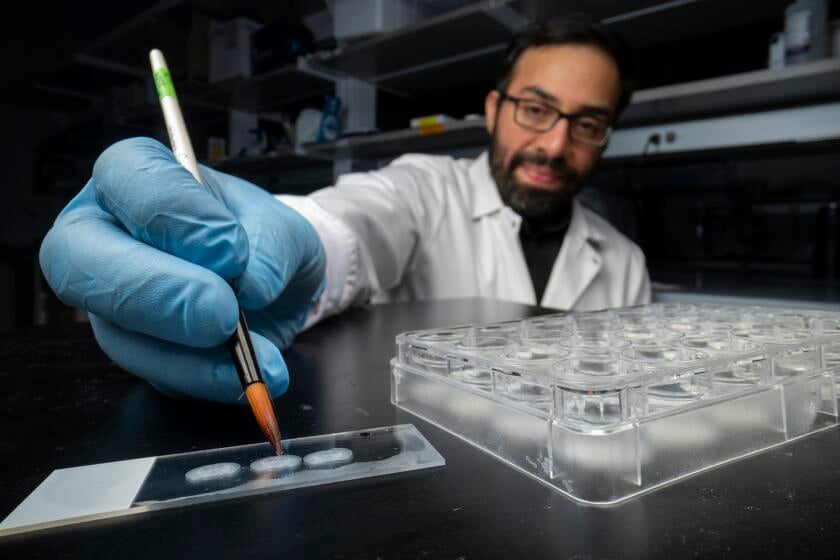
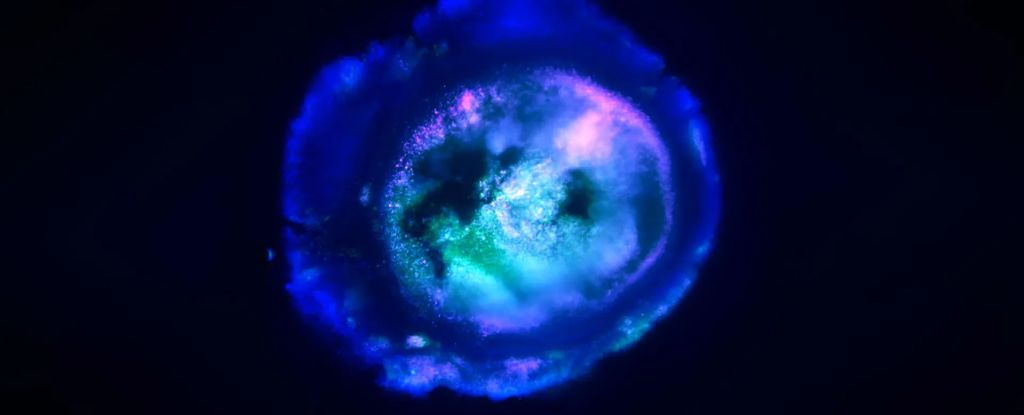
Scientists at Johns Hopkins have developed a multi-region brain organoid that mimics early human brain development, including interconnected regions and blood vessel formation, providing a new platform for studying brain function and neurological diseases.
Recent research suggests that dormant herpes simplex virus (HSV) infections, especially when reactivated by head injuries, may accelerate the development of Alzheimer's disease, highlighting the importance of understanding viral impacts on brain health and potential therapeutic avenues.
A Northwestern Medicine study found a virus, human pegivirus (HPgV), in the brains of Parkinson's patients, suggesting a potential viral link to the disease, though further research is needed to understand its role and implications.
Steve Ramirez, a neuroscientist at Boston University, is pioneering research on how memories can be artificially created, modified, or erased, with potential applications for treating PTSD and neurodegenerative diseases. His experiments with mice demonstrate the ability to implant false memories and manipulate existing ones, laying the groundwork for future human therapies and a deeper understanding of memory's malleability.
Steve Ramirez, a neuroscientist at Boston University, is pioneering research on how memories can be artificially created, modified, or erased in the brain, with potential applications for treating PTSD and neurodegenerative diseases, while acknowledging the ethical and scientific challenges involved.
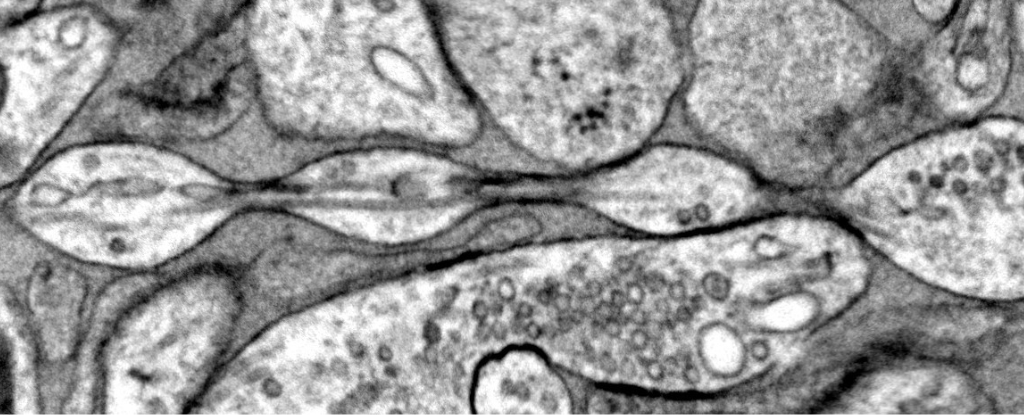
A controversial study from Johns Hopkins University suggests that axons, the main arms of neurons, are not smooth cylinders but have a 'pearling' structure, resembling a string of pearls. This challenges long-held views on neuron anatomy and could impact our understanding of brain signaling. Critics argue that these 'nanopearls' might be stress-induced artifacts from tissue culturing, but the study's authors found similar patterns in live cells. Further research is needed to confirm these findings, including studies on human neurons.
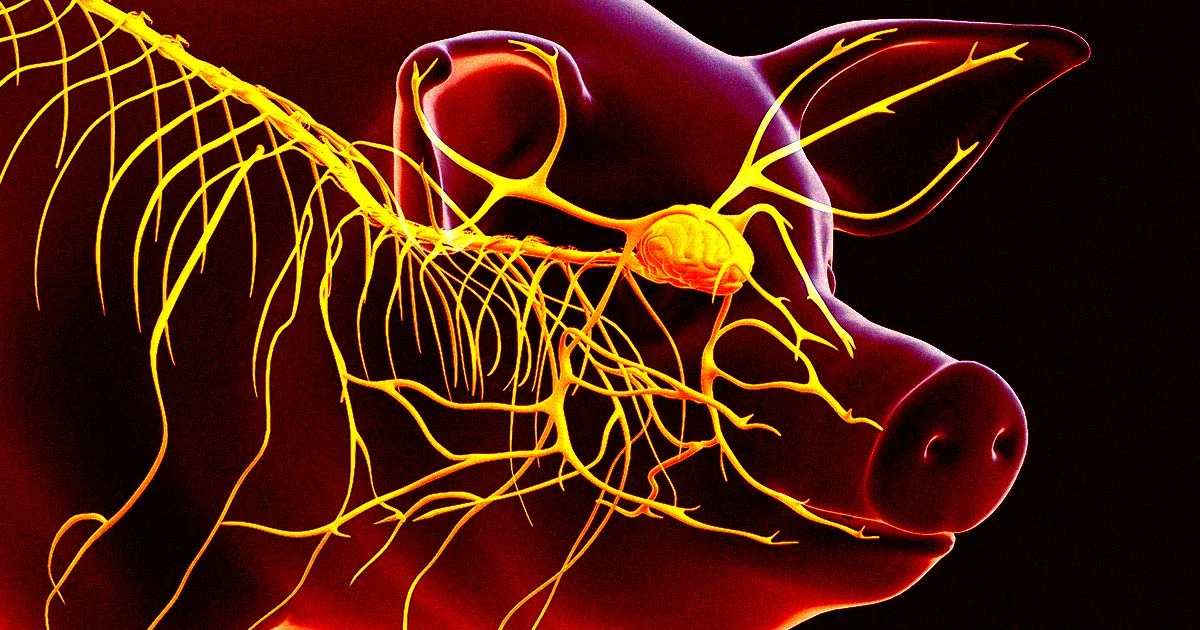
Scientists have revived cellular functions in a severed pig's brain using a cocktail of preserving agents, challenging previous notions about brain death. This research, led by Yale neuroscientist Zvonimir Vrselja, could have significant implications for reanimating human brains, though it raises ethical concerns about the definition of death. The technique, which prevents brain damage from oxygen-rich blood post-mortem, is also being explored for treating neurodegenerative diseases and extending the viability of donor organs.
Researchers at the Champalimaud Foundation have identified a neural circuit in the ventromedial hypothalamus (VMH) of female mammals that governs sexual rejection. This study highlights how progesterone-sensitive neurons in the VMH act as a switch between acceptance and rejection of mating attempts, depending on the female's reproductive state. The findings, which have implications for understanding human reproductive and social behaviors, suggest that abnormalities in this brain region could be linked to conditions like polycystic ovarian syndrome and altered social behaviors.
Recent research suggests that Alzheimer's disease may not primarily be a brain disease but rather an autoimmune disorder involving the brain's immune system. This theory posits that beta-amyloid, traditionally seen as a harmful protein, is actually part of the brain's immune response, which mistakenly attacks brain cells due to similarities with bacterial membranes. This new perspective challenges the long-held focus on beta-amyloid and calls for exploring alternative treatment pathways, as conventional autoimmune therapies may not be effective for Alzheimer's.