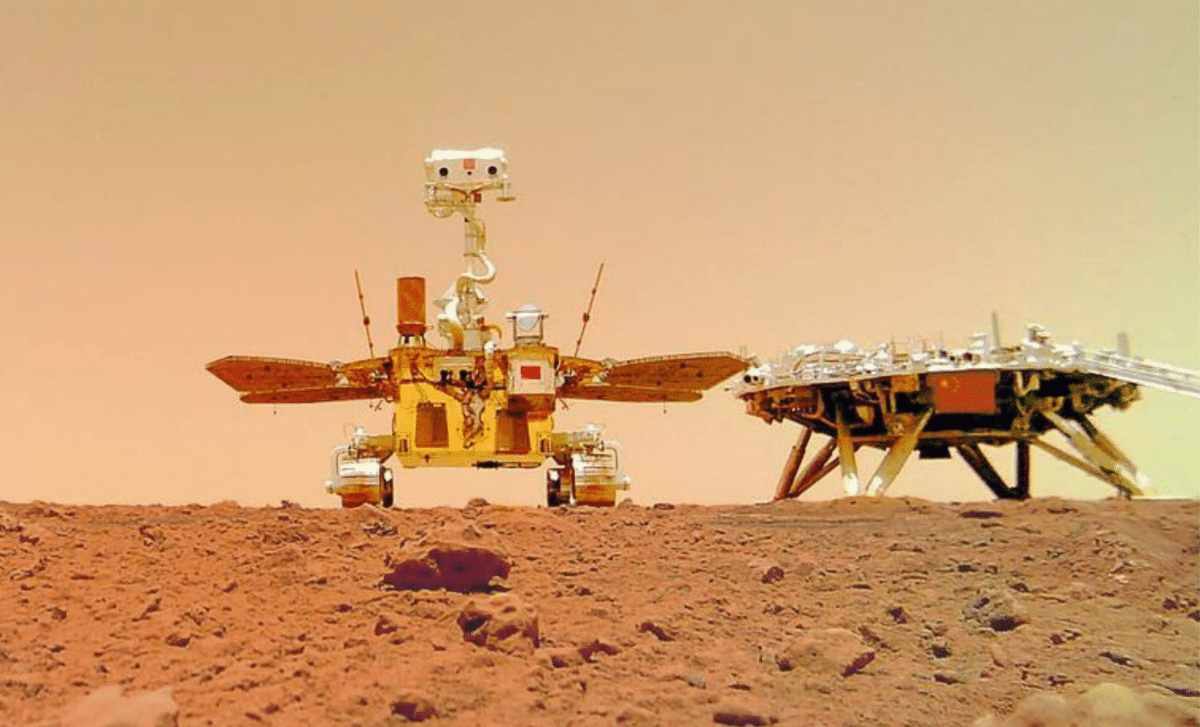
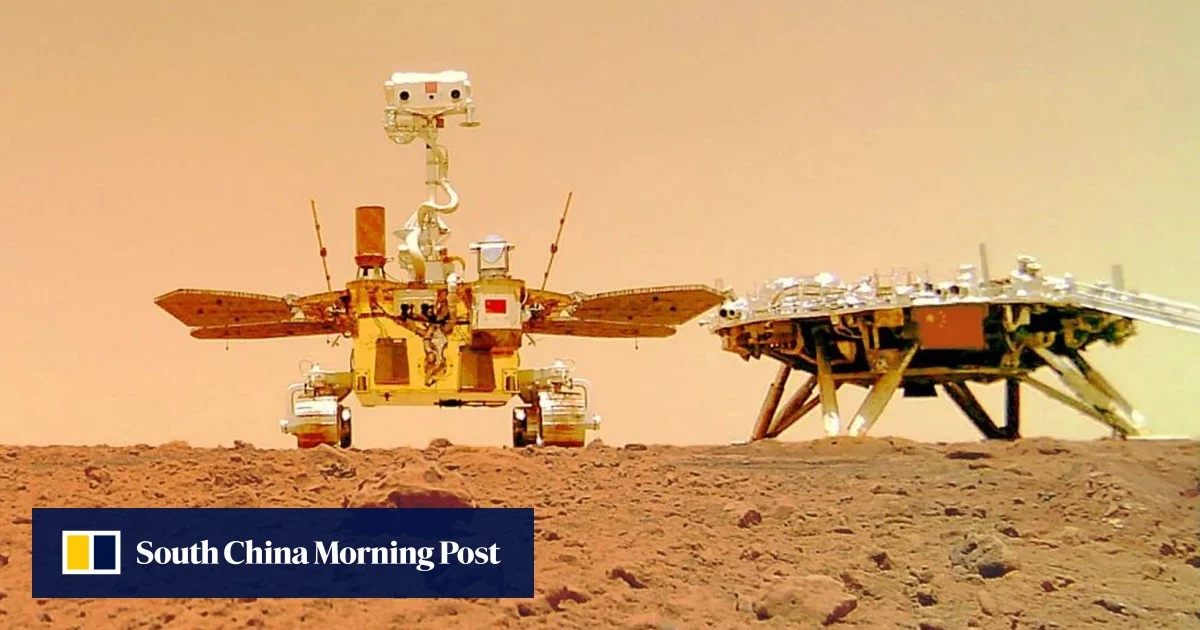
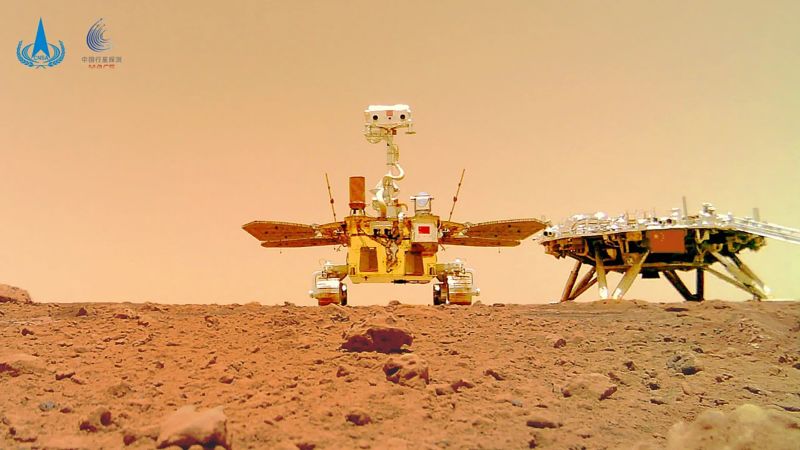
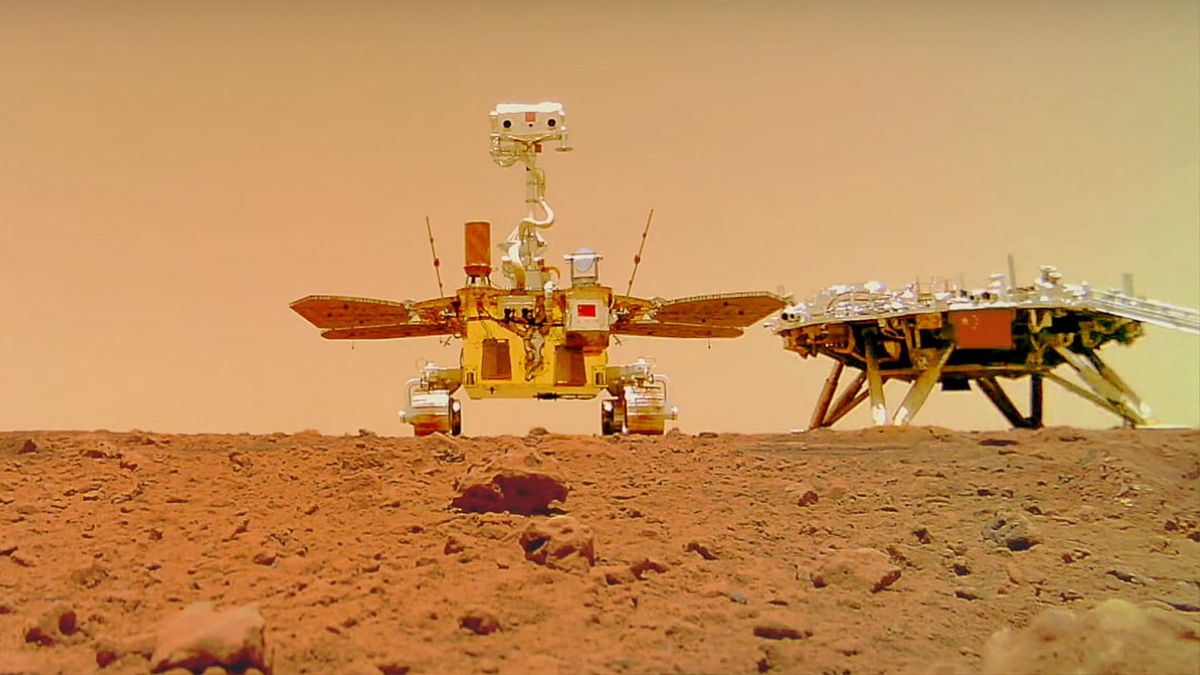
China’s Mars rover Zhurong has discovered evidence that liquid water persisted on Mars much later than previously believed, indicating the planet may have had habitable conditions for hundreds of millions of years longer, which has significant implications for understanding Mars’ climate, geology, and potential to support life.
China's Mars rover Zhurong has discovered evidence of an ancient ocean on Mars, supporting theories of the planet's watery past. Research from the Tianwen-1 mission indicates that rock deposits in Utopia Planitia, a large plain in Mars' northern hemisphere, suggest the presence of a sea around 3.5 billion years ago. The study, involving Hong Kong Polytechnic University and other institutions, found sedimentary rocks and surface features indicative of past water activity, providing a probable scenario for the ocean's formation.
China's Mars rover Zhurong has remained in hibernation since May 2022, leading to questions about whether the mission is over. Chinese officials have now stated that they have not had any communication from the rover since it entered hibernation, but they are monitoring it every day and believe it has not woken up because the sunlight has not yet reached the minimum level for power generation. The most likely culprit is a build-up of dust hampering Zhurong's ability to generate solar power.
China's Zhurong rover on Mars has been in hibernation since last May due to an "unpredictable accumulation" of dust, according to mission designer Zhang Rongqiao. The rover is expected to automatically wake up when the light and weather conditions improve with temperatures inside the cabin surpassing -15 degrees Celsius and when there is enough sunlight to charge the battery to at least 140 watts. The rover's primary mission was to search for signs of ancient life, and it has so far worked 358 days and traveled 1,921 meters on Mars.
China's Mars rover, Zhurong, has likely suffered excessive accumulation of sand and dust, affecting its power generation and ability to wake up from hibernation. The rover was expected to wake up in December 2022 after entering a planned sleep mode in May 2022. The Zhurong had explored the Martian surface for 358 days and travelled for 1,921 metres, far exceeding its original mission time span of three months. The rover was tasked with studying the planet's surface soil and atmosphere, looking for signs of ancient life, including any subsurface water and ice, using a ground-penetrating radar.
China's Zhurong Mars rover, part of the Tianwen-1 Mars mission, has been in a dormant mode since May 2022, but scientists are hopeful that it can reactivate and explore once more. The rover was supposed to autonomously resume activities in December 2021, but it has remained stationary for a while, covered by sand and dust, which has impacted its ability to generate electricity and retain heat. However, scientists believe that the rover may operate again in the summer season on Mars when it receives more sunlight and the temperature increases.