NASA's IXPE has captured detailed observations of the white dwarf star EX Hydrae, revealing new insights into its accretion process and magnetic field interactions, marking a significant advancement in high-energy astronomy.
NASA's IXPE has for the first time used its X-ray polarization capabilities to study a white dwarf star, EX Hydrae, revealing details about the star's accretion process and magnetic field, which enhances understanding of energetic binary systems.
The first White Dwarf of 2026, issue 520, offers an in-depth look at Warhammer 40,000's Titus and the Nightbringer, along with lore, miniatures design, new missions, and features on Nurgle-themed terrain and Age of Sigmar collections, with pre-orders available.
The Grotmas Calendar Day 21 features four Warhammer 40,000 missions from the White Dwarf Bunker, designed to add variety to holiday gaming sessions with friends and family, set against a backdrop of a war-torn planet in the 41st Millennium.
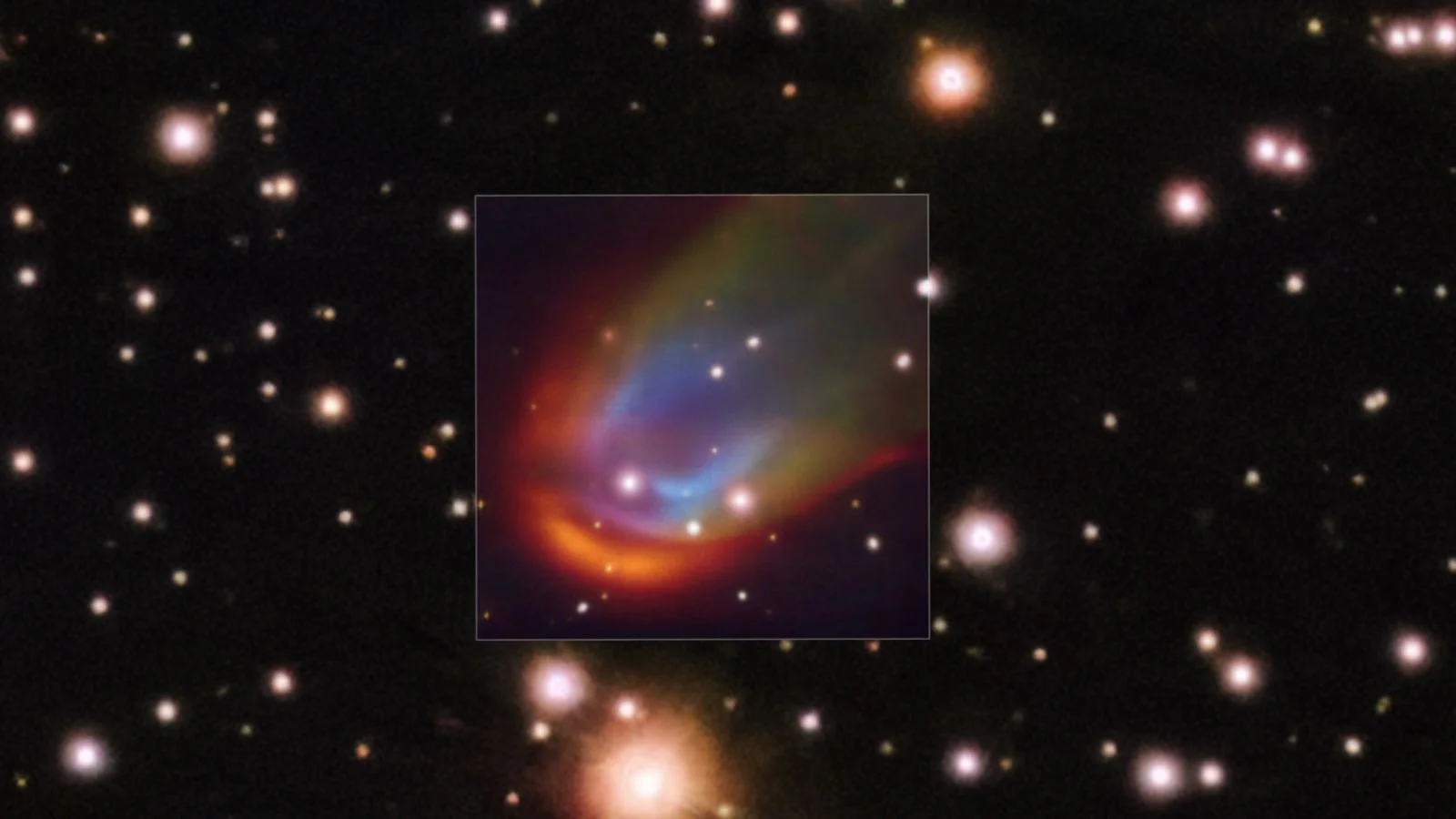
A binary star system called V Sagittae, located about 10,000 light-years away, is on the verge of a supernova explosion due to a white dwarf star rapidly consuming its larger companion, which will be visible from Earth during the day. The system's extreme brightness and impending explosion have been studied using the Very Large Telescope, revealing a giant gas ring and signs of an imminent nova or supernova event. This rare cosmic event could reshape our understanding of stellar life cycles.
Astronomers observed a white dwarf star consuming the remains of a shattered planet, revealing insights into planetary system evolution and offering a glimpse of our own Solar System's distant future, with implications for understanding exoplanet composition and long-term planetary dynamics.
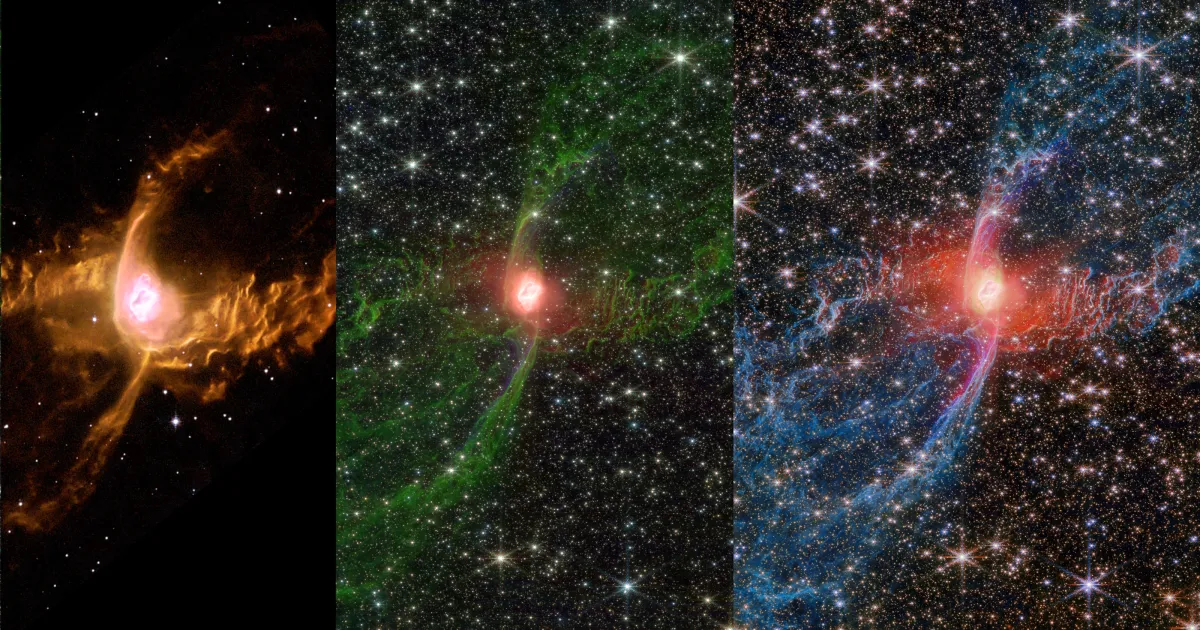
The article discusses the recent JWST imaging of the Red Spider Nebula, highlighting its structure, the role of binary companions in shaping nebulae, and the advanced temperature and ionization features revealed by infrared observations, providing new insights into the lifecycle of Sun-like stars.
Scientists observed a white dwarf star, LSPM J0207+3331, actively consuming planetary debris, including a rocky body likely similar to Earth, revealing ongoing planetary system dynamics billions of years after star death and challenging traditional views of stellar remnants.
Astronomers have observed a 'zombie' white dwarf star, LSPM J0207+3331, actively devouring remnants of a rocky planet after three billion years, challenging previous assumptions about the dormancy of such stars and suggesting planetary systems can remain unstable for eons.
Astronomers have observed a white dwarf star, LSPM J0207+3331, actively tearing apart a planetary body, revealing recent accretion of debris rich in Earth-like elements, challenging current understanding of planetary system evolution and suggesting ongoing dynamical processes long after the star's death.
Astronomers discovered a 3 billion-year-old white dwarf actively consuming material from its planetary system, challenging previous beliefs about the stability of planetary remnants long after stellar death, with evidence of ongoing dynamical disturbances and potential outer planets.
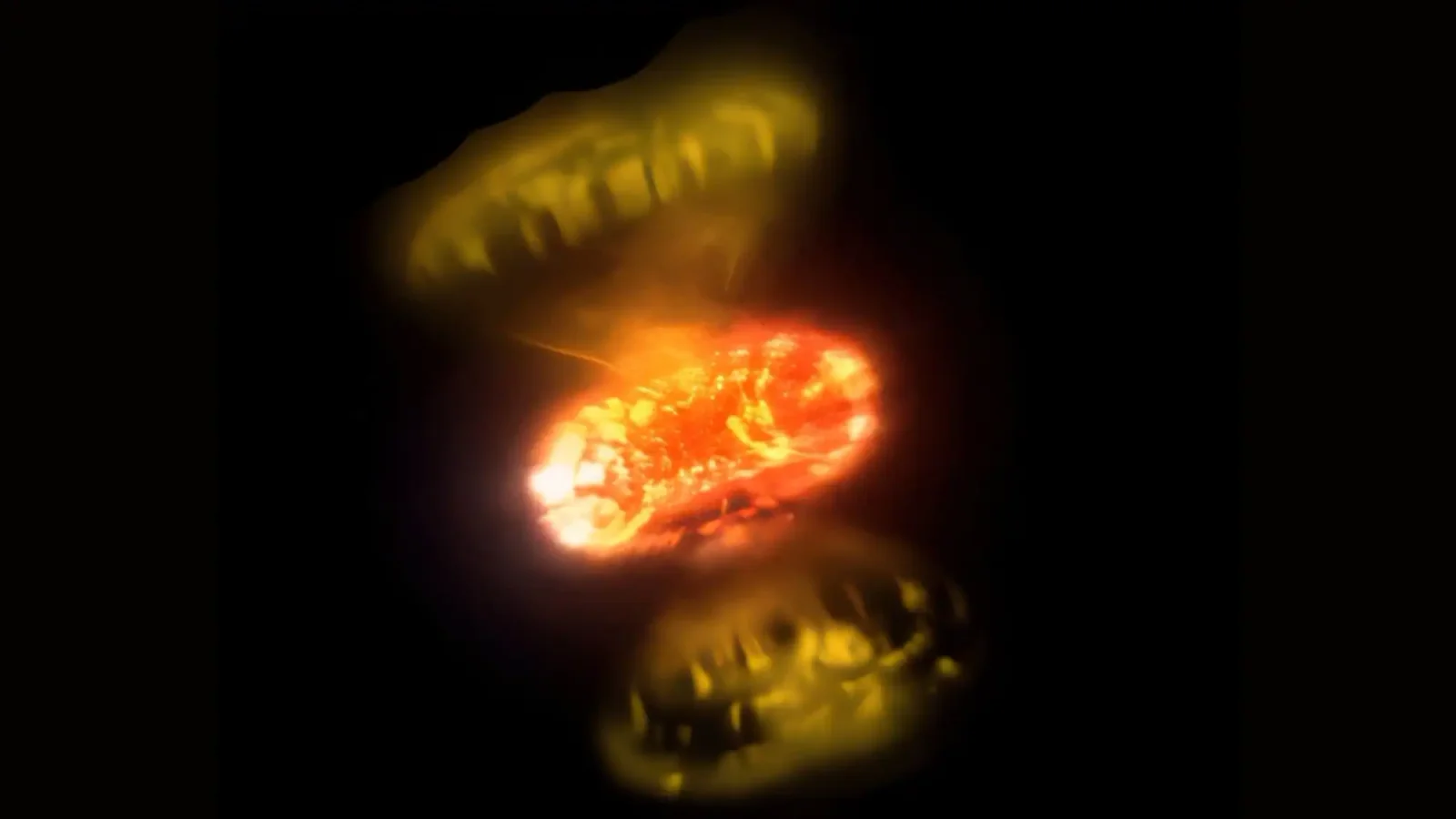
Astronomers have captured the first clear image of a star that exploded twice, providing direct evidence for a double detonation mechanism in Type Ia supernovae, which has implications for understanding cosmic distances and the universe's expansion.
NASA's Hubble Space Telescope has observed a white dwarf star consuming a Pluto-like object rich in water ice and volatiles, providing insights into the future of our solar system as the star evolves into a white dwarf and potentially pulls in icy bodies from its Kuiper Belt.
Astronomers using the Hubble Space Telescope observed a white dwarf star, WD 1647+375, consuming fragments of an icy, Pluto-like object, providing insights into planetary destruction and the presence of water and volatiles in space, with implications for understanding the future of our solar system.
Astronomers observed a Pluto-like icy body colliding with a white dwarf star, revealing that outer solar system objects can survive long after their star's death, and providing insights into planetary system evolution and water delivery in space.