Tag

Binary Star System

All articles tagged with #binary star system

science1 month ago

Upcoming Supernova Could Brighten Earth's Daytime Sky

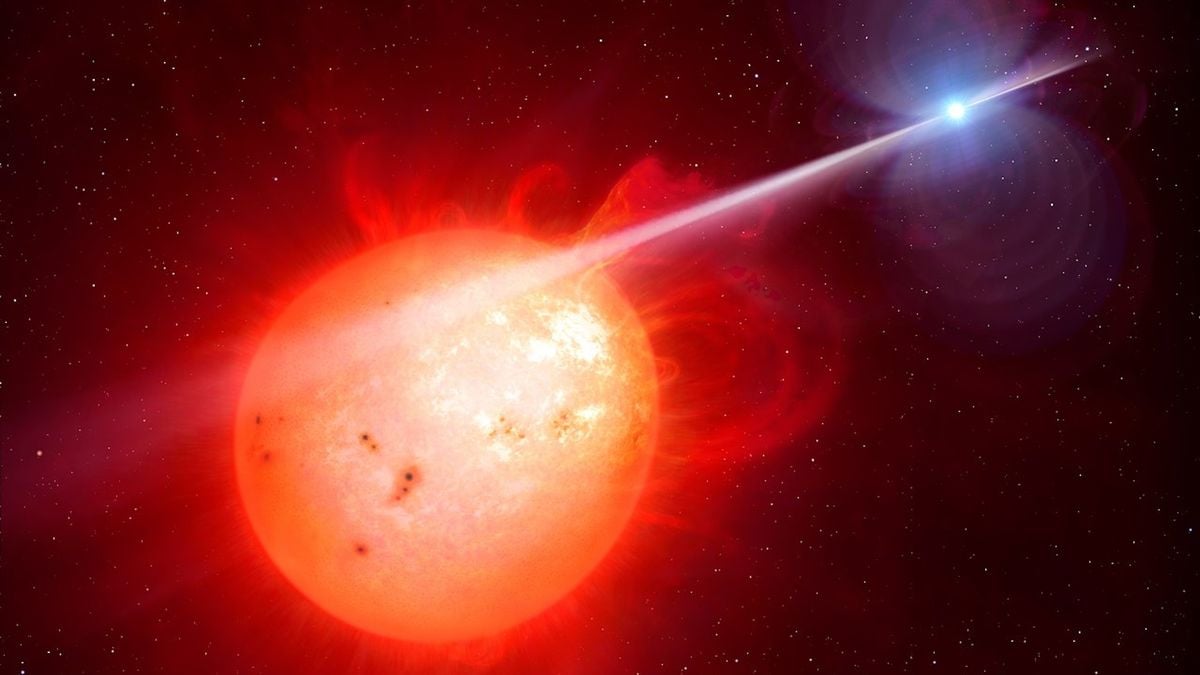
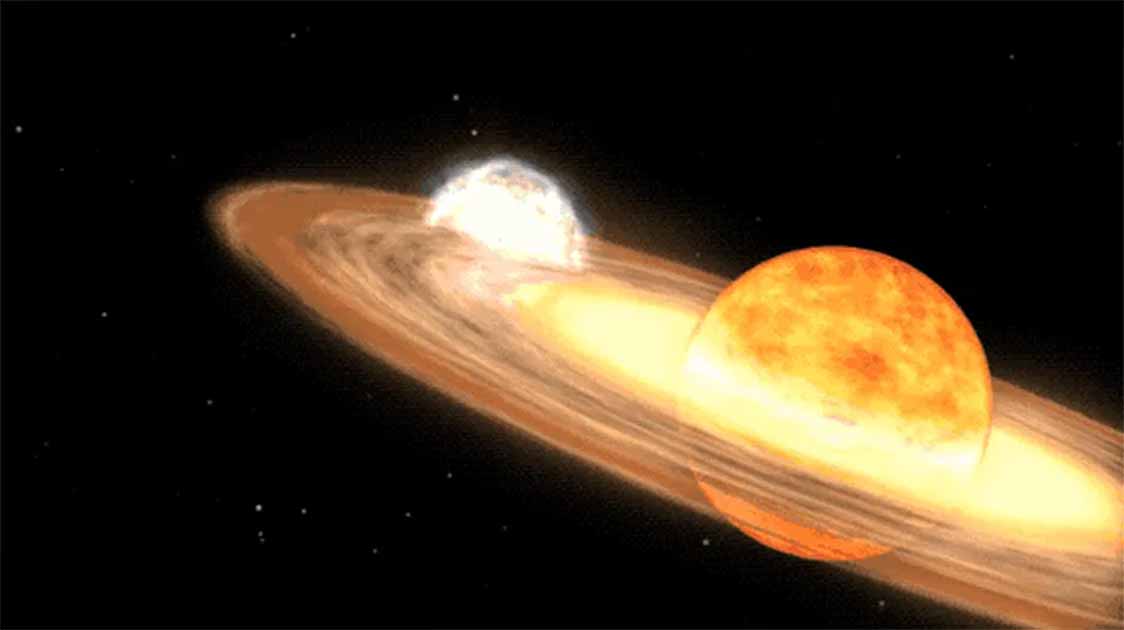
A binary star system called V Sagittae, located about 10,000 light-years away, is on the verge of a supernova explosion due to a white dwarf star rapidly consuming its larger companion, which will be visible from Earth during the day. The system's extreme brightness and impending explosion have been studied using the Very Large Telescope, revealing a giant gas ring and signs of an imminent nova or supernova event. This rare cosmic event could reshape our understanding of stellar life cycles.

science5 months ago

Scientists Discover Retrograde Orbiting Planet, Challenging Astronomy

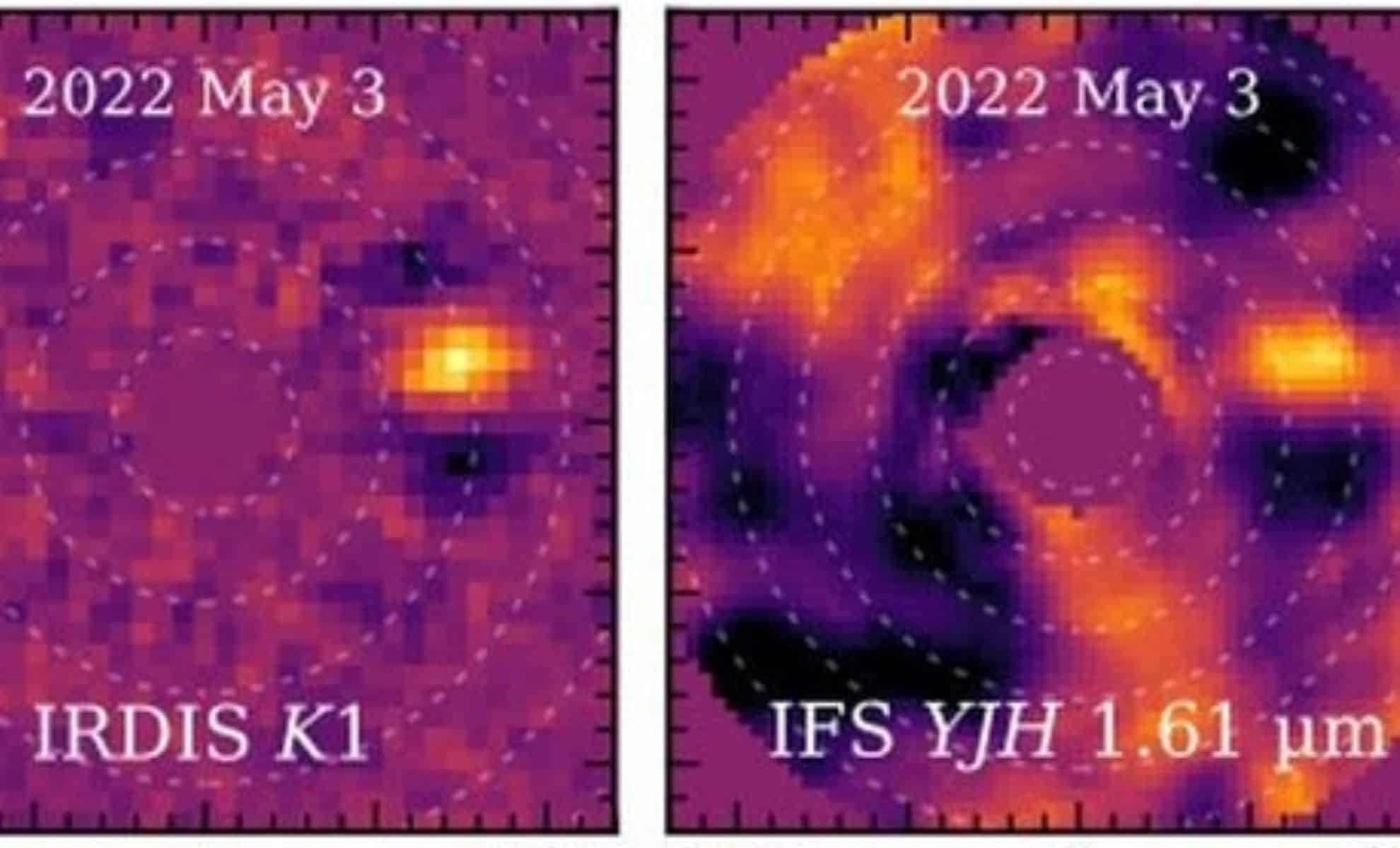
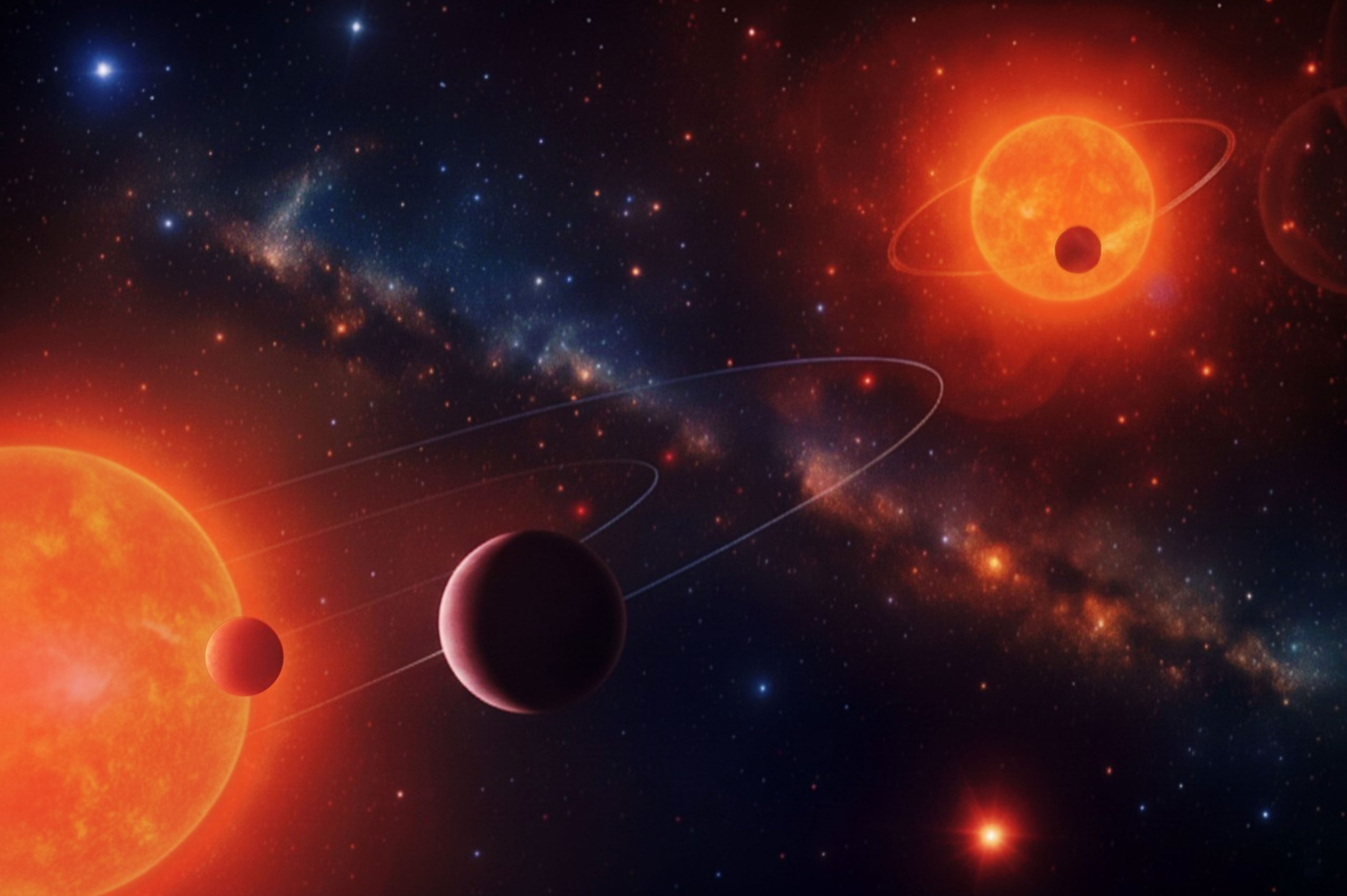
Astronomers have confirmed a planet in the nu Octantis binary star system orbiting in a retrograde direction, challenging existing theories of planetary formation and suggesting the possibility of second-generation planets formed from material expelled by a white dwarf star. This discovery, made using high-precision radial velocity data, opens new avenues for understanding planetary system evolution in complex environments.

science1 year ago

Asteroid Impacts on Neutron Stars Could Explain Mysterious Radio Bursts

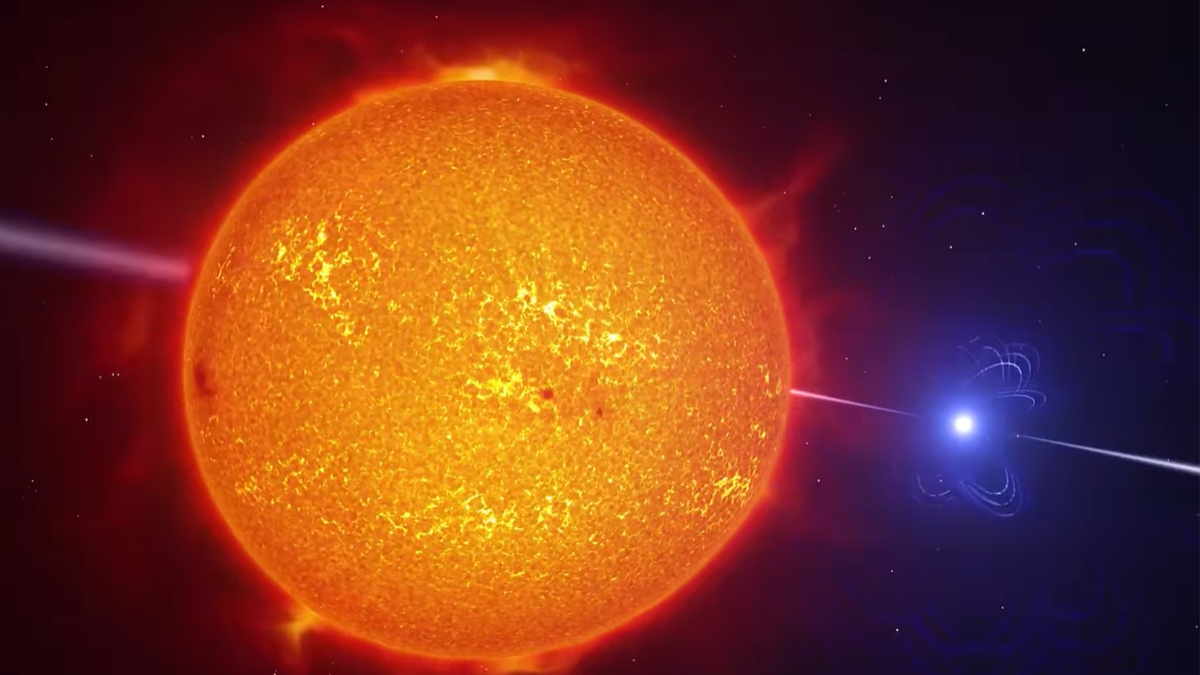
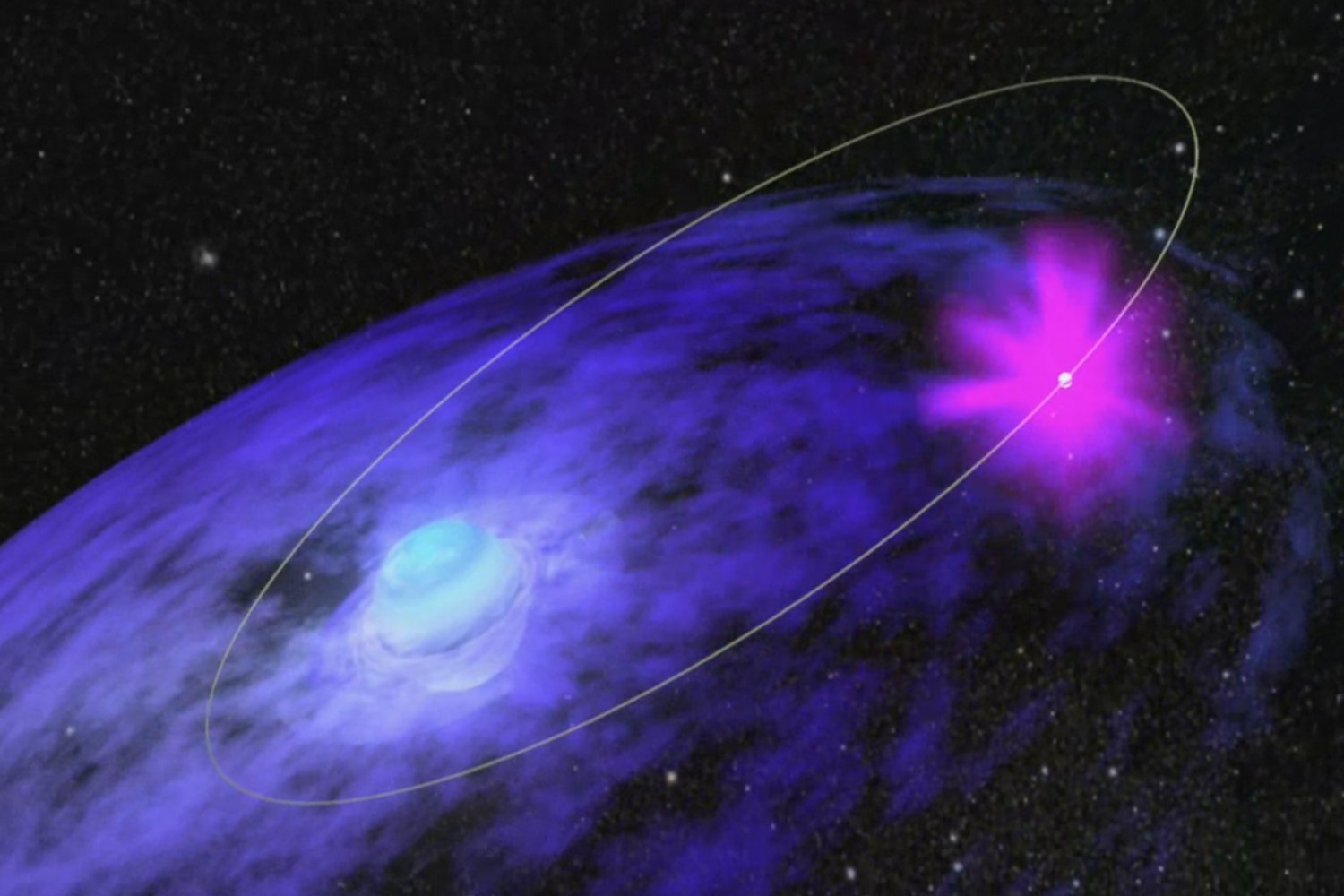
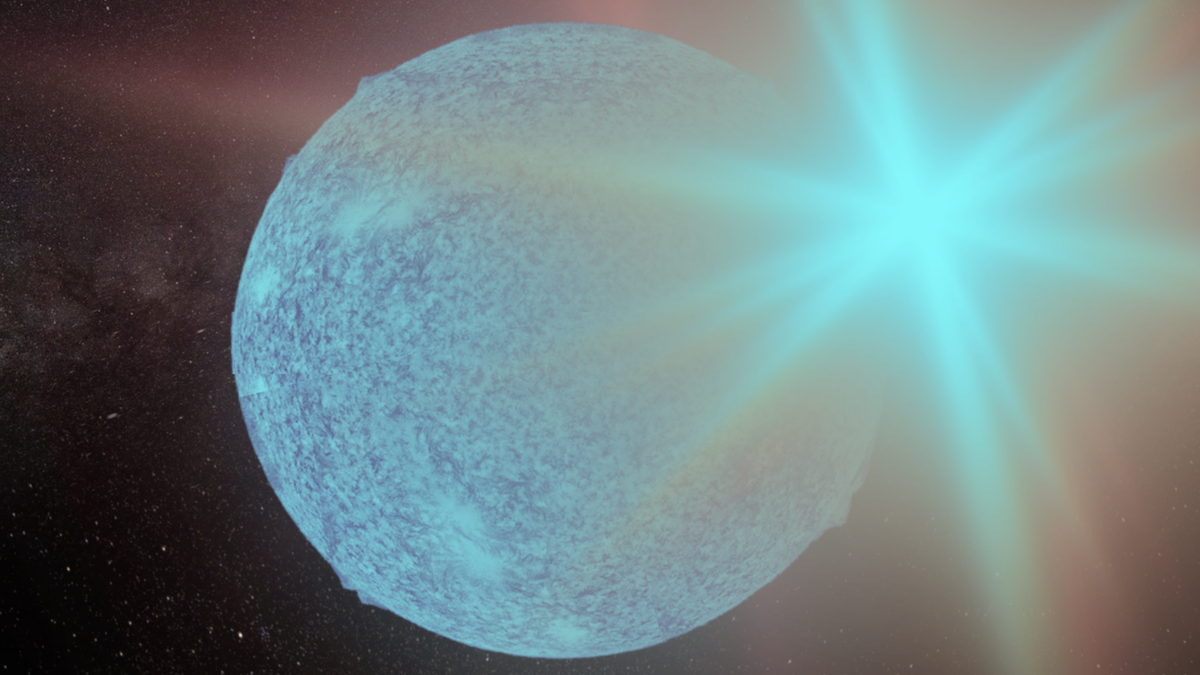
Astronomers have traced mysterious, repeating radio bursts to a red dwarf star likely in a binary orbit with a white dwarf. These long-period radio transients, first discovered in 2022, challenge existing theories as they pulse every 18 minutes, unlike typical radio pulsars. The discovery of a new source, GLEAM-X J0704-37, with pulses every 2.9 hours, suggests the radio waves may result from interactions between the red dwarf's stellar wind and the white dwarf's magnetic field. This finding could lead to a better understanding of such cosmic phenomena.

science1 year ago

Astronomers Trace Mysterious Radio Bursts to Unlikely Cosmic Sources

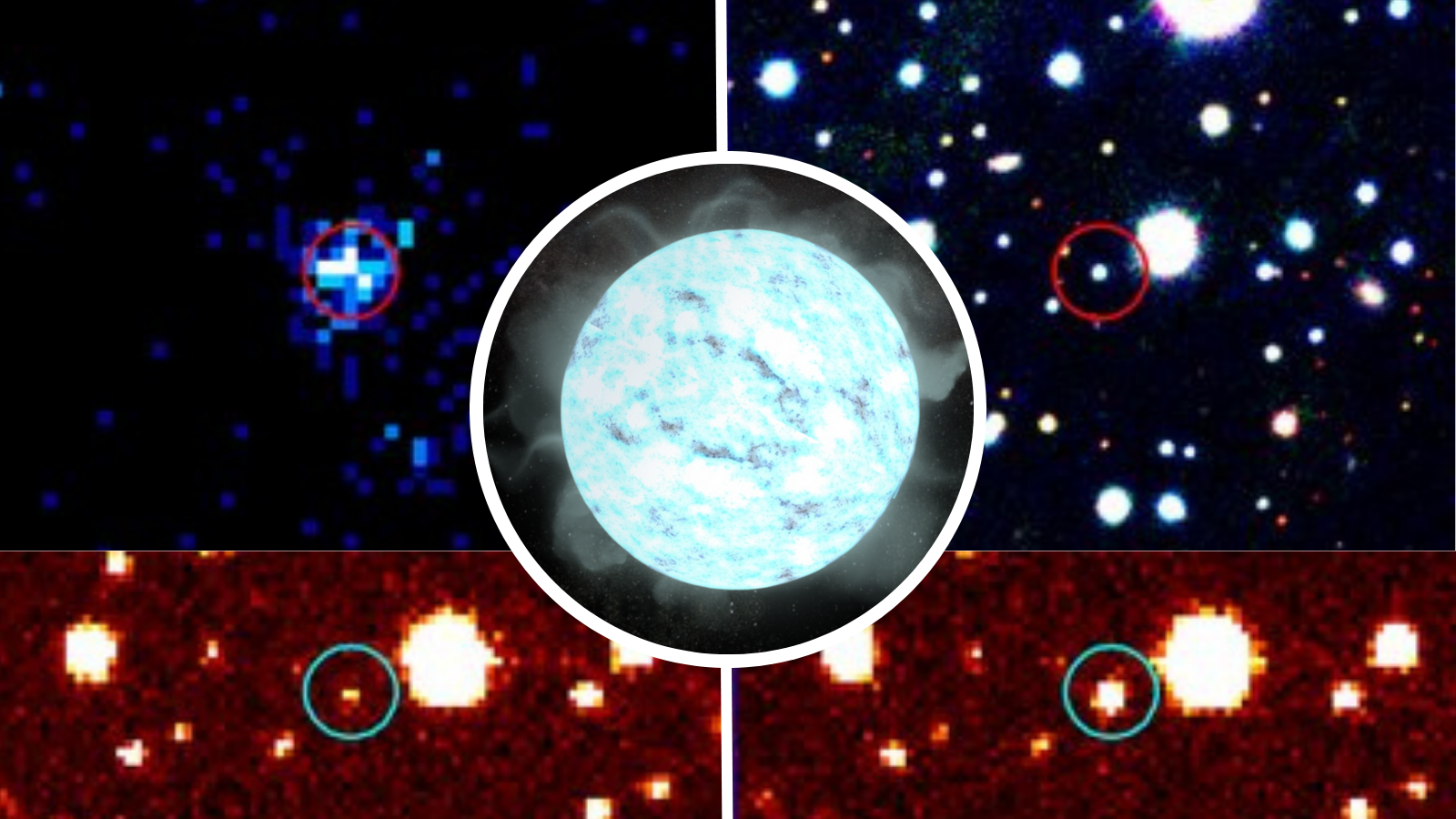
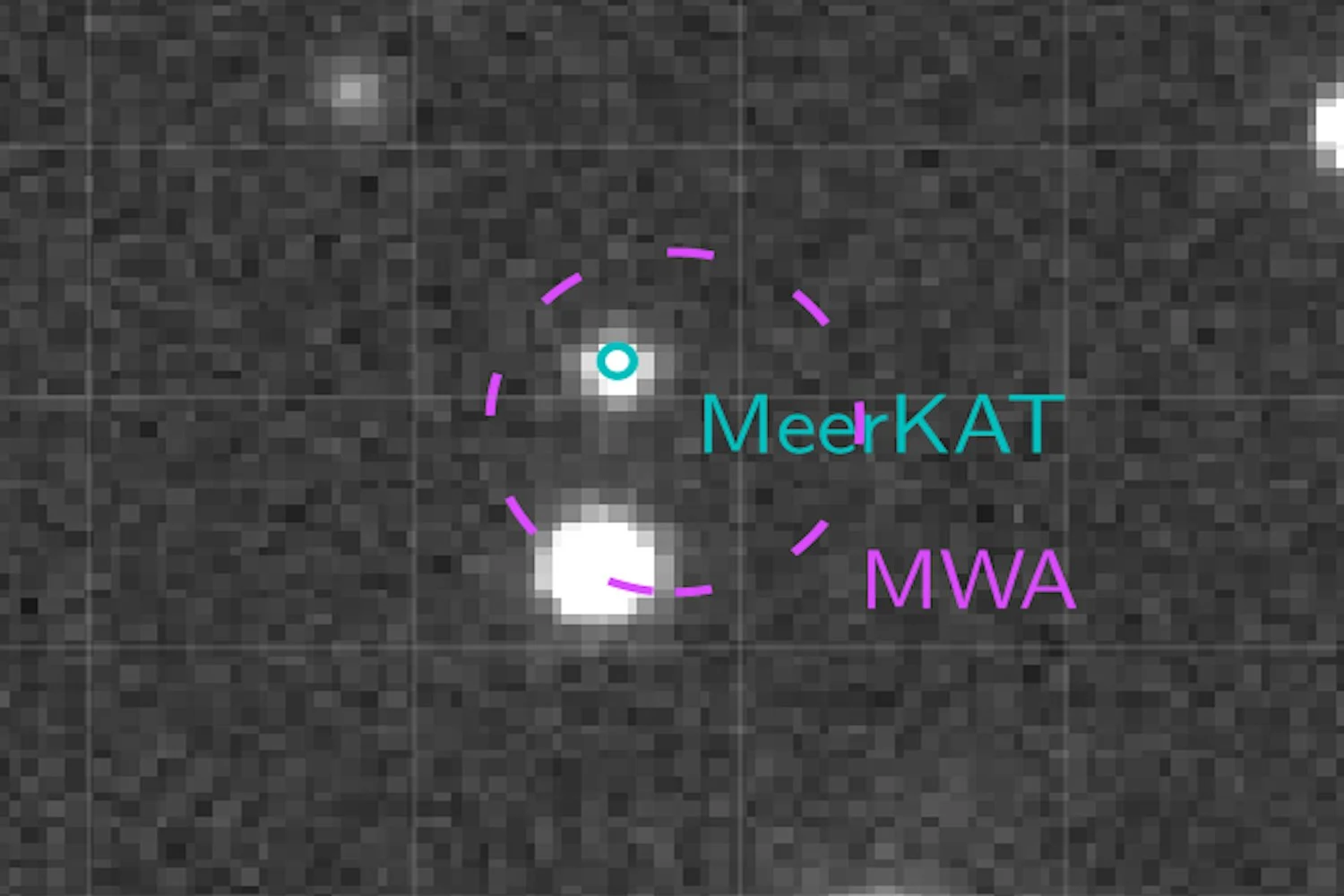
Astronomers have identified a mysterious radio signal emanating from the outskirts of the Milky Way, pinpointing its source to a binary star system consisting of an M dwarf and a white dwarf. This discovery, made using the Murchison Widefield Array and MeerKAT telescopes, marks the longest-period radio transient ever detected. The signal, named GLEAM-X J0704-37, challenges previous understanding as M dwarfs alone cannot produce such energy, suggesting a collaborative emission with the white dwarf. Researchers aim to explore more long-period radio transients in the universe.

science1 year ago

Astronomers Unravel Mystery Behind Record-Breaking Radio Signal

Astronomers have identified a record-breaking energy burst from a binary system containing a red dwarf and a white dwarf, located 5,000 light-years away. This burst, known as GLEAM-X J0704-37, is the longest-period example of long-period radio transients, a phenomenon that has puzzled scientists for nearly two decades. The discovery, made using data from the Murchison Widefield Array and the MeerKAT telescope, suggests that strong magnetic fields in the system may be responsible for the periodic energy emissions. This finding opens the possibility of uncovering more such transients in existing astronomical data.

science1 year ago

Record-Breaking Neutron Star Spins 716 Times Per Second

Astronomers have discovered a neutron star, part of the x-ray binary system 4U 1820-30, spinning at an extraordinary 716 times per second, making it one of the fastest-spinning objects ever observed. Located 26,000 light-years away in the Sagittarius constellation, this neutron star pulls material from its white dwarf companion, leading to powerful thermonuclear bursts. The discovery, made using NASA's NICER telescope, provides insights into the life cycles of binary star systems and the formation of elements in the universe.

science1 year ago

Astronomers Unveil Record-Breaking Fast-Spinning Neutron Star

Astronomers have discovered a neutron star in the binary system 4U 1820-30 that spins at a record-breaking 716 times per second, making it one of the fastest-spinning cosmic bodies ever observed. This neutron star, located in the globular cluster NGC 6624 in the Milky Way, also experiences powerful thermonuclear explosions on its surface. The discovery was made using NASA's NICER X-ray telescope on the ISS, and the findings provide insights into the extreme properties of neutron stars and the dynamics of binary star systems.

science1 year ago

"Medieval Nova Set to Dazzle Sky in Rare Celestial Event"

The double star system T Coronae Borealis, first recorded in 1217, is set to flare up and become visible in Earth's night sky between now and September. This rare nova event, occurring roughly every 80 years, will make the star as bright as Polaris for about a week. The phenomenon results from a violent interaction between a white dwarf and a red giant, causing a thermonuclear reaction. The last such event was observed in 1946, and the upcoming flare is expected to reach a magnitude of +2.

science-and-technology1 year ago

NASA Finds Potentially Habitable Mini-Neptune in Binary Star System

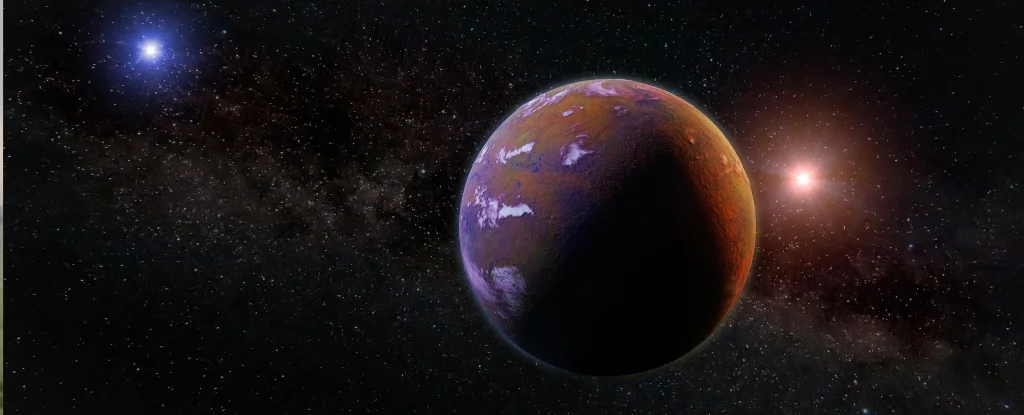
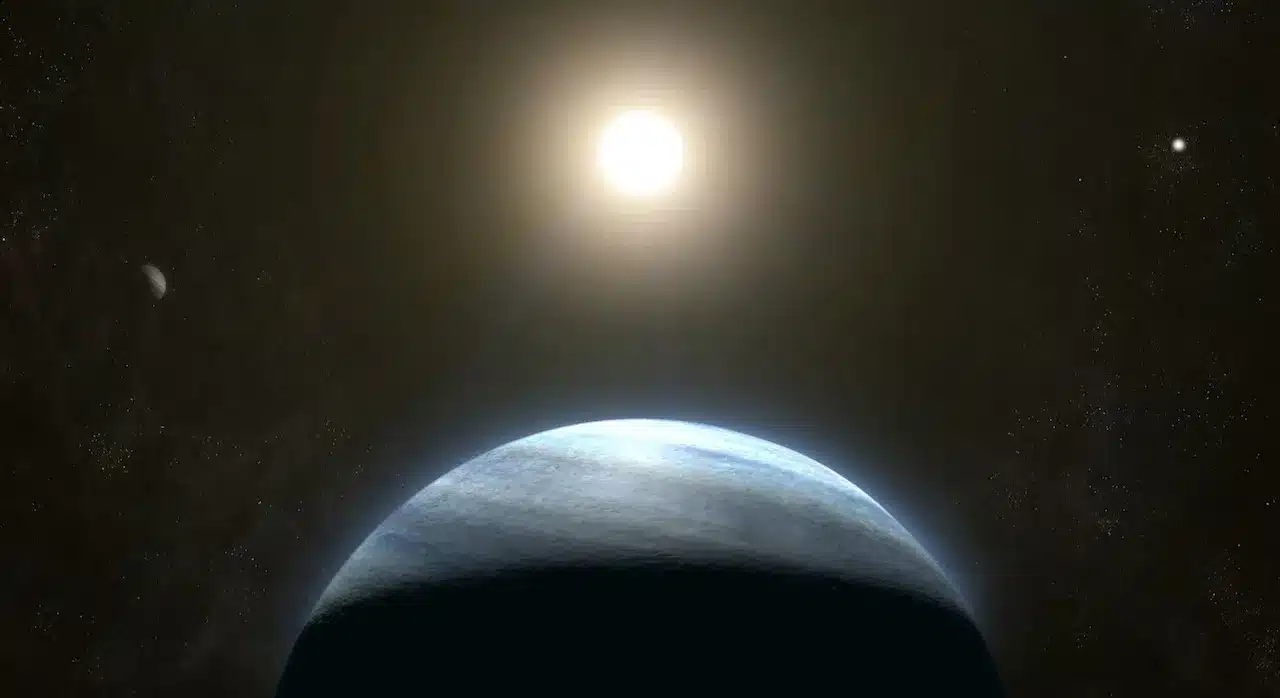
NASA's TESS has discovered a rare mini-Neptune exoplanet, TOI 4633 c, in a binary star system's habitable zone. This planet's unique characteristics, including its 272-day orbit, challenge existing planetary formation theories and raise intriguing possibilities for habitability, particularly for potential moons. The discovery offers new insights into the dynamics of binary star systems and the potential for life in diverse environments.