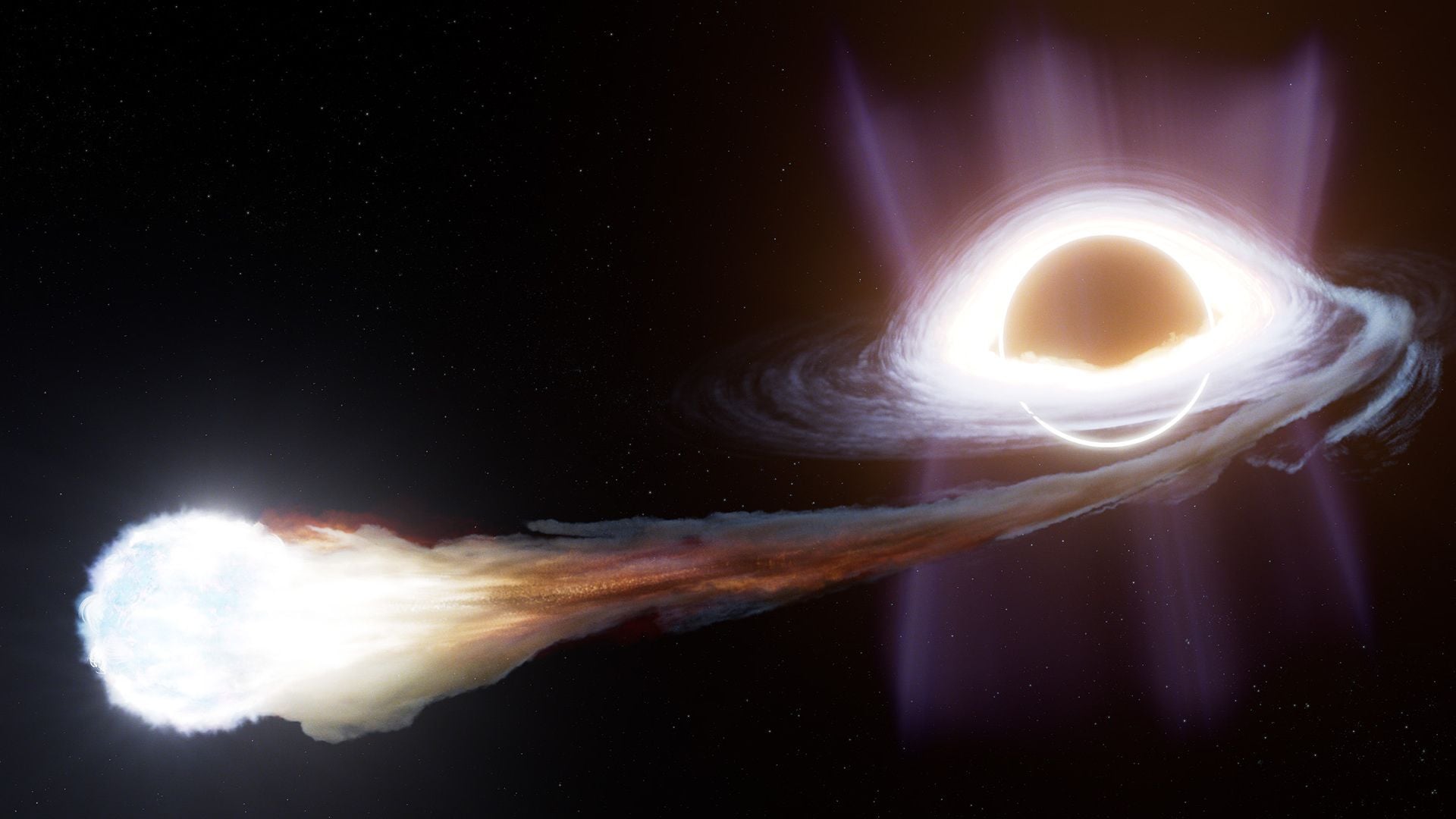
Astronomers observed an extraordinary off-center tidal disruption event (TDE) in a galaxy 650 million light-years away, where a black hole tore apart a star and produced unexpected delayed radio outflows, challenging previous understanding of black hole behavior and suggesting the black hole may be an intermediate mass black hole wandering outside the galaxy's center.
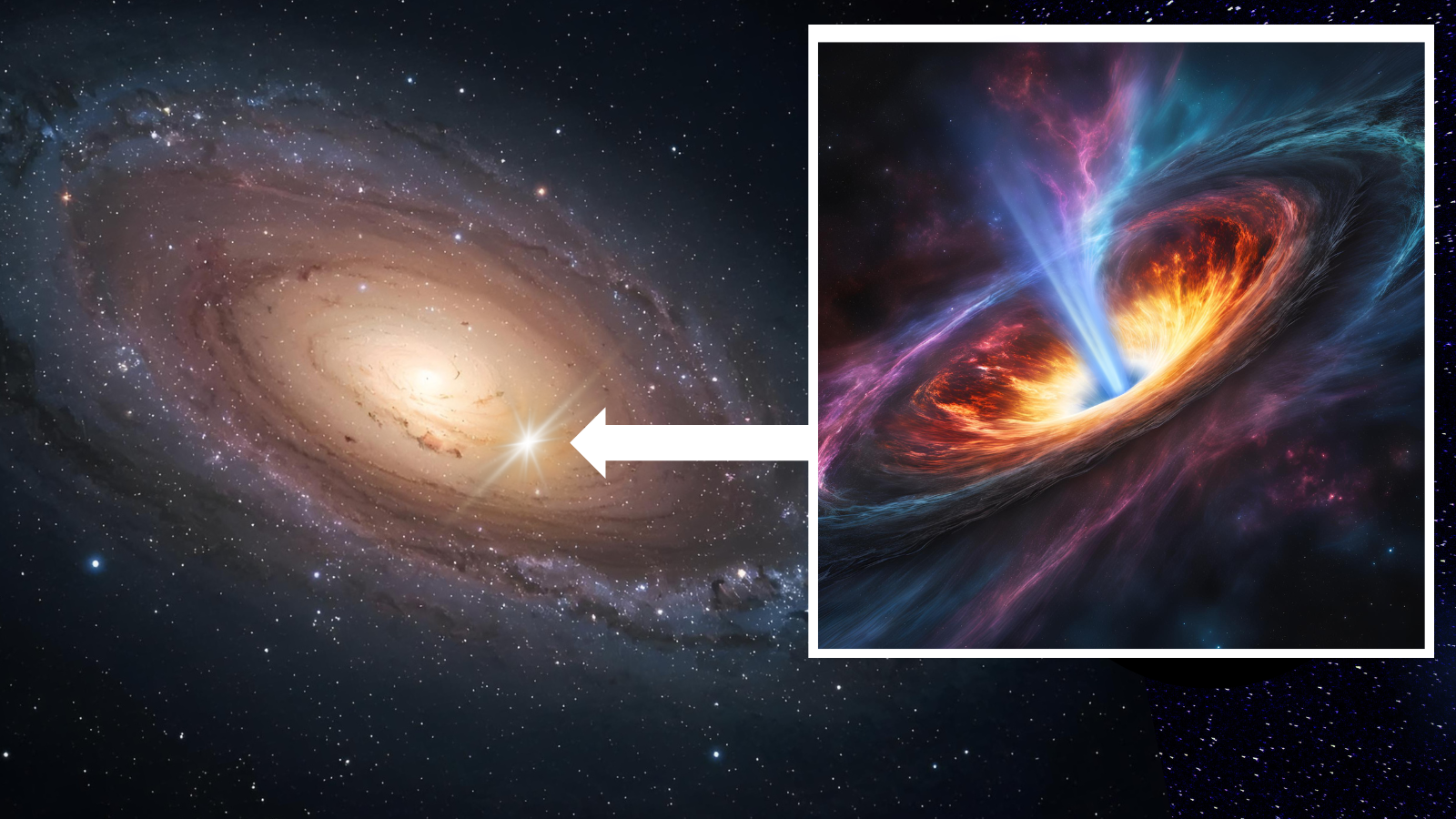
Astronomers have discovered a wandering intermediate-mass black hole actively accreting matter and producing jets in a dwarf galaxy, challenging the traditional view that black holes are only found at galactic centers and shedding light on black hole growth and galaxy evolution.
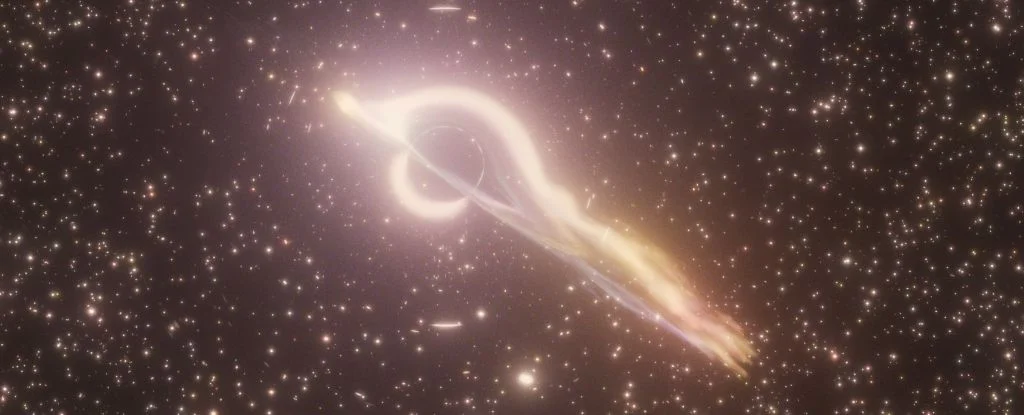
Astronomers have observed a flare from a black hole in a distant galaxy that is likely an intermediate-mass black hole, a rare find that could help explain the formation of supermassive black holes. The black hole, HLX-1, shows signs of devouring a star, providing valuable insights into black hole growth and the elusive middle ground between stellar and supermassive black holes.
A rogue intermediate-mass black hole in a distant galaxy has been observed disrupting a star, with conflicting data on whether the star was completely destroyed or just partially stripped, highlighting the challenges in studying these elusive objects and the potential for future discoveries with upcoming sky surveys.
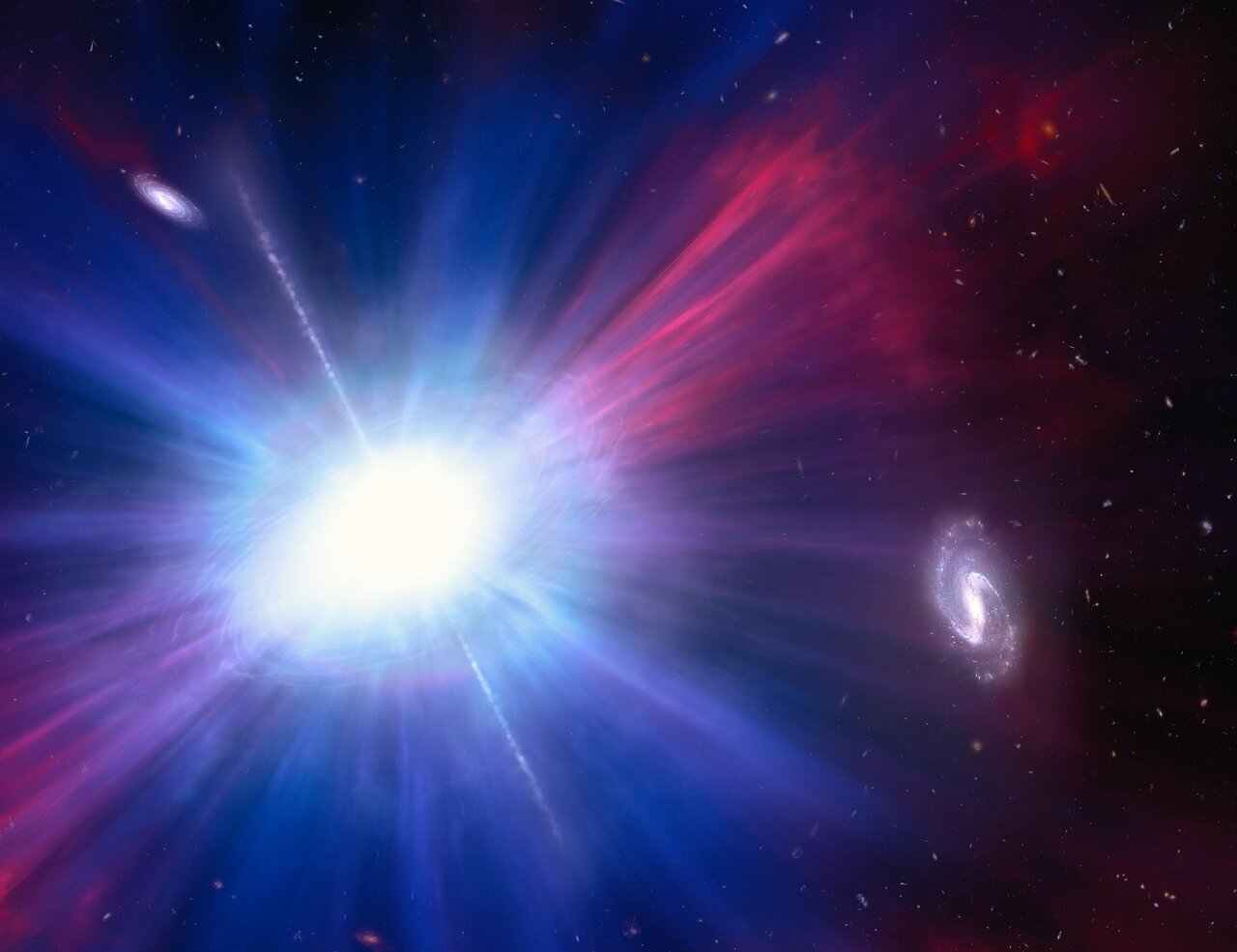
The NASA/ESA Hubble Space Telescope has discovered a Luminous Fast Blue Optical Transient (LFBOT) in an unexpected location, far away from any host galaxy. LFBOTs are extremely bright events that occur unpredictably in the universe. The discovery, named the Finch, is located between two neighboring galaxies, which is unusual for this type of phenomenon. The exact cause of LFBOTs is still unknown, but possible explanations include stars being torn apart by an intermediate-mass black hole or the collision of two neutron stars. Further research is needed to determine the true nature of these mysterious explosions.
A new study examines whether the supermassive black hole at the center of the Milky Way, known as Sagittarius A*, has a companion. While most galaxies contain a supermassive black hole, it is unclear if our galaxy has a companion black hole. The study analyzes the orbit of a star called S0-2, which orbits Sag A* closely, and finds no evidence of gravitational perturbations that would suggest the presence of an intermediate mass black hole (IMBH) companion. The study puts upper bounds on the mass of a hypothetical IMBH, suggesting that if it exists, it could have a mass no greater than 1,000 to 10,000 Suns if it orbits outside S0-2's orbit, or no greater than 400 Suns if it orbits closer than S0-2. However, the study acknowledges that smaller IMBH companions may still exist beyond our current detection capabilities.
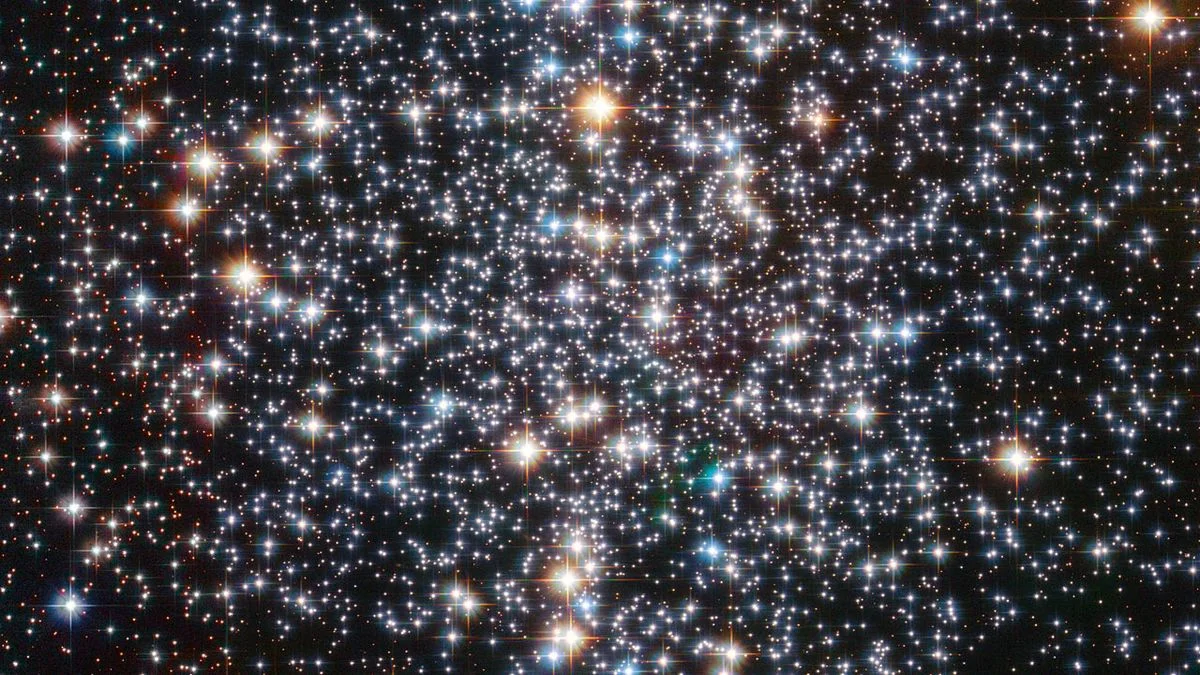
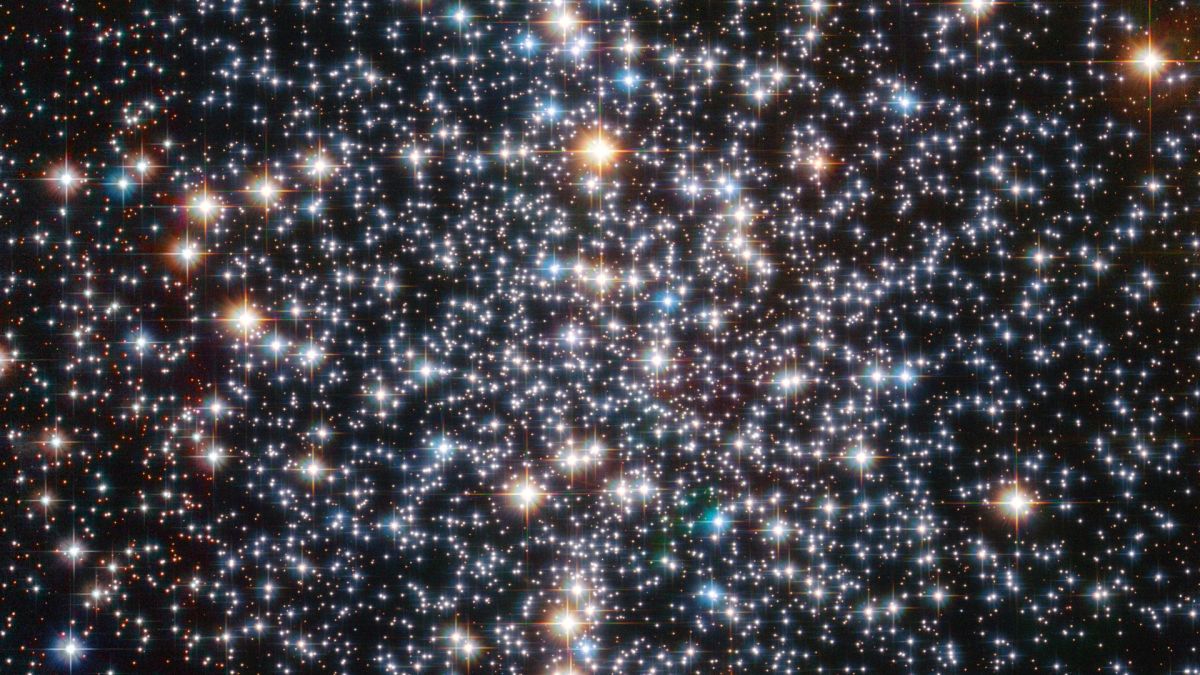
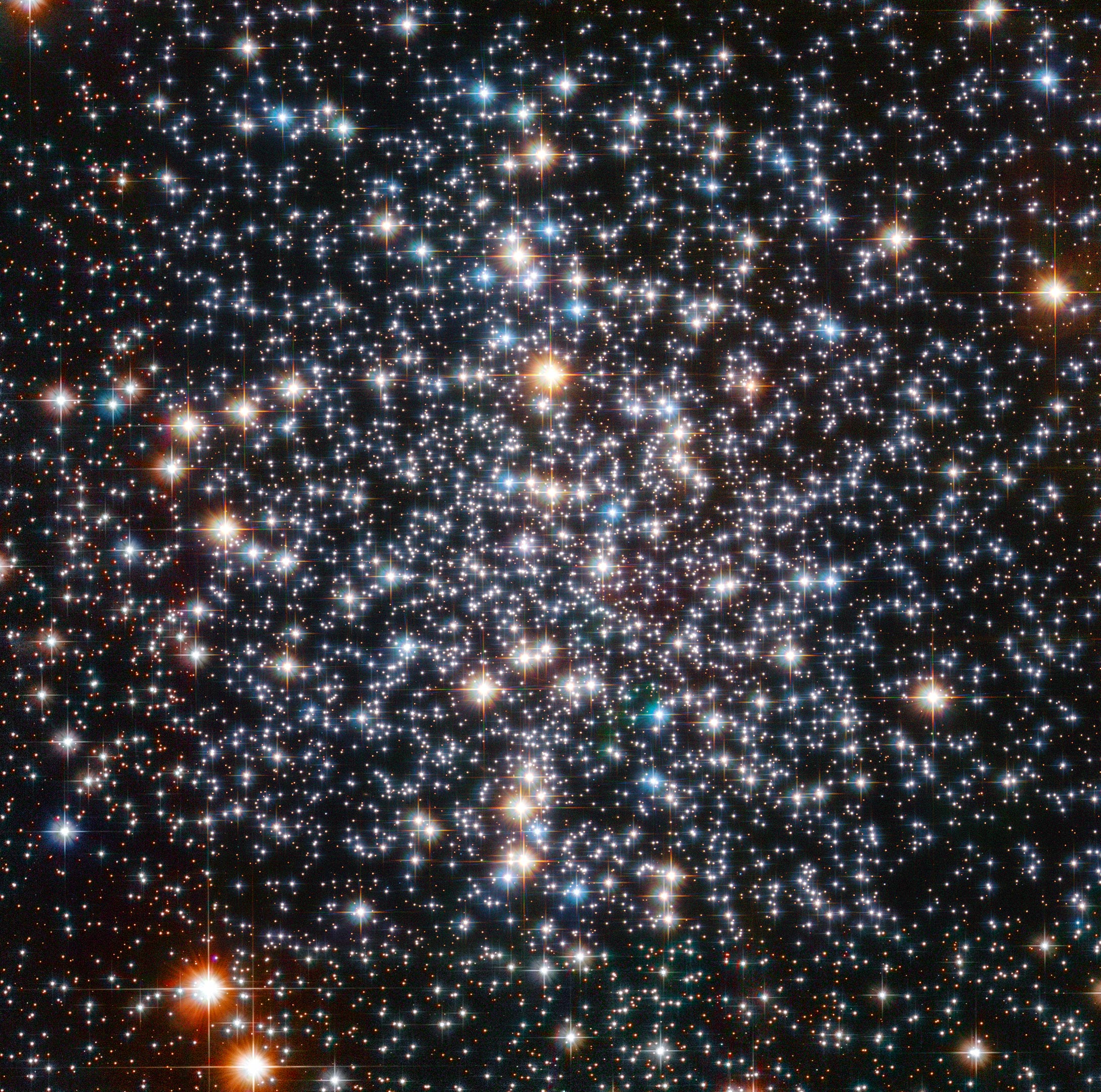
The Hubble Space Telescope may have discovered an intermediate-mass black hole candidate located at the core of the nearby star cluster Messier 4, roughly 6,000 light-years away. The black hole candidate is an ultradense region of space packed with the mass of 800 suns, causing nearby stars to orbit it. Intermediate-mass black holes are the most elusive black holes in the universe, and no intermediate-mass black holes have been definitively confirmed to exist. Further observations are needed to confirm the discovery.
Astronomers have discovered a tiny region with the mass of 800 suns that is creating chaos among nearby stars, which could indicate the presence of an intermediate-mass black hole just 6,000 light-years away in the constellation Scorpius. The discovery could add to the growing evidence that the universe is friendly toward such cosmic middleweights, only a handful of which have been found so far. The team used data from the Hubble Space Telescope and the European Space Agency's star-mapping Gaia spacecraft to study the chaotic motion of stars at the center of a nearby star cluster called Messier 4.
NASA's Hubble Space Telescope has detected a possible intermediate-mass black hole of roughly 800 solar masses in the core of the globular star cluster Messier 4, located 6,000 light-years away from Earth. The black hole's mass is calculated by studying the motion of stars caught in its gravitational field. Hubble's data tend to rule out alternative theories for this object, such as a compact central cluster of unresolved stellar remnants like neutron stars, or smaller black holes swirling around each other.