Tag

Binary System

All articles tagged with #binary system

science1 month ago

Astronomers Find Three Earth-Like Planets Orbiting Binary Stars

Astronomers have discovered three Earth-sized planets orbiting two stars in the TOI-2267 binary system, marking the first confirmed case of planets transiting both stars in such a system, challenging existing theories of planetary formation and demonstrating the potential for rocky worlds to exist in complex gravitational environments.

astronomy1 year ago

"Stellar Merger Unveils Magnetic Monster: Solving Nebula Mysteries"

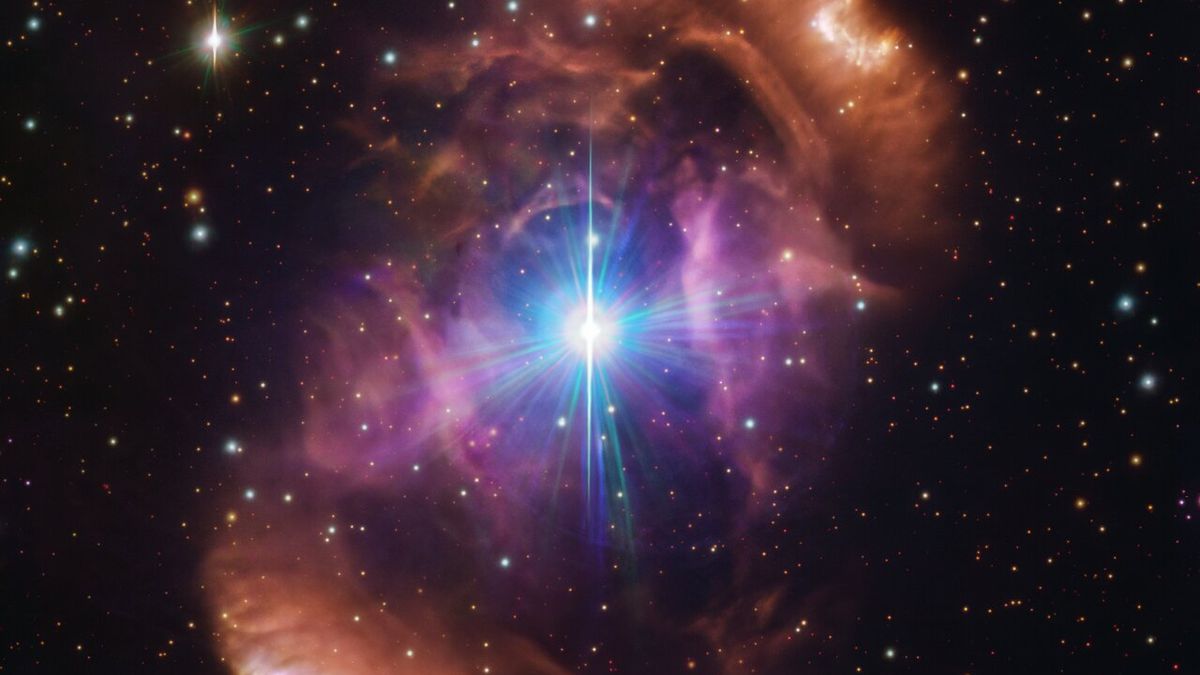
A bizarre binary star system, HD 148937, located 3,800 light-years away, contains two massive stars, one of which is the brightest and hottest known to have a magnetic field. Despite the conventional understanding that massive stars should not have magnetic fields, about 7% of them do. Recent observations suggest that the magnetic field in HD 148937's star was acquired through a violent merger with another star, leading to the creation of a bipolar nebula and shedding light on the origin of magnetic fields in massive stars.

astronomy1 year ago

"China-Led Team Discovers Ghostly Lone Companion of Smallest Star in Exotic Binary System"

Astronomers have discovered an extraordinary binary system, TMTS J0526, containing a small white dwarf star and a hot subdwarf star with an incredibly short orbital period of around 20 minutes. This system, located 2,760 light-years from Earth, provides evidence for the formation of tiny hot subdwarfs through the ejection of common envelopes. The discovery sheds light on the birth of such small subdwarf stars and could help explain their origins in the universe.

astronomy1 year ago

"Unveiling the Smallest Stars in Exotic Binary Systems"

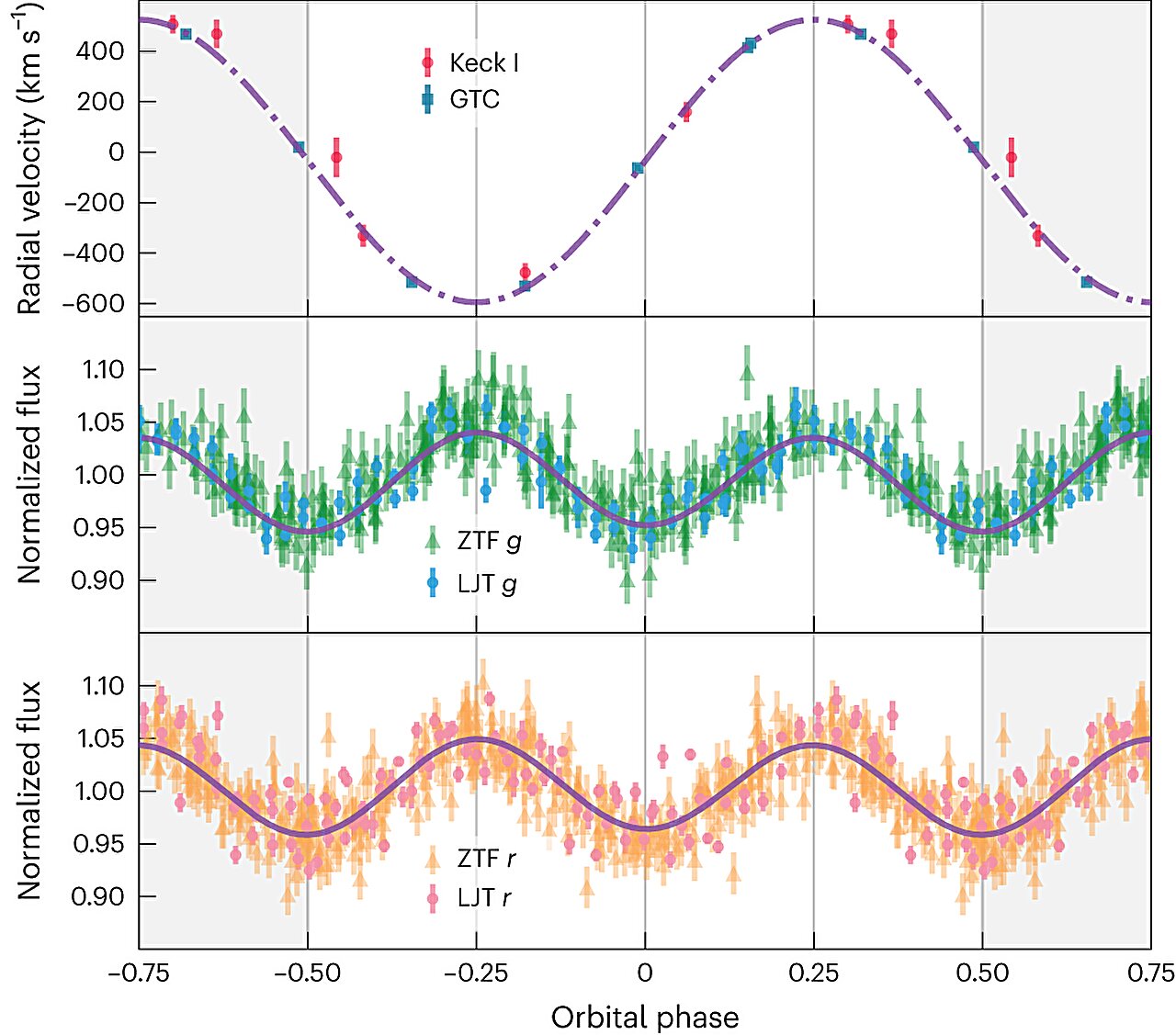
Astronomers have discovered the smallest known star, part of a binary system called J0526, located 2,760 light years from Earth. The star, named J0526B, is a hot subdwarf approximately seven times the size of Earth with a surface temperature of 2,226°C, and it orbits a larger unseen white dwarf, J0526A, every 20 minutes. This finding challenges previous theories about the size and nature of stars, suggesting that they can be smaller than previously thought and leading to speculation about the existence of even smaller stars with unknown properties.

astronomy1 year ago

"J0526+5934: The Smallest Star in a Ghostly Binary System"

Astronomers have discovered the smallest star ever, part of a binary system called TMTS J0526, with a radius just seven times that of Earth and about one-third the mass of the Sun. It orbits its companion, a white dwarf, with the shortest known period for binary stars at just 20.5 minutes. The observations suggest that the white dwarf is deforming the subdwarf star with every orbit, and this finding could provide insights into the evolution of such extreme stars.

astronomy1 year ago

"Discovery of Smallest Star and Ghostly Companion by China-Led Research Team"

A China-led research team has discovered the smallest star ever detected, a hot subdwarf just seven times the size of Earth, along with its larger white dwarf companion, using the Tsinghua University-Ma Huateng Telescope for Survey. The star, TMTS J0526B, and its invisible companion, J0526A, orbit each other every 20 minutes, and their existence supports a theory proposed by Chinese astronomers two decades ago. The finding offers the first direct observational evidence of such a unique binary system, and the researchers expect that the next generation of space-based gravitational wave detectors could detect the system's gravitational waves.

space-exploration2 years ago

NASA's Lucy Spacecraft Discovers Second Asteroid and Moon During Flyby

NASA's Lucy spacecraft made a "marvelous" discovery during its flyby of the asteroid Dinkinesh, revealing that it is actually a binary system. This encounter served as a test for the spacecraft's tracking abilities and provided valuable data for future missions to explore the Jupiter Trojan asteroids. The larger body of Dinkinesh is estimated to be approximately 0.5 miles wide, while the smaller body is about 0.15 miles in size. The successful test of the terminal tracking system has excited scientists and will help in understanding the nature of small asteroids. The spacecraft will now prepare for its next close-up look at the main belt asteroid Donaldjohanson in 2025 before heading towards the Jupiter Trojan asteroids in 2027.

astronomy2 years ago

"Galactic Collision Reveals Earth's Closest Supermassive Black Hole Pair"

Astronomers have discovered a pair of supermassive black holes in the aftermath of a galactic collision that occurred a billion years ago. Located 90 million light-years away, these black holes have masses of 154 million and 6.3 million times that of the sun. They are currently orbiting each other and will eventually merge, creating an even stronger supermassive black hole. This discovery provides insight into the future collision between the Milky Way and Andromeda galaxies. The chaotic state of NGC 7727, the result of the collision, offers a glimpse of what our own galaxy will look like in 4.5 billion years.

astronomy2 years ago

"James Webb Telescope Captures Physics-Breaking Objects in Orion Nebula"

The James Webb Space Telescope has discovered pairs of physics-breaking rogue objects, known as JuMBOs, freely drifting through the Orion Nebula. These Jupiter-mass binary objects exist in 42 pairs, orbiting each other at distances up to 390 times that between Earth and the sun. Scientists are puzzled by their existence, as they are too small to be stars and unlikely to be rogue planets. The researchers suggest a new formation mechanism may be responsible for their creation. The objects are gas giants with temperatures around 1,300 degrees Fahrenheit and primarily consist of carbon monoxide, methane, and steam. The discovery raises questions about how these pairs formed and survived being ejected from their solar systems.

astronomy2 years ago

"Unprecedented Shift: Polaris, the Brightest Cepheid Variable, Undergoes Mysterious Transformation"

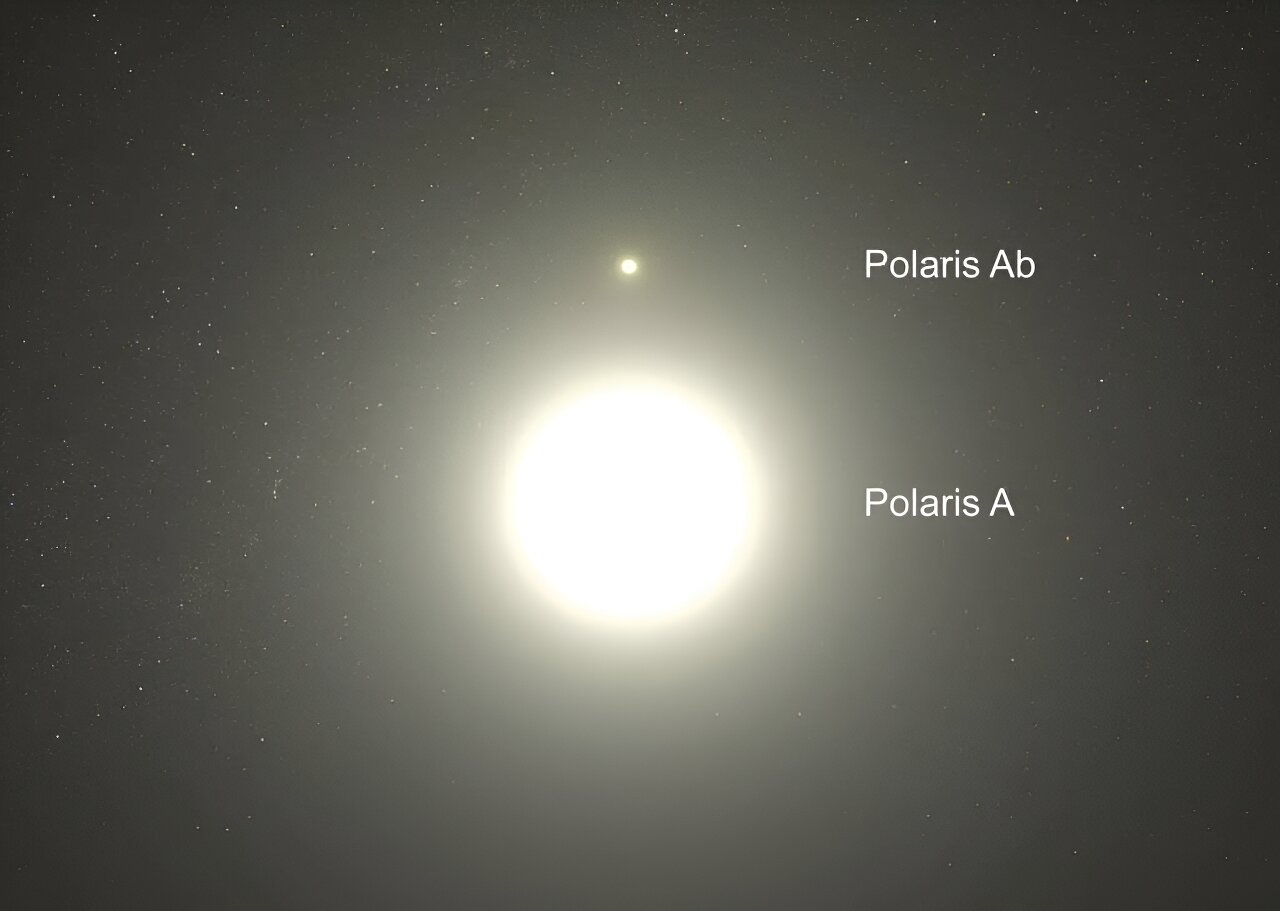
Polaris, the brightest star in the Ursa Minor constellation and a classic Cepheid variable, has recently shown unexpected changes in its pulsation period. For over a century, the period had been increasing, but it has now started getting shorter. Astronomer Guillermo Torres suggests that these changes may be due to the binary nature of the system, where the companion star perturbs the atmosphere of the primary star. This discovery could shed light on the behavior of other pulsating stars and improve our understanding of their oscillations.

astronomy2 years ago

Unprecedented Shift Detected in Polaris, the Brightest Cepheid Variable.

Polaris, the closest and brightest Cepheid variable star, has recently shown unexpected changes in its pulsation period. For over a century, the period had been increasing, but it has now started to shorten. Astronomer Guillermo Torres suggests that these changes are due to the binary nature of the system, where the companion star perturbs the atmosphere of the primary star. By analyzing radial velocity measurements, Torres was able to trace the evolution of Polaris' pulsation properties and derive an improved spectroscopic orbit for the binary system. This discovery could provide insights into the behavior of other pulsating stars and help understand the nature of their oscillations.