Scientists at NIST have calculated that clocks on Mars run approximately 477 microseconds faster per day than on Earth, with variations due to Mars' orbit and gravity, which is crucial for future Mars exploration and interplanetary communication systems.
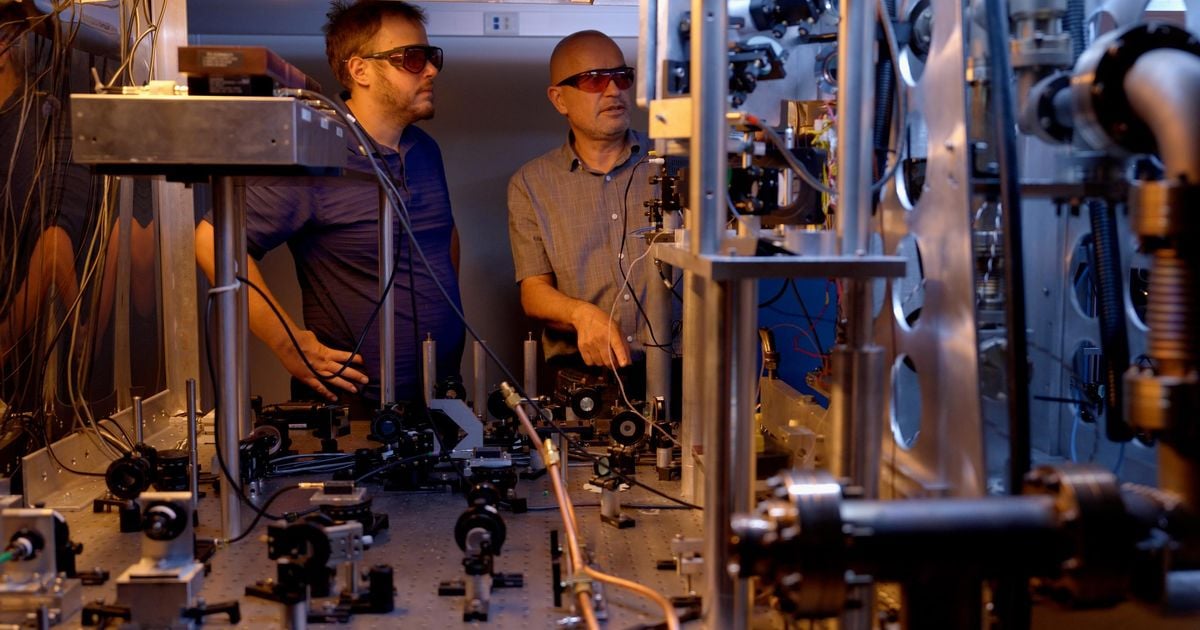
A power outage at NIST in Boulder caused a disruption in atomic clock operations, affecting internet time servers globally. Backup systems were activated, restoring accurate time within nanoseconds, but the incident highlights the critical role of atomic clocks in modern technology like GPS and financial systems.
Last week, some of the world's most precise atomic clocks were off by about five-millionths of a second due to a wind-induced power outage, highlighting the sensitivity of high-precision time standards used globally.
A power outage caused by preemptive shutdowns in Boulder temporarily affected the NIST F-4 atomic clock, resulting in a minimal 4 microsecond drift in time measurement, but the system's redundancies ensure no significant impact on global timekeeping or critical industries.
Scientists from NIST have determined that clocks on Mars run approximately 477 microseconds faster per day than on Earth due to gravitational effects, with variations throughout the Martian year, which is crucial for future Mars missions and interplanetary navigation.
Mihai Cuciuc created a unique clock that ticks at one becquerel, using a clever setup with an Am-241 source and coincidence detection to produce a stable one-hertz signal based on radioactive decay, despite the inherent randomness of such decay processes.
On August 5, 2025, Earth experienced a slight slowdown in its rotation, making the day about 1.45 milliseconds longer due to atmospheric, oceanic, and internal planetary factors, highlighting the complex and dynamic forces influencing our planet's spin.
Scientists have observed that Earth's rotation is accelerating, leading to the possibility of introducing a negative leap second to maintain time synchronization, which could cause significant disruptions in global time-dependent systems.
Earth's recent faster rotation has led to discussions about implementing a negative leap second to keep atomic time aligned with astronomical time, but concerns over system disruptions and international coordination make its adoption unlikely in the near future.
This summer, Earth experienced some of the shortest days in recorded history due to the planet spinning faster, influenced by factors like lunar gravity, atmospheric changes, and internal core dynamics. While these millisecond variations are imperceptible to humans, they have significant implications for precise timekeeping and technology, with scientists uncertain about future trends due to complex geophysical interactions.
Earth is spinning faster this summer, causing shorter days and prompting scientists to consider the possibility of negative leap seconds, with factors like lunar tides, atmospheric changes, and climate change influencing Earth's rotation.
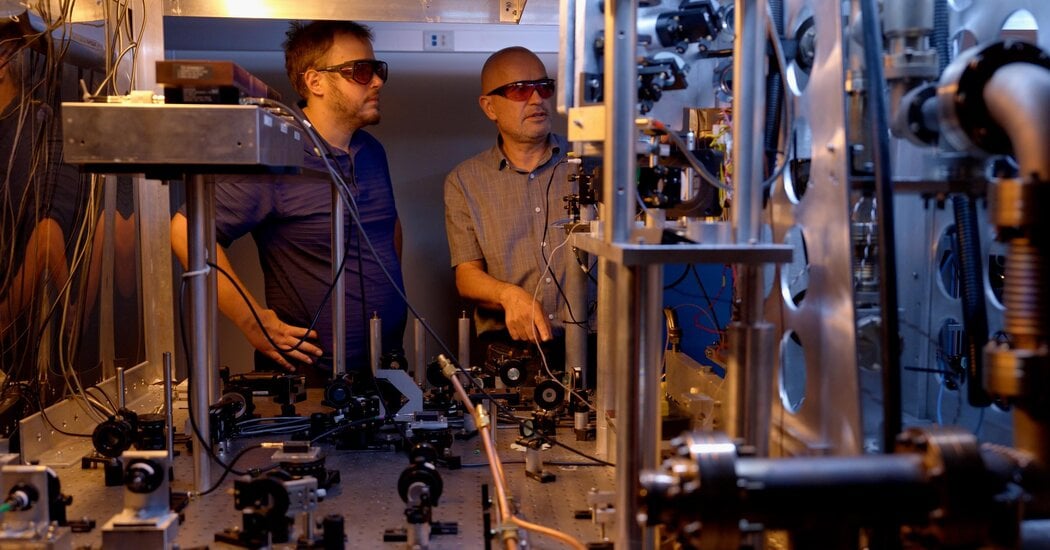
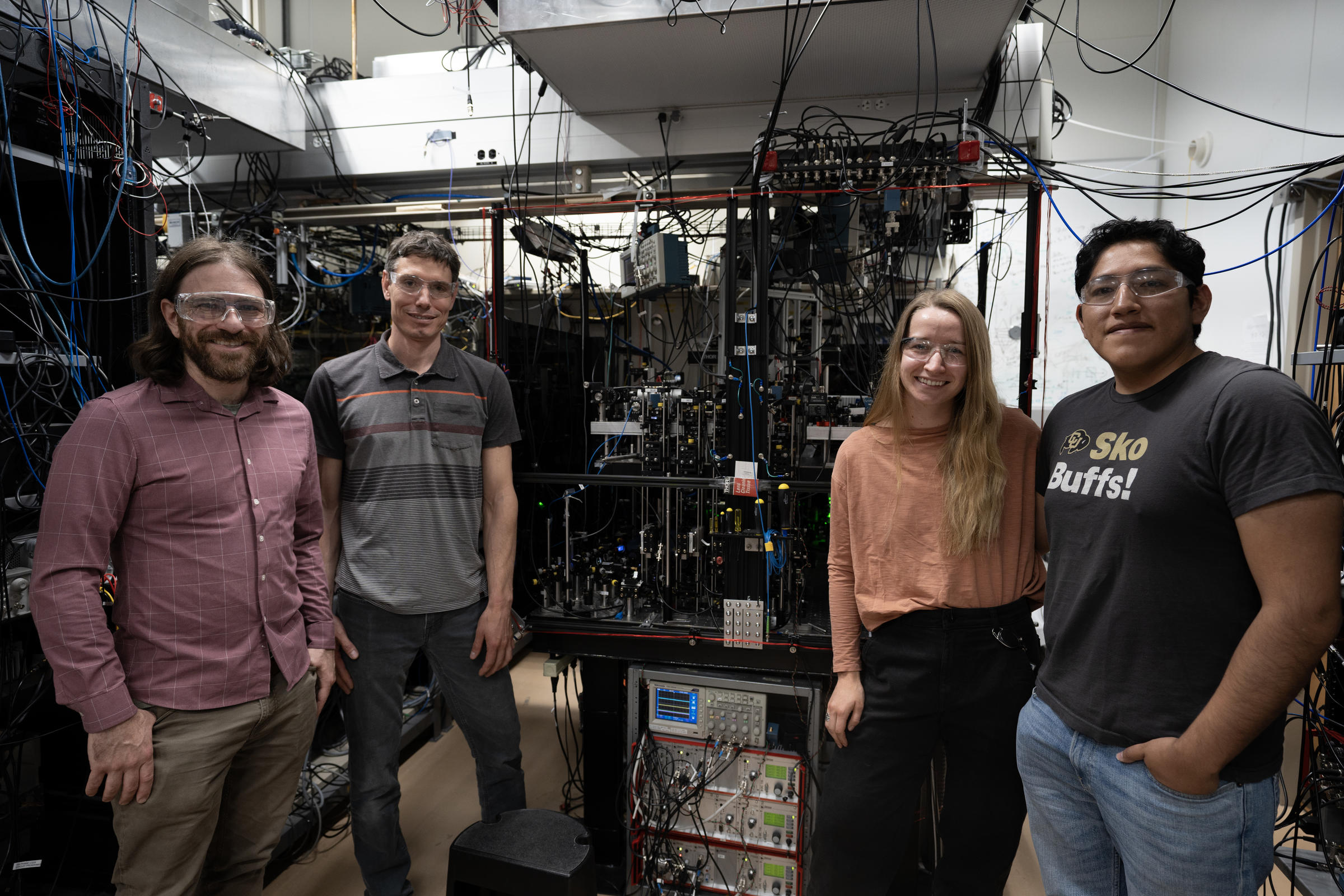
NIST has developed the most precise atomic clock using aluminum ions, measuring time with unprecedented accuracy to the 19th decimal place, which could revolutionize scientific research, quantum technology, and geodesy.
Scientists have developed a new method using thorium-229 in a nuclear clock to detect dark matter by measuring tiny shifts in atomic resonance frequencies, potentially revolutionizing our understanding of the universe's elusive dark matter and offering unprecedented precision in detection.
Researchers at NIST have developed the most accurate atomic clock based on a trapped aluminum ion, achieving 19 decimal places of accuracy and surpassing previous records by 41%. The clock's enhanced stability and precision are due to improvements in the ion trap design, vacuum chamber, and laser stability, enabling new scientific research and potential redefinition of the second.
Earth is spinning faster than ever, with recent records indicating the shortest days since 1973, likely due to factors like core movement and melting glaciers. This acceleration impacts timekeeping systems, potentially leading to the removal of leap seconds, and has significant implications for technologies relying on precise time synchronization.