On August 5, 2025, Earth experienced a slight slowdown in its rotation, making the day about 1.45 milliseconds longer due to atmospheric, oceanic, and internal planetary factors, highlighting the complex and dynamic forces influencing our planet's spin.
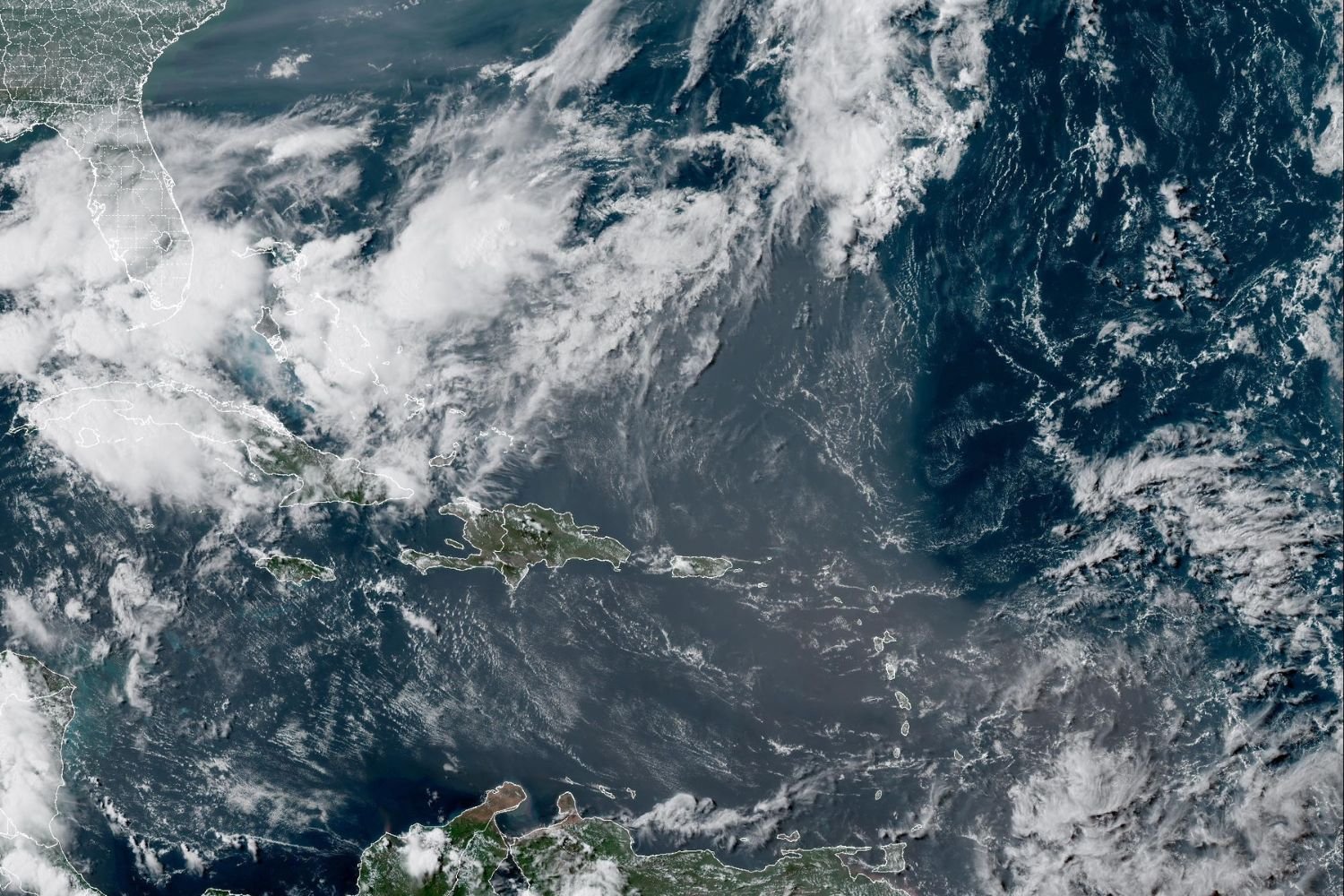
A massive Saharan dust cloud is moving towards Florida, expected to arrive by midweek, causing drier weather, vivid sunsets, and air quality concerns, while also potentially influencing early hurricane activity and bringing rain and thunderstorms to the region.
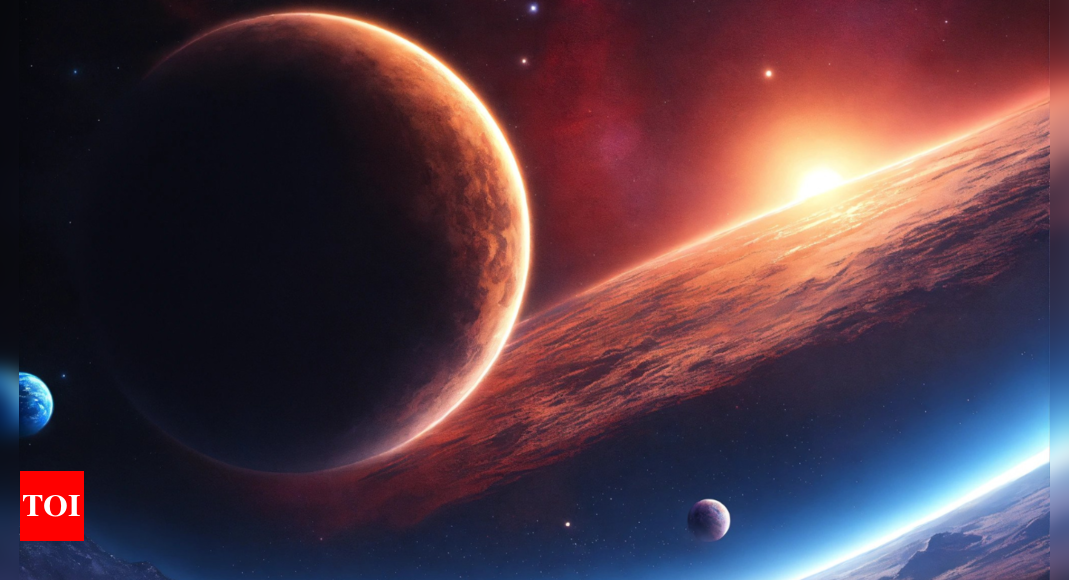
Astronomers have potentially observed a rare "glory" phenomenon in the atmosphere of the distant exoplanet WASP-76 b, located 637 light-years away, making it a possible first outside our solar system. This planet, known for extreme conditions due to its close orbit to its star, exhibited a bright spot of light, possibly a "glory," on its eastern limb, suggesting diffractive atmospheric conditions. Further study is needed to confirm this discovery, but it could lead to new insights into atmospheric phenomena on other worlds and expand our understanding of distant galaxy atmospheric conditions.
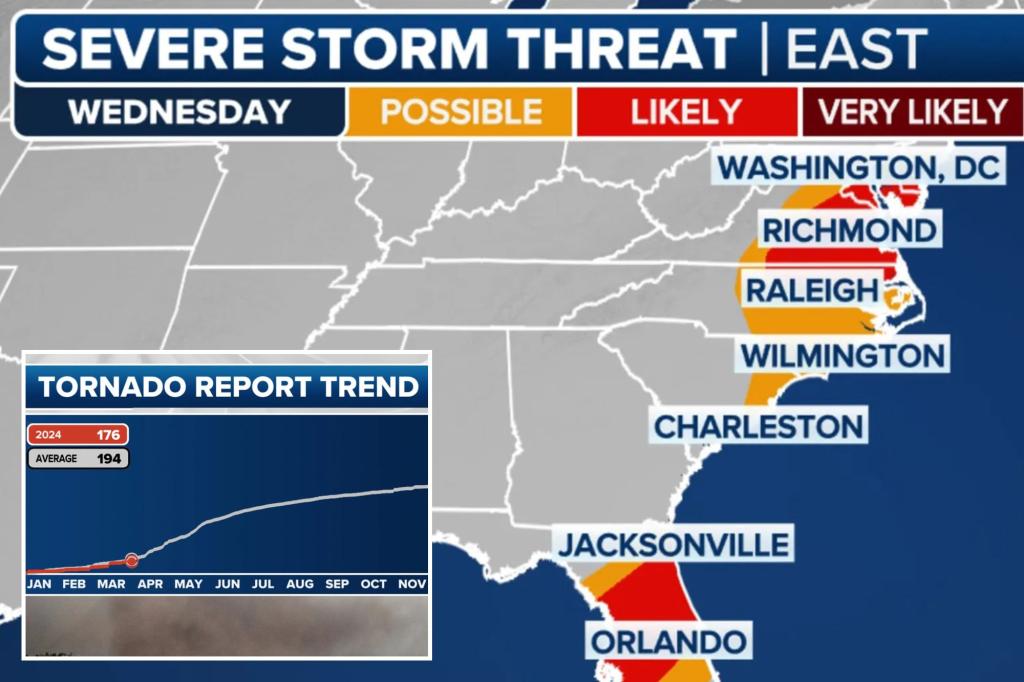
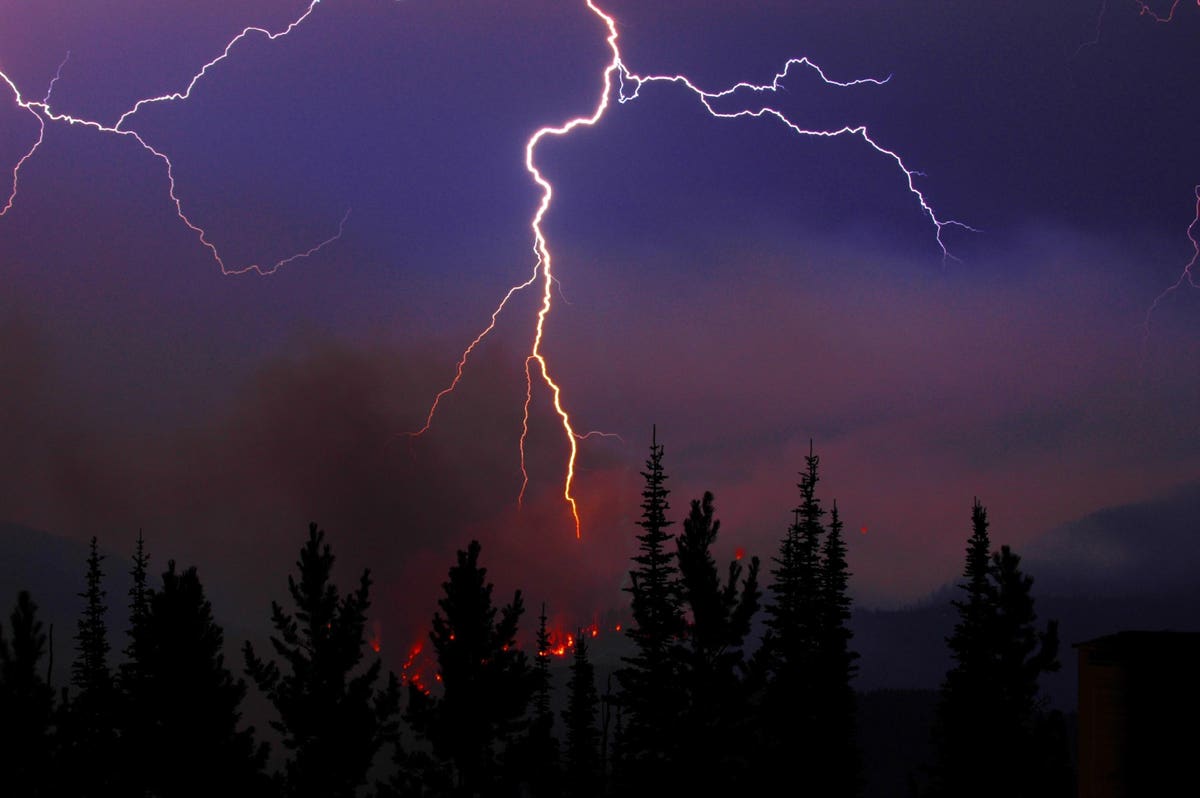
A severe weather outbreak spanning from Texas to the Southeast and causing damage continued along the East Coast, with the mid-Atlantic region facing a Tornado Watch. Atmospheric conditions are less conducive for severe weather, reducing the risk of damaging winds, large hail, and tornadoes. The storm system, fast-moving with thunderstorms ahead of a cold front, is expected to move off the East Coast by sunset, while winter weather on the northern end will linger. April typically sees an increase in severe weather outbreaks, and this year's activity aligns with previous El Niño events, with tornado activity below average and hail and damaging wind reports closer to average.
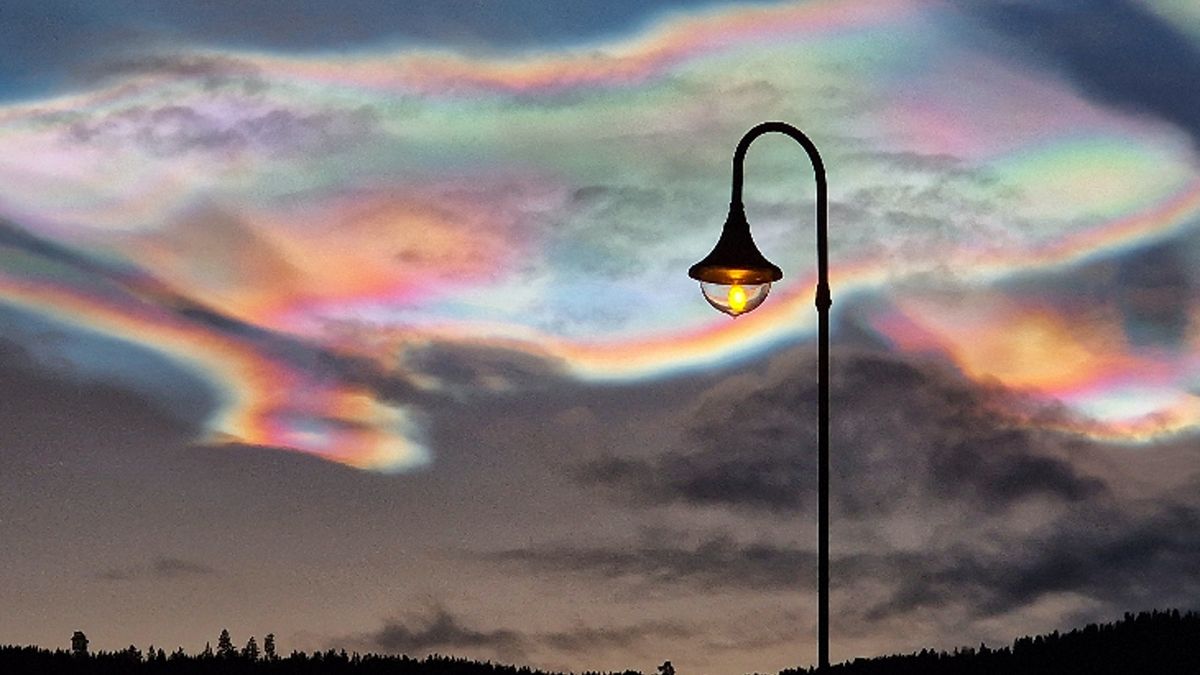
Rare rainbow-colored clouds, known as polar stratospheric clouds (PSCs), have been observed in the skies over the Arctic for three consecutive days due to an unusual cold snap in the upper atmosphere. These iridescent clouds, also called nacreous clouds, were seen in parts of Norway, Sweden, Finland, Alaska, and even Scotland. PSCs are formed by tiny ice crystals that refract sunlight, creating a rainbow-like effect. The recent appearance of PSCs may have been triggered by the current El Niño event or human-caused climate change. Experts predict a high chance of more PSC sightings in the Arctic in the coming months.
Scientists have analyzed the chemistry of microscopic pockets of water trapped in crystals of sea salt to reconstruct the history of tectonic movement on the seafloor and gain insights into atmospheric conditions over the past 150 million years. By tracking the lithium content in marine halite, researchers were able to determine the decrease in tectonic plate activity and hydrothermal activity, which resulted in a drop in lithium concentration and a rise in magnesium to calcium ratios. This decrease in geological activity may have contributed to the cooling that produced the last ice age. The study highlights the interconnectedness of Earth's systems and the role of plate tectonics in regulating the hydrosphere and atmosphere.
Astronomers argue that for technologically advanced extraterrestrial civilizations to exist, planets need to have significant atmospheric concentrations of oxygen, as it is crucial for open air combustion and metallurgy. The development of technology, including the ability to extract and purify metals, relies on easy access to fire. The presence of oxygen is also essential for the establishment of advanced technological civilizations that can be detected through astronomical observations. The authors suggest that the minimal amount of oxygen needed for complex life is less than that needed for combustion, implying that there might be planets with the right amount of oxygen for complexity and intelligence, but not enough for technology. The history of oxygen concentrations on Earth indicates that flammability could have been highly variable, potentially affecting the development of advanced technologies.
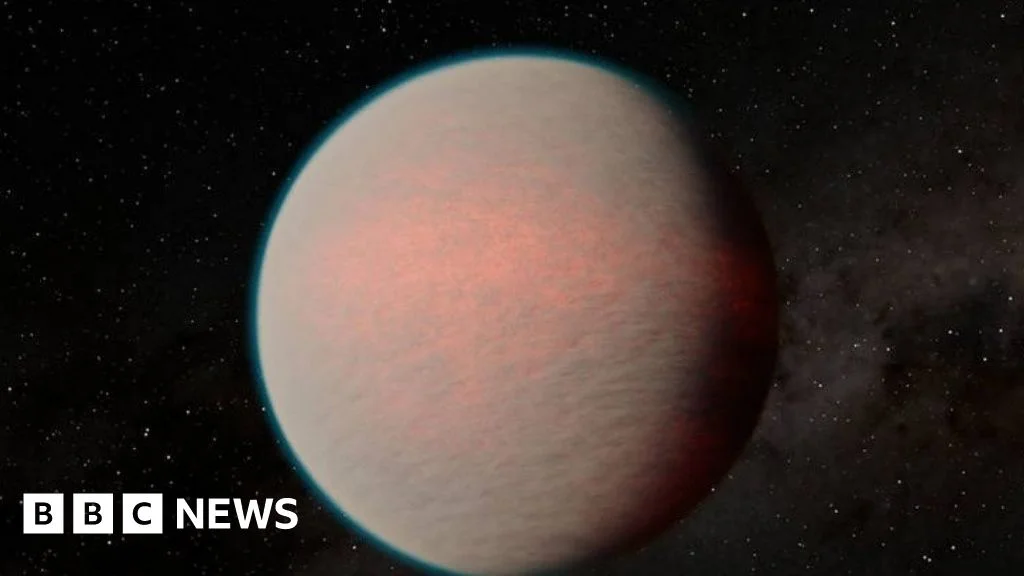
Dr Michael Roman from the University of Leicester used the Mid-Infrared Instrument (MIRI) on NASA's James Webb Space Telescope to make observations about the atmospheric conditions on the planet GJ 1214b, which was discovered in 2009. His work forms part of an international research programme led by NASA. Dr Roman hopes to carry out further work on the planet soon. The observations have fed into a paper published in the science journal Nature.
Dr Michael Roman from the University of Leicester has used the Mid-Infrared Instrument (MIRI) on NASA's James Webb Space Telescope to make observations about the atmospheric conditions on the planet GJ 1214b, which was discovered in 2009. His work forms part of an international research programme led by NASA. The observations have fed into a paper published in the science journal Nature. Dr Roman said he and his team were hoping to carry out more observations on the planet soon.