Researchers in Japan have demonstrated that thin films of ruthenium dioxide can exhibit altermagnetism, a new magnetic state that combines the advantages of ferromagnetism and antiferromagnetism, potentially leading to faster, denser, and more reliable data storage technologies. This discovery was achieved by controlling the crystallographic orientation of the material, confirming its intrinsic magnetic properties, and opening new avenues for spintronics and memory device development.
MIT researchers have developed a magnetic transistor using a magnetic semiconductor material, chromium sulfur bromide, which offers smaller, faster, and more energy-efficient circuits with built-in memory capabilities, overcoming limitations of silicon-based transistors and opening new avenues in electronics design.
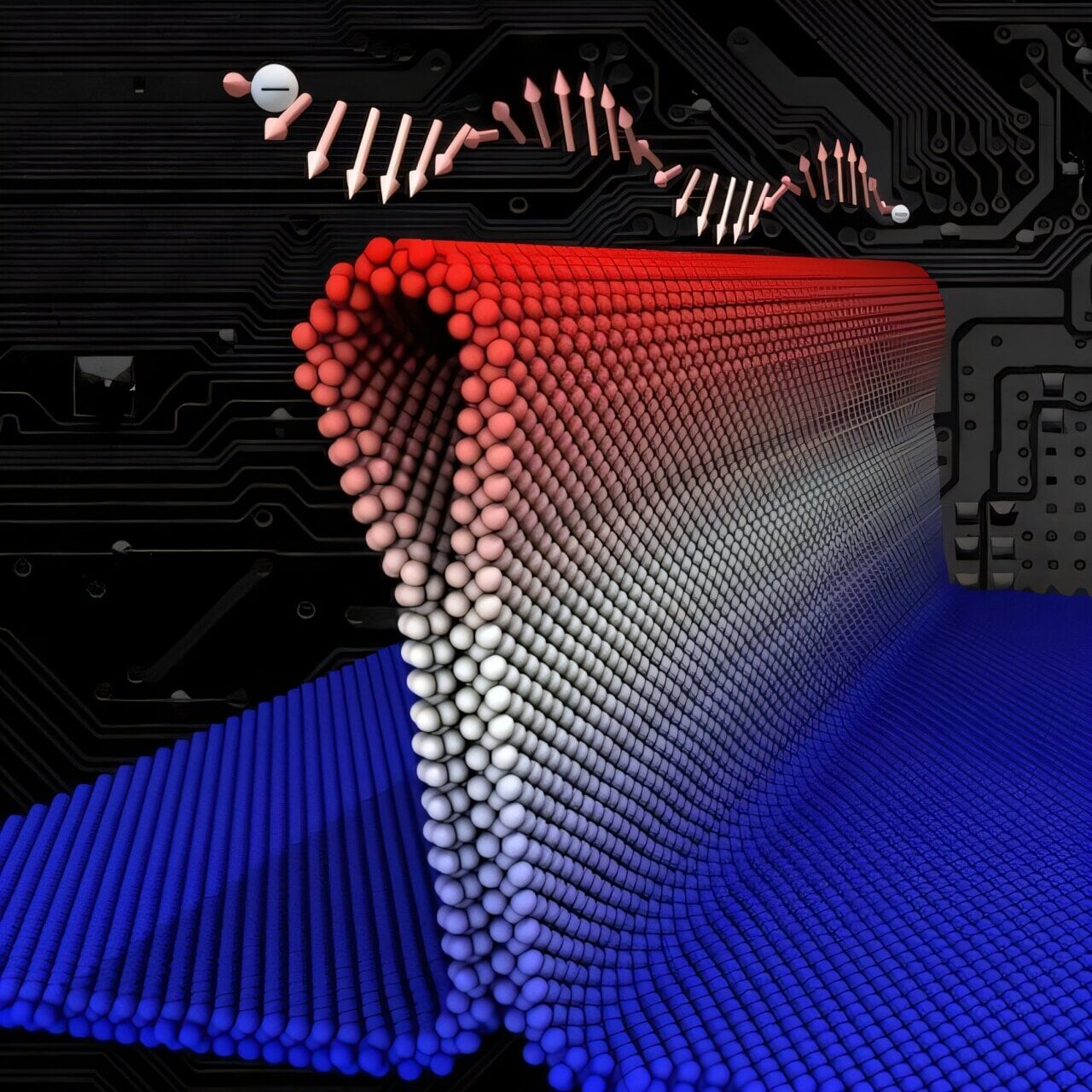
Rice University scientists discovered that tiny wrinkles in atomically thin materials like molybdenum ditelluride can control electron spins with high precision, enabling the development of ultra-compact, energy-efficient spintronic devices by creating persistent spin helix states through mechanical bending and flexoelectric effects.
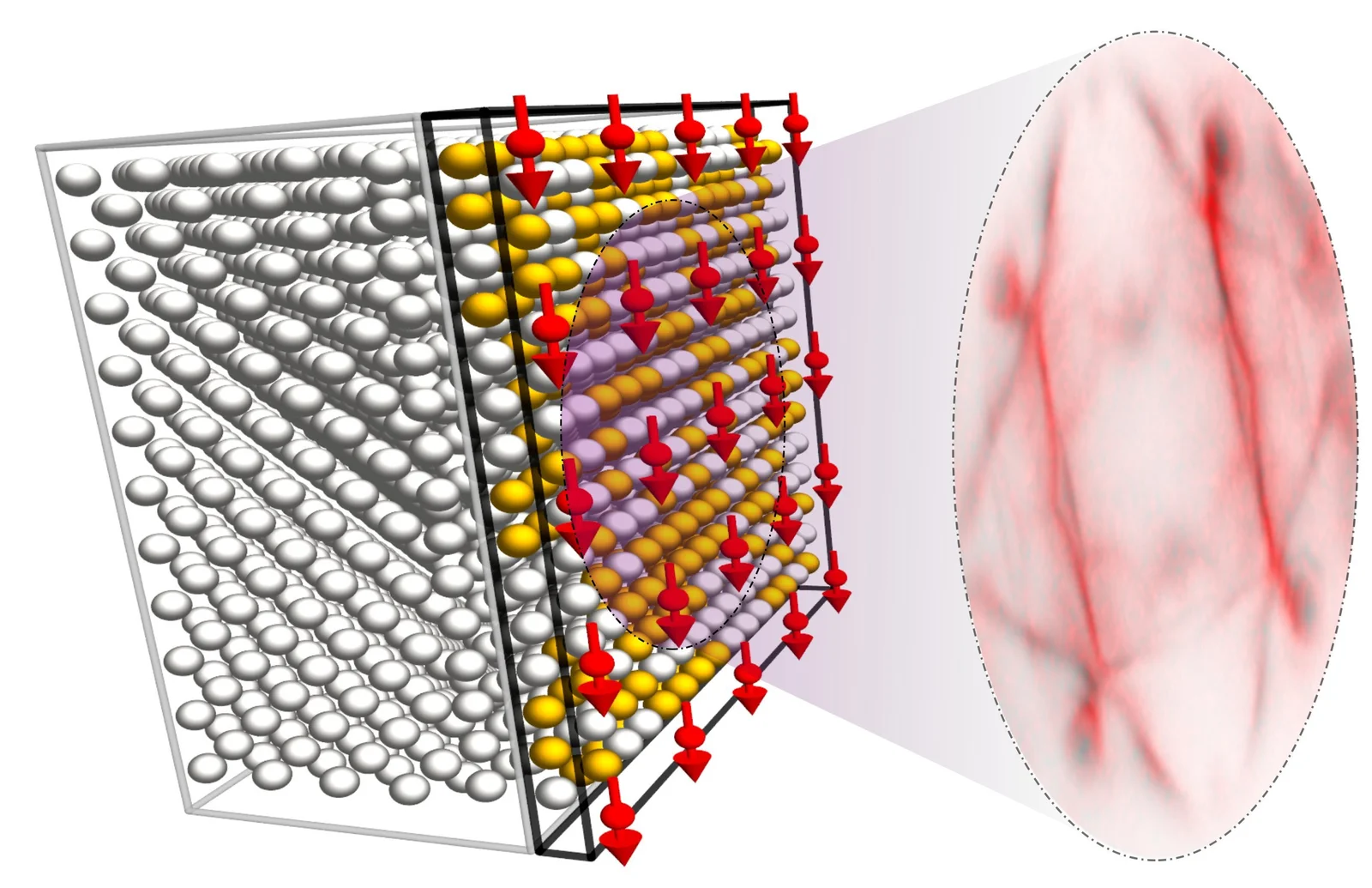
Researchers at Forschungszentrum Jülich have created the world's first experimentally verified two-dimensional half metal, a material that conducts electricity using electrons of only one spin type, which could advance energy-efficient spintronic devices and operate effectively at room temperature.
Scientists at Delft University of Technology have experimentally demonstrated the quantum spin Hall effect in magnetic graphene at room temperature without external magnetic fields, paving the way for practical, miniaturized quantum and spintronic devices that operate under ambient conditions.
MIT physicists have observed a new form of magnetism called 'p-wave magnetism' in nickel iodide, characterized by spiral spin configurations that can be electrically switched, paving the way for more efficient spintronic memory devices.
MIT physicists discovered a new form of magnetism called p-wave magnetism in nickel iodide, which allows for electrical control of electron spins and could lead to faster, more efficient spintronic memory devices, although current observations are at ultracold temperatures.
Researchers at the University of Nottingham have discovered a new class of magnetism called "altermagnetism," which combines the advantages of ferromagnetism and antiferromagnetism without their drawbacks. This breakthrough could revolutionize digital devices and spintronic applications by offering energy-efficient, scalable, and robust solutions. Altermagnets, with no net magnetization, are compatible with superconductors and ideal for quantum and neuromorphic technologies. The discovery opens new research avenues and promises advancements in memory systems and computing.
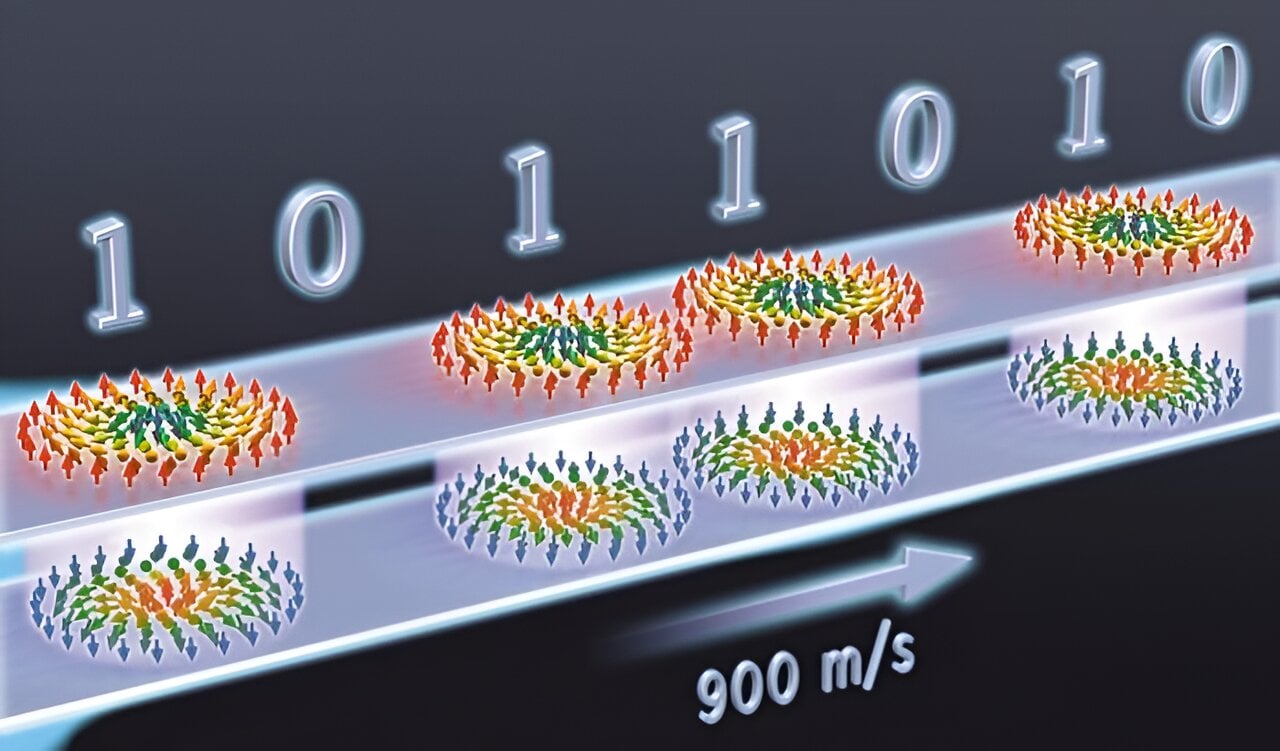
An international research team has found that magnetic nanobubbles called skyrmions can be moved by electrical currents at record speeds of up to 900 m/s, thanks to the use of an antiferromagnetic material as a medium. This discovery opens up new possibilities for developing higher-performance and less energy-intensive computing devices, as skyrmions are anticipated to be future bits in computer memory, offering enhanced avenues for information processing in electronic devices.
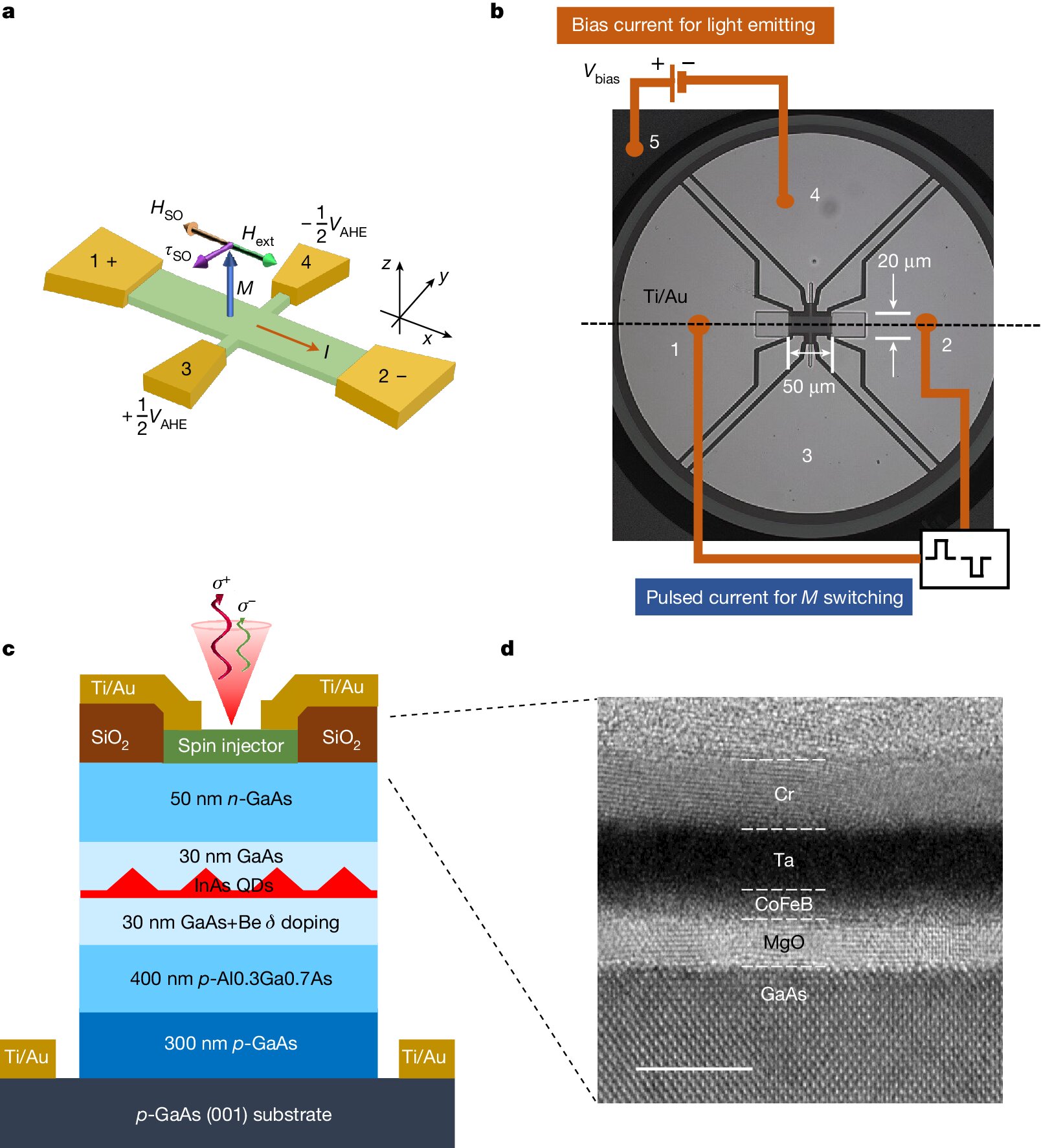
Scientists have developed a method to transfer spin information from electrons to photons using electrical pulses, enabling the transmission of polarized light signals over long distances at high speeds. This breakthrough in spintronics meets crucial criteria for practical applications and could revolutionize optical telecommunications, potentially enabling rapid communication between Earth and Mars, as well as advancing technologies such as optical quantum communication, neuromorphic computing, and ultrafast optical transmitters.
Tohoku University researchers have developed a theoretical model for energy-efficient, nanoscale computing using spin wave reservoir computing and spintronics technology, paving the way for advanced neuromorphic devices with high-speed operations and applications in fields like weather forecasting and speech recognition. The innovation, detailed in npj Spintronics, harnesses the unique properties of spintronics technology to potentially usher in a new era of intelligent computing, bringing us closer to realizing a physical device for practical use in various applications.
Japanese scientists have developed a method to control magnetization direction in spintronic devices using a low electric field through a breakthrough in interfacial multiferroics, which could significantly improve the efficiency and power consumption of future spintronic technologies. By modifying orbital magnetic moments through strain, it’s possible to manipulate electron spins, leading to an enhanced magnetoelectric effect for superior performance. The study provides guidelines for designing materials with a large magnetoelectric effect and will be useful in developing new information writing technology that consumes less power.
Scientists have discovered a new type of magnet called altermagnetism, which could revolutionize next-generation computers and electronics. This discovery, proven at the Swiss Light Source, opens up possibilities for more efficient electronic devices and a better understanding of condensed-matter physics. Altermagnetism, previously thought to be impossible, has the potential to impact various fields, including spintronics, and was detailed in a study published in the scientific journal Nature.
Scientists have discovered a new type of magnet called altermagnetism, which could lead to more efficient electronic devices and revolutionize the field of spintronics. This discovery, proven at the Swiss Light Source, challenges previous beliefs and opens up possibilities for next-generation computers and electronics. The phenomenon, first theorized in 2019, has the potential for broad impact and could improve our understanding of condensed-matter physics.
Experiments at the Swiss Light Source SLS have led to the discovery of a new type of magnetism called altermagnetism, which combines the characteristics of both ferromagnets and antiferromagnets. This breakthrough in fundamental physics has significant implications for spintronics and offers potential for next-generation magnetic memory technology. The experimental validation of altermagnetism opens up new research opportunities and could have a broad impact across various areas of technology and condensed-matter physics.