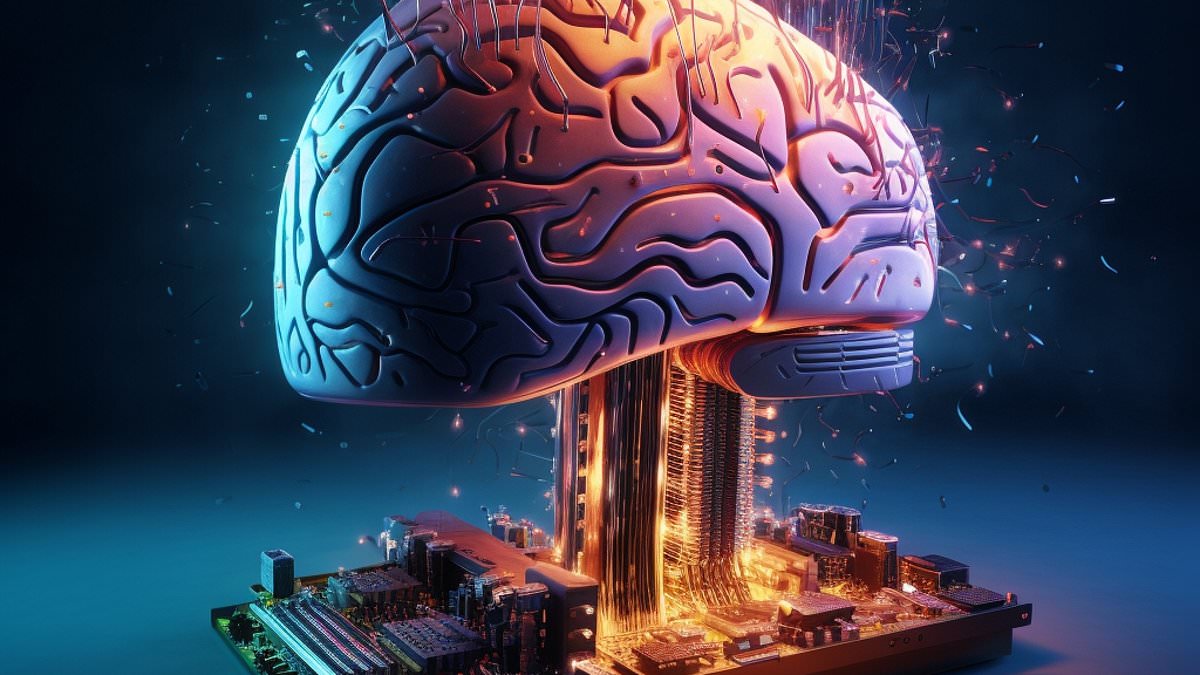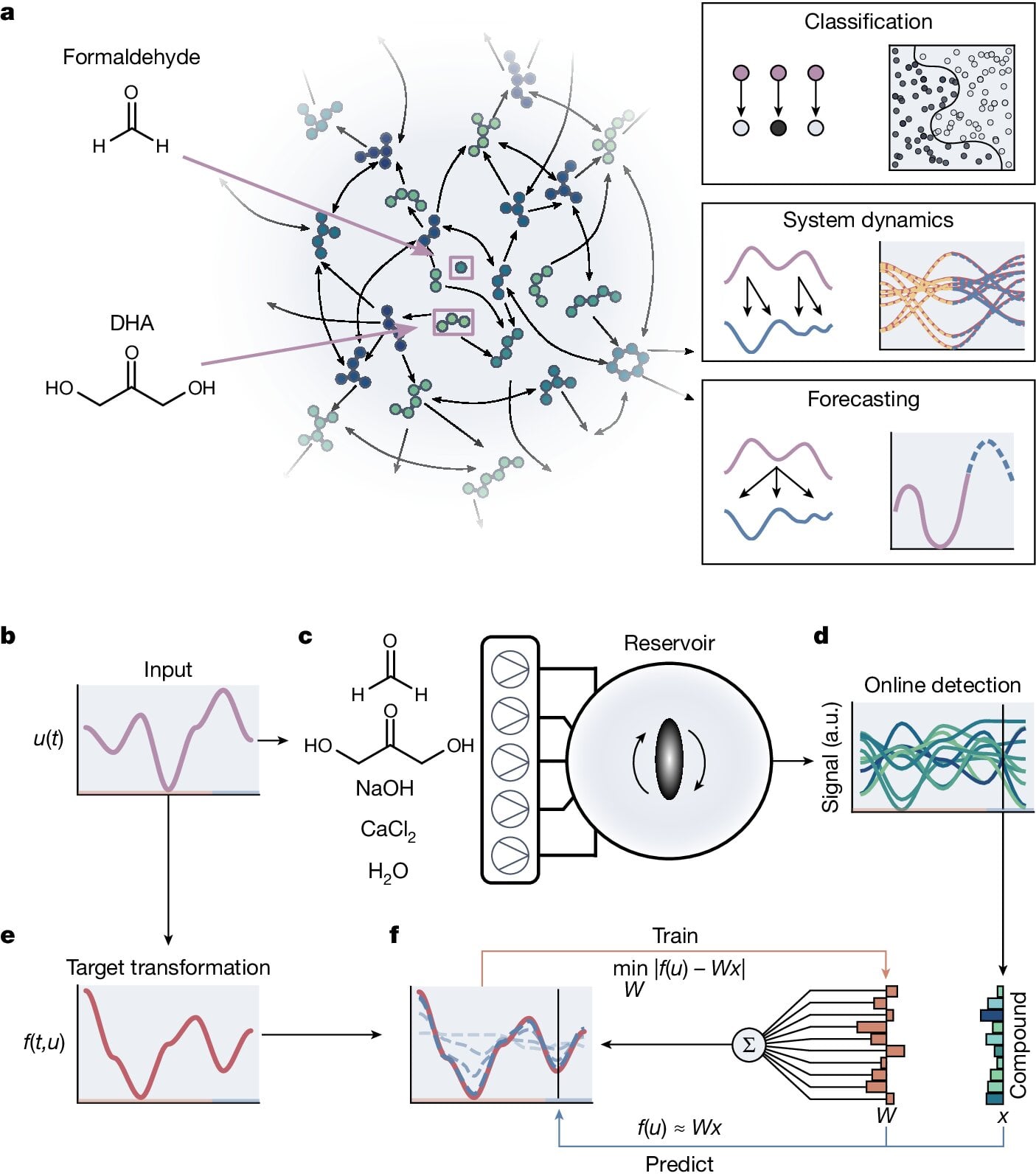
Researchers at Radboud University have demonstrated that the formose reaction, a complex self-organizing chemical reaction network, can perform computational tasks such as nonlinear classification and complex dynamics prediction. This approach leverages the inherent properties of chemical systems for computation, potentially bridging the gap between artificial systems and biological information processing. The study, published in Nature, highlights the potential for scalable and flexible molecular computing, with implications for the origins of life and neuromorphic computing.
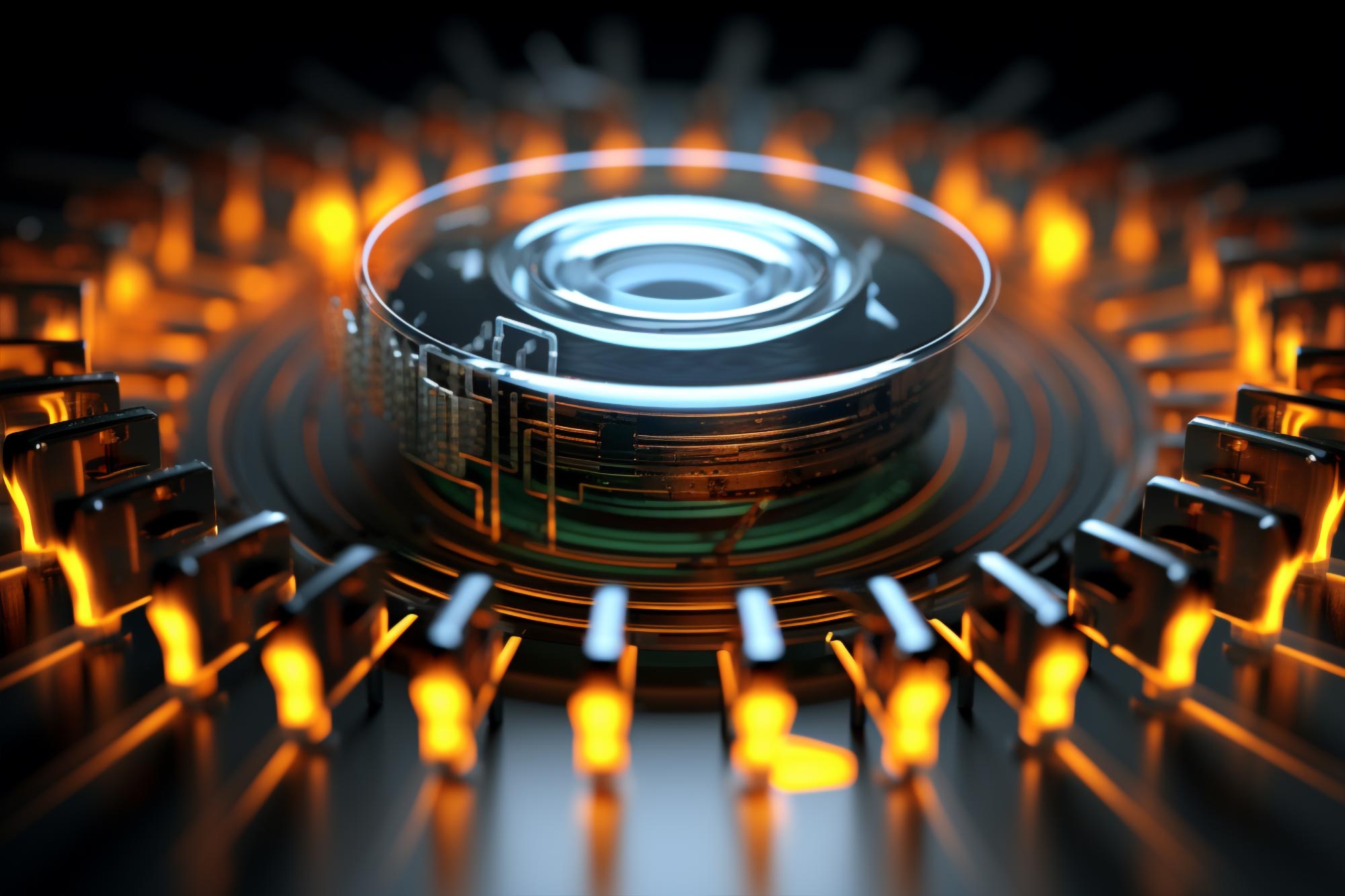
Tohoku University researchers have developed a theoretical model for energy-efficient, nanoscale computing using spin wave reservoir computing and spintronics technology, paving the way for advanced neuromorphic devices with high-speed operations and applications in fields like weather forecasting and speech recognition. The innovation, detailed in npj Spintronics, harnesses the unique properties of spintronics technology to potentially usher in a new era of intelligent computing, bringing us closer to realizing a physical device for practical use in various applications.
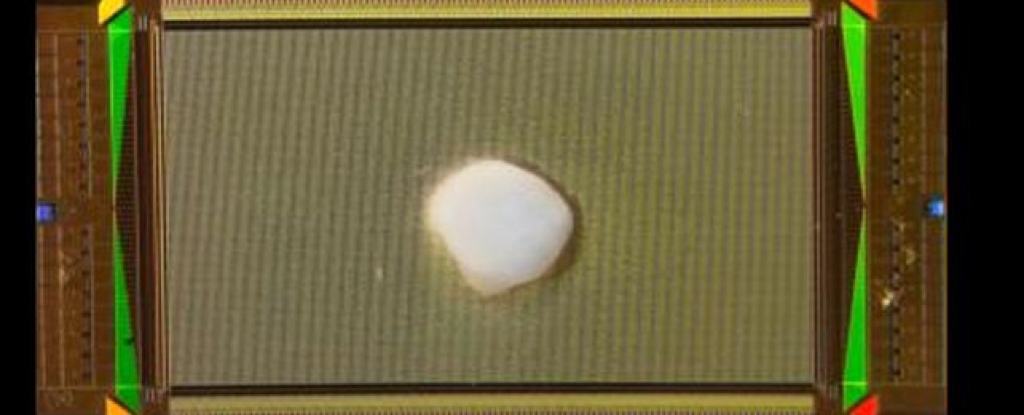
Scientists have developed a hybrid computer called 'Brainoware' that combines human brain-like tissues with electronic hardware. The computer features a brain organoid made of human stem cells, which sits on a circuit board and can perform tasks such as voice recognition and complex math problem-solving. This biological-electronic hybrid represents a significant step towards merging man and machine to perform complex computing problems with lower power requirements than conventional computers. The organoid's ability to form new connections and reorganize contributes to the computer's learning capabilities. Further research is needed to explore the potential of brain-hybrid computer systems in areas such as long-term memory and lifelong learning.
Scientists have developed Brainoware, a computer architecture that integrates real human brain tissue with electronics. Using brain organoids connected to microelectrodes, Brainoware demonstrated the ability to perform tasks like speech recognition and nonlinear equation prediction. While slightly less accurate than pure hardware computers running on artificial intelligence, this research represents an important step towards a new kind of computer architecture. Ethical considerations surrounding the use of human neural tissue in biocomputing systems are highlighted, but the technology has implications for understanding the human brain and developing preclinical models for cognitive impairment.
Researchers have built a proof-of-concept computer that uses running water instead of traditional logical circuitry processors to forecast future events via an approach called "reservoir computing". In benchmark tests, the analog computer did well at remembering input data and forecasting future events, and in some cases, it even outperformed a high-performance digital computer. The researchers plan to miniaturize the computer as a microfluidic processor, which could produce reliable long-term forecasts in areas such as climate change, bushfires, and financial markets, with much lower cost and wider availability than current supercomputers.
Researchers have built a proof-of-concept computer that uses running water instead of traditional logical circuitry processors to forecast future events via an approach called "reservoir computing." The computer uses solitary waves to process data at a higher speed and can forecast financial markets and certain kinds of human activity. The researchers plan to miniaturize the computer as a microfluidic processor, which could bring data science and machine learning to rural and remote communities worldwide.