Tag

Photonics

All articles tagged with #photonics

MIT's Photonic Processor Revolutionizes AI with Light-Speed Efficiency

Originally Published 1 year ago — by ExtremeTech

Featured image for MIT's Photonic Processor Revolutionizes AI with Light-Speed Efficiency
Source: ExtremeTech

MIT researchers have developed a new photonic neural network processor that uses light to perform calculations, potentially overcoming limitations of traditional electronic computing. This new system, which incorporates nonlinear optical function units (NOFUs), allows all neural network processing to occur on the chip, achieving high accuracy and ultra-low latency. The photonic chip, fabricated with standard semiconductor tools, could be manufactured at scale, offering a faster alternative to electronic processors for machine learning tasks.

Scientists Capture First-Ever Image of a Single Photon

Originally Published 1 year ago — by Space.com

Featured image for Scientists Capture First-Ever Image of a Single Photon
Source: Space.com

Researchers at the University of Birmingham have captured the first image of an individual photon, revealing it as a lemon-shaped particle. This breakthrough, published in Physical Review Letters, was achieved by simplifying complex equations using imaginary numbers, allowing scientists to model photon properties emitted from nanoparticles. This advancement could significantly impact fields like quantum computing, photovoltaics, and artificial photosynthesis by enhancing our understanding of light-matter interactions at the quantum level.

Photon Pair Generation Triggered by Quantum Optical Delay

Originally Published 1 year ago — by Phys.org

Featured image for Photon Pair Generation Triggered by Quantum Optical Delay
Source: Phys.org

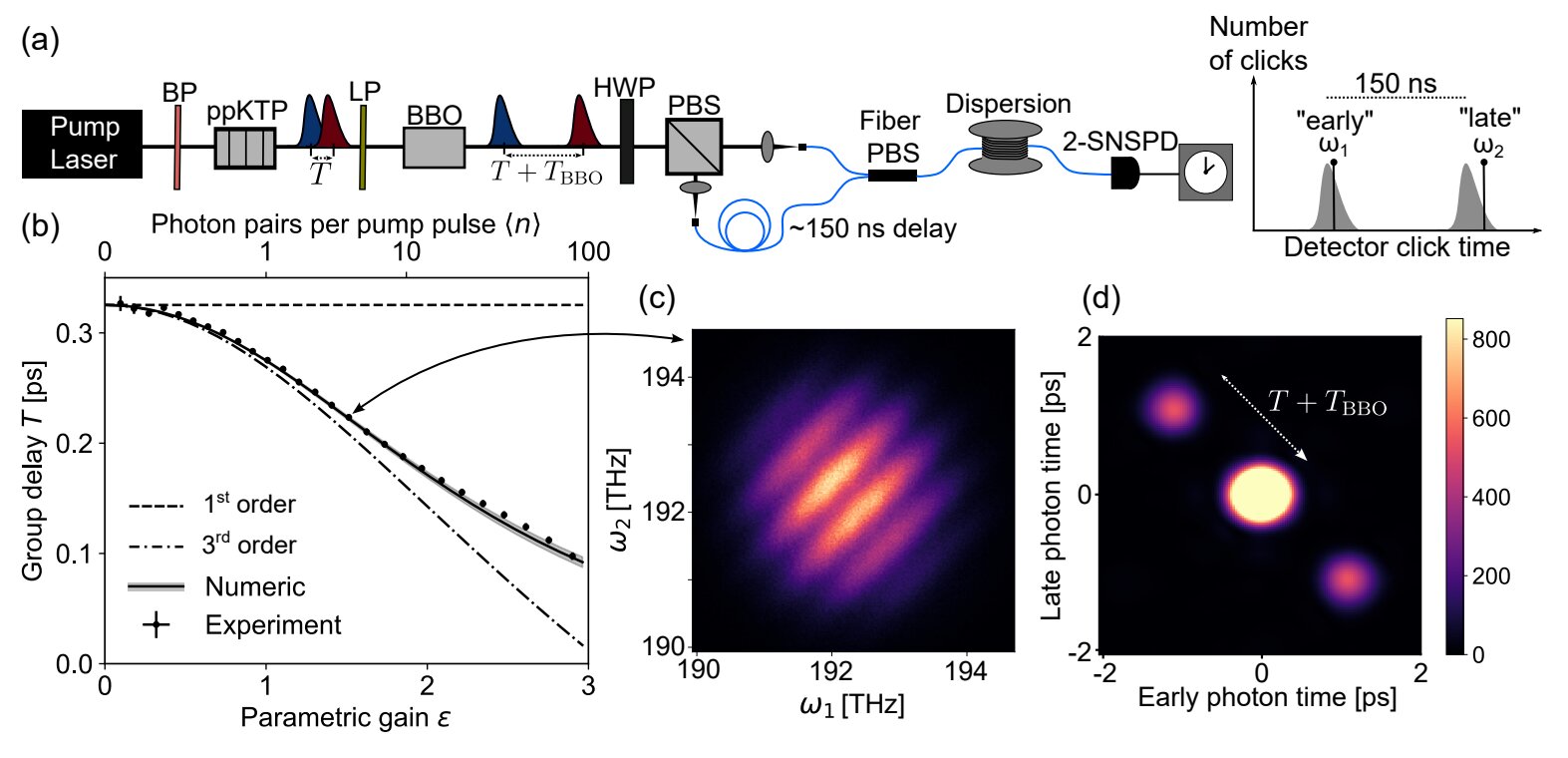
A Canadian research team has discovered a gain-induced group delay in spontaneous parametric down-conversion (SPDC), a process where a photon splits into two entangled photons. This delay, dependent on the intensity of incoming light, could impact applications requiring precise photon timing, such as quantum sensors and computers. The study, published in Physical Review Letters, used theoretical models and experiments to identify this delay, which poses challenges for quantum interference circuits but can be compensated in bulk optics.

Revolutionary 8-Photon Chip Miniaturizes Quantum Computing

Originally Published 1 year ago — by SciTechDaily

Featured image for Revolutionary 8-Photon Chip Miniaturizes Quantum Computing
Source: SciTechDaily

South Korean researchers at the Electronics and Telecommunications Research Institute (ETRI) have developed a photonic quantum circuit chip capable of controlling up to eight photons, marking a significant advancement in quantum computing. This chip enables complex quantum phenomena like multipartite entanglement and has achieved record-breaking 6-qubit entanglement. The research, in collaboration with KAIST and the University of Trento, aims to further scale up to 16 and 32-qubit chips, contributing to the development of universal quantum computers.

"Light-Speed Transfer: Electron Spin Transport from Earth to Mars"

Originally Published 1 year ago — by Phys.org

Featured image for "Light-Speed Transfer: Electron Spin Transport from Earth to Mars"
Source: Phys.org

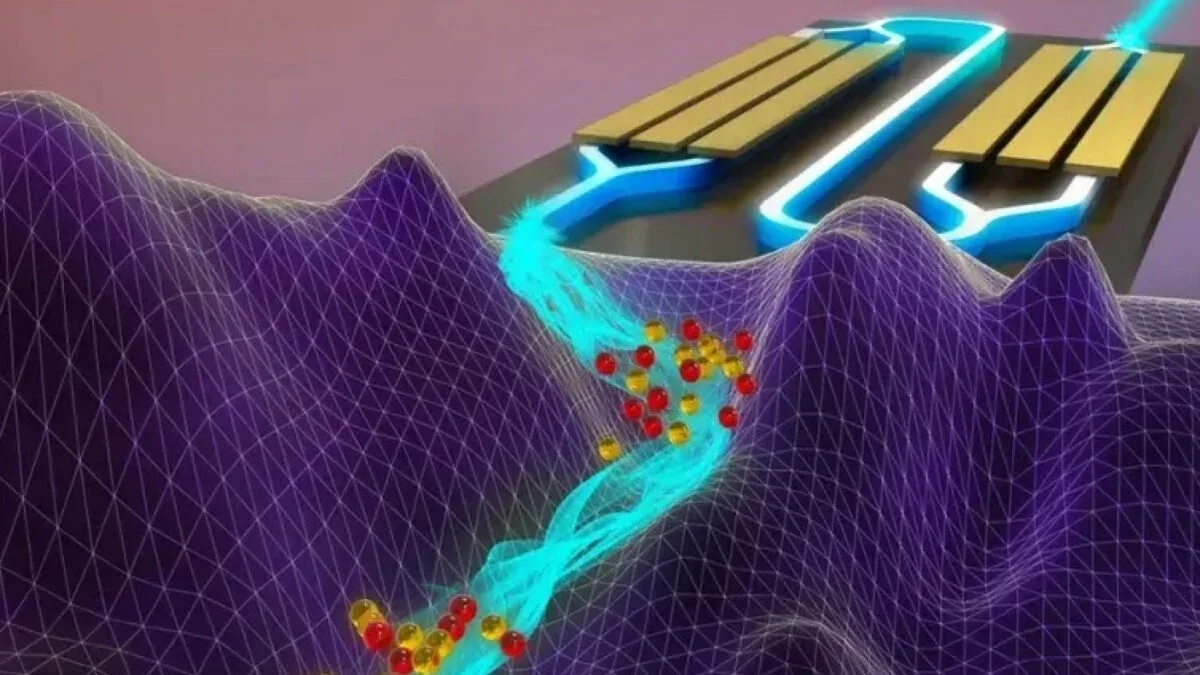
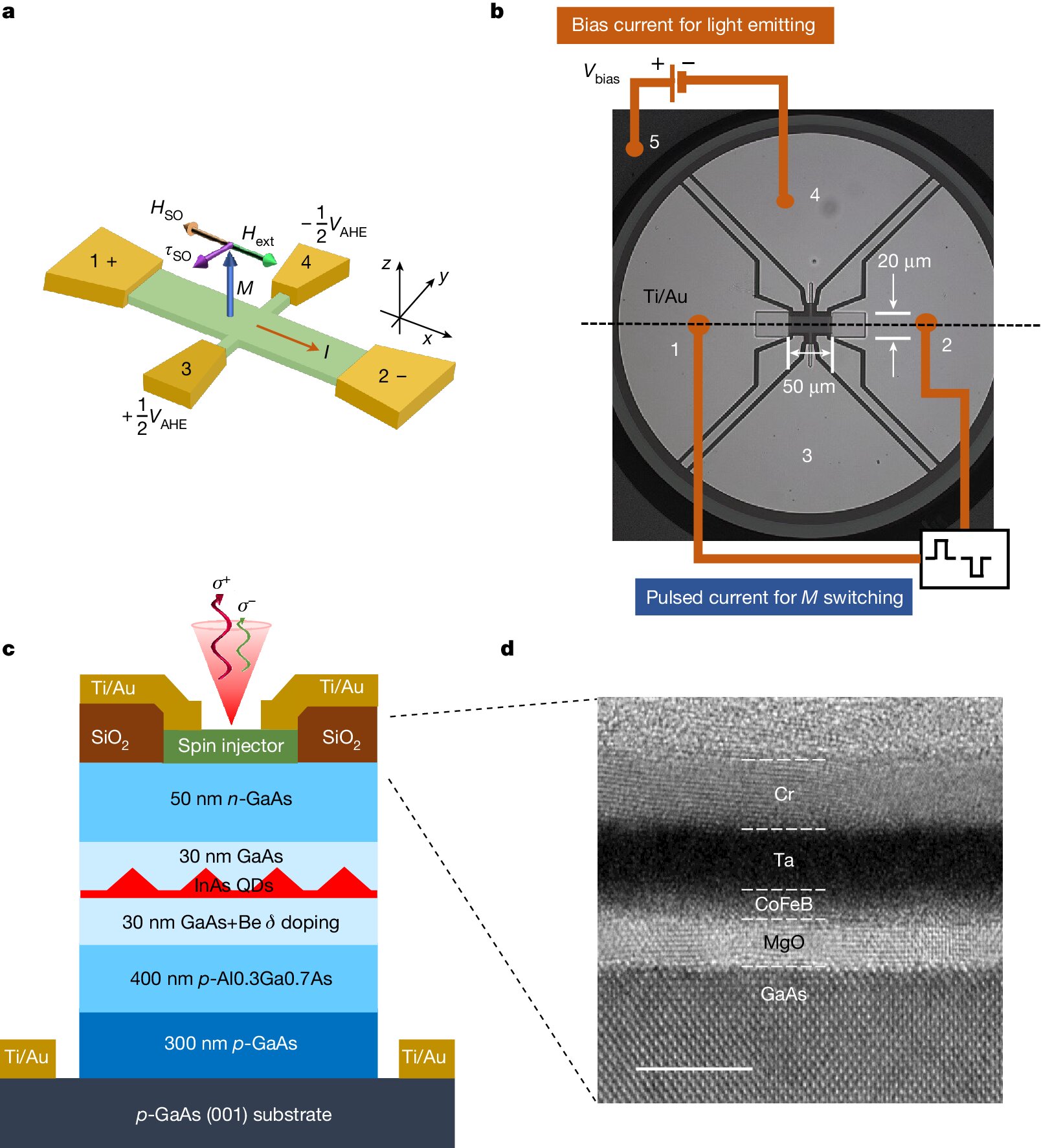
Scientists have developed a method to transfer spin information from electrons to photons using electrical pulses, enabling the transmission of polarized light signals over long distances at high speeds. This breakthrough in spintronics meets crucial criteria for practical applications and could revolutionize optical telecommunications, potentially enabling rapid communication between Earth and Mars, as well as advancing technologies such as optical quantum communication, neuromorphic computing, and ultrafast optical transmitters.

"Major Breakthrough: Scientists Achieve Key Milestone in Quantum Internet Development"

Originally Published 1 year ago — by Livescience.com

Featured image for "Major Breakthrough: Scientists Achieve Key Milestone in Quantum Internet Development"
Source: Livescience.com

Scientists have achieved a significant breakthrough by building a network of "quantum memories" at room temperature, marking a crucial step towards the development of a quantum internet. This quantum memory technology, which stores and retrieves photonic qubits at the quantum level, is essential for the next generation of the World Wide Web. Quantum communications are inherently secure and faster than classical communications, and the successful development of quantum memory at room temperature brings us closer to realizing the potential of quantum computing and quantum networks.

"Efficient Room Temperature Operation of Germanium-Silicon Single-Photon Avalanche Diode"

Originally Published 1 year ago — by Nature.com

Featured image for "Efficient Room Temperature Operation of Germanium-Silicon Single-Photon Avalanche Diode"
Source: Nature.com

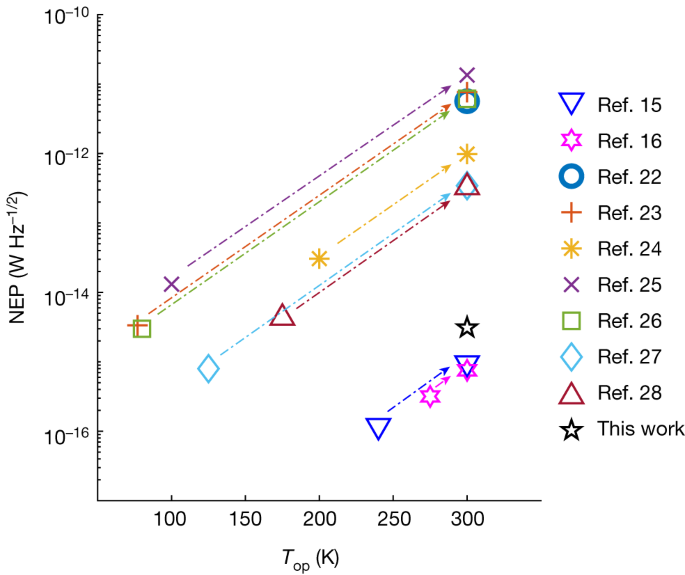
Researchers have achieved room temperature operation of a germanium-on-silicon single-photon avalanche diode (SPAD), a key component in photonics and quantum applications. This advancement is significant as it enables the practical integration of SPADs into various technologies, such as quantum communication and imaging systems, without the need for cryogenic cooling. The development opens up new possibilities for high-performance photon detection and imaging at room temperature, paving the way for more widespread and accessible applications in the field of photonics.

"Breakthrough: Light Slowed 10,000 Times in Groundbreaking Experiment"

Originally Published 1 year ago — by ScienceAlert

Featured image for "Breakthrough: Light Slowed 10,000 Times in Groundbreaking Experiment"
Source: ScienceAlert

Scientists from Guangxi University and the Chinese Academy of Sciences have developed a new method to slow down light by more than 10,000 times using a synthetic 2D structure called a metasurface, made from thin layers of silicon. This breakthrough in light manipulation could have significant implications for computing and optical communication, offering better control over how light travels and reducing energy loss compared to existing methods.

"Spiral Lens Innovation: Clear Vision at All Distances"

Originally Published 1 year ago — by Interesting Engineering

Featured image for "Spiral Lens Innovation: Clear Vision at All Distances"
Source: Interesting Engineering

Researchers at the Photonics, Numerical and Nanosciences Laboratory have developed a spiral-shaped lens, known as the spiral diopter, that maintains clear focus across different distances and lighting conditions, without the distortions often seen in conventional progressive lenses. This innovative design creates multiple focal points, potentially impacting contact lens technologies, intraocular implants for cataracts, and miniaturized imaging systems.

"Sydney Researchers Develop Lego-Like Photonic Chip for Enhanced 6G and 7G Connectivity"

Originally Published 2 years ago — by Livescience.com

Featured image for "Sydney Researchers Develop Lego-Like Photonic Chip for Enhanced 6G and 7G Connectivity"
Source: Livescience.com

Scientists have developed a chip architecture that combines electronic and light-based components, paving the way for 6G technology. By integrating photonic components into a conventional electronic circuit board, researchers increased radio frequency bandwidth and improved signal accuracy at high frequencies. The prototype chip demonstrated improved filtering capabilities, which is crucial for future wireless technologies that rely on higher frequencies. This advancement in chip architecture will be instrumental in powering 6G devices and enabling faster data speeds in the future.

Revolutionary Hybrid Device Enhances Laser Technology with Micro-Ring Resonator

Originally Published 2 years ago — by Phys.org

Featured image for Revolutionary Hybrid Device Enhances Laser Technology with Micro-Ring Resonator
Source: Phys.org

Researchers at EPFL's Photonic Systems Laboratory have developed a hybrid device that combines semiconductor lasers with silicon nitride photonic circuits containing microresonators, resulting in a chip-scale laser source that enhances the performance of lasers and enables the generation of shorter wavelengths. This breakthrough improves the coherence of semiconductor lasers and shifts their output towards the visible spectrum, opening up new possibilities for applications in telecommunications, metrology, and other high-precision fields. The technology has the potential to revolutionize industries such as biomedical imaging and precision timekeeping, and it lays the groundwork for future advancements in laser technology.

Revolutionary Laser Technology: Supercharging Lasers by a Million Times with Plasma Pulse Compression

Originally Published 2 years ago — by Interesting Engineering

Featured image for Revolutionary Laser Technology: Supercharging Lasers by a Million Times with Plasma Pulse Compression
Source: Interesting Engineering

Scientists from the UK and South Korea have developed a new technique to compress light, resulting in laser pulses that are 1,000 times stronger than current capabilities. By utilizing the density gradient of plasma, the researchers were able to cause photons to bunch together, significantly increasing laser power. This breakthrough could lead to important discoveries about the nature of matter and has the potential to enhance laser technology by over a million times its current capacity.

"Montana and West Virginia Secure Tech Hub Designations, Boosting Tech Industries"

Originally Published 2 years ago — by Missoulian

Featured image for "Montana and West Virginia Secure Tech Hub Designations, Boosting Tech Industries"
Source: Missoulian

Montana has been selected as a "regional tech hub" by the federal Economic Development Administration, making the state eligible to compete for a share of $500 million in federal funds to become a leader in smart, autonomous, photonic remote sensing technologies. The tech hub will be led by Accelerate Montana, based on the University of Montana campus in Missoula. The announcement has been praised by top elected officials in Montana, who believe it will boost the state's technology sector, create jobs, and strengthen national security. The goal of the program is to diversify tech hubs beyond traditional locations like Silicon Valley.

Unveiling the Promise of "Time Reflections" in Tech

Originally Published 2 years ago — by IFLScience

Featured image for Unveiling the Promise of "Time Reflections" in Tech
Source: IFLScience

Physicists have demonstrated time reflections of electromagnetic waves for the first time by switching the dielectric constant of a metamaterial, allowing for greater control over the interaction between waves and matter. This breakthrough could have promising applications in photonics, potentially leading to faster computers, cell phones, and wireless communication. Time reflections involve a reversal in the order and frequency lengthening of the wave, with the end of the signal being reflected first. The challenge lies in changing the properties of the medium quickly and uniformly enough to time reflect electromagnetic signals, but the use of metamaterials has overcome this obstacle.

"Revolutionary Technology Unveiled: Exploring Other Earths"

Originally Published 2 years ago — by Phys.org

Featured image for "Revolutionary Technology Unveiled: Exploring Other Earths"
Source: Phys.org

The development of advanced specialized telescopes using starshades could revolutionize our ability to observe distant terrestrial planets, particularly Earth-like worlds orbiting red dwarf stars in their habitable zone. However, the faintness of these planets remains a challenge. A new study proposes using photonics, an advanced type of optics that works on the scale of individual photons, to enhance the detection of faint planets. By combining coronagraphs with photonic detectors, astronomers could create a hybrid system capable of observing much fainter planets. While starshade observatories are still in the future, this study highlights the potential of astronomical photonics to transform our understanding of the universe.