Tag

Magnetic Materials

All articles tagged with #magnetic materials

science18 days ago

Revolutionary Magnetic State Promises Next-Gen Data Storage and AI Power

Researchers in Japan have demonstrated that thin films of ruthenium dioxide can exhibit altermagnetism, a new magnetic state that combines the advantages of ferromagnetism and antiferromagnetism, potentially leading to faster, denser, and more reliable data storage technologies. This discovery was achieved by controlling the crystallographic orientation of the material, confirming its intrinsic magnetic properties, and opening new avenues for spintronics and memory device development.

science-and-technology1 year ago

Innovative Magnetic Materials Revolutionize Thermoelectric Technology

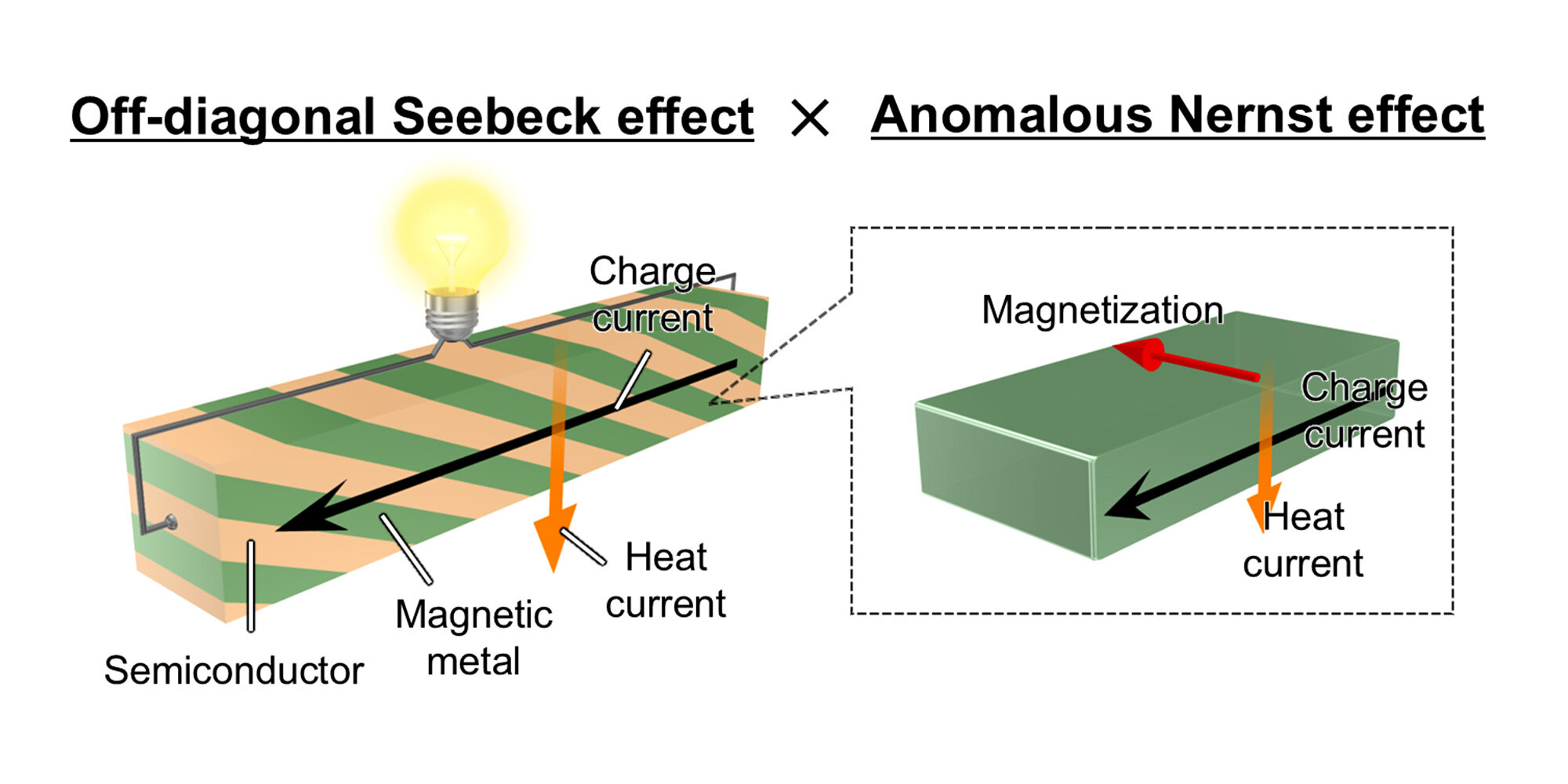
Researchers from NIMS and UTokyo have developed a new approach to enhance thermoelectric performance using artificially tilted multilayers of magnetic metals and semiconductors. This design leverages the anomalous Nernst effect (ANE) and the off-diagonal Seebeck effect (ODSE) to improve transverse thermoelectric conversion efficiency significantly. The study, published in Nature Communications, suggests that focusing on structural design and specific physical parameters can lead to better materials for practical applications like power generation from waste heat and electronic cooling.

science-and-technology1 year ago

Revolutionary Magnetism Class Paves Way for Advanced Digital Memory

Researchers at the University of Nottingham have imaged a new class of magnetism called altermagnetism, which could revolutionize digital memory by significantly increasing operation speeds and efficiency. Altermagnets combine properties of ferromagnets and antiferromagnets, potentially reducing reliance on rare elements and lowering carbon emissions. The study, published in Nature, demonstrates the practical application of altermagnetic materials, offering a promising path for future technological advancements.

technology1 year ago

Breakthrough in Magnetism Promises to Transform Electronics and Memory

An international research team has successfully imaged and controlled altermagnetism, a new type of magnetic flow, which could revolutionize electronic devices by making them faster, more reliable, and energy-efficient. This breakthrough, achieved using a powerful X-ray microscope in Sweden, demonstrates that altermagnetic materials can sustain magnetic activity without being inherently magnetic. The discovery, led by Nottingham University, suggests that altermagnets could significantly enhance microelectronic components and digital memory, potentially impacting the electronics industry within a decade.

physics1 year ago

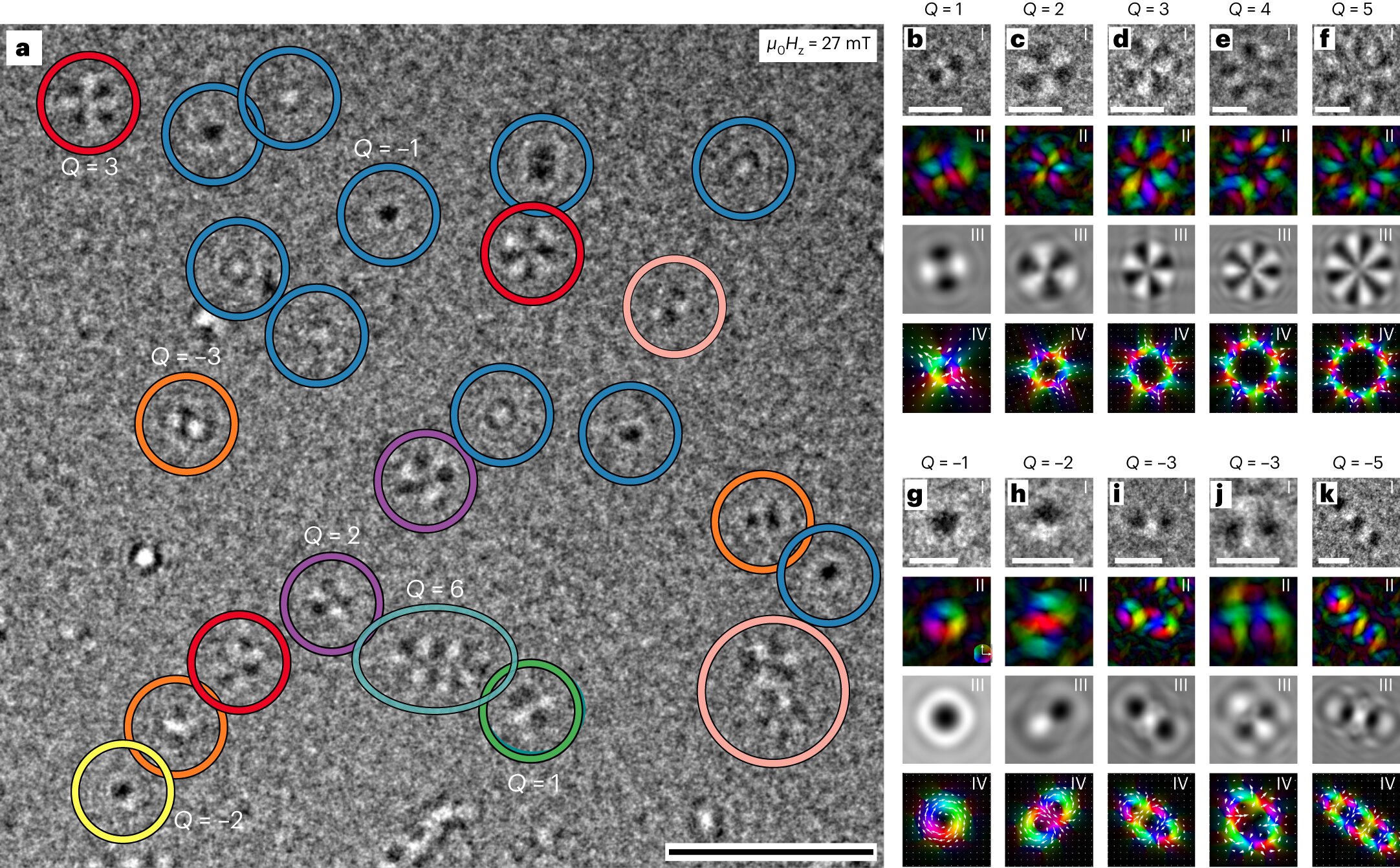
"Uncovering High-Order Skyrmions and Antiskyrmions"

Researchers have discovered co-existing magnetic skyrmions and antiskyrmions of arbitrary topological charge at room temperature in magnetic Co/Ni multilayer thin films, opening up new possibilities for skyrmionics research. These spin objects, resembling tornado-like whirls in magnetic materials, offer potential applications in information storage devices and unconventional computing. The study, published in Nature Physics, also demonstrates the efficient control of the motion of these spin objects, providing insights for the development of skyrmionic devices.

science-and-technology2 years ago

AI-driven discovery of critical element-free magnetic materials by researchers

Researchers at Ames National Laboratory have developed a machine learning model that predicts the Curie temperature of new material combinations, a crucial factor in discovering critical-element-free permanent magnet materials. By training the model using experimental data and theoretical modeling, the team aims to design new magnetic materials with reduced reliance on critical materials like cobalt and rare earth elements. This approach saves time and resources compared to traditional experimentation-based methods. The successful prediction of Curie temperatures in material candidates represents an important step towards creating high-performance, sustainable permanent magnets for various technological applications.

technology2 years ago

Unveiling the Magnetic Secrets of Neuromorphic Computing through Spintronics and X-ray Microscopy

Researchers have made a discovery in the behavior of dynamic magnetic fractal networks, known as skyrmions, which could advance neuromorphic computing capabilities. These skyrmions create magnetic spin waves with a narrow wavelength, forming an unexpected fractal structure. The researchers aim to use this discovery to develop a miniaturized, spin wave neuromorphic architecture. The findings were made through neutron scattering experiments and could have implications for future applications.

science-and-technology2 years ago

"Revolutionary Breakthrough: Trapped Light in Magnet Unleashes Tech Innovations"

Scientists have discovered that trapping light within certain magnetic materials can significantly enhance their intrinsic properties. This breakthrough study examined a specific layered magnet capable of hosting powerful excitons, enabling it to trap light independently. The optical reactions of this material to magnetic occurrences are remarkably stronger than those in regular magnets. This advancement opens up possibilities for magnetic lasers, magneto-optical memory devices, and advancements in quantum transduction applications.

science-and-technology2 years ago

Illuminating Magnetic Materials Reveals Nanostructure Secrets

Researchers at the Max Born Institute in Berlin have successfully performed X-ray Magnetic Circular Dichroism (XMCD) experiments in a laser laboratory for the first time. XMCD makes it possible to decode magnetic order in nanostructures and to assign it to different layers or chemical elements. Until now, access to the required x-ray radiation has only been possible at scientific large-scale facilities, such as synchrotron-radiation sources or free-electron lasers (FELs), and has thus been strongly limited. The work demonstrates that laser-based x-ray sources are catching up with large-scale facilities.