Tag

Solar Eruption

All articles tagged with #solar eruption

science6 months ago

Sun's Surface Forms 'Canyon of Fire' After Massive Eruption

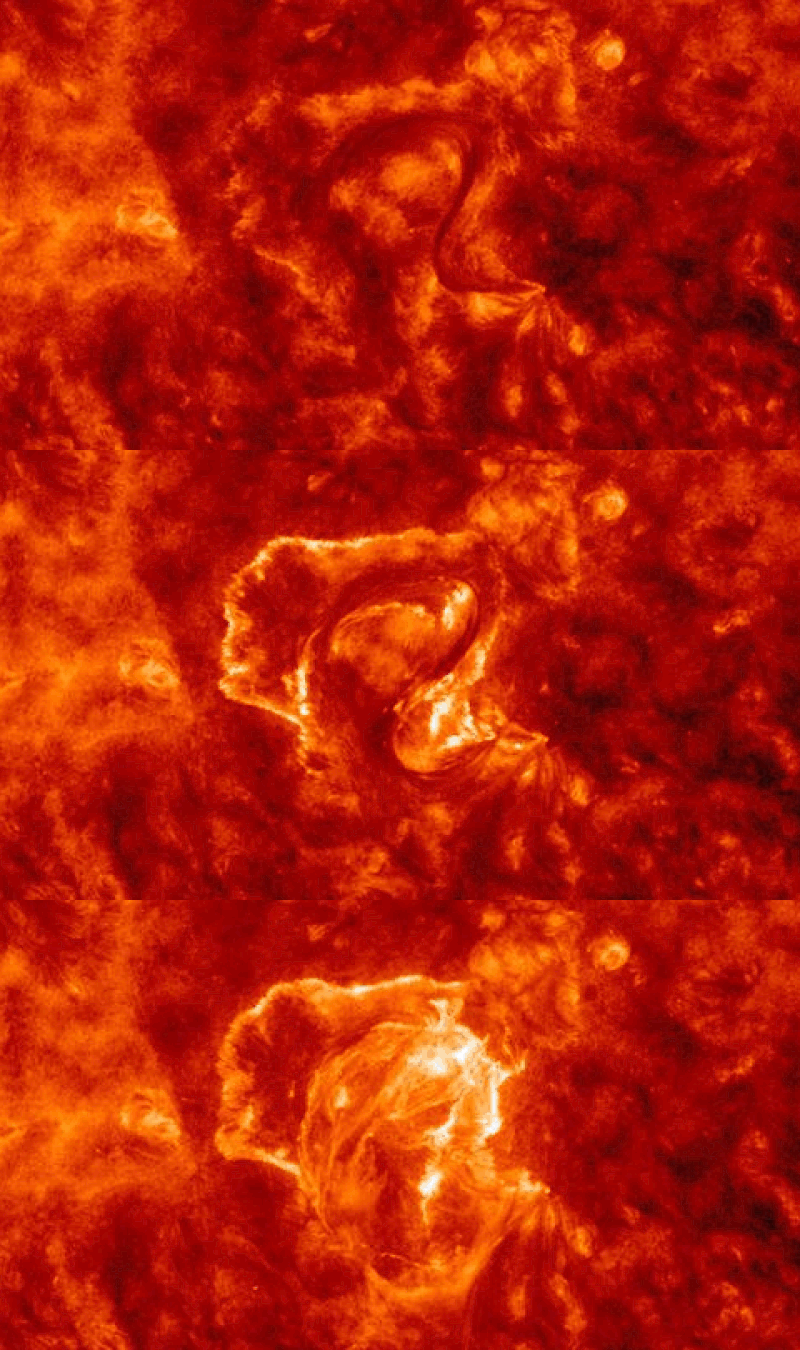
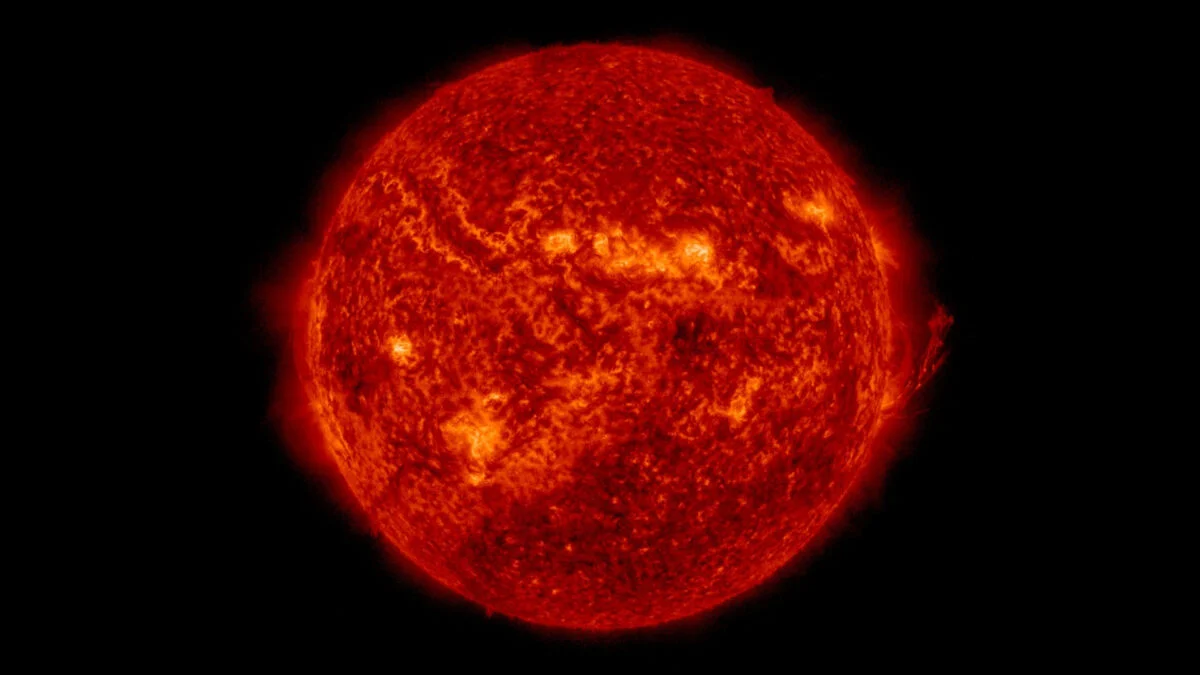
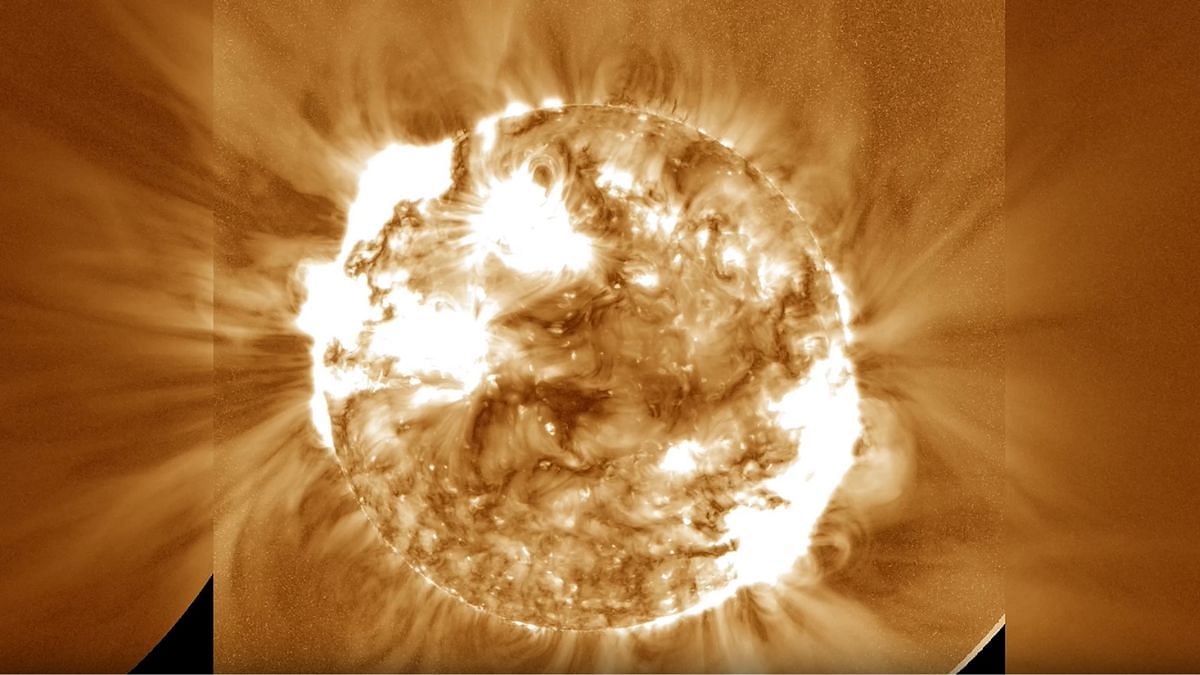
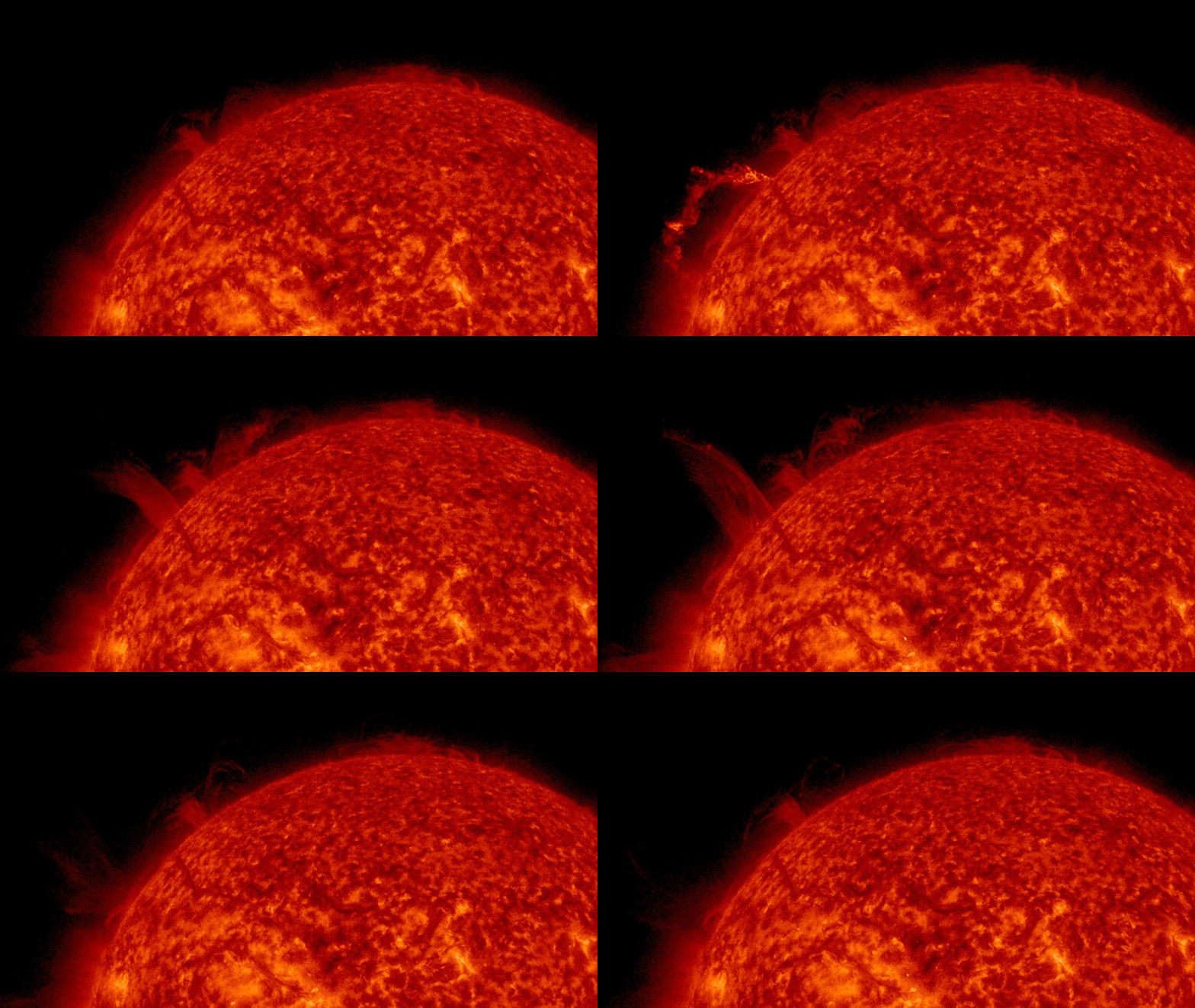
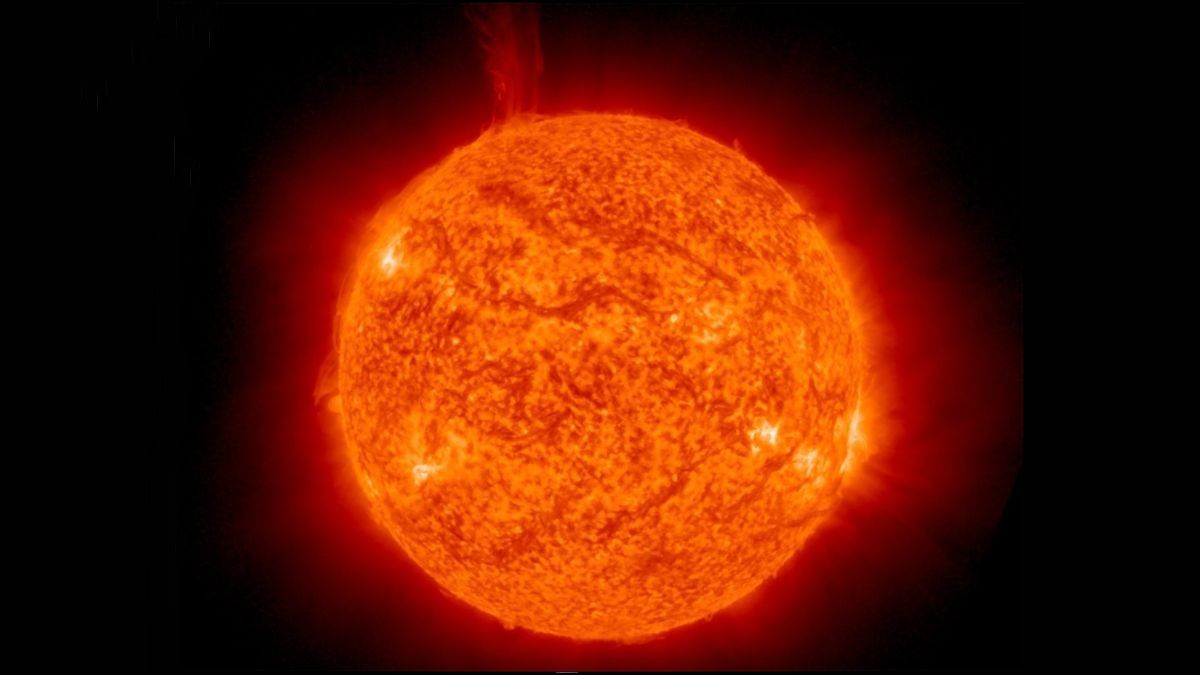
A massive solar filament eruption on July 15 created a 'canyon of fire' on the Sun's surface, carving a deep scar over 250,000 miles long. The event also triggered a coronal mass ejection that is heading away from Earth, reducing potential space weather impacts. Astronomers continue to monitor the Sun for such activity due to its potential effects on Earth and space missions.

science-and-space1 year ago

"Severe Solar Storm Triggers Spectacular Northern Lights Display"

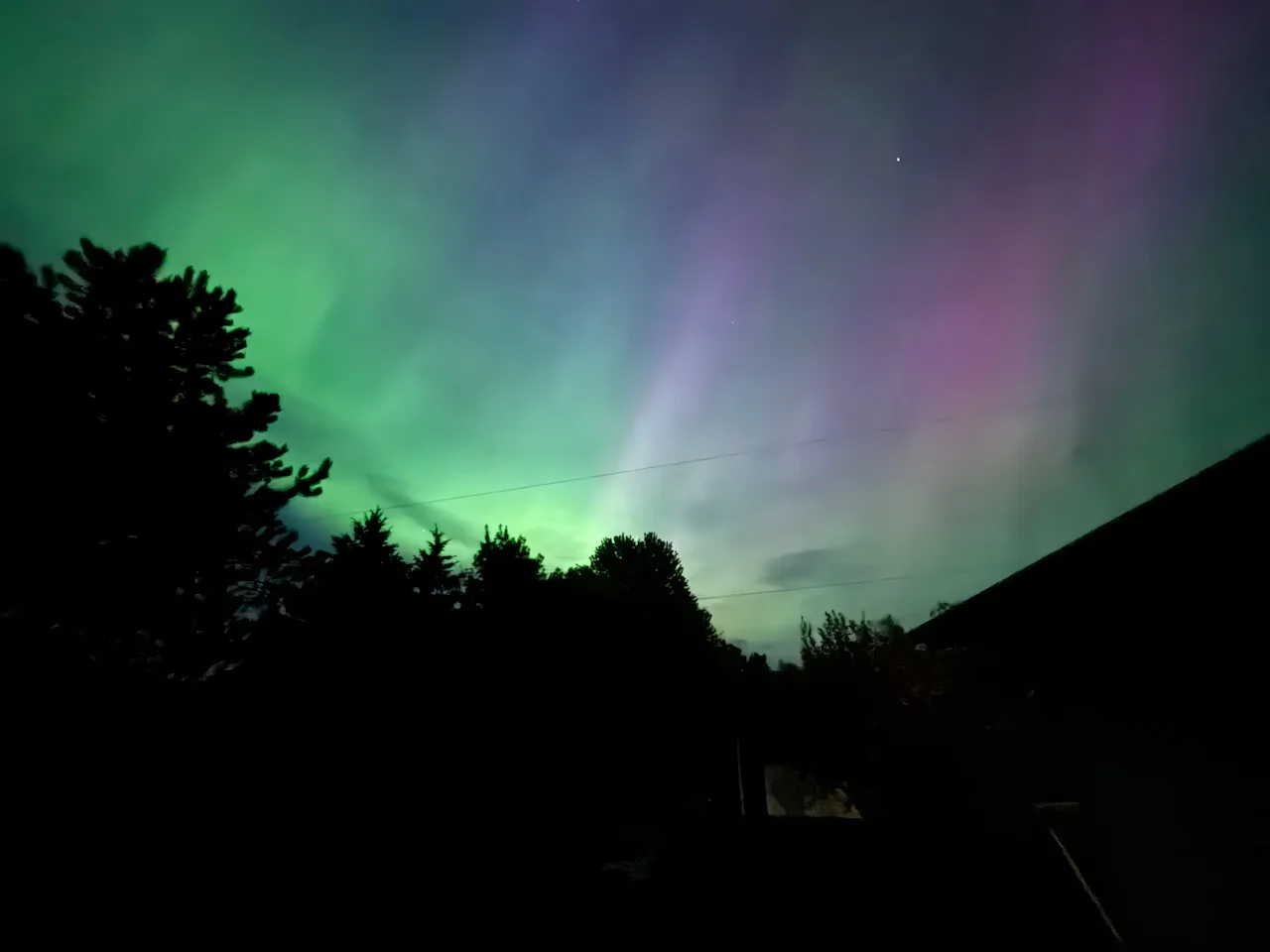
Scientists observed a solar eruption leading to a 'severe' geomagnetic storm, resulting in a beautiful aurora in higher latitudes. NASA's analysis of soil samples from asteroid Bennu suggests it originated from a wet, tectonically active planet and contains organic molecules. A study on dog brains revealed how they process words, while another study found that human brains have been getting larger over the past century, potentially indicating improved brain health and physical development.

space-science1 year ago

"Massive Solar Eruption on Mercury Sparks Potential X-ray Auroras"

A massive solar eruption from the sun's hidden far side has potentially triggered "X-ray auroras" on Mercury, following a powerful solar flare on March 9. The eruption, around 40 times wider than Earth, released a large coronal mass ejection that collided with Mercury on March 10, exposing the planet's unprotected surface to X-rays. This event suggests that the sun's solar maximum, a period of increased solar activity, may have begun earlier than expected. Scientists are concerned about monitoring the far side of the sun for surprise solar storms, but NASA's Perseverance rover on Mars provides a potential solution for observing the sun's hidden regions.

space1 year ago

Rare Solar Eruption Captured as 'Magnetic Noose' Constricts Sun's South Pole

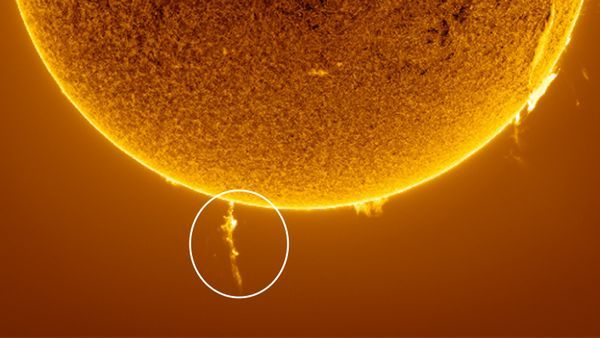
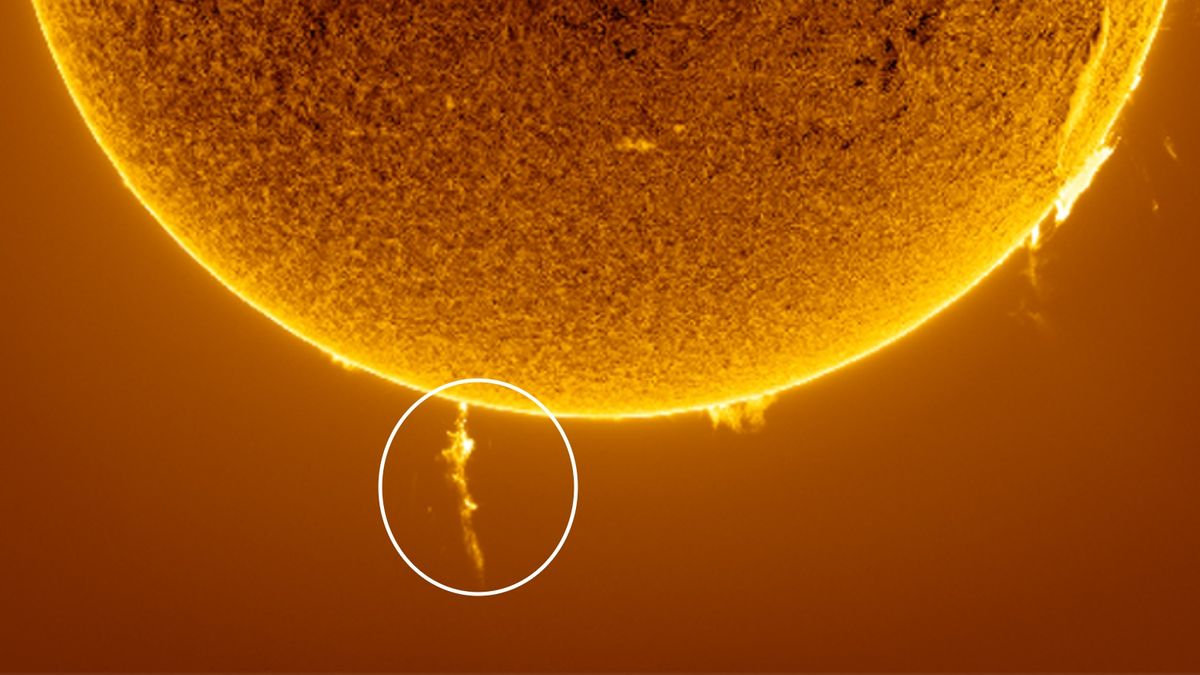
A rare solar eruption occurred at the sun's south pole, where solar flares almost never occur, signaling the sun's entry into its most active phase, the solar maximum. The explosion released a gigantic column of ionized gas, or plasma, towering around 124,300 miles above the solar surface, captured in stunning detail by astrophotographer Eduardo Schaberger Poupeau. This unusual event was likely triggered by a polar crown filament and is a sign of the sun's increasing activity as it approaches the solar maximum, which is expected to arrive earlier than originally predicted.

astronomy1 year ago

"Rare Solar Eruption: Captivating Images of Sun's South Pole Struggle"

A rare solar eruption occurred at the sun's south pole, releasing a massive plasma plume that towered over 125,000 miles above the solar surface, captured in stunning detail by astrophotographer Eduardo Schaberger Poupeau. This unusual event, triggered by a polar crown filament, is a sign that the sun is approaching its most active phase, the solar maximum. As the sun's magnetic crowns constrict, they "strangle" nearby magnetic fields, making them more likely to explode. This phenomenon, occurring close to the sun's poles, is a rare occurrence and indicates the sun's increasing activity as it approaches the solar maximum.

astronomy1 year ago

"Stunning Video Captures Giant Solar Plasma Eruption"

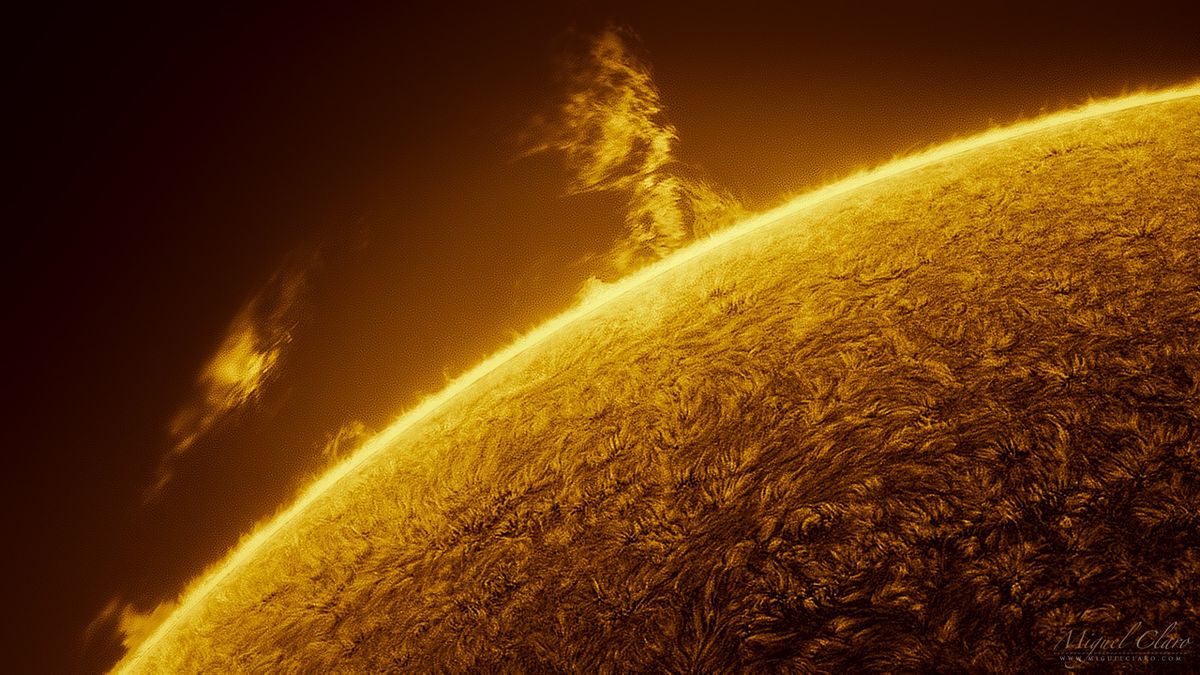
Astrophotographer Miguel Claro captured incredible footage of a gigantic solar prominence on Feb. 22, 2022, as it blasted a large coronal mass ejection (CME) into space. The prominence, a large loop of plasma flowing along twisted magnetic fields on the sun's surface, appeared so tall that dozens of Earths could fit inside it. Claro's high-resolution solar movie, comprising around 2 hours and 15 minutes, was captured from the Dark Sky® Alqueva region of Portugal. With a total solar eclipse approaching on April 8, 2024, he advises taking precautions when photographing the sun, emphasizing the danger of looking directly at it without the right equipment.

spaceweather2 years ago

"Potential Geomagnetic Storm to Illuminate Northern US Skies Today"

A solar eruption has launched a blob of plasma toward Earth, expected to trigger a geomagnetic storm and stunning aurora displays across the northern and Midwest U.S. today and tomorrow. The storm is expected to be a G2 category, with auroras likely to be seen in Alaska and Canada, but states like Vermont, Minnesota, and Wisconsin also have a chance of spotting the auroras. This event comes as the sun is rapidly approaching the peak of its current cycle, Solar Cycle 25, which could fuel strong space weather events triggering radio and satellite blackouts.

science-and-astronomy2 years ago

Solar Eruption Warps Sun's Magnetic Field in Powerful Blast

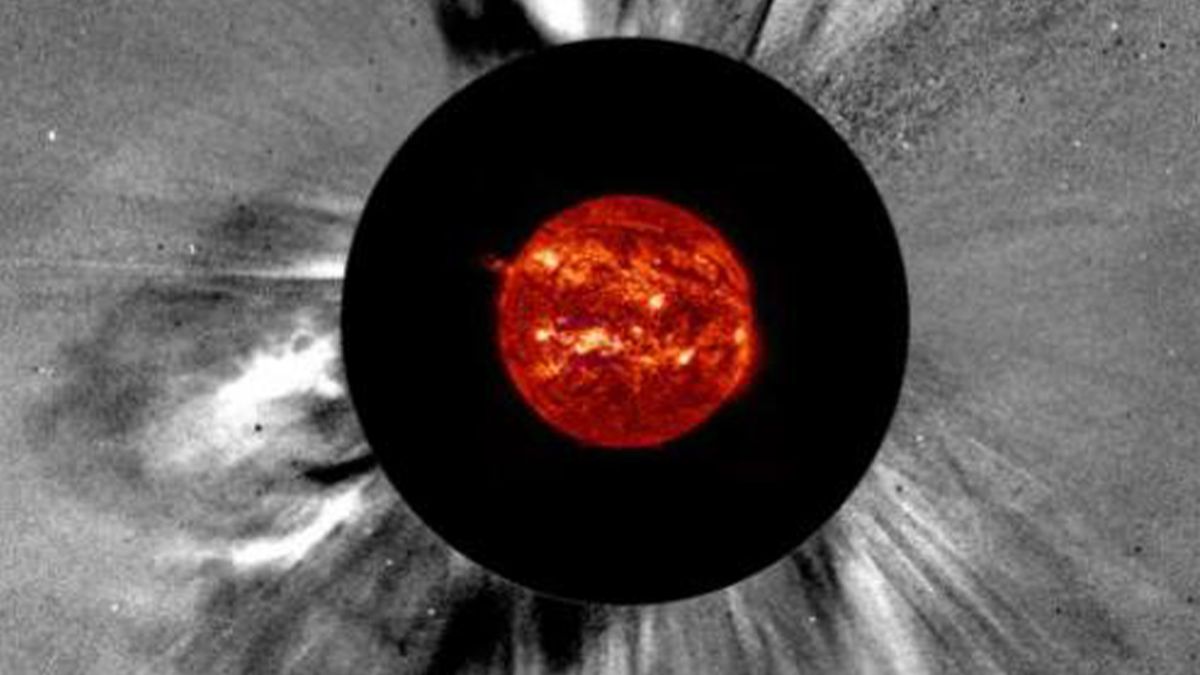
A powerful solar eruption, known as a coronal mass ejection (CME), was observed this week, warping the sun's magnetic field. Satellites captured the bright burst of super-hot plasma as it shot out into space. The CME originated from sunspots, causing a sudden explosion of energy that ejected gigantic plumes of solar material. The release of energy caused temperature variations along the sun's magnetic field lines. Thankfully, the CME was not directed towards Earth, but if it had been, it could have impacted communication systems.

space2 years ago

"Solar Eruption Creates Enormous 'Canyon of Fire' on Halloween Night"

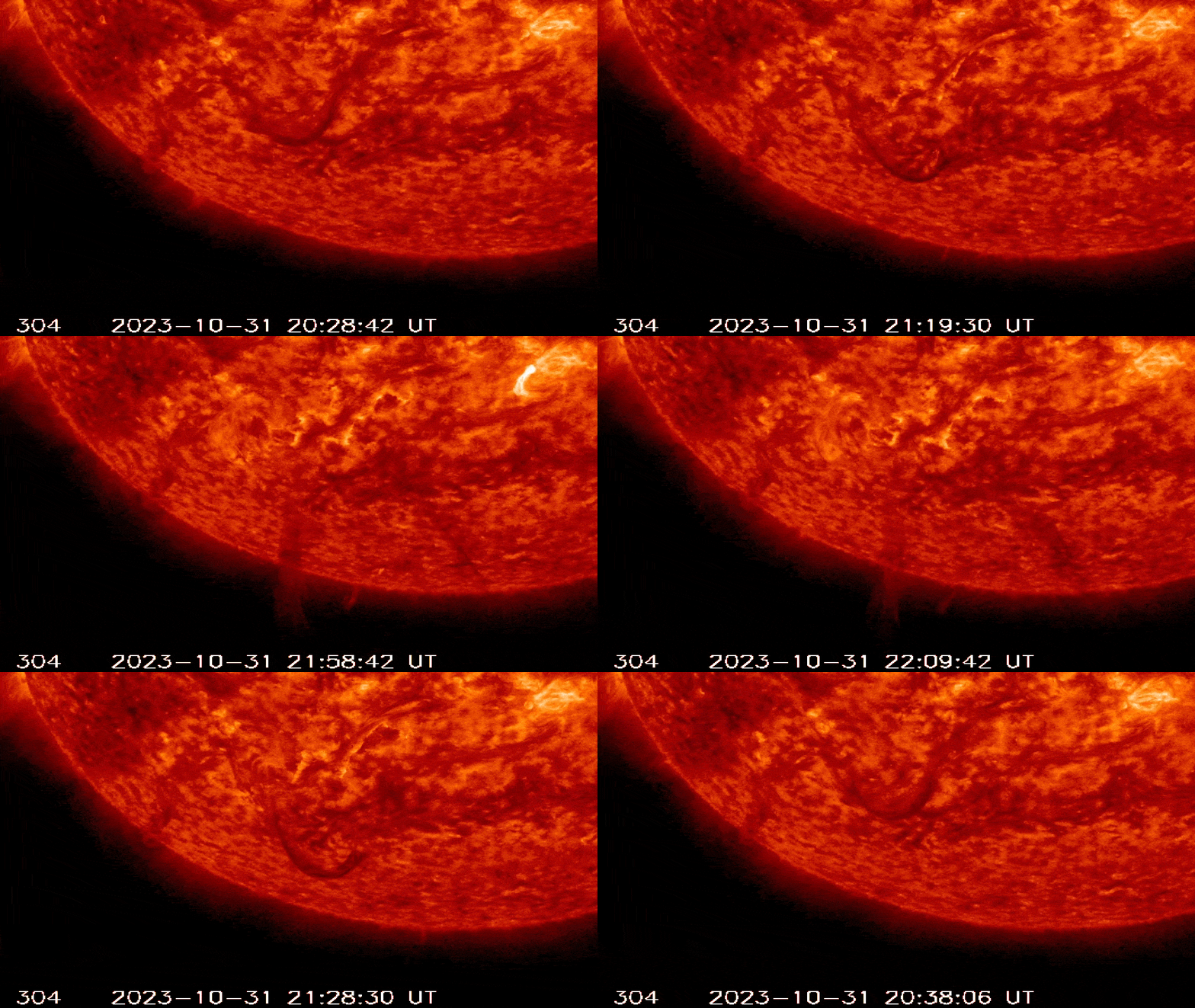
A massive solar eruption on Halloween night created a "canyon of fire" on the sun's surface, twice as wide as the contiguous U.S. and more than seven times as long as Earth. This event is a reminder that the sun is approaching its explosive peak, known as the solar maximum. The eruption launched a loop of magnetized plasma into space, leaving behind the enormous canyon. Although scientists initially worried that the plasma could hit Earth, further observations revealed that it will miss our planet. This solar canyon is the latest sign that we are rapidly approaching the solar maximum, now expected to occur in 2024.

science-and-technology2 years ago

NASA's Parker Probe Captures Jaw-Dropping Footage of Massive Solar Eruption

NASA's Parker Solar Probe captured up-close footage of a massive solar eruption, featuring a powerful coronal mass ejection (CME) that took place last year. CMEs are explosions of super-hot plasma from the Sun's atmosphere that can cause disruptions on Earth. The CME that struck the Parker Solar Probe was one of the most powerful ever recorded. The probe, designed to study the Sun, survived the CME and collected valuable data on particle acceleration. Scientists also studied the interaction between the CME and interplanetary dust to improve space weather forecasting.

space2 years ago

"Solar Storm Alert: Massive Eruption Sends CME Towards Earth, Expect Spectacular Auroras"

A massive solar eruption on September 16 has launched a coronal mass ejection (CME) towards Earth, prompting the U.S. National Oceanic and Atmospheric Administration (NOAA) to issue a G2-class moderate geomagnetic storm watch for September 19. If the CME arrives as expected, it could trigger a geomagnetic storm similar to the one on September 12, resulting in auroras and potential disruptions to radio communication. Scientists anticipate more extreme space weather events as the sun approaches its peak in the 11-year solar activity cycle.