
Rare Solar Eruption Captured as 'Magnetic Noose' Constricts Sun's South Pole
TL;DR Summary
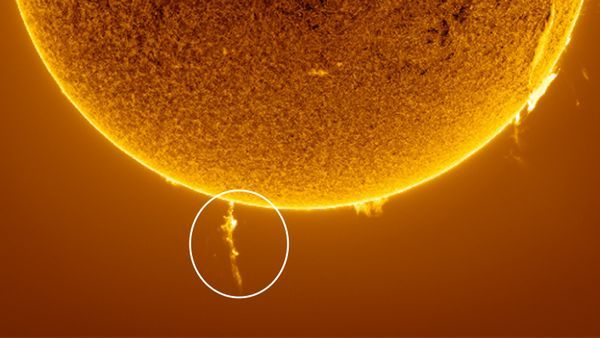
A rare solar eruption occurred at the sun's south pole, where solar flares almost never occur, signaling the sun's entry into its most active phase, the solar maximum. The explosion released a gigantic column of ionized gas, or plasma, towering around 124,300 miles above the solar surface, captured in stunning detail by astrophotographer Eduardo Schaberger Poupeau. This unusual event was likely triggered by a polar crown filament and is a sign of the sun's increasing activity as it approaches the solar maximum, which is expected to arrive earlier than originally predicted.
Reading Insights
Total Reads
0
Unique Readers
0
Time Saved
3 min
vs 4 min read
Condensed
86%
628 → 91 words
Want the full story? Read the original article
Read on Space.com