
Tag

Helioseismology

All articles tagged with #helioseismology

science1 year ago

Sun's Magnetic Field Likely Originates Near Surface, Study Finds

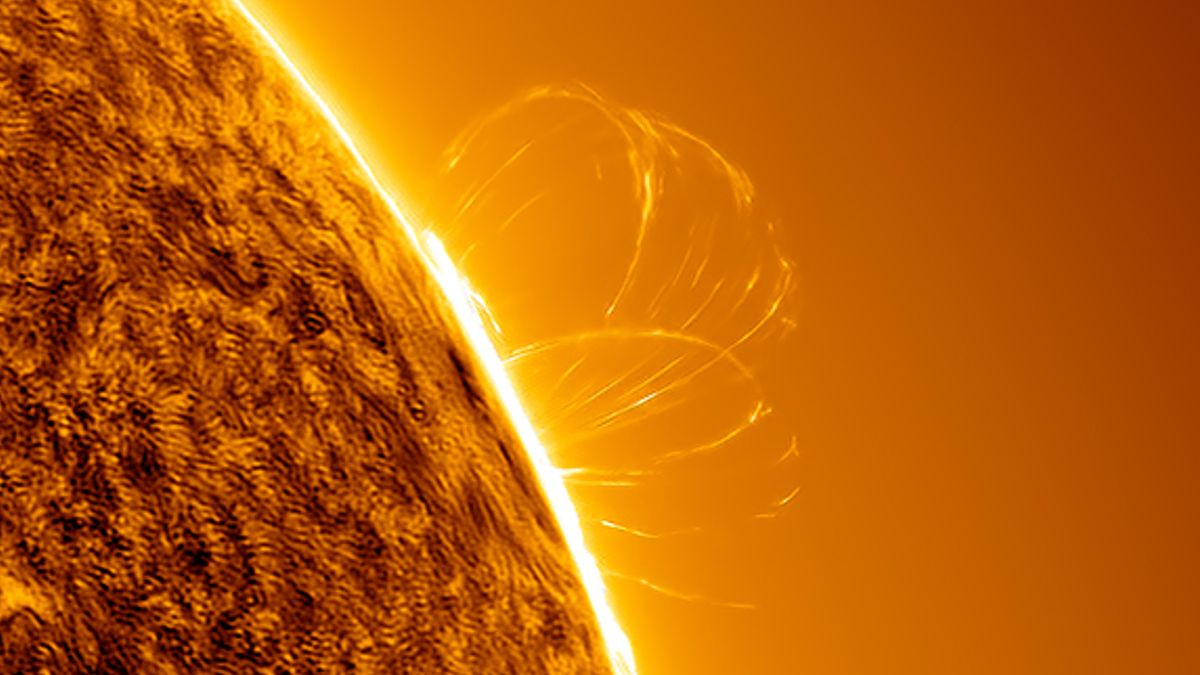
Scientists have discovered that the sun's magnetic field likely originates from instabilities in the plasma across the outermost layers of the solar surface, rather than deep within the star. This finding, based on complex computer simulations and helioseismology data, could improve predictions of solar flares and storms, which can impact Earth's technology and infrastructure. The study, published in Nature, challenges the prevailing focus on deep solar dynamo action and suggests that surface perturbations play a crucial role in magnetic field formation.

astronomy1 year ago

"The Sun's Rotation: Unraveling the Mystery of Long-period Oscillations"

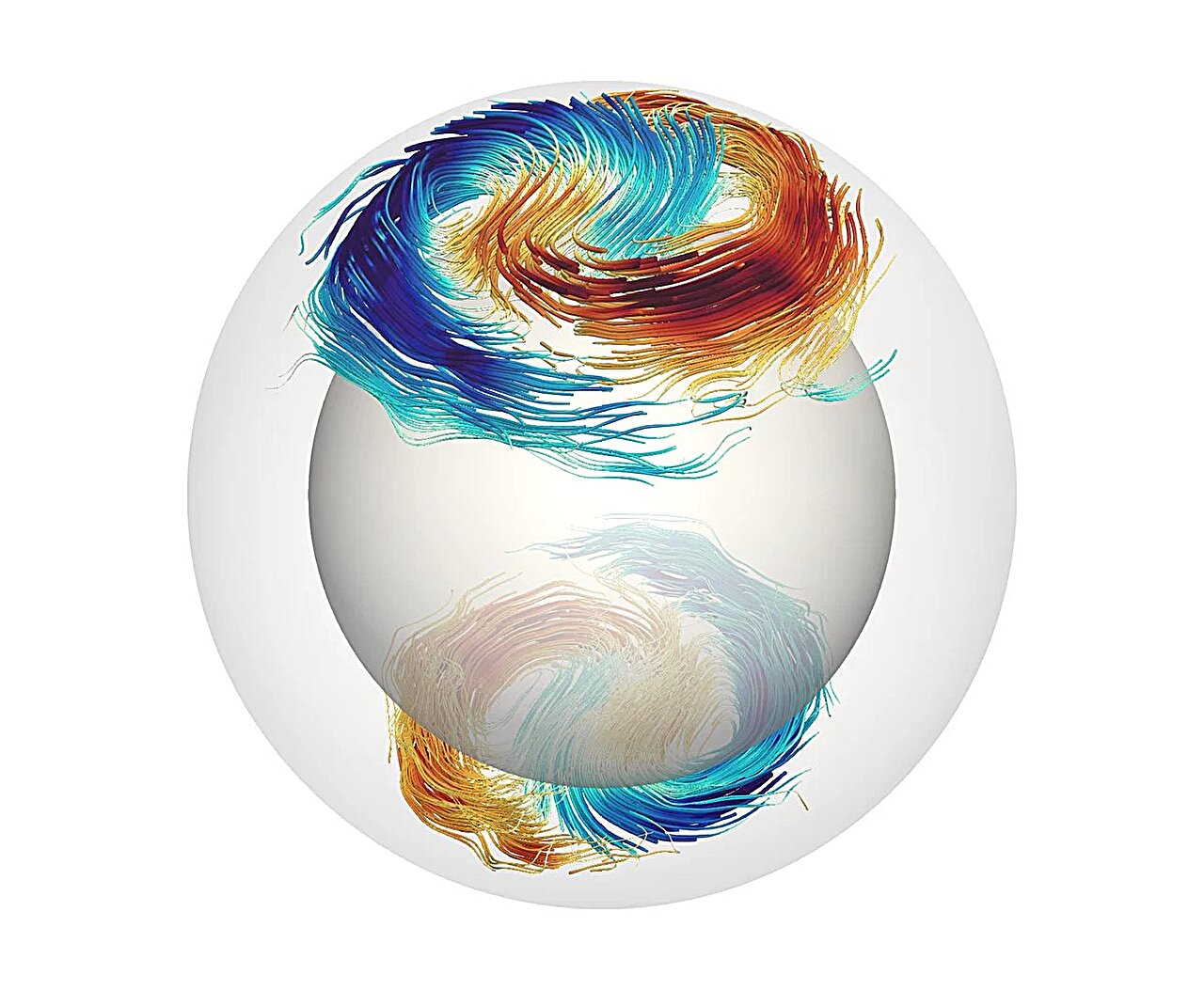
Scientists have discovered a new theory to explain the Sun's differential rotation, which involves long-period oscillations of sound waves in the solar convection zone. These oscillations, detected as swirling motions around the poles, limit the temperature difference between the poles and the equator, ultimately controlling the Sun's bizarre rotation. The relationship between the oscillations and the differential rotation goes both ways, with the oscillations curbing the rotation. This finding could provide insights into the dynamics of other stars as well.

astronomy1 year ago

"Sun's Differential Rotation Controlled by Long-Period Oscillations"

Scientists have discovered that long-period high-latitude oscillations in the sun's convection zone play a crucial role in controlling the sun's differential rotation. These oscillations, observed through helioseismology, carry heat from the solar poles to the equator, limiting the temperature difference between the two to less than seven degrees. This small temperature difference influences the sun's global dynamics and is an important feedback mechanism. The study, published in Science Advances, sheds light on the physics of these oscillations and their role in the sun's workings, providing valuable insights for future research.

astronomy2 years ago

Using Gravitational Waves to Probe the Sun's Interior

Scientists propose using gravitational waves to probe the interior of the Sun, which is too hot and dense for light to penetrate. Asymmetrical spinning neutron stars produce continuous streams of gravitational waves, which can be used to study the Sun's density profile. The Sun's gravitational mass lenses the waves as they pass through it, allowing for accurate measurements. Hundreds of fast-rotating neutron stars pass behind the Sun each year, providing an opportunity to observe their gravitational waves and gain insight into our closest star.