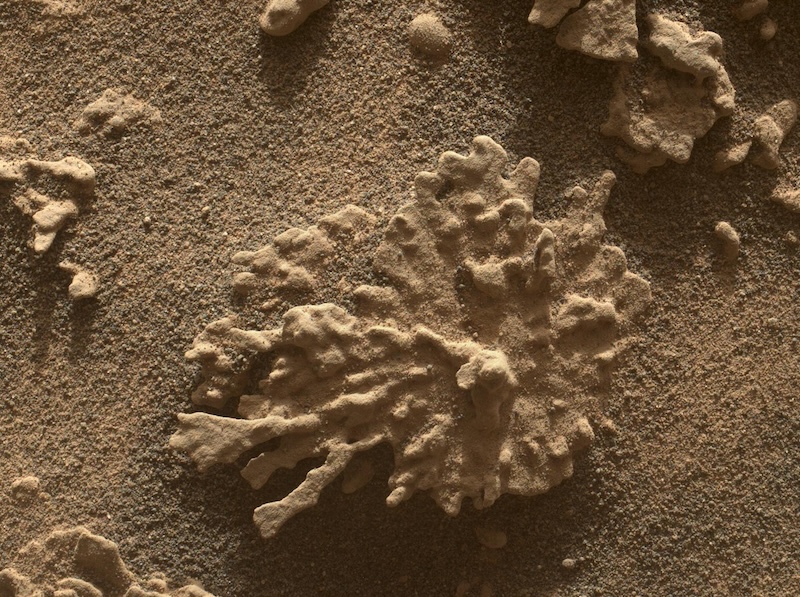
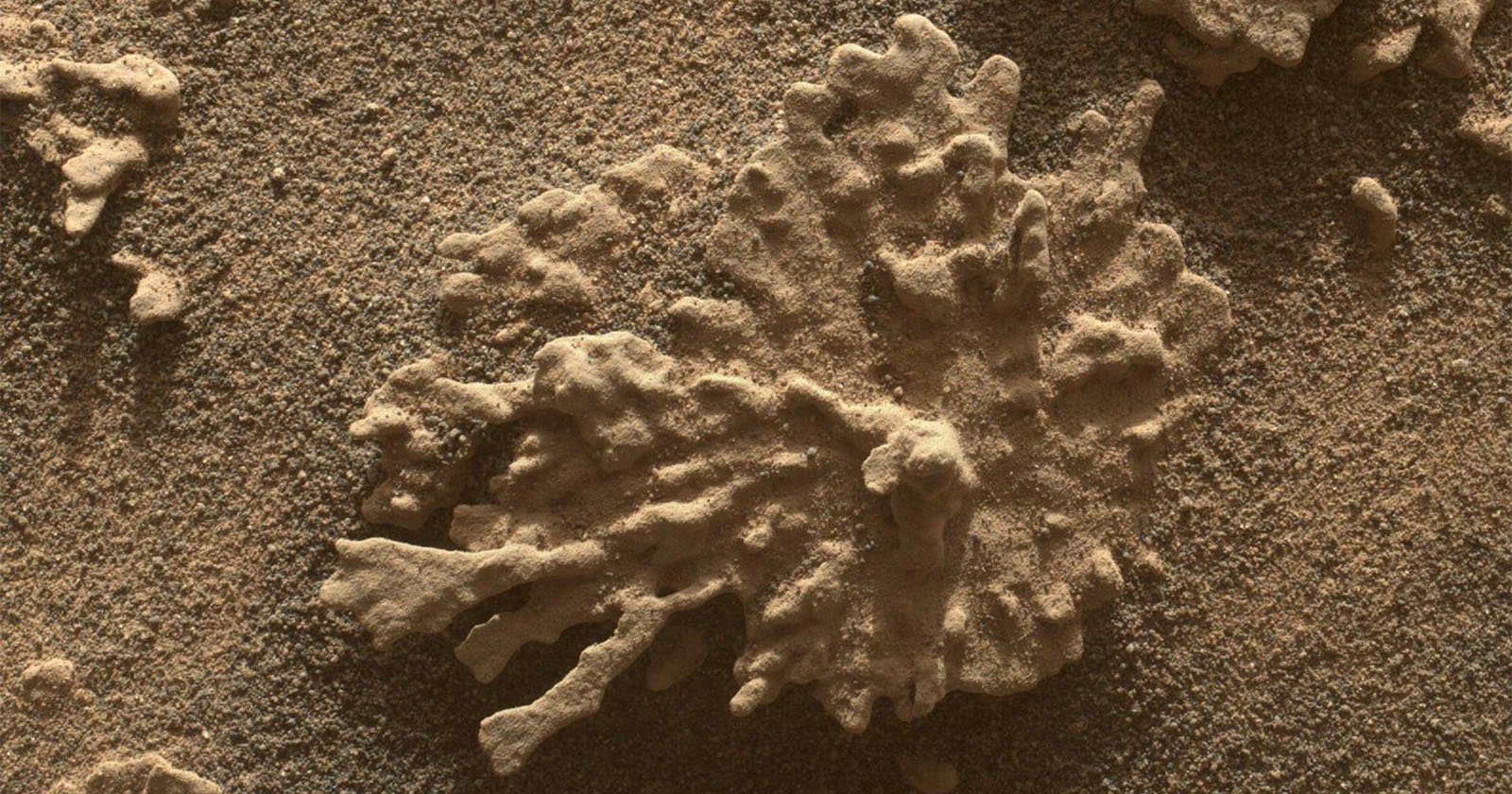
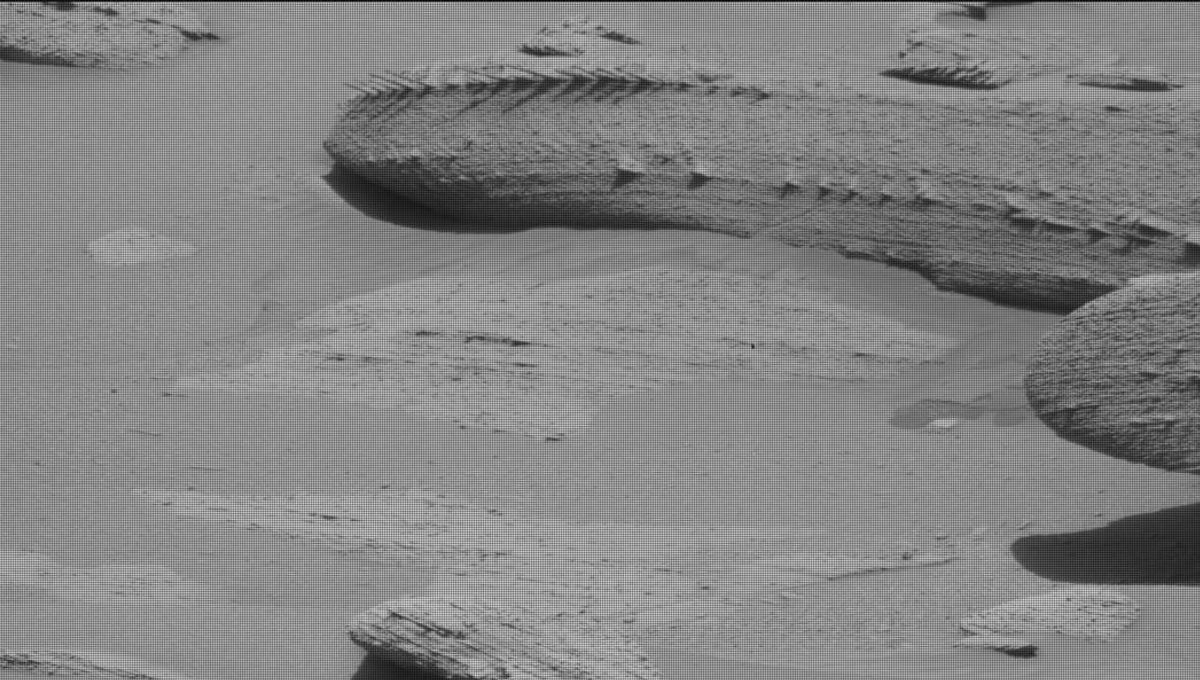
NASA's Curiosity rover recently captured images of rocks in Gale crater on Mars that resemble fossilized coral, but scientists believe they are shaped by wind erosion rather than being actual fossils, providing insights into Mars' geological history and past water activity.
NASA's Curiosity rover captured images of coral-like rocks on Mars, formed by wind erosion and water activity billions of years ago, providing evidence of past habitability on the planet. The rover continues its mission, exploring Gale Crater and adapting with new software upgrades to extend its operational life.
Nanoparticles hidden in 3.5-billion-year-old rocks from the Pilbara region of Australia provide clues about the emergence of life. These nanocrystals, including greenalite and fluorapatite, suggest that hydrothermal vents might have been an early source of accessible phosphorus, explaining its prevalence in biological structures. The unique structure of greenalite particles could have facilitated the formation of primitive RNA, while the rocks also indicate that phosphorus was more abundant in the ocean billions of years ago.
Nola, a cat with a unique preference, loves being scratched by rocks. Her owner discovered this when he tried scratching her with a rock from his terrarium collection, and Nola immediately meowed for more and started purring. Since then, they have experimented with different types of rocks, but Nola's favorite is lava rock. She demands to be pet by rocks all the time and even has guests scratch her with a rock to show they are friendly. Nola's love for rocks has become a well-known aspect of her family's daily life.
Trader Joe's issued three recalls in a week due to potential foreign material found in their products. The recalls include cookies, falafel, and soup, with the possibility of rocks in the cookies and falafel, and insects in the soup. Customers in multiple states are advised to discard the products or return them for a refund. The affected products have been removed from sale and destroyed, and no adverse health effects have been reported so far.
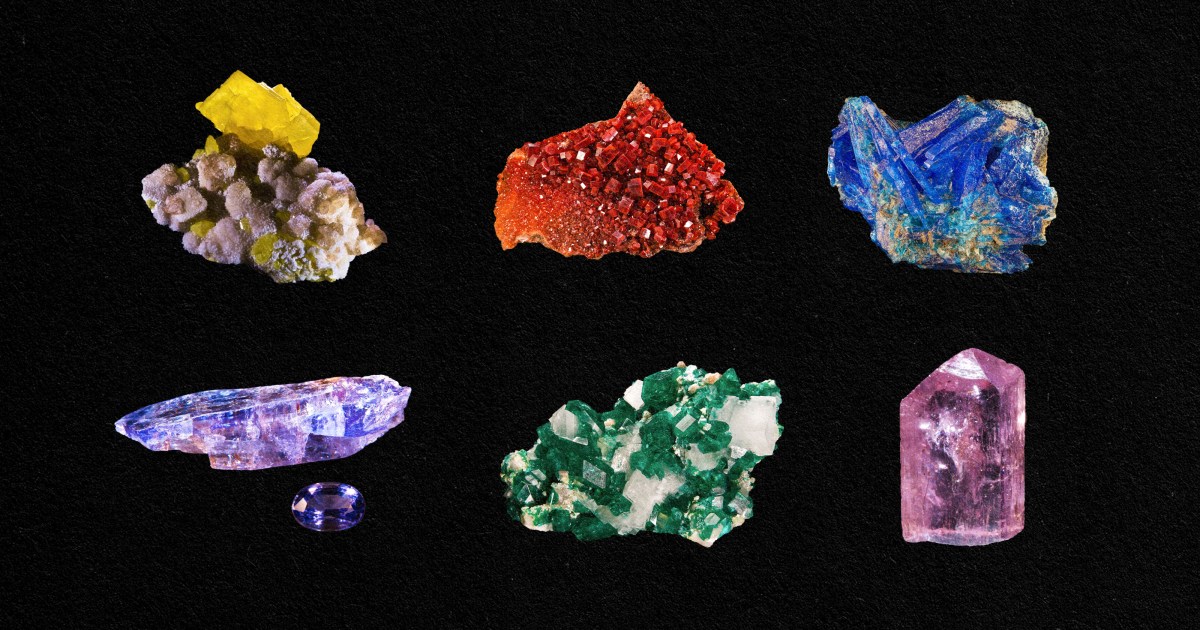
Rocks and minerals exhibit a stunning array of colors due to their molecular behavior and the interaction with light. Rubies and sapphires get their colors from imperfections in their crystal lattice, while emeralds owe their green hue to the presence of chromium. Some minerals fluoresce under ultraviolet light, emitting vibrant colors. Opals and pearls display iridescence due to the arrangement of tiny spheres or layers that diffract light. Tiger's eye forms through a process involving quartz and crocidolite, resulting in its unique banding. Quartz, one of the most common minerals, can have various colors depending on impurities and environmental factors. These minerals interact with light as both waves and particles, making them truly unique.
A peculiar rock formation on Mars, resembling a spine, has caught the attention of scientists. However, it is not an actual spine but rather the remains of eroded ripples. The formation was discovered by Dr. Nathelie Cabrol, an expert in ancient lakes on Mars. The Curiosity rover, currently exploring Gale Crater, captured images of the formation, along with other rocks exhibiting unusual bumps and spokes. These geological features provide insights into the deposition of sediments and the effects of wind erosion on Mars.
Trader Joe's is recalling their Almond Windmill Cookies and Dark Chocolate Chunk and Almond Cookies due to potential contamination with rocks. The affected products have specific sell-by dates and customers are advised not to consume them. Trader Joe's has removed all potentially affected products from sale and is offering full refunds to customers.
The moon's gravity may trigger earthquakes on Earth, according to a few studies. While the moon's pull on the oceans is well-known, its effect on earthquakes was previously deemed too weak to have any significant impact. However, with the advent of bigger and more comprehensive datasets, scientists have started to uncover the moon's tiny but mighty effect on Earth's earthquakes. The moon's impact is seen clearly in underwater earthquakes, where the weight of the ocean presses down on a volcano's magma chamber, causing it to inflate and deflate, leading to earthquakes.
Geoscientists from Virginia Tech have discovered evidence that suggests a rise in biologically accessible nitrogen during the period when marine eukaryotes gained dominance. The evolution of complex eukaryotic cells into multicellular beings marked a significant turning point in the history of life on Earth, leading to the emergence of animals, plants, and fungi. The team’s research findings show that nitrate could be responsible for algae, flowers, and even neighbors. By examining rocks, we can connect Earth’s past to its present and future, gaining a deeper understanding of our planet’s history.
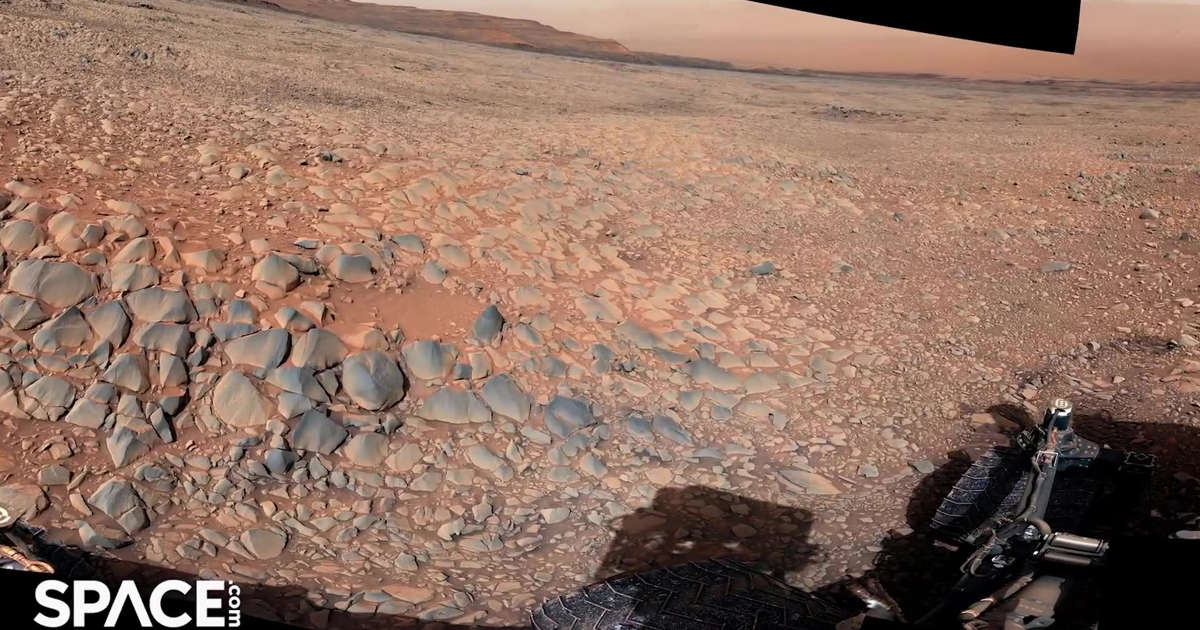
NASA's Curiosity rover has had to change its route while exploring Mount Sharp on Mars due to encountering sharp "gator-back" rocks. Mission planners are now looking for a new route to continue the exploration.
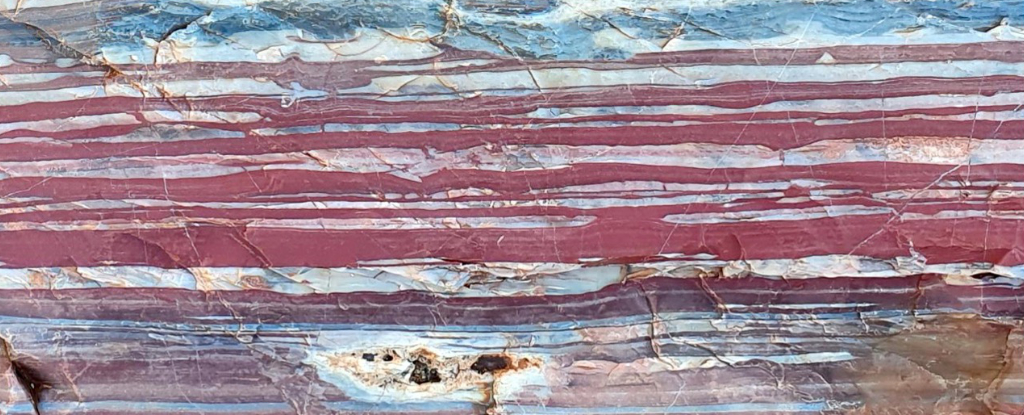
The Great Unconformity is a geological mystery where up to a billion years of rock and history are missing from the Earth's record. While some theories suggest it was caused by "snowball Earth", a recent study suggests that it was likely caused by the breakup of the supercontinent Rodinia 700-800 million years ago. However, the unconformities seen around the world were not made by a common cause, forming at different times in different locations and for different reasons.