
The Spectacular Dance of Light and Minerals
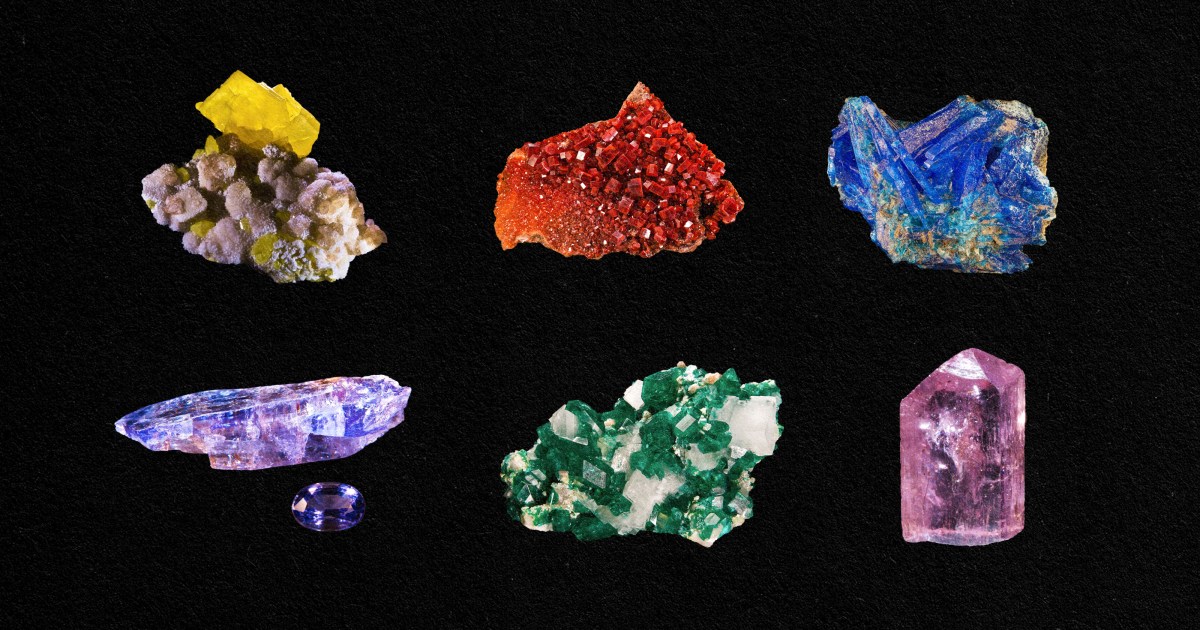
Rocks and minerals exhibit a stunning array of colors due to their molecular behavior and the interaction with light. Rubies and sapphires get their colors from imperfections in their crystal lattice, while emeralds owe their green hue to the presence of chromium. Some minerals fluoresce under ultraviolet light, emitting vibrant colors. Opals and pearls display iridescence due to the arrangement of tiny spheres or layers that diffract light. Tiger's eye forms through a process involving quartz and crocidolite, resulting in its unique banding. Quartz, one of the most common minerals, can have various colors depending on impurities and environmental factors. These minerals interact with light as both waves and particles, making them truly unique.
Reading Insights
0
9
6 min
vs 7 min read
91%
1,229 → 114 words
Want the full story? Read the original article
Read on Big Think