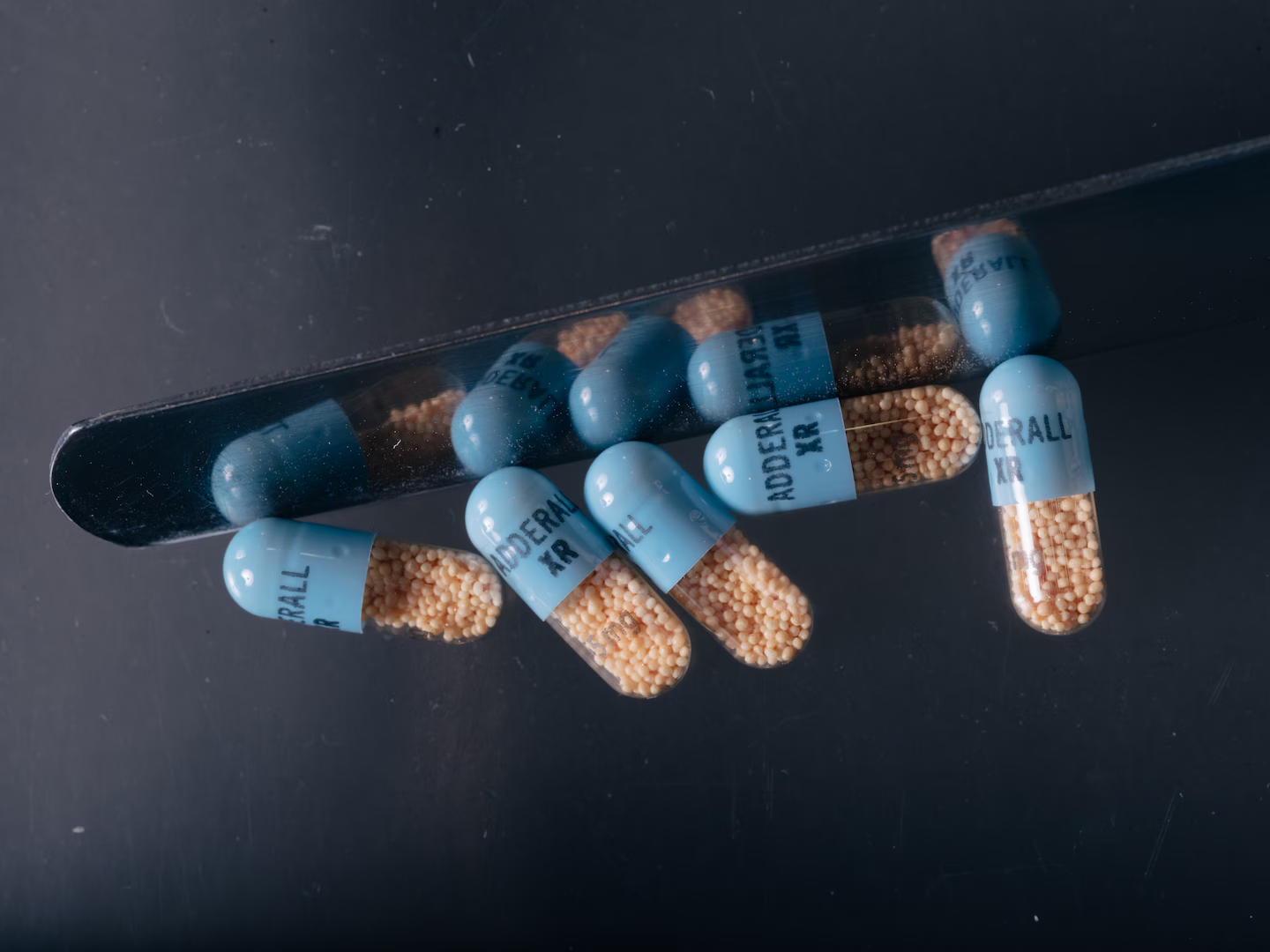
Research indicates that ADHD medications like Ritalin and Adderall do not primarily act on the brain's attention circuitry as previously believed, but instead influence the reward and wakefulness centers.
New research shows that ADHD medications like Ritalin and Adderall primarily act on the brain's reward and wakefulness centers, rather than directly improving attention, which may explain their effectiveness in managing hyperactivity and the importance of sleep in treatment.
A study published in the British Medical Journal shows that ADHD medications like methylphenidate significantly reduce serious harmful outcomes such as substance misuse, suicidal behavior, criminal activity, and traffic accidents in newly diagnosed patients, highlighting the broader benefits of treatment beyond improving focus.
A new study suggests that long-term use of stimulant medications like Adderall and Ritalin for ADHD may slightly increase the risk of developing cardiomyopathy, a condition where the heart muscle weakens. While the overall risk remains relatively low, researchers found that patients on stimulants were more likely to develop cardiomyopathy over time compared to those not taking the medications. The study emphasizes the importance of closely monitoring patients on long-term stimulant regimens and watching for potential cardiac symptoms, although experts stress that the risk is still very low and that the benefits of these medications for managing ADHD symptoms often outweigh the potential risks.
New research suggests that the effects of methylphenidate, commonly known as Ritalin, on creativity depend on an individual's baseline dopamine levels. The study found that methylphenidate impaired creative thinking in individuals with low dopamine levels but enhanced it in those with high dopamine levels. The research highlights the complex relationship between brain chemistry and cognitive function, cautioning against the assumption that psychoactive drugs can universally enhance creativity. The study also suggests that the effects of dopamine on creativity may not be evident under normal conditions but become apparent when the system is manipulated with medication. However, further research is needed to understand the specific neural mechanisms involved.
The ongoing stimulant shortage is causing difficulties for individuals relying on ADHD medications. While nonstimulants are an option, they are generally less effective. To substitute stimulant medications, it is important to understand the categories of Ritalin/methylphenidate and Adderall/amphetamine salts, as well as their variations. By substituting within the same category, such as trying Focalin if Ritalin is unavailable, individuals can maintain the effectiveness of their medication. Additionally, there are different forms of long-acting methylphenidates and amphetamines that can be considered. It is recommended to consult with a doctor for dosing and check with a pharmacist for availability.
A study by researchers from the University of Cambridge and the University of Melbourne challenges the belief that drugs like Adderall and Ritalin enhance cognitive abilities. The study involved 40 healthy participants and revealed that the usage of these drugs leads to overthinking, resulting in unstable cognitive performance. The study's findings carry significant implications for individuals without ADHD who consider using drugs like Adderall and Ritalin to enhance their cognitive abilities. Further research is needed to gain a comprehensive understanding of the effects of these stimulant drugs on neurotypical individuals.
A recent study found that people without ADHD who were given Adderall or Ritalin were more motivated to solve complex problems but less accurate. The study suggests that these medications may cause more errors if taken by individuals who do not have ADHD.