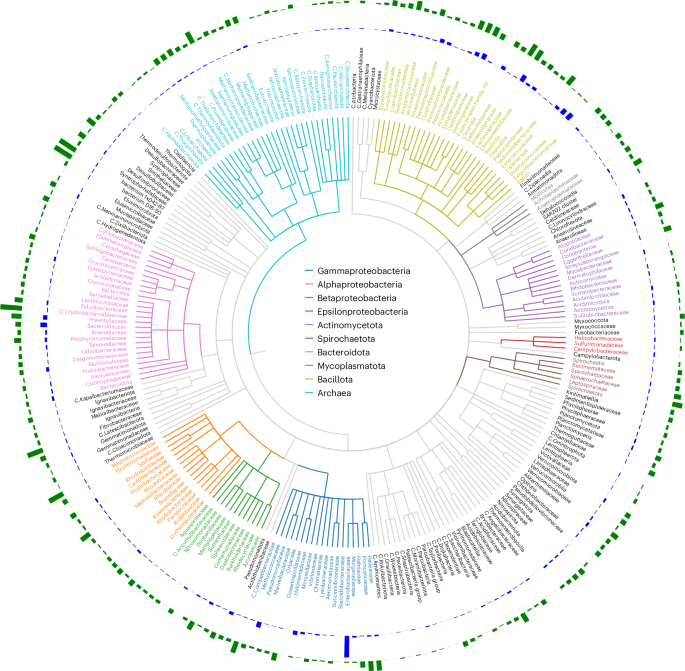
A large-scale genomic analysis revealed over 100,000 complete lytic phages embedded within bacterial genomes across diverse species and environments, challenging traditional phage classification and highlighting their potential in therapy and ecology. The study identified new phage lineages, expanded known groups, and found therapeutic phages naturally present in bacterial populations, suggesting a broader and more dynamic phage-bacteria interaction than previously understood.
Researchers are revisiting phage therapy, an old method using viruses to kill bacteria, as a potential solution to the growing problem of antibiotic-resistant superbugs. A recent study highlights how bacteria like Bacillus subtilis defend themselves against phages, revealing new insights that could improve phage therapy's effectiveness. Despite challenges such as immune system interference, the renewed interest aims to develop alternative treatments to antibiotics amid a looming public health crisis.
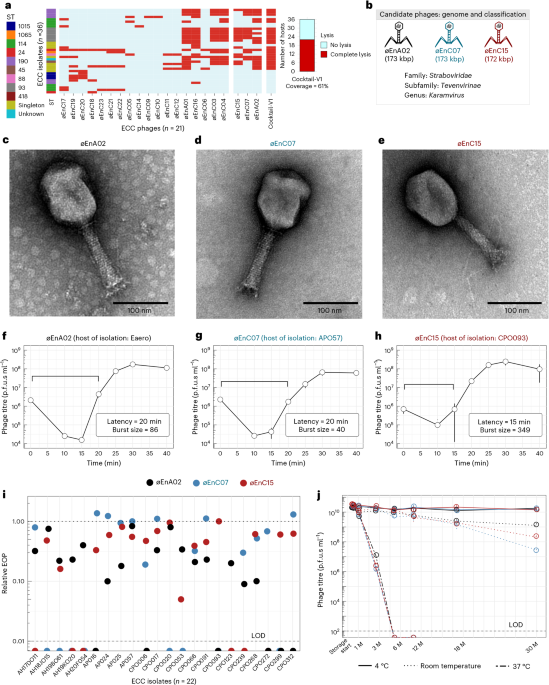
Researchers designed a hospital-specific phage cocktail, Entelli-02, targeting Enterobacter cloacae complex to combat antimicrobial resistance, demonstrating broad efficacy in vitro, in vivo, and on clinical isolates, with potential for rapid clinical deployment.
The article discusses how understanding bacterial defense systems like Kiwa, a sensor that detects phage attacks, can improve phage therapy to combat antibiotic-resistant infections, highlighting the ongoing microbial arms race and the potential for tailored phage treatments.
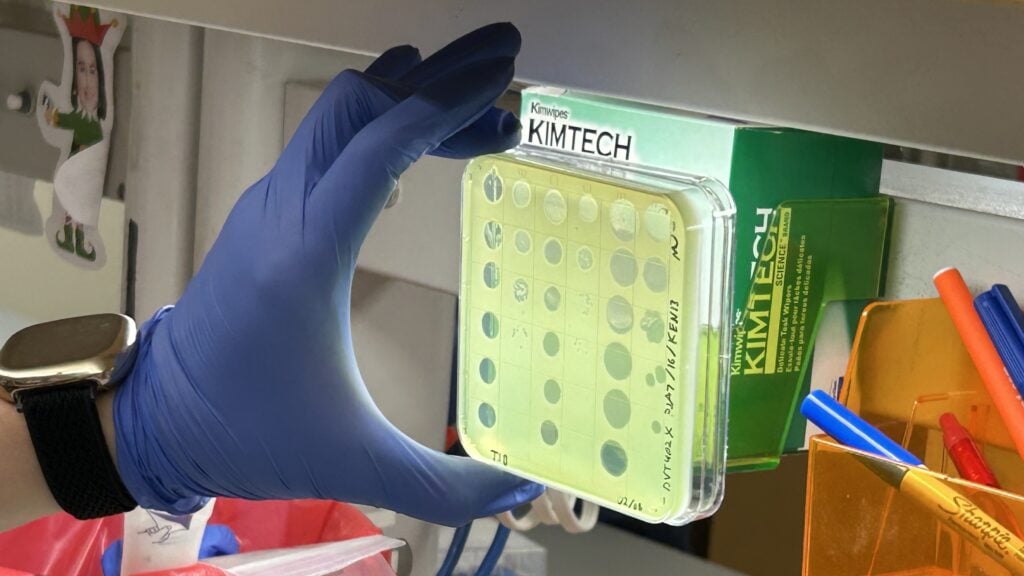
A researcher discovers a bacteriophage in toilet water that can kill bacteria causing infections, highlighting the potential of phage therapy as an alternative to antibiotics amid rising antimicrobial resistance. The process involves collecting samples, isolating phages, and testing their ability to target specific bacteria, with promising results for treating infections like urinary tract infections and lung infections. Phage therapy, a century-old concept, is gaining renewed interest due to the growing threat of superbugs and the limitations of antibiotics.
Phage therapy, which uses bacteriophages to target bacterial infections, is gaining renewed interest as an alternative to antibiotics, which are becoming less effective due to overuse and bacterial resistance. Scientists like Biswajit Biswas and Carl Merril are exploring how phages can persist in the body and potentially evolve to avoid being filtered out by the immune system, offering hope against antibiotic-resistant superbugs. This approach, once overshadowed by antibiotics, is being revisited as a promising solution to combat rising bacterial resistance.
A study led by Prof. Ronen Hazan demonstrated the successful use of personalized phage therapy to treat a multidrug-resistant Pseudomonas aeruginosa infection in a Siamese cat named Squeaks. This marks the first documented application of such therapy in veterinary medicine, highlighting its potential to address antibiotic-resistant infections in animals. The treatment involved a combination of a specific anti-P. aeruginosa phage and ceftazidime, leading to the complete healing of the cat's surgical wound after fourteen weeks.
Phage therapy, which uses bacteriophages to target and kill drug-resistant bacteria, is gaining renewed interest as a potential solution to antibiotic resistance. While promising, challenges such as building comprehensive phage libraries, conducting clinical trials for FDA approval, and addressing purification and delivery issues remain. Despite some successful cases, including the treatment of a patient with recurrent blood infections, there are varied outcomes and uncertainties surrounding phage therapy's effectiveness. Researchers and biotech companies are working to overcome these hurdles and bring phage therapy into mainstream medicine as a viable alternative to antibiotics.
A woman with a persistent bacterial infection was successfully treated with an experimental phage therapy, using viruses found in wastewater to target the specific bacteria in her bloodstream. While the treatment initially cleared her infection, the bacteria eventually evolved to resist the phage, and the therapy triggered an immune reaction in the patient. This case highlights both the potential and limitations of phage therapy in combating drug-resistant bacterial infections, with ongoing clinical trials aiming to optimize its effectiveness.
Cynthia Horton, a lupus patient, suffered from antibiotic-resistant ear infections, leading doctors to treat her with phages, tiny viruses that attack bacteria. Phage therapy is being explored as a potential solution to the growing superbug crisis, with clinical trials underway to test its effectiveness against various infections. Scientists are also investigating genetic engineering to target unique antibiotic-resistant pathogens and mass-produce phages. The CDC is interested in using phages to combat superbug recolonization in patients, potentially decreasing the likelihood of infection and transmission to others.
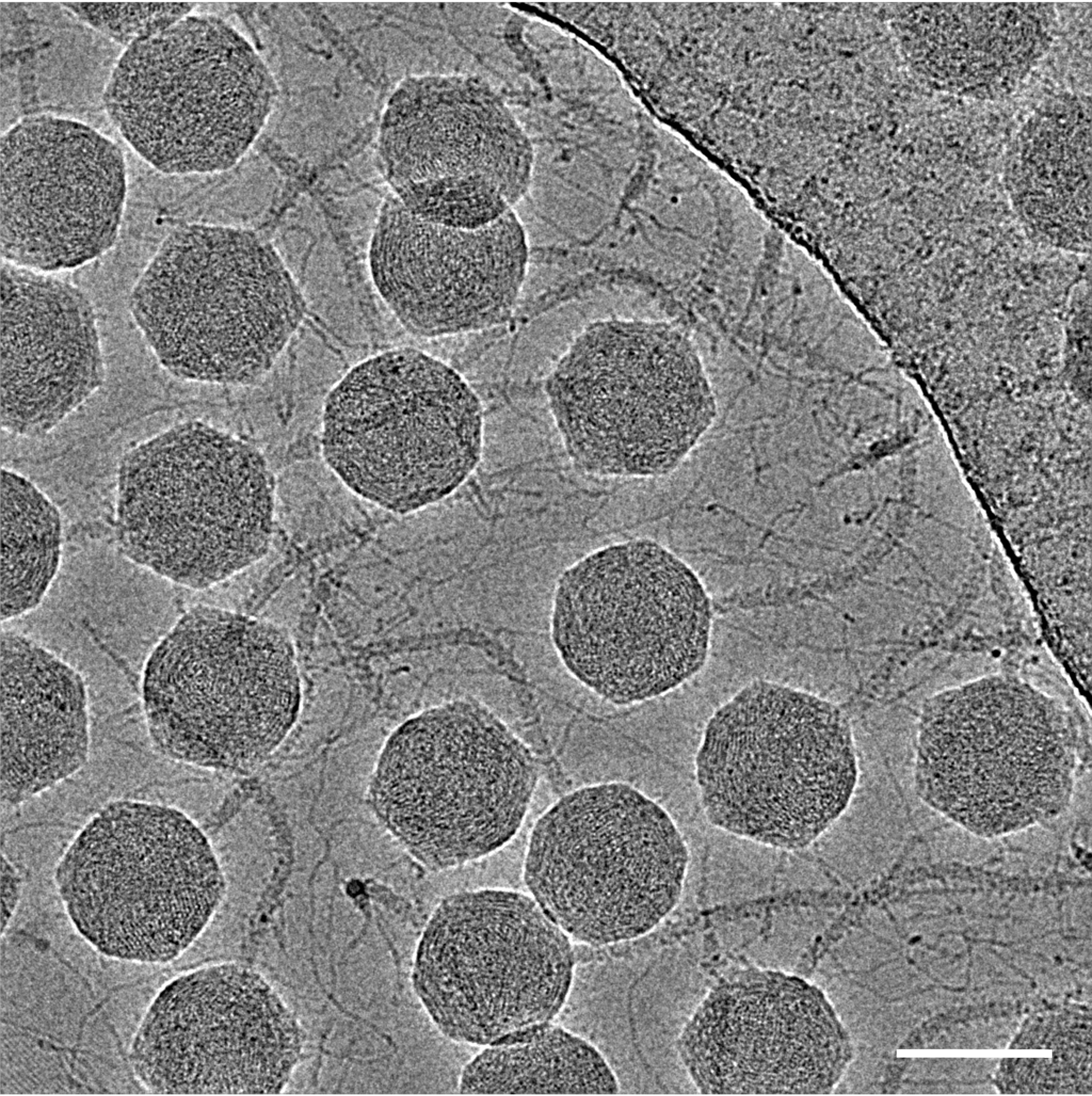
Scientists at the Okinawa Institute of Science and Technology have revealed the molecular structure of the tequintavirus, a type of bacteriophage that infects bacteria. Using cryo-electron microscopy, they obtained atomic models for all structural components of the virus, providing a detailed understanding of its organization at the atomic level. This research has implications for phage therapy, gene therapy, and the engineering of bacteriophages for specific purposes. The study also developed new methods for visualizing complex viruses, which could be applied to other viruses with similar shapes.
A new study reveals that a type of bacteriophage, a virus that infects and kills bacteria, found in the human gut can help mammal cells grow and thrive, suggesting a potential symbiotic relationship. This surprising finding could have implications for future research, including phage therapy to treat antibiotic-resistant infections. The study also highlights the need for further investigation into the interactions between phages and mammalian cells, as well as their potential impacts on human health, particularly in the gut microbiome.
A study published in PLOS Biology suggests that mammalian cells may internalize bacteriophages (viruses that kill bacteria) as a resource to promote cellular growth and survival. Researchers found that the phages triggered signaling pathway events that promote cellular growth and survival without activating DNA-mediated inflammatory pathways. Further studies are needed to understand why cells use phage particles as resources and whether they have evolved to benefit from this internalization. This research provides insights into the potential benefits of bacteriophages on mammalian hosts and has implications for fields such as immunology, phage therapy, microbiome, and human health.
Bacteriophages, or phages, which are viruses that kill bacteria, could potentially be used to prevent sexually transmitted infections (STIs) and reduce our dependence on antibiotics. Currently, the Centers for Disease Control and Prevention (CDC) is considering recommending the use of the antibiotic doxycycline as a preventative measure for at-risk individuals. However, concerns about antibiotic resistance have led experts to explore the use of phages as an alternative. Phages have the advantage of being able to kill both nonresistant and resistant bacteria, and they do not put pressure on bacteria to evolve resistance. While there are technical and research hurdles to overcome, phage therapy could potentially be a safer and more effective option for preventing and treating STIs in the future.
Danish company SNIPR BIOME has engineered bacteriophages, viruses that target bacteria, to make them hyper-selective. They have used CRISPR to precisely target only harmful bacteria, leaving other species to thrive. Their first drug, SNIPR001, is currently in clinical trials and has been shown to prevent the evolution of resistance. SNIPR001 remains stable for five months in storage and does not affect any other gut bacteria. The goal is to continue vanquishing bacterial foes without promoting drug resistance.