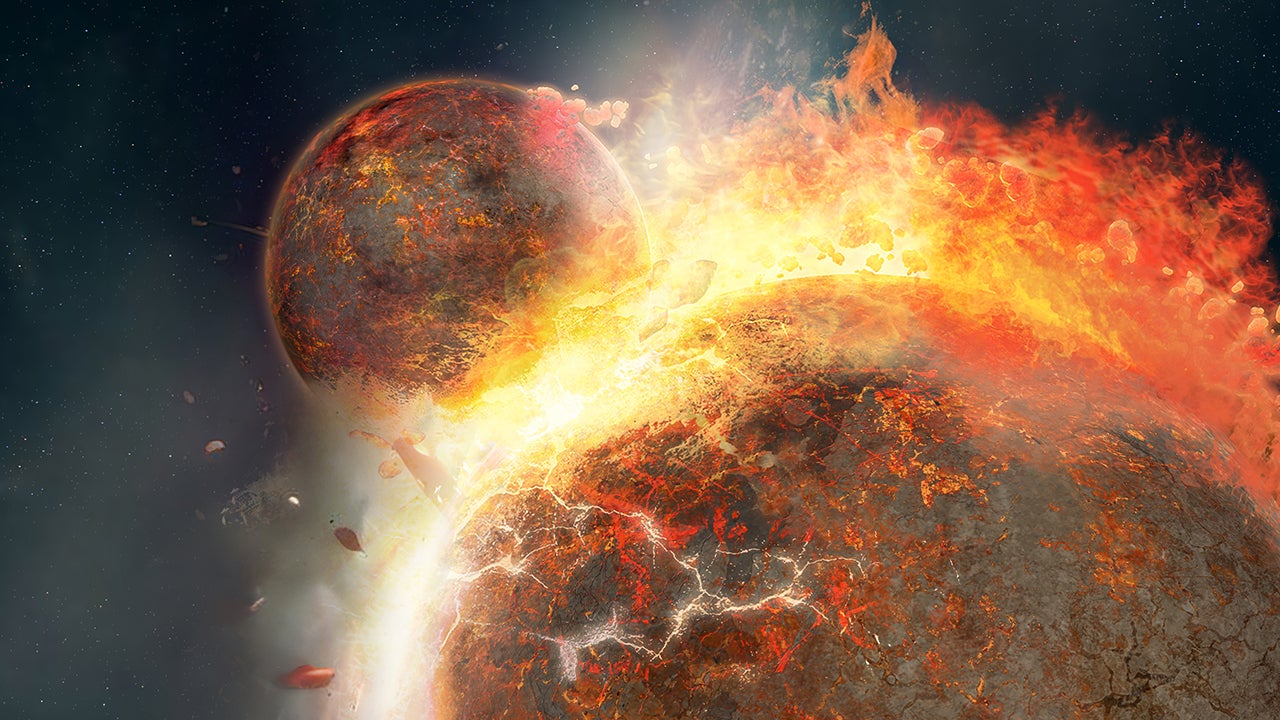
Scientists analyzing 3.7-billion-year-old rocks from Western Australia found chemical signatures supporting the giant impact theory of the moon's formation, revealing insights into Earth's early crust and its connection to lunar origins.
Scientists have found the first direct evidence of the proto-Earth, the original Earth before the Moon-forming impact, by analyzing ancient rocks and meteorites for potassium-40 isotopic signatures. These findings suggest that some ancient Earth materials have survived billions of years, providing new insights into Earth's early composition and the materials that formed it.
Recent research indicates that Earth formed quickly within three million years of the Solar System's birth, but was initially dry, lacking water and carbon compounds. The planet's volatile content was likely delivered later through impacts, such as the collision with Theia, which also led to the formation of the Moon. This late delivery of volatiles was crucial for making Earth habitable, highlighting the importance of impact history in planetary habitability.
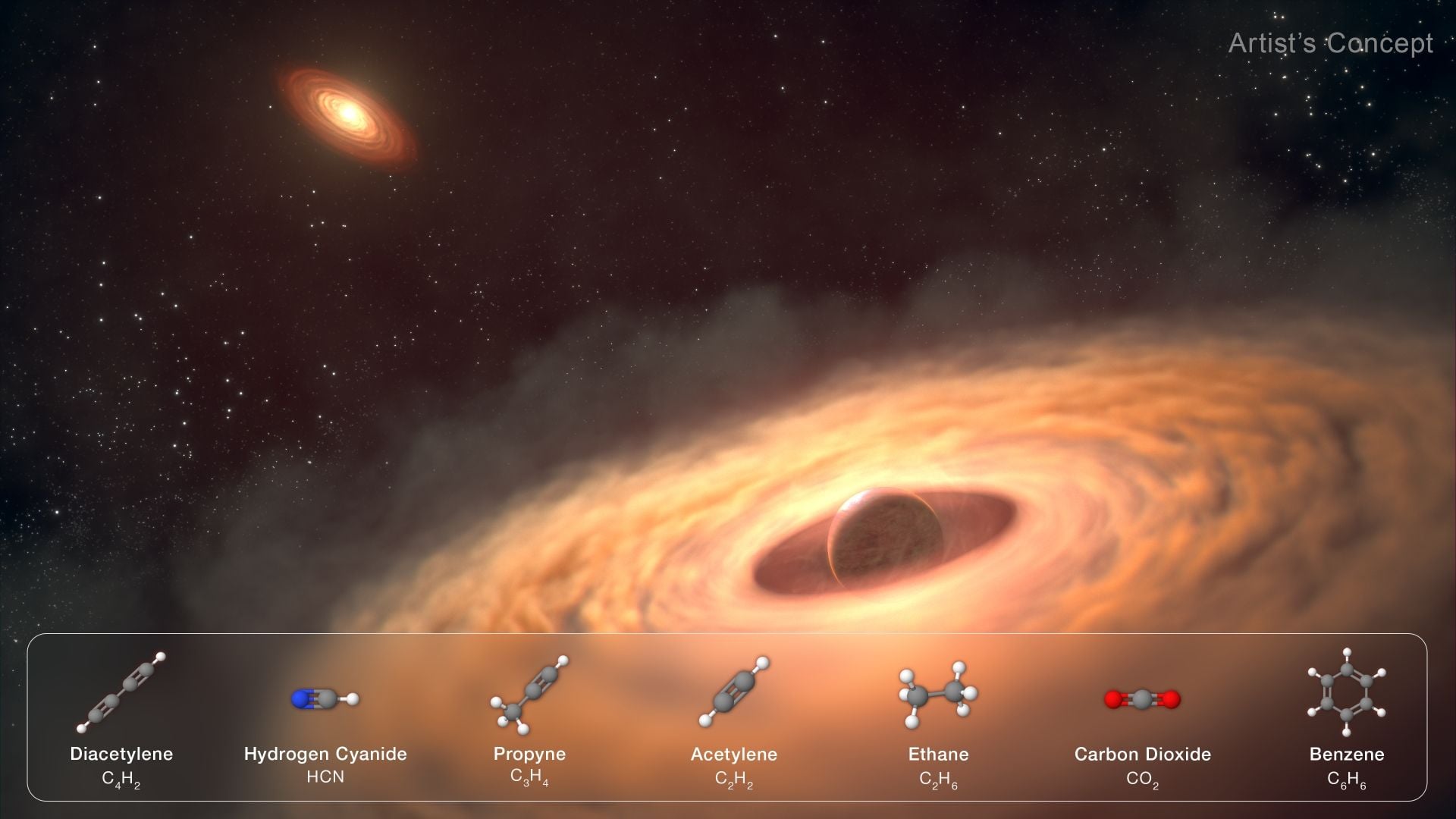
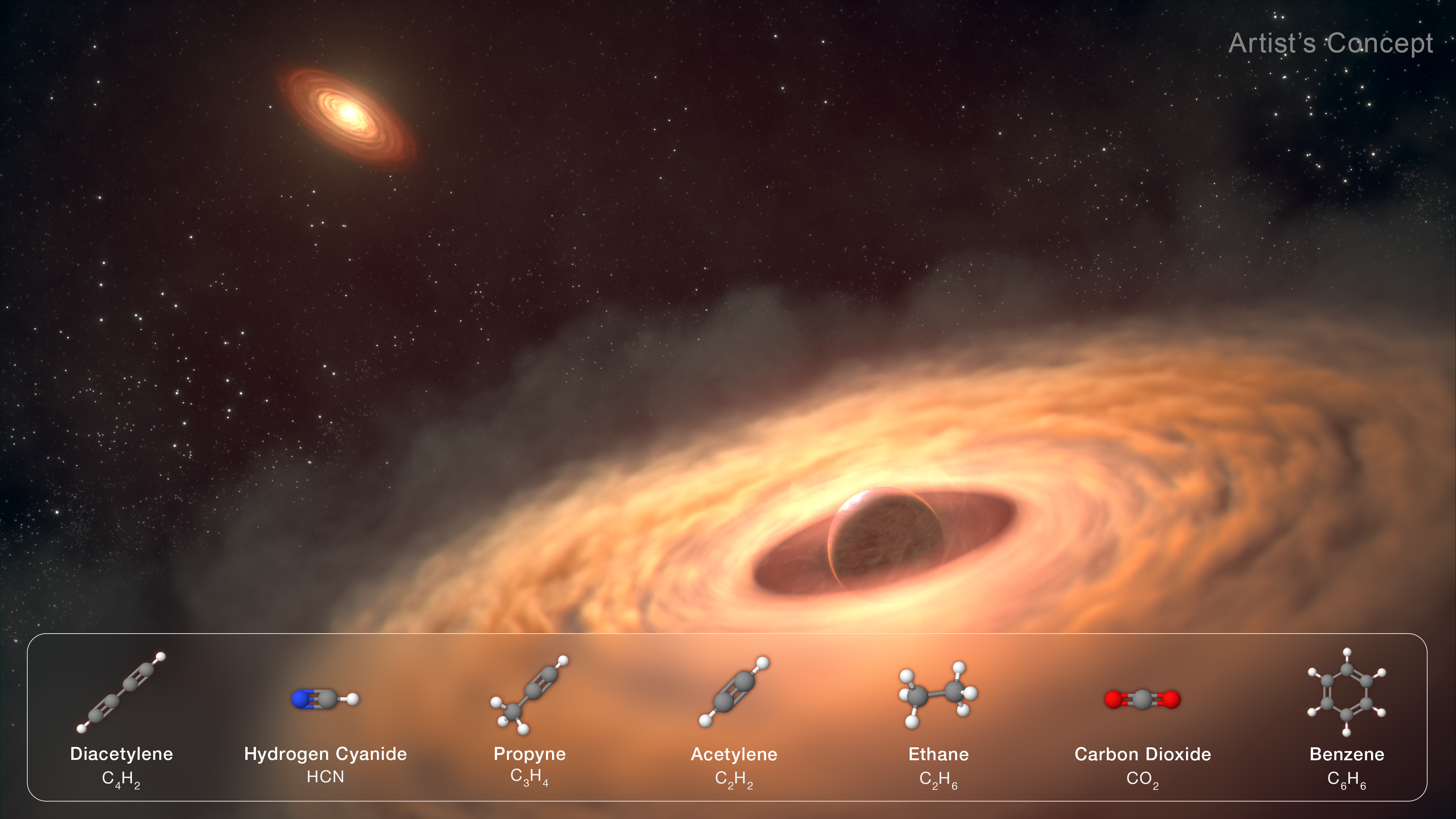
The James Webb Space Telescope has for the first time analyzed the composition of a moon-forming disk around the planetary body CT Cha b, revealing a rich presence of carbon-bearing molecules that are essential for moon formation, providing new insights into how moons in our solar system and beyond may develop.
NASA's James Webb Space Telescope has directly observed a potential moon-forming disk around the exoplanet CT Cha b, revealing complex carbon-rich chemistry and providing new insights into planet and moon formation processes, with implications for understanding our solar system's origins.
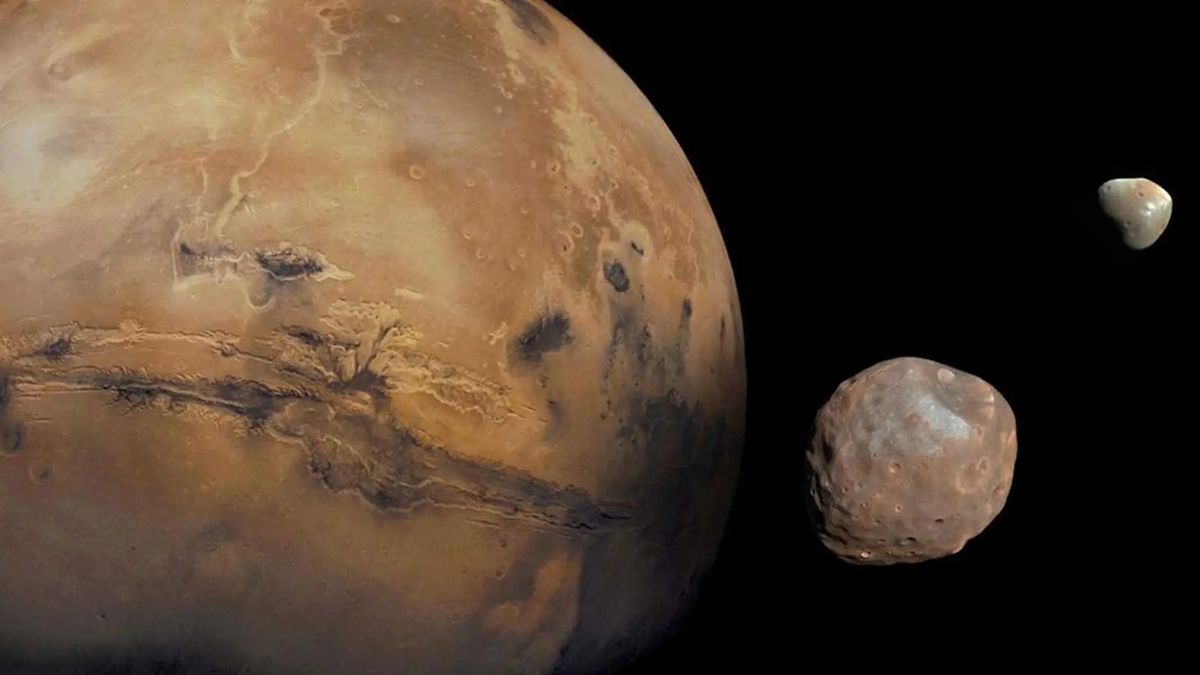
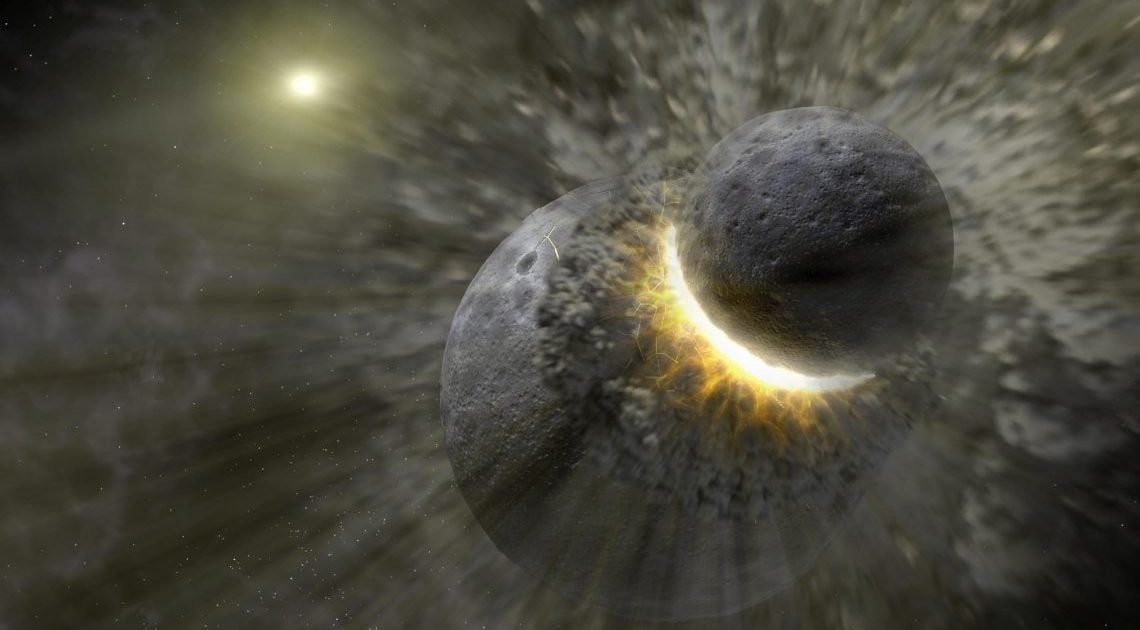
New computer simulations suggest that Mars' moons, Phobos and Deimos, may have formed from debris when a large asteroid was torn apart by Mars' gravity. This model explains their circular orbits and differing distances from Mars, challenging previous theories of their origin. The hypothesis will be tested by the upcoming Martian Moons eXploration mission, which aims to return samples from Phobos to Earth for analysis.
New simulations suggest that smaller rocky planets are more likely to host large moons due to less energetic collisions that produce silicate-rich disks, which are more conducive to moon formation. This contrasts with larger planets, where more energetic impacts create vapor-rich disks that hinder moon formation. The findings imply that exomoons are more likely to be found around planets less than 1.6 times the size of Earth.
Scientists have proposed a new theory explaining the unusual composition of Moon rocks, suggesting that heavy minerals like ilmenite initially sank to the Moon's core before rising back to the surface, effectively turning the Moon inside out. This theory, supported by data and models, challenges previous assumptions about the Moon's formation and could provide a new understanding of our celestial neighbor for future lunar exploration missions.
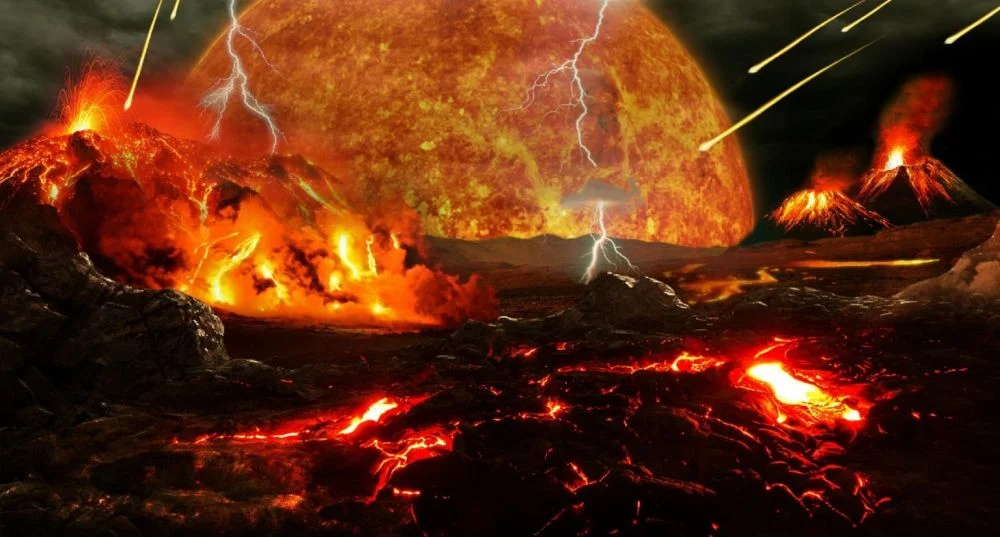
Over 4.5 billion years ago, the formation of planet Earth began as a result of the collapse of a large gas cloud in the Milky Way, leading to the birth of the Sun and the formation of a planetary system. Protoplanetary disks around young stars are the starting points for planet formation, with gaps forming after 1-2 million years. Planets grow from imperfections in these disks, and collisions between protoplanetesimals lead to the formation of moons. The Moon's origin is likely the result of a high-energy collision with a foreign object, forming a synestia, and eventually settling to form Earth and the Moon as we know them today. The early Solar System was conducive to life, with the raw ingredients for habitability, suggesting the possibility of life arising elsewhere in the Milky Way.
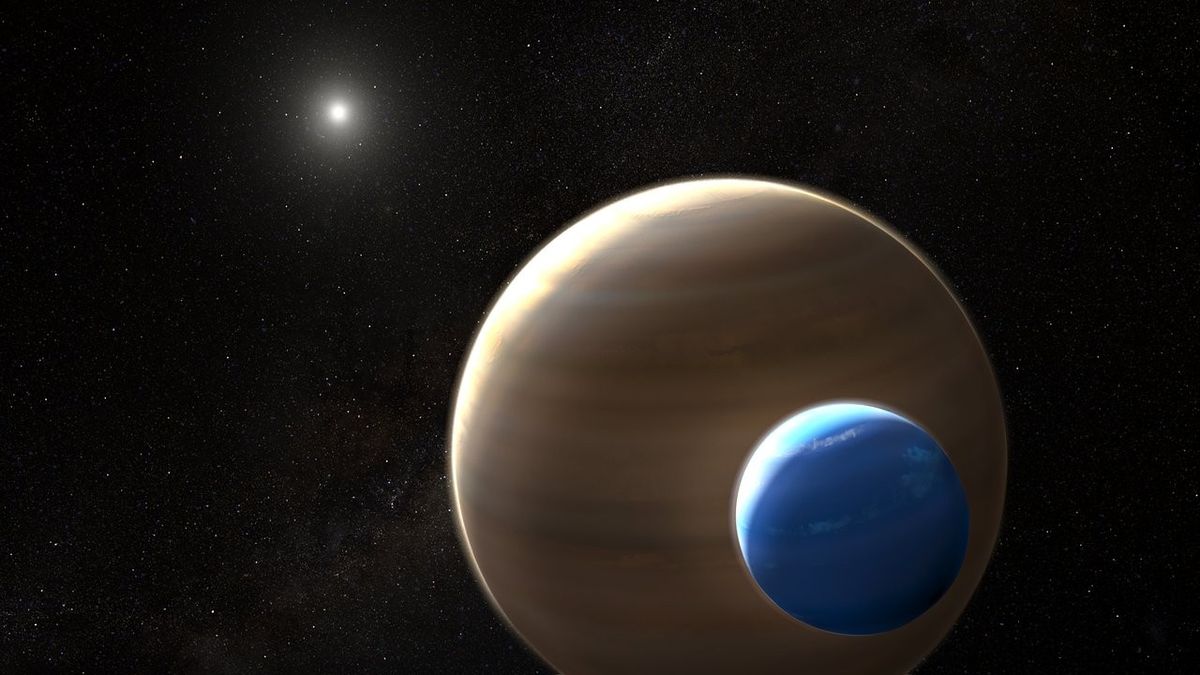
Gas moons do exist, but they are not found in our solar system. While most moons in our solar system formed through the bottom-up core accretion process, there was not enough leftover material to form gas moons. The top-down process of gas world formation also has limitations, as objects smaller than 3 Jupiter masses cannot form. However, there are oddities in the solar system, such as captured moons, that formed independently and later got caught by a planet's gravity. In the case of exoplanets, there are two possible gas exomoons, Kepler 1625b-i and Kepler 1708b-i, which are gas giants orbiting even larger gas giants. These exomoons challenge existing theories and may have been captured objects rather than true moons.
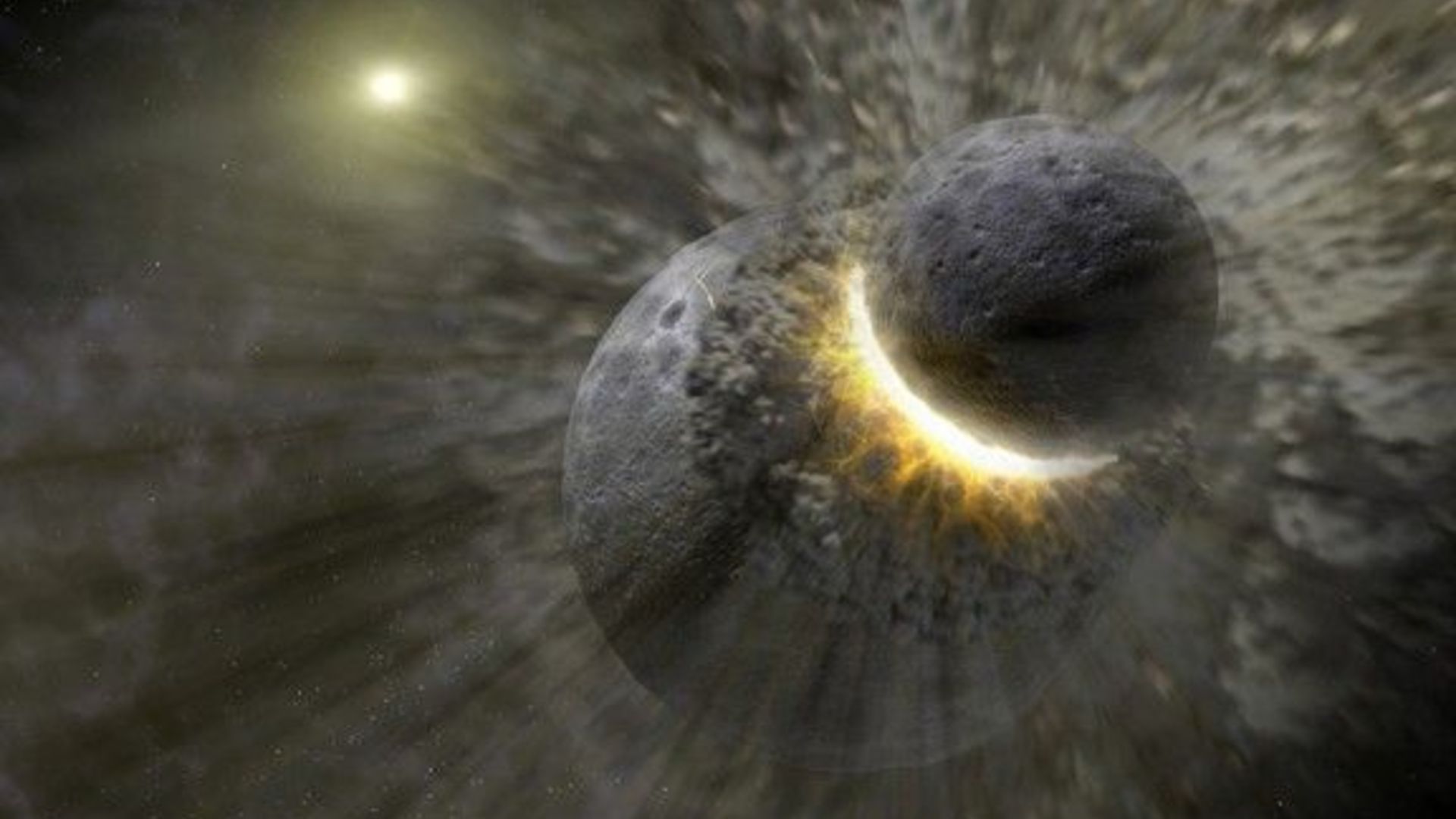
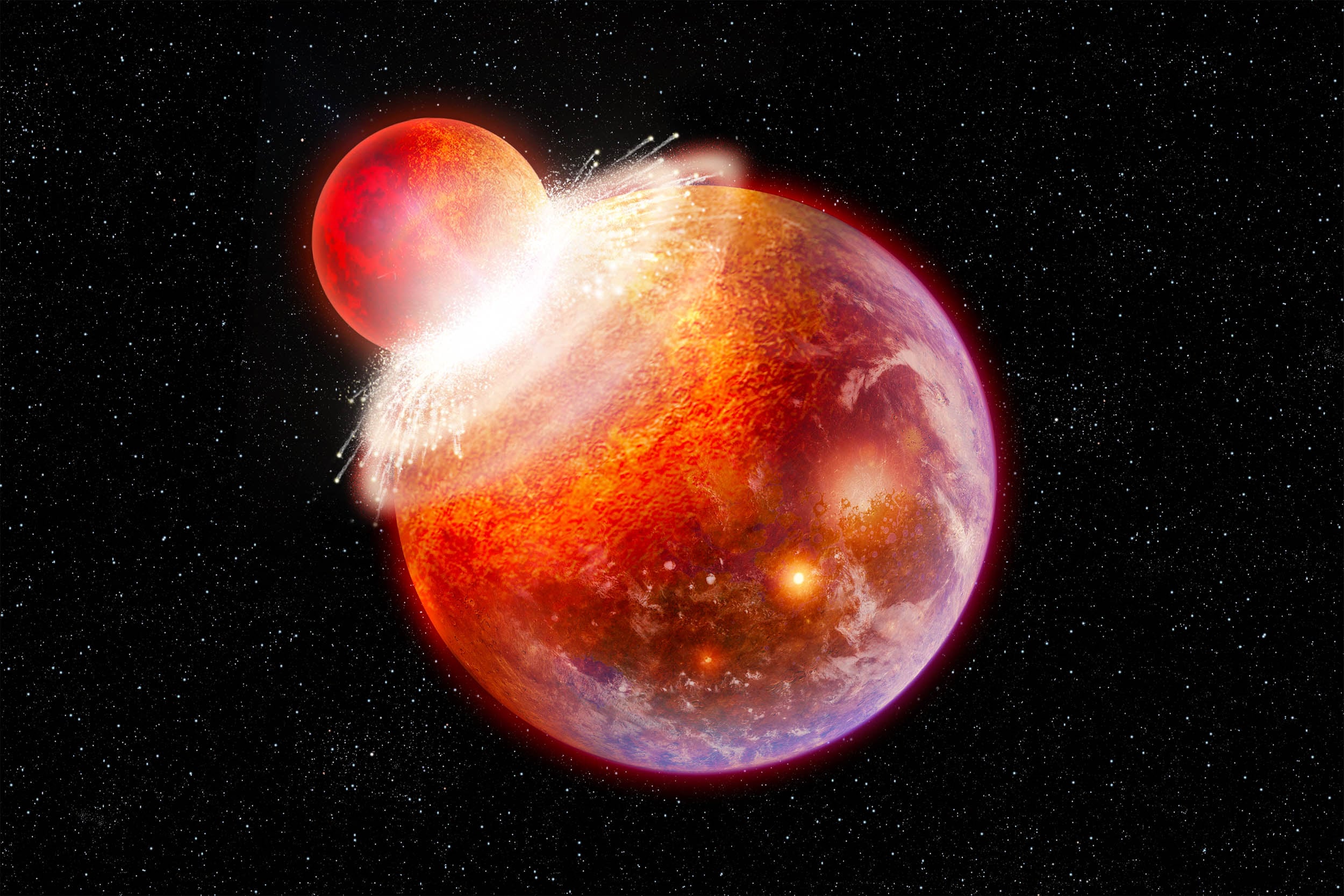
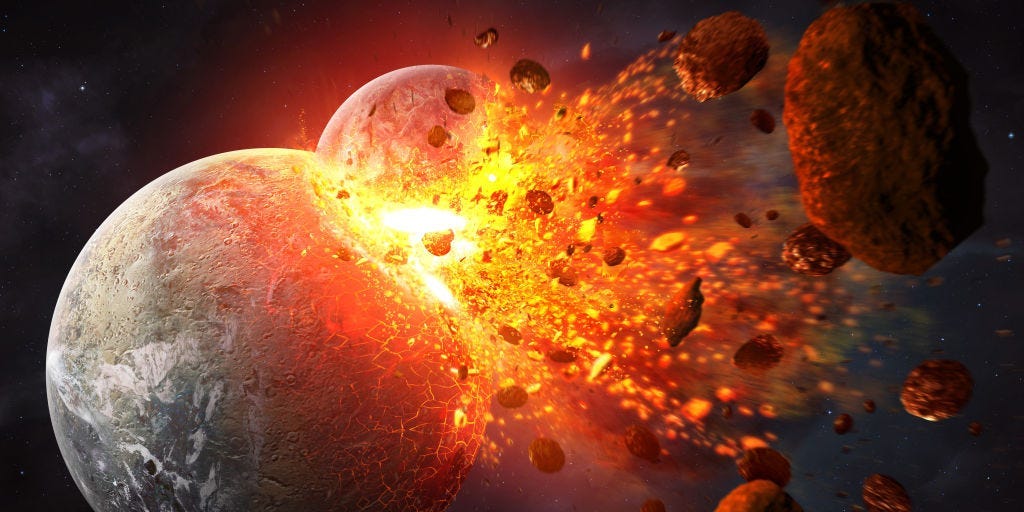
Scientists have proposed four leading theories on how the moon formed. The capture theory suggests that the moon was wandering through the universe and was captured into Earth's orbit. However, this theory is unlikely due to the moon's size. The accretion hypothesis suggests that the moon and Earth emerged from the same cosmic cloud of dust. Another theory suggests that the moon is material shed by the Earth as it started spinning. The most widely accepted theory is the giant impact theory, which suggests that a Mars-sized planet called Theia collided with Earth, causing material to be ejected into space and eventually forming the moon. However, there are still unanswered questions and ongoing research to reconcile the finer details of this theory.
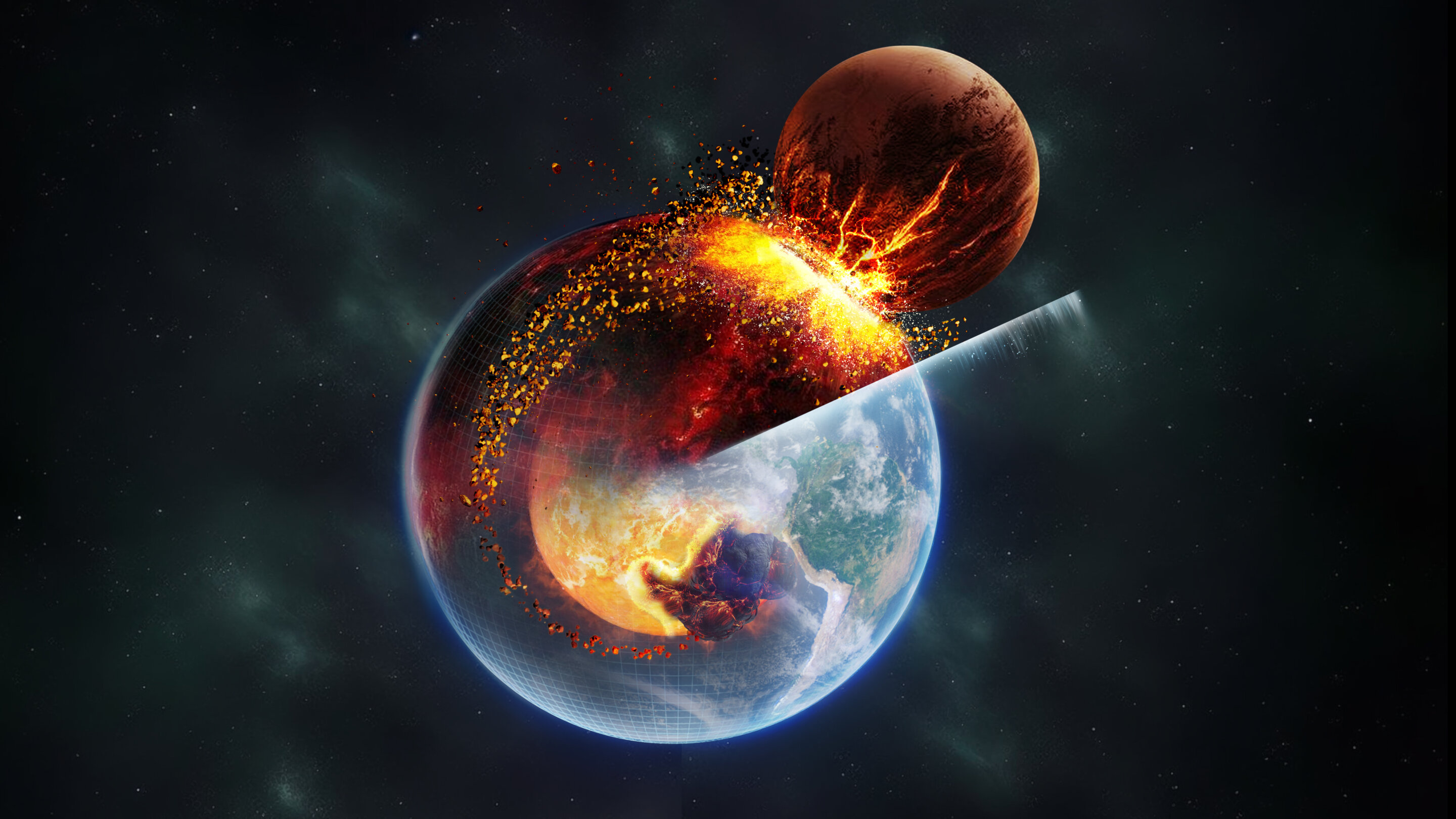
Scientists have discovered two large, dense masses in the Earth's mantle, one under Africa and the other under the South Pacific Ocean, which they believe could be remnants of a collision between Earth and a Mars-sized object called Theia that occurred over 4.46 billion years ago. Computer simulations suggest that most of Theia was absorbed into Earth, forming the two masses, while the remaining pieces formed the moon. If confirmed, this would provide evidence of the moon-forming crash and shed light on the evolution of Earth and other rocky planets.
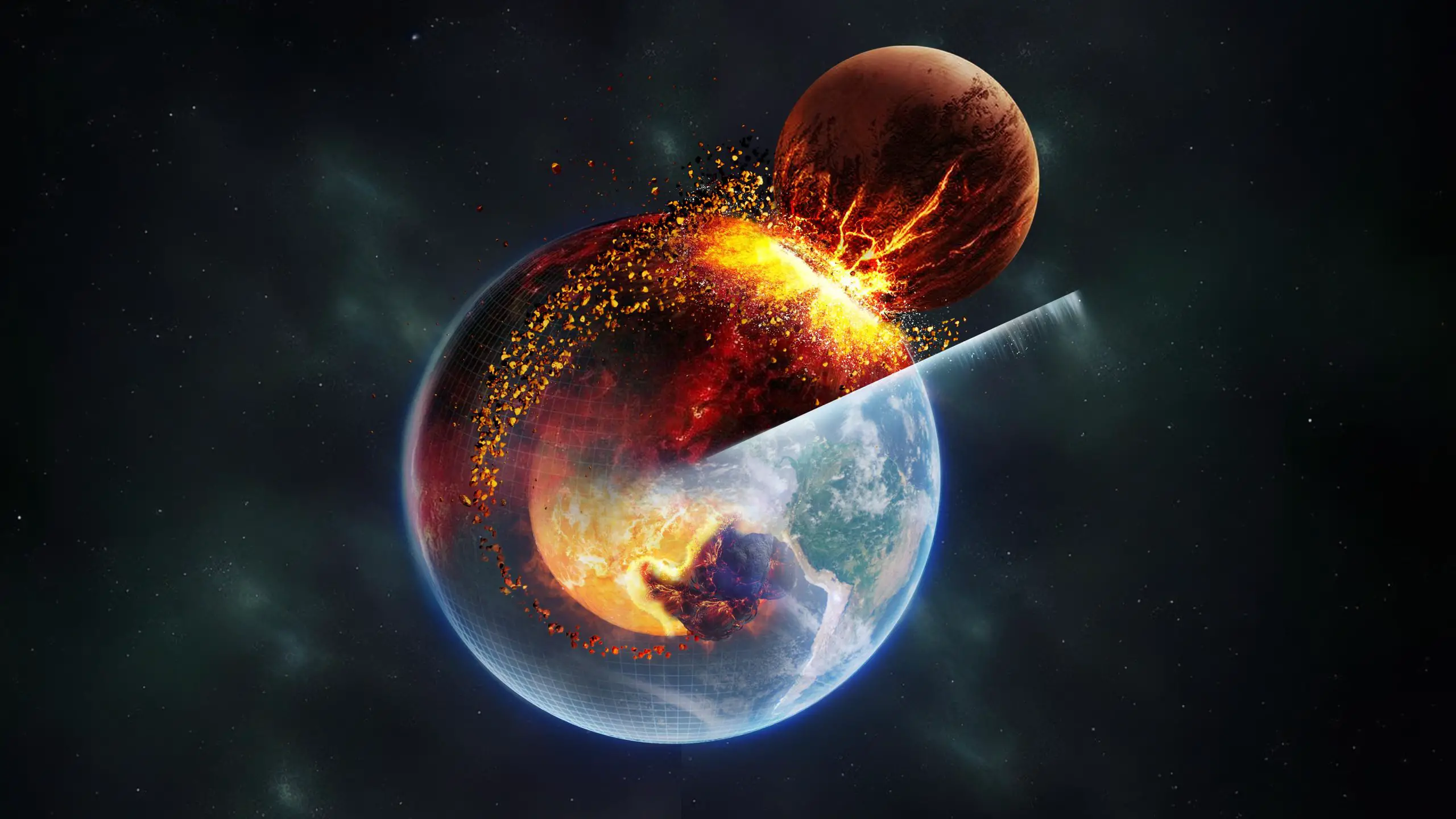
Scientists have discovered that remnants of the ancient planet Theia may be present in Earth's deep mantle, shedding light on the origin of the Moon and Earth's early history. Through computational fluid dynamics simulations, researchers found that the giant impact between Theia and Earth resulted in mantle stratification, with the upper mantle forming a magma ocean and the lower mantle retaining the composition of Earth (Gaia). This stratification may have persisted to the present day, explaining the presence of Large Low Velocity Provinces (LLVPs) in the mantle. The study challenges previous theories of Moon formation and provides insights into Earth's geological evolution and the formation of the inner solar system.
Scientists believe that remnants of an ancient Mars-sized planet called Theia, which collided with Earth 4.5 billion years ago and gave rise to the formation of the moon, may be buried deep within Earth's mantle close to the core. Computer simulations support the theory that two continent-sized masses of material located under Africa and the Pacific Ocean are remnants of Theia. These masses, known as large low-velocity provinces (LLVPs), have a different composition and higher density than the surrounding mantle. The simulations suggest that Theia's matter, which partially melted Earth's mantle during the collision, settled into these LLVPs over time. Further research will explore how this alien material may have influenced Earth's evolution and the formation of its first continents.
A recent study suggests that a massive anomaly deep within Earth's mantle may be a remnant of the collision that formed the moon around 4.5 billion years ago. Using computational fluid dynamics methods, researchers discovered that the early Earth exhibited mantle stratification after the impact, with the upper mantle featuring a magma ocean created through the mixing of material from Earth and the proto-planet Theia, while the lower mantle remained solid and retained the composition of Earth. This finding challenges the traditional notion that the giant impact led to the homogenization of the early Earth and provides insights into Earth's internal structure and long-term evolution. The study also sheds light on the formation of the inner solar system and has implications for understanding the heterogeneity of Earth's mantle and the origins of Large Low Velocity Provinces (LLVPs).