Tag

Gas Giants

All articles tagged with #gas giants

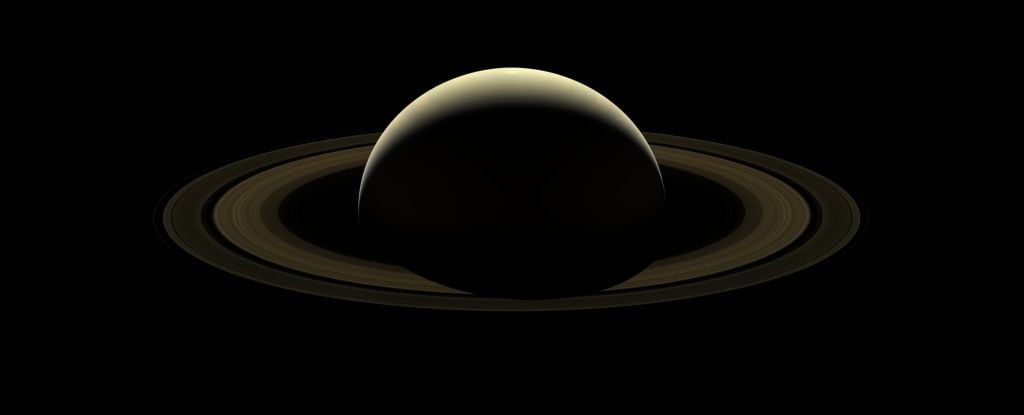
NASA's James Webb Discovers Unexplained Phenomenon in Saturn's Atmosphere

Originally Published 2 months ago — by Indian Defence Review

Featured image for NASA's James Webb Discovers Unexplained Phenomenon in Saturn's Atmosphere
Source: Indian Defence Review

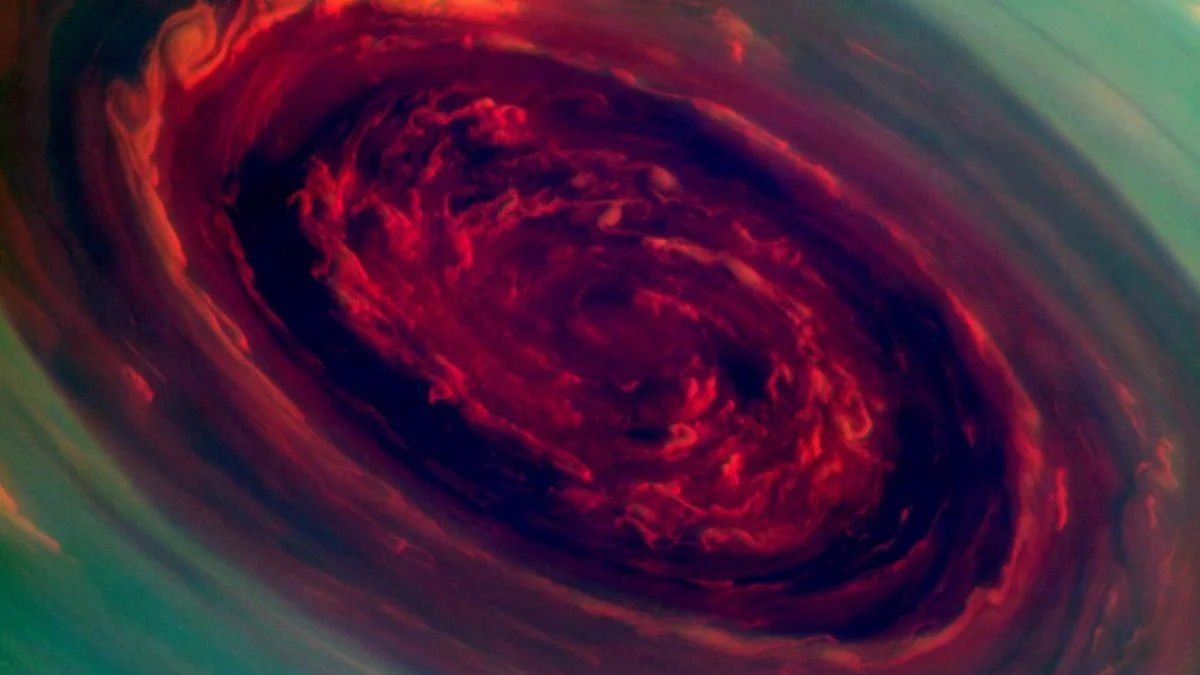
NASA's James Webb Space Telescope has discovered two mysterious atmospheric phenomena on Saturn—dark beads in the ionosphere and an asymmetric star-shaped pattern in the stratosphere—that defy current scientific understanding, suggesting new, unexplored dynamics in planetary atmospheres.

Interstellar Comet 3I/ATLAS Reveals Origins and Impact on Planet Formation

Originally Published 3 months ago — by Rude Baguette

Featured image for Interstellar Comet 3I/ATLAS Reveals Origins and Impact on Planet Formation
Source: Rude Baguette

Astrophysicist Susanne Pfalzner proposes that interstellar objects may serve as seeds for giant planet formation, especially around high-mass stars, potentially revolutionizing our understanding of planetary genesis and explaining the rapid formation of gas giants like Jupiter.

James Webb Telescope Reveals Infant and Young Exoplanets in Formation

Originally Published 7 months ago — by Reuters

Featured image for James Webb Telescope Reveals Infant and Young Exoplanets in Formation
Source: Reuters

The James Webb Space Telescope has directly imaged two massive, young exoplanets orbiting a star about 16 million years old, revealing they are at different stages of development with distinct atmospheric features, highlighting the complexity of planetary system formation.

"Saturn's Energy Imbalance Fuels Massive Storms, Cassini Reveals"

Originally Published 1 year ago — by ScienceAlert

Featured image for "Saturn's Energy Imbalance Fuels Massive Storms, Cassini Reveals"
Source: ScienceAlert

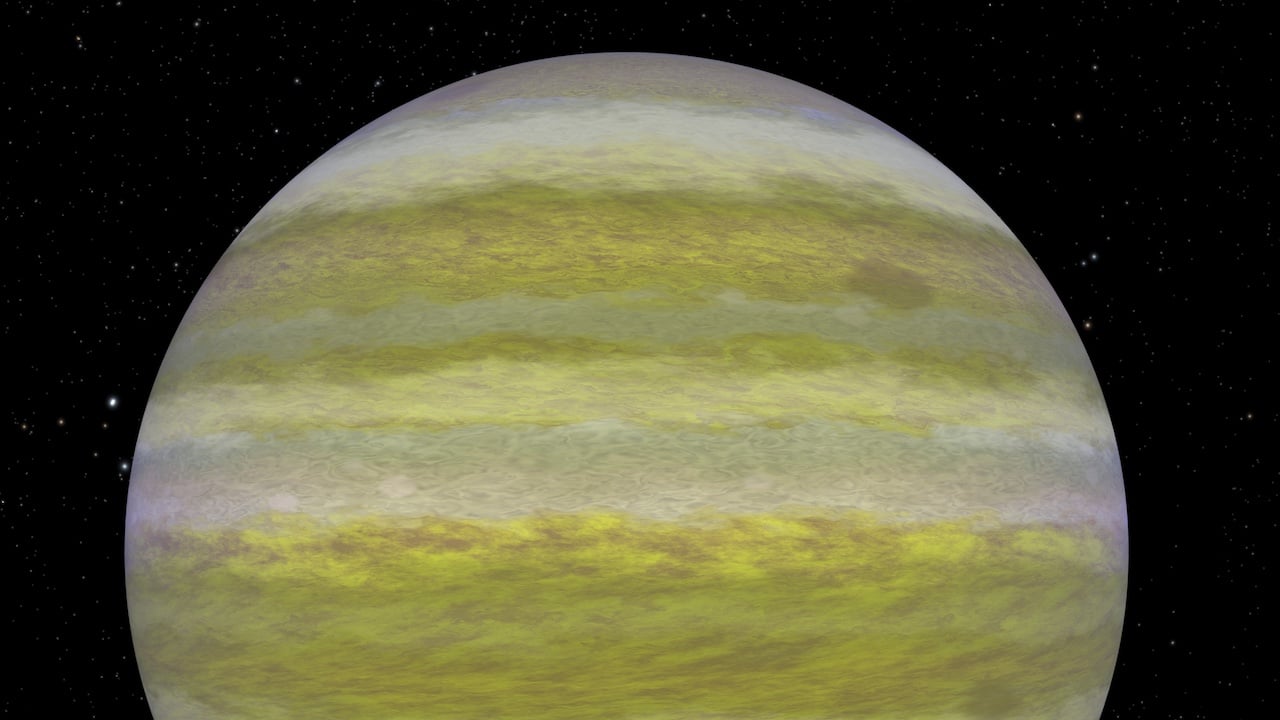
Scientists have discovered a significant seasonal energy imbalance on Saturn, with energy absorption and emission varying by up to 16% due to its elliptical orbit. This finding challenges existing models of gas giant atmospheres and suggests similar imbalances may exist on other gas giants like Jupiter, Neptune, and Uranus. The research, based on Cassini data, could also enhance our understanding of planetary weather and climate.

"Astronomers Discover 'Cold Saturn' with Unusually Long Year"

Originally Published 1 year ago — by Science@NASA

Featured image for "Astronomers Discover 'Cold Saturn' with Unusually Long Year"
Source: Science@NASA

NASA's TESS has discovered two giant planets, TOI-4600 b and c, orbiting a star 700 light-years away, with the outer planet having the longest year of 483 days and being among the coldest exoplanets found so far. These planets could provide valuable insights into the formation and evolution of large, gaseous planets, filling a gap in knowledge between gas giants like Jupiter and "hot Jupiters." While space telescopes have been able to measure some atmospheric components of hot and warm Jupiters, TOI-4600 b and c offer the rarer prospect of revealing atmospheric ingredients of "temperate" gas giants.

"Revealing the Flat Truth: Jupiter's Surprising Past and Baby Exoplanets' Shape"

Originally Published 1 year ago — by ScienceAlert

Featured image for "Revealing the Flat Truth: Jupiter's Surprising Past and Baby Exoplanets' Shape"
Source: ScienceAlert

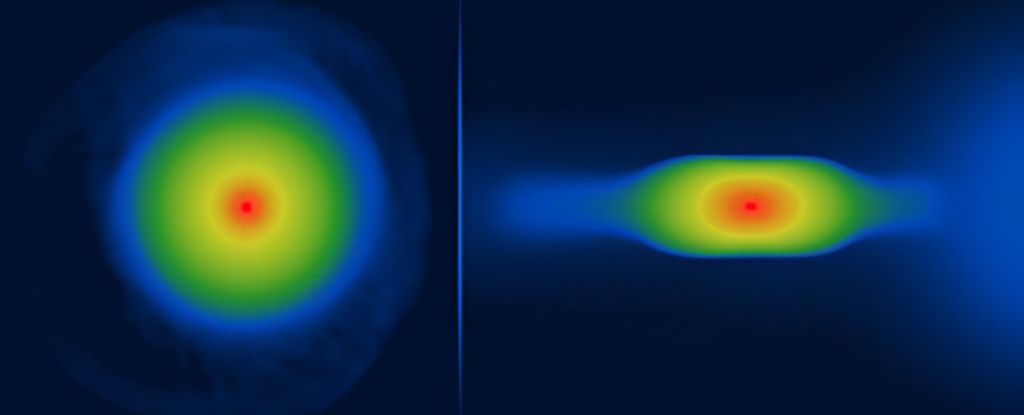
New simulations suggest that gas giant protoplanets may initially form as flattened oblate spheroids before settling into their familiar round shape, shedding light on the diverse ways planets can grow in the turbulent disks of dust and gas around young stars. This finding challenges the assumption that planets form as perfect spheres and provides insight into the process of disk instability planet formation. The research, conducted by astrophysicists at the University of Central Lancashire, has been accepted into Astronomy & Astrophysics Letters and offers valuable implications for understanding and interpreting developing planets in stellar disks.

"Unraveling the Enigma: The Absence of Gas Moons in Space"

Originally Published 2 years ago — by Space.com

Featured image for "Unraveling the Enigma: The Absence of Gas Moons in Space"
Source: Space.com

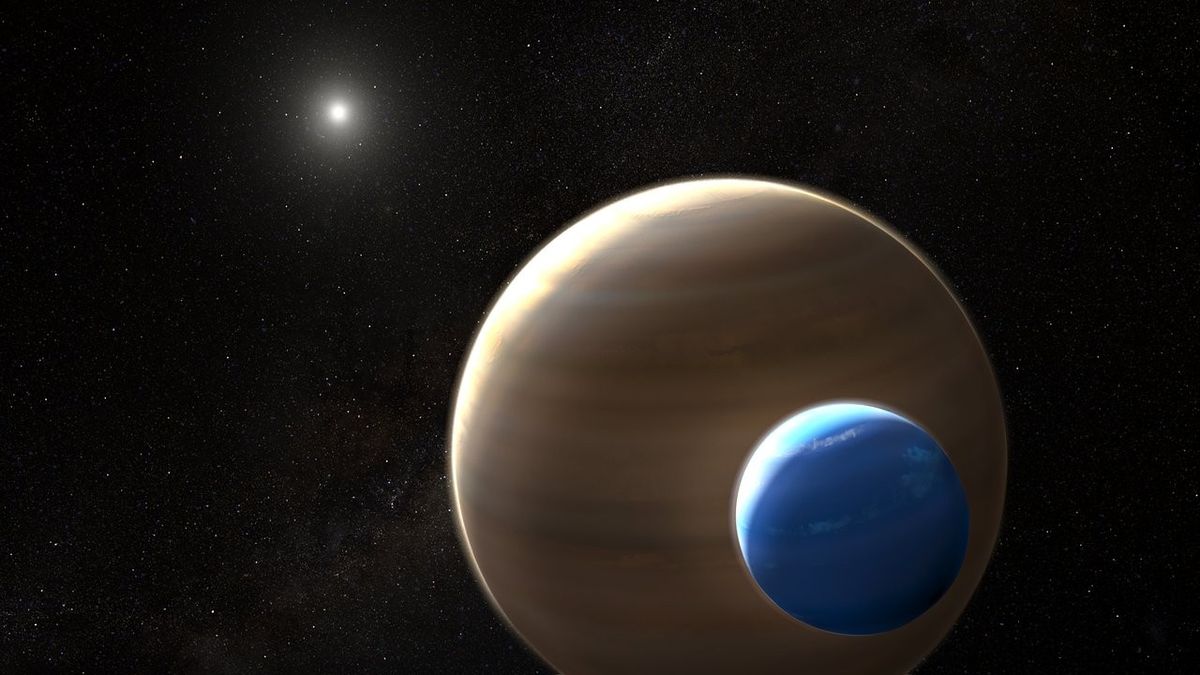
Gas moons do exist, but they are not found in our solar system. While most moons in our solar system formed through the bottom-up core accretion process, there was not enough leftover material to form gas moons. The top-down process of gas world formation also has limitations, as objects smaller than 3 Jupiter masses cannot form. However, there are oddities in the solar system, such as captured moons, that formed independently and later got caught by a planet's gravity. In the case of exoplanets, there are two possible gas exomoons, Kepler 1625b-i and Kepler 1708b-i, which are gas giants orbiting even larger gas giants. These exomoons challenge existing theories and may have been captured objects rather than true moons.

"Unveiling the Colossal Giant: The Largest Planet Ever Discovered"

Originally Published 2 years ago — by Space.com

Featured image for "Unveiling the Colossal Giant: The Largest Planet Ever Discovered"
Source: Space.com

The largest known planet depends on various factors, including how one defines a planet. One candidate is ROXs 42Bb, a gas giant about nine times the mass of Jupiter and with a radius 2.5 times that of Jupiter. However, there are other objects, including protoplanets, that may be larger. The uncertainty arises from different measurement methods and the challenge of distinguishing between planets and brown dwarfs. The formation process of an object is not currently part of the formal definition of a planet. The debate over what constitutes a planet highlights the diversity of planetary systems and the many possible outcomes.

Young Stars Host Hot Jupiters as Old Ones Feast

Originally Published 2 years ago — by Inverse

Featured image for Young Stars Host Hot Jupiters as Old Ones Feast
Source: Inverse

Hot Jupiters, gas giants that orbit close to their host stars, are more common around younger stars because they don't live long enough to orbit older ones, according to a new study. The research suggests that hot Jupiters form early or migrate early in a star system's life. Older stars that once had hot Jupiters may have already consumed them. The study provides insights into how these gas giants form and offers a way to test models of planet formation.

"Breakthrough: Scientists Uncover Ultra-Hot Ice's New High-Density Phase"

Originally Published 2 years ago — by Phys.org

Featured image for "Breakthrough: Scientists Uncover Ultra-Hot Ice's New High-Density Phase"
Source: Phys.org

Scientists have discovered a new phase of high-density, ultra-hot ice called Ice XIX, which could exist in the interiors of gas giants like Uranus and Neptune. Using high-power lasers and X-ray laser facilities, researchers observed the body-centered cubic structure of Ice XIX, with freely moving hydrogen atoms that dramatically increase conductivity. This discovery provides insight into the complex magnetic fields observed by the Voyager II spacecraft and expands our understanding of water ice under extreme conditions.

Centuries-Long Megastorms on Saturn: Unveiling the Lingering Scars

Originally Published 2 years ago — by Earth.com

Featured image for Centuries-Long Megastorms on Saturn: Unveiling the Lingering Scars
Source: Earth.com

Megastorms on Saturn can last for centuries, leaving marks on its atmosphere. Researchers from UC Berkeley and the University of Michigan studied radio emissions from Saturn and discovered long-term disruptions in the distribution of ammonia gas. These megastorms, which occur every two to three decades, resemble Earth's hurricanes but on a much larger scale. The driving force behind these storms remains a mystery, but the findings provide a broader perspective on the largest storms in the solar system and challenge current knowledge of terrestrial meteorology.

TESS Discovers Longest-Orbit Exoplanet in NASA's Latest Findings

Originally Published 2 years ago — by SciTechDaily

Featured image for TESS Discovers Longest-Orbit Exoplanet in NASA's Latest Findings
Source: SciTechDaily

Astronomers using NASA's Transiting Exoplanet Survey Satellite (TESS) have discovered a rare system containing two long-period planets orbiting the star TOI-4600, located 815 light years away from Earth. The inner planet has an 82-day orbit, similar to Mercury, while the outer planet has a 482-day orbit, placing it between Earth and Mars. These gas giants bridge the gap between "hot Jupiters" and the colder, longer-period gas giants in our solar system. The discovery provides valuable insights into the formation and composition of planets with longer orbital periods.