Tag

Earth Formation

All articles tagged with #earth formation

science3 months ago

The Cosmic Collision That Made Earth Habitable and Gave Rise to Life

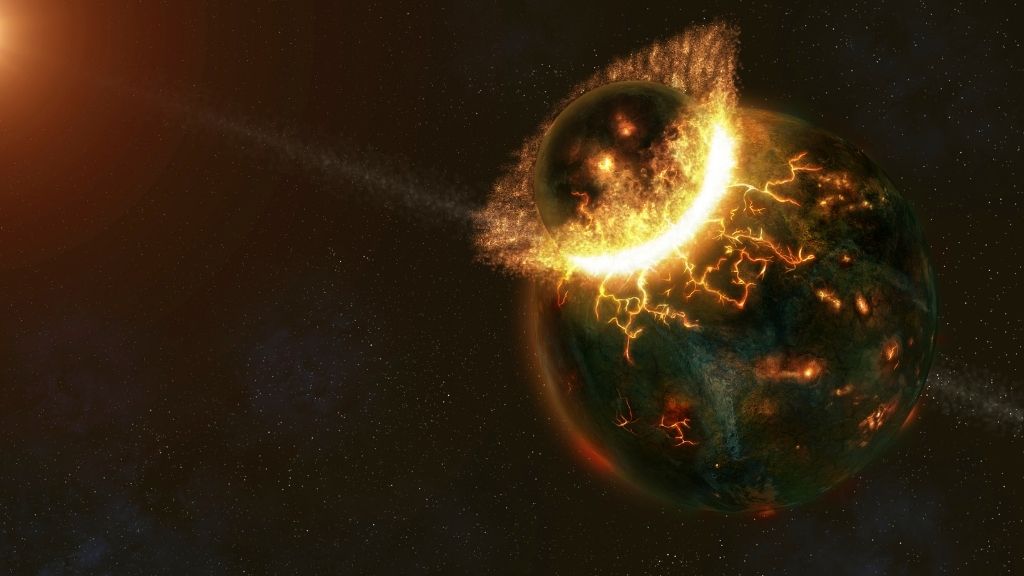
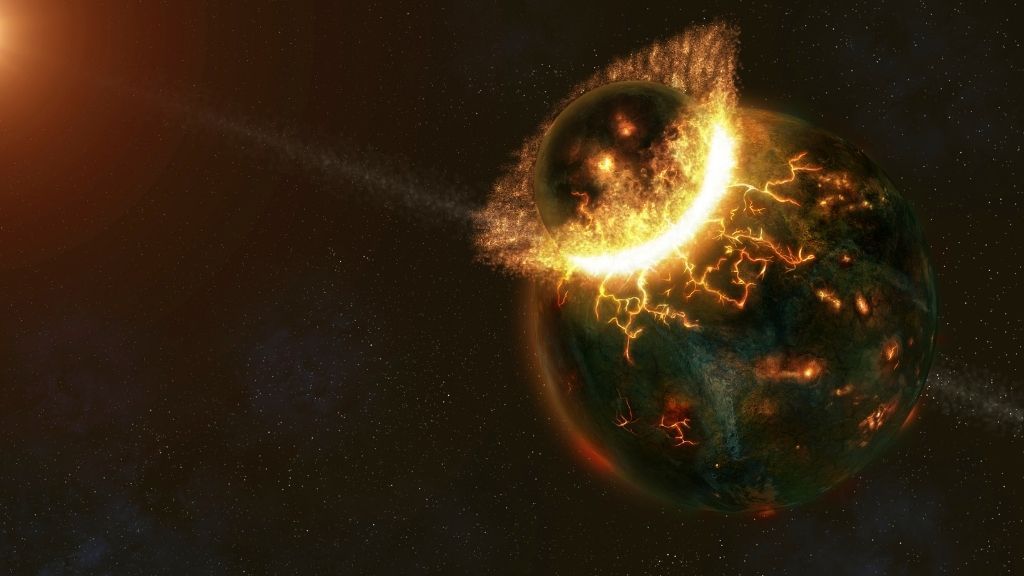
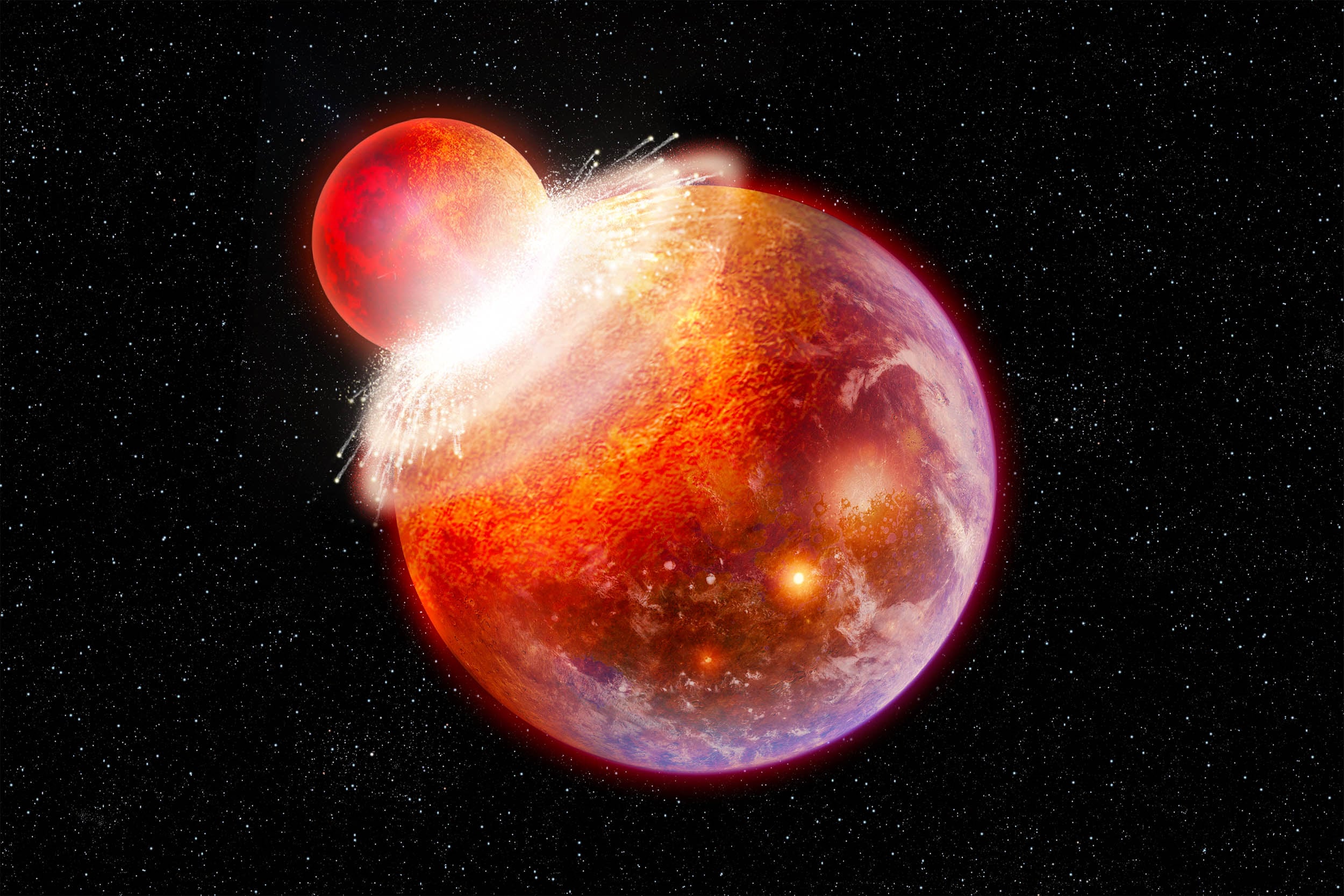
Recent research indicates that Earth formed quickly within three million years of the Solar System's birth, but was initially dry, lacking water and carbon compounds. The planet's volatile content was likely delivered later through impacts, such as the collision with Theia, which also led to the formation of the Moon. This late delivery of volatiles was crucial for making Earth habitable, highlighting the importance of impact history in planetary habitability.
science3 months ago

Cosmic Collision Turned Earth into a Water-Rich, Life-Supporting Planet

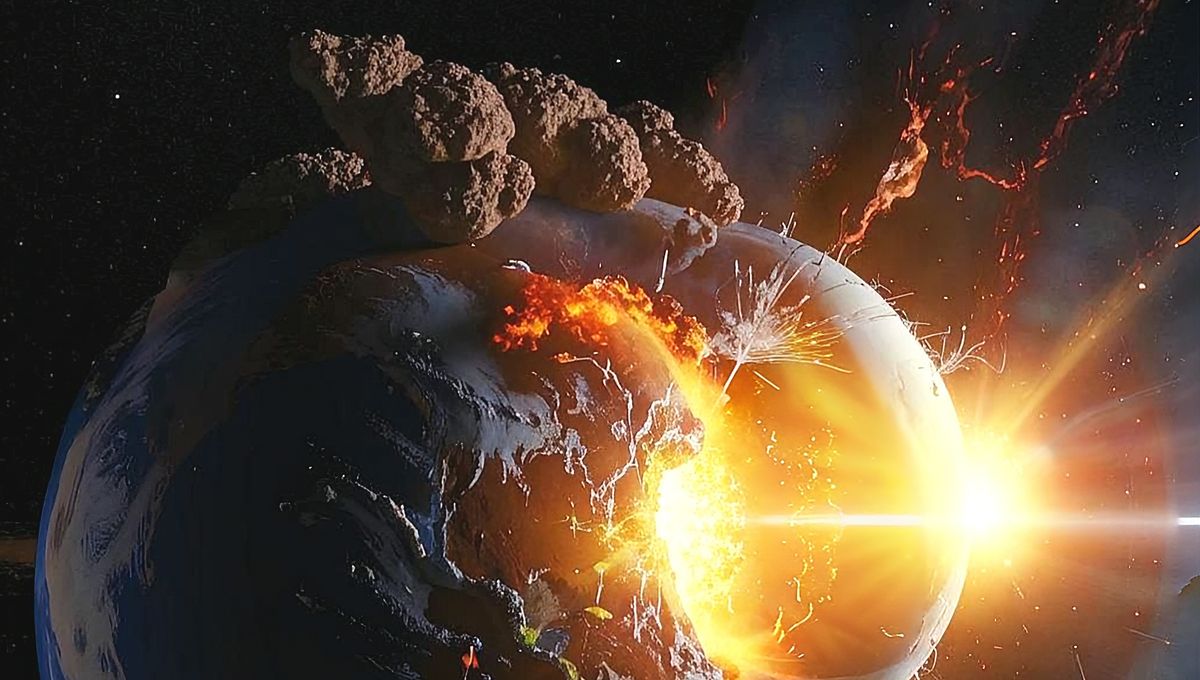
A new theory suggests Earth was initially dry and only became water-rich after a massive collision with Theia, which also formed the Moon. This event delivered volatiles essential for life, making Earth’s habitability a rare outcome of a unique planetary collision, and implying that truly life-friendly planets may be exceedingly uncommon in the universe.

science4 months ago

Earth's Formation and the Origins of Life

A study from the University of Bern shows that Earth's initial chemical composition was complete within three million years of formation, suggesting that essential life ingredients like water and organic compounds were likely delivered by a late impact with a water-rich body, supporting the Giant Impact Hypothesis and providing insights into the origins of life and planetary habitability.

science1 year ago

Moon-Forming Impact May Have Sparked Earth's Continental Drift

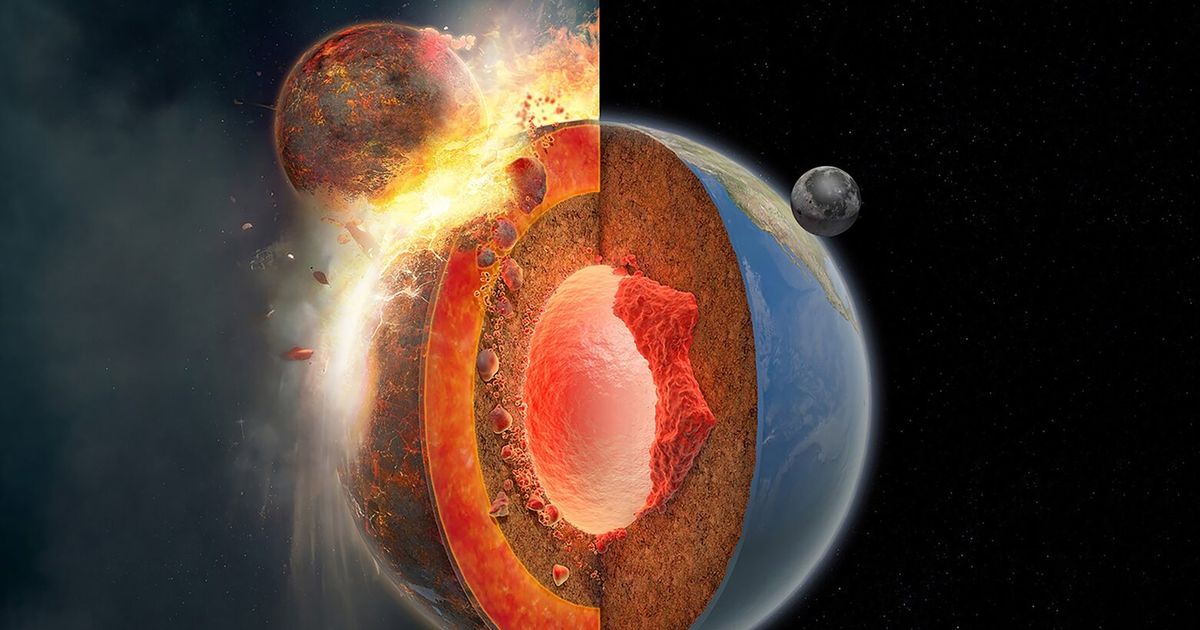
A study suggests that the collision between Earth and a Mars-sized object named Theia 4.5 billion years ago, which formed the moon, may have also initiated plate tectonics. Researchers propose that the impact generated the necessary heat to start tectonic activity, supported by computer simulations and geological evidence from ancient zircons in Australia. While the theory is compelling, it remains one of several hypotheses about the origin of plate tectonics.

science1 year ago

"Scientists Uncover Enormous Subterranean 'Ocean' Dwarfing Earth's Surface Seas"

Scientists have discovered a massive reservoir of water hidden 400 miles beneath the Earth's surface, contained within a blue rock called ringwoodite in the Earth's mantle. This reservoir is three times larger than all the oceans on the Earth's surface and was found using seismometers to measure earthquake waves. The discovery could help explain Earth's formation and the origin of its water, suggesting a whole-Earth water cycle and potentially reshaping our understanding of where Earth's water came from.

science2 years ago

Late Arrival: Earth's Water Came in the Final Stages of Formation

A study from Caltech reveals that the early Earth formed from hot and dry materials, indicating that water, a crucial component for the evolution of life, arrived late in Earth's formation. The research, conducted by an international team of scientists, analyzed the chemical signatures of magmas from different depths within the Earth to understand its layers. The study suggests that Earth primarily accreted from volatile-poor differentiated planetesimals and that the addition of life-essential volatiles, including water, occurred during the last 15% or less of Earth's formation. The findings contribute to our understanding of planet formation and have implications for the building blocks of other terrestrial planets like Mercury and Venus.

astronomy2 years ago

Controversial theory suggests Earth formed quickly, increasing likelihood of alien life.

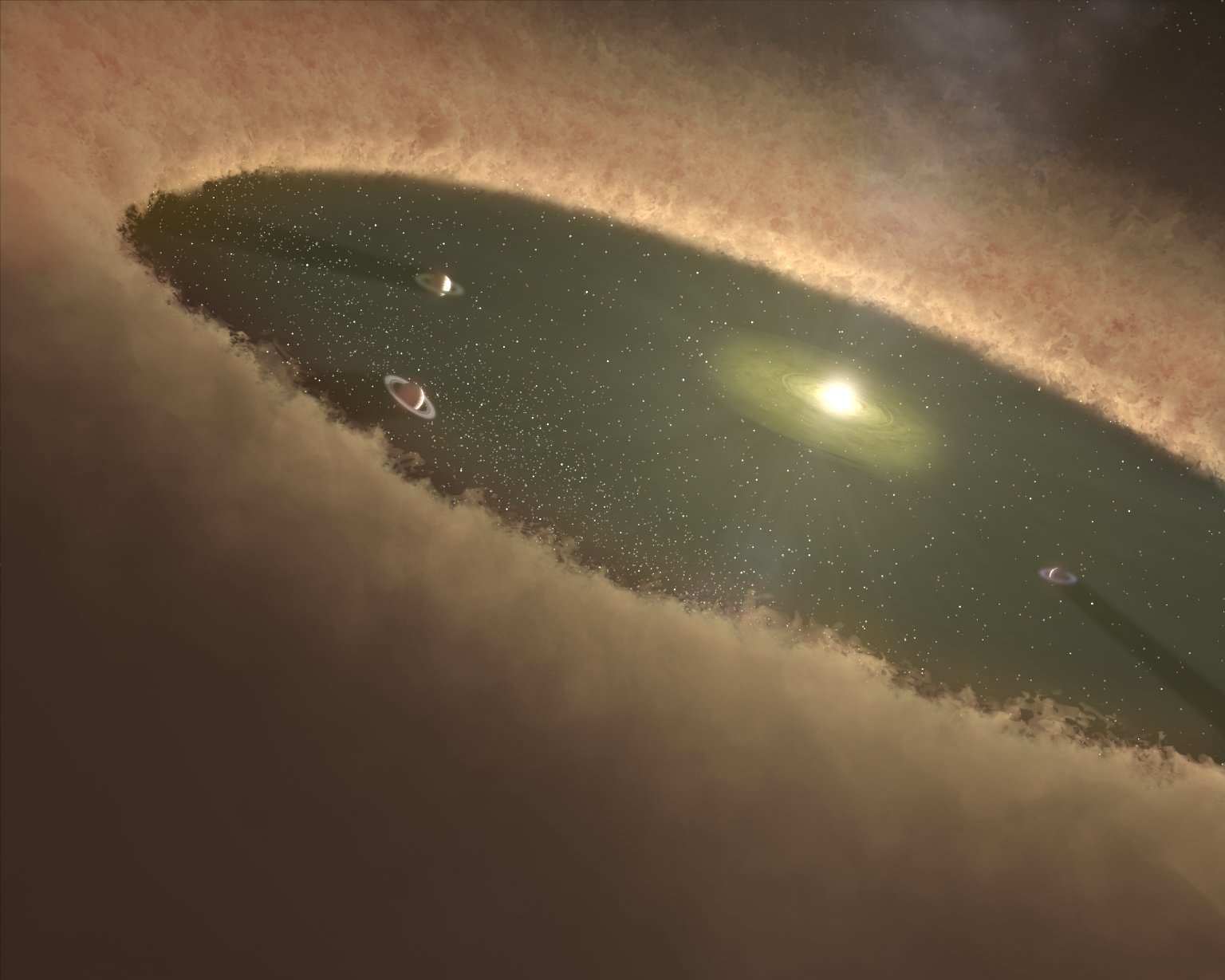
New research from the University of Copenhagen suggests that Earth formed more quickly than previously thought, in just a few million years, by accumulating small millimetre-sized pebbles from the protoplanetary disk. The research also suggests that Earth's water is a result of how it formed from those grains, rather than from incidental collisions with water-rich asteroids and comets. The study focused on the distribution of silicon isotopes in more than 60 different meteorites and planetary bodies, providing a novel perspective on the accretion history of terrestrial planets. The findings could have implications for the search for habitable exoplanets.

science2 years ago

Controversial theory suggests fast Earth formation increases likelihood of alien life.

Earth formed within just 3 million years, much faster than previously thought, according to a new study. The authors assert that this rapid genesis occurred through a theory called pebble accretion. The team determined the time scale of Earth’s formation by looking at silicon isotopes from more than 60 meteorites and planetary bodies in the vicinity of Earth, which represent the rubble leftover after planet formation. This study provides “the strongest evidence” that terrestrial planets formed via pebble accretion.

science2 years ago

Rapid Earth Formation and Water Origins Explored

A new study from the University of Copenhagen suggests that the Earth was formed much faster than previously thought, in just a few million years, by the accumulation of small millimeter-sized pebbles. The presence of water on Earth is a predicted outcome of this formation process, rather than a chance event. The researchers used silicon isotopes to understand the mechanisms and timescales of planet formation and establish genetic relationships between rocky planets like Earth and Mars and other celestial objects. This new understanding of planet formation increases the chance of water being present on other planets, making the chance of having habitable planets in the galaxy much higher than previously thought.