Tag

Giant Impact Hypothesis

All articles tagged with #giant impact hypothesis

Earth's Formation and the Origins of Life

Originally Published 4 months ago — by ScienceAlert

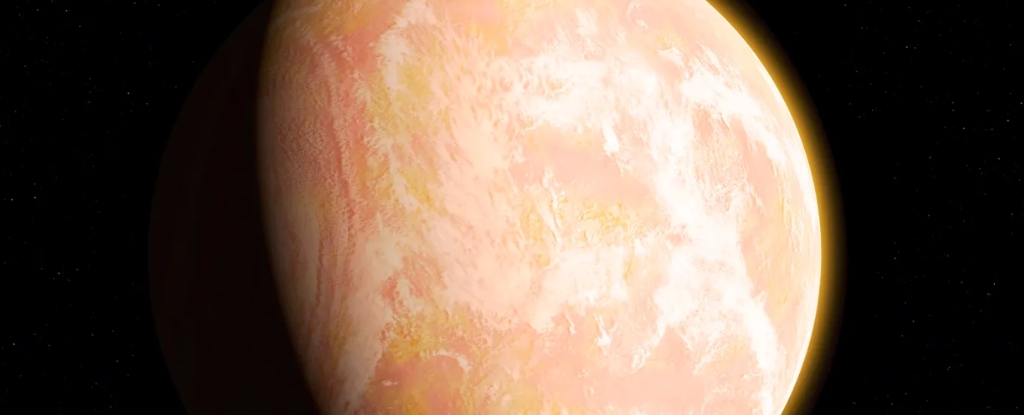
Featured image for Earth's Formation and the Origins of Life
Source: ScienceAlert

A study from the University of Bern shows that Earth's initial chemical composition was complete within three million years of formation, suggesting that essential life ingredients like water and organic compounds were likely delivered by a late impact with a water-rich body, supporting the Giant Impact Hypothesis and providing insights into the origins of life and planetary habitability.
"New Insights into Earth's Mysterious D” Layer from Ancient Ocean Relics"

Originally Published 1 year ago — by SciTechDaily

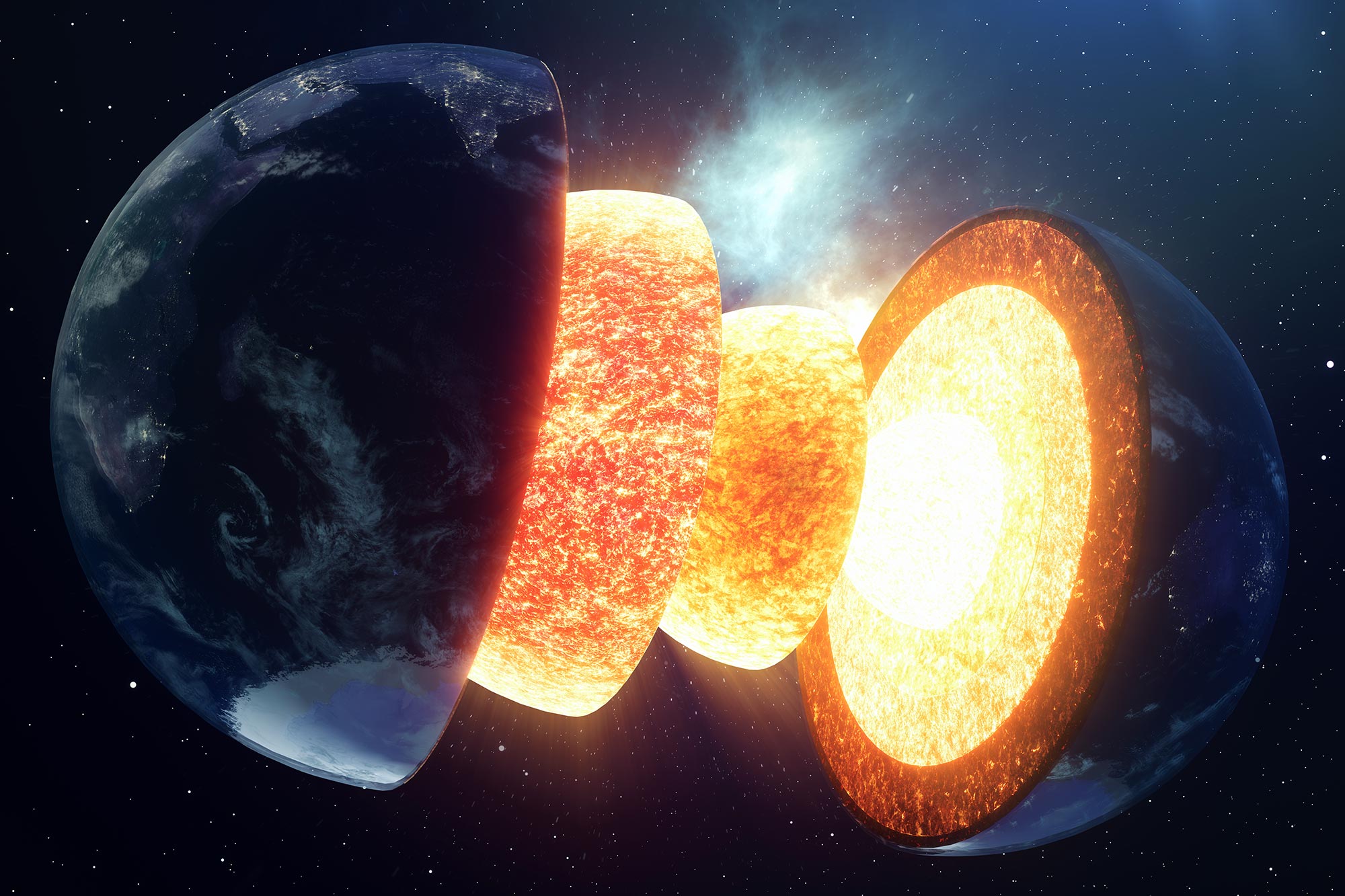
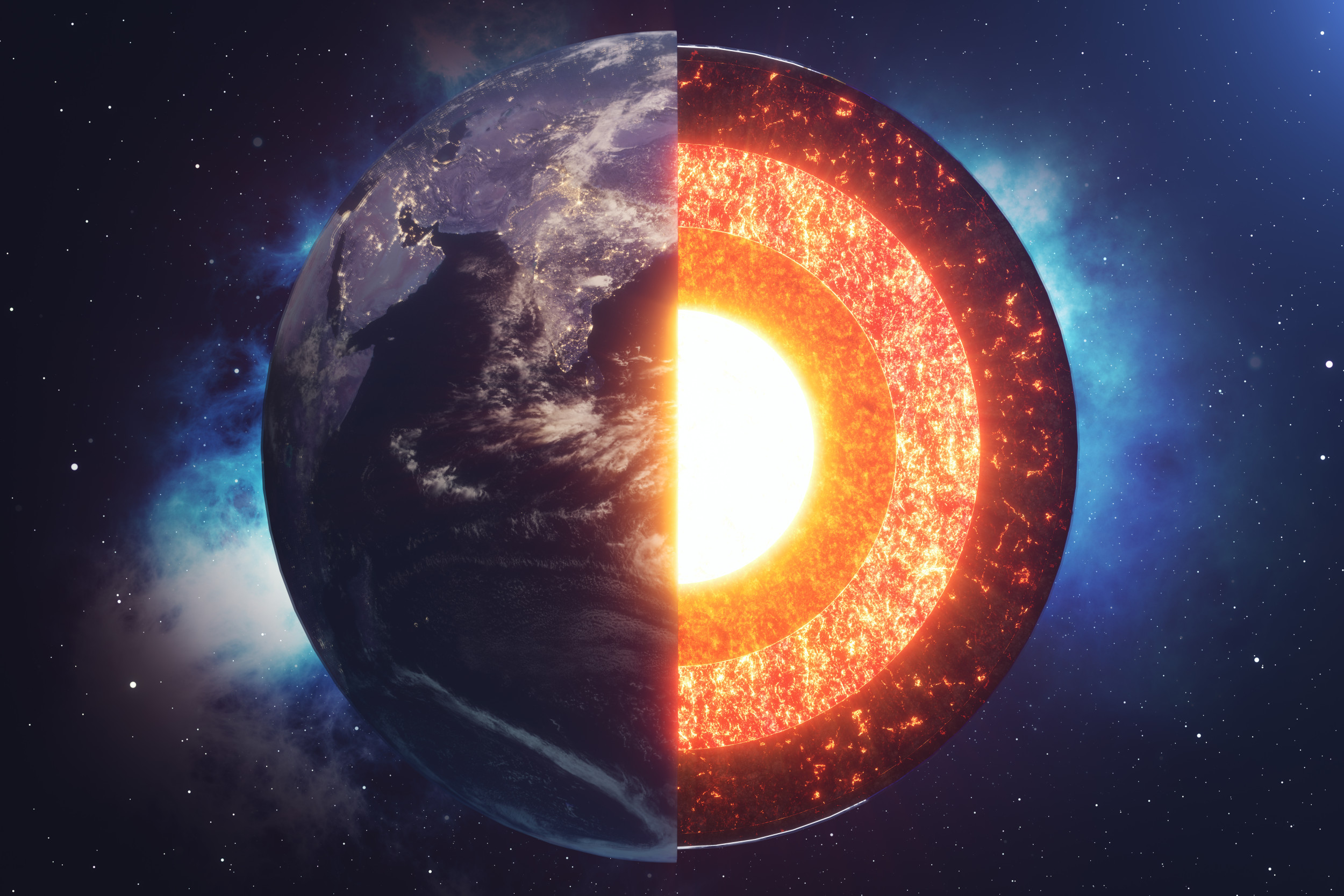
Featured image for "New Insights into Earth's Mysterious D” Layer from Ancient Ocean Relics"
Source: SciTechDaily

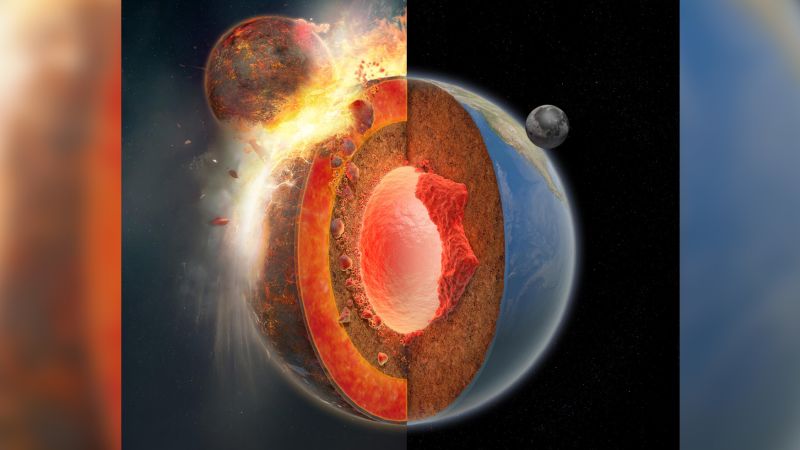
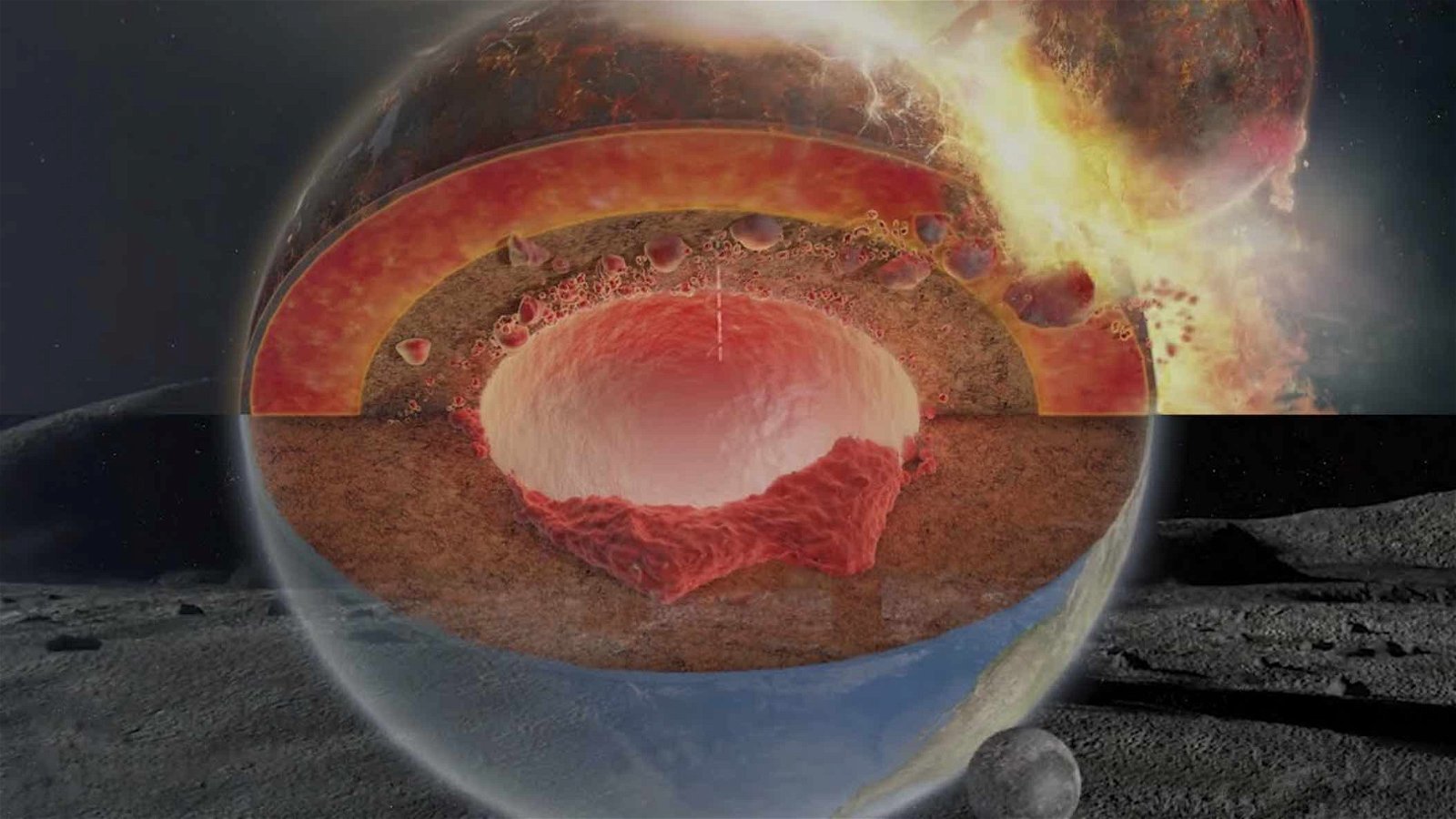
A new study suggests that Earth's mysterious D” layer near the core-mantle boundary may have formed from a magma ocean created by a massive impact in the planet's early days. This layer's unique composition and heterogeneity could be explained by the presence of iron-magnesium peroxide, formed from water in the magma ocean, which has a strong affinity for iron and contributes to the D” layer's distinct geophysical features.

Scientists Uncover Origin of Mysterious Earth Layer

Originally Published 1 year ago — by Newsweek

Featured image for Scientists Uncover Origin of Mysterious Earth Layer
Source: Newsweek

Geoscientists have potentially solved the mystery of the D" layer, a molten rock layer deep within the Earth, suggesting it was formed by a collision with a Mars-sized planet billions of years ago. This impact created a magma ocean, where unique chemical reactions led to the formation of an iron-rich phase called iron-magnesium peroxide, explaining the layer's seismic heterogeneity and varying thickness.

"The Formation of Planet Earth: A Glimpse into its Early Days"

Originally Published 1 year ago — by Big Think

Featured image for "The Formation of Planet Earth: A Glimpse into its Early Days"
Source: Big Think

Over 4.5 billion years ago, the formation of planet Earth began as a result of the collapse of a large gas cloud in the Milky Way, leading to the birth of the Sun and the formation of a planetary system. Protoplanetary disks around young stars are the starting points for planet formation, with gaps forming after 1-2 million years. Planets grow from imperfections in these disks, and collisions between protoplanetesimals lead to the formation of moons. The Moon's origin is likely the result of a high-energy collision with a foreign object, forming a synestia, and eventually settling to form Earth and the Moon as we know them today. The early Solar System was conducive to life, with the raw ingredients for habitability, suggesting the possibility of life arising elsewhere in the Milky Way.

Ancient Planet's Remnants Unearthed in Earth's Mantle, Study Reveals

Originally Published 2 years ago — by KSL.com

Featured image for Ancient Planet's Remnants Unearthed in Earth's Mantle, Study Reveals
Source: KSL.com

Scientists propose a new theory that remnants of the ancient planet Theia, which collided with Earth billions of years ago to form the moon, may still exist buried deep within Earth's mantle. The theory suggests that molten slabs of Theia could have embedded themselves within Earth's mantle after impact and solidified, leaving portions of the ancient planet's material resting above Earth's core. This theory provides additional details to support the giant-impact hypothesis and offers a potential explanation for the existence of large low-velocity provinces (LLVPs) deep within Earth, which have remained a mystery to scientists. However, the theory is still a hypothesis and requires further research and investigation.

Earth's Hidden Alien Relics: Blobs and a Secret Planet Unveiled

Originally Published 2 years ago — by CNN

Featured image for Earth's Hidden Alien Relics: Blobs and a Secret Planet Unveiled
Source: CNN

A new study proposes that remnants of the ancient planet Theia, which collided with Earth billions of years ago and formed the moon, may still exist buried within Earth's mantle. These remnants, in the form of molten slabs, could have embedded themselves in Earth's mantle after impact and solidified, creating two massive blobs known as large low-velocity provinces (LLVPs) that are located deep within the Earth. The study provides additional support for the giant-impact hypothesis and offers a potential explanation for the origins of the LLVPs, which have remained a mystery to scientists. However, the theory is still a hypothesis and requires further research and investigation.

Lost Planet Theia Found in Earth's Core, Unraveling Moon's Origins

Originally Published 2 years ago — by The Debrief

Featured image for Lost Planet Theia Found in Earth's Core, Unraveling Moon's Origins
Source: The Debrief

Scientists at the California Institute of Technology have discovered two massive iron-rich structures near Earth's core that they believe are the remnants of Theia, a lost planet that collided with Earth and gave birth to the Moon. These structures, known as large low-velocity provinces (LLVPs), were first discovered in the 1980s and have a unique seismic signature due to their high iron content. The discovery of Theia's final resting place could revolutionize our understanding of Earth's history and lunar origins, shedding light on the violent events that shaped our planet and the enduring dance of celestial bodies in the cosmos. Further research will explore the consequences of Theia's materials on Earth's ancient interior processes, such as plate tectonics and the formation of continents.

"Unearthed: Ancient Planetary Remnants Discovered in Earth's Crust"

Originally Published 2 years ago — by indy100

Featured image for "Unearthed: Ancient Planetary Remnants Discovered in Earth's Crust"
Source: indy100

Scientists have discovered two massive structures, known as large low shear velocity provinces (LLSVPs), beneath Africa and the Pacific Ocean, which make up around six percent of the Earth's volume. These structures, also referred to as "blobs," have different seismic properties than the surrounding mantle, indicating they are made of something different. One theory suggests that they could be remnants of an ancient planet called Theia, which collided with Earth around 4.5 billion years ago. However, the exact composition and origin of these structures remain unknown, highlighting the ongoing mysteries of Earth's core and the need for further research.

Possible Traces of an Ancient Planet Found in Earth's Core

Originally Published 2 years ago — by indy100

Featured image for Possible Traces of an Ancient Planet Found in Earth's Core
Source: indy100

Two large structures, known as large low shear velocity provinces (LLSVPs), located beneath Africa and the Pacific Ocean, could be the remains of an ancient planet that hit the Earth around 4.5 billion years ago, according to the "giant impact hypothesis". These structures occupy around six per cent of the world's entire volume, and seismic tomography has shown that they are made of something different than the surrounding lower mantle. The origin of these structures remains a mystery, but studying Theia has offered important insights into how the possible collision might have kickstarted key plate tectonic and mantle motion inside our planet.

Possible discovery of ancient planet remnants deep within Earth.

Originally Published 2 years ago — by indy100

Featured image for Possible discovery of ancient planet remnants deep within Earth.
Source: indy100

Two large structures, known as large low shear velocity provinces (LLSVPs), located beneath Africa and the Pacific Ocean, could be the remains of an ancient planet that hit the Earth around 4.5 billion years ago. These structures occupy around six per cent of the world’s entire volume, and seismic tomography has shown that they are made of something different than the surrounding lower mantle. While there is no direct way of observing the Earth’s core, studies into Theia have offered important insights into how the possible collision might have kickstarted key plate tectonic and mantle motion inside our planet.

Possible discovery of ancient planet remnants deep within Earth.

Originally Published 2 years ago — by indy100

Featured image for Possible discovery of ancient planet remnants deep within Earth.
Source: indy100

Two large structures, known as large low shear velocity provinces (LLSVPs), located beneath Africa and the Pacific Ocean, could be the remains of an ancient planet that hit the Earth around 4.5 billion years ago. These structures occupy around six per cent of the world’s entire volume, and seismic tomography has shown that they are made of something different than the surrounding lower mantle. While there is no direct way of observing the Earth’s core, studies into Theia have offered important insights into how the possible collision might have kickstarted key plate tectonic and mantle motion inside our planet.