
Ancient Collision Unearthed: Traces of Moon-Forming Impact Found in Earth's Mantle
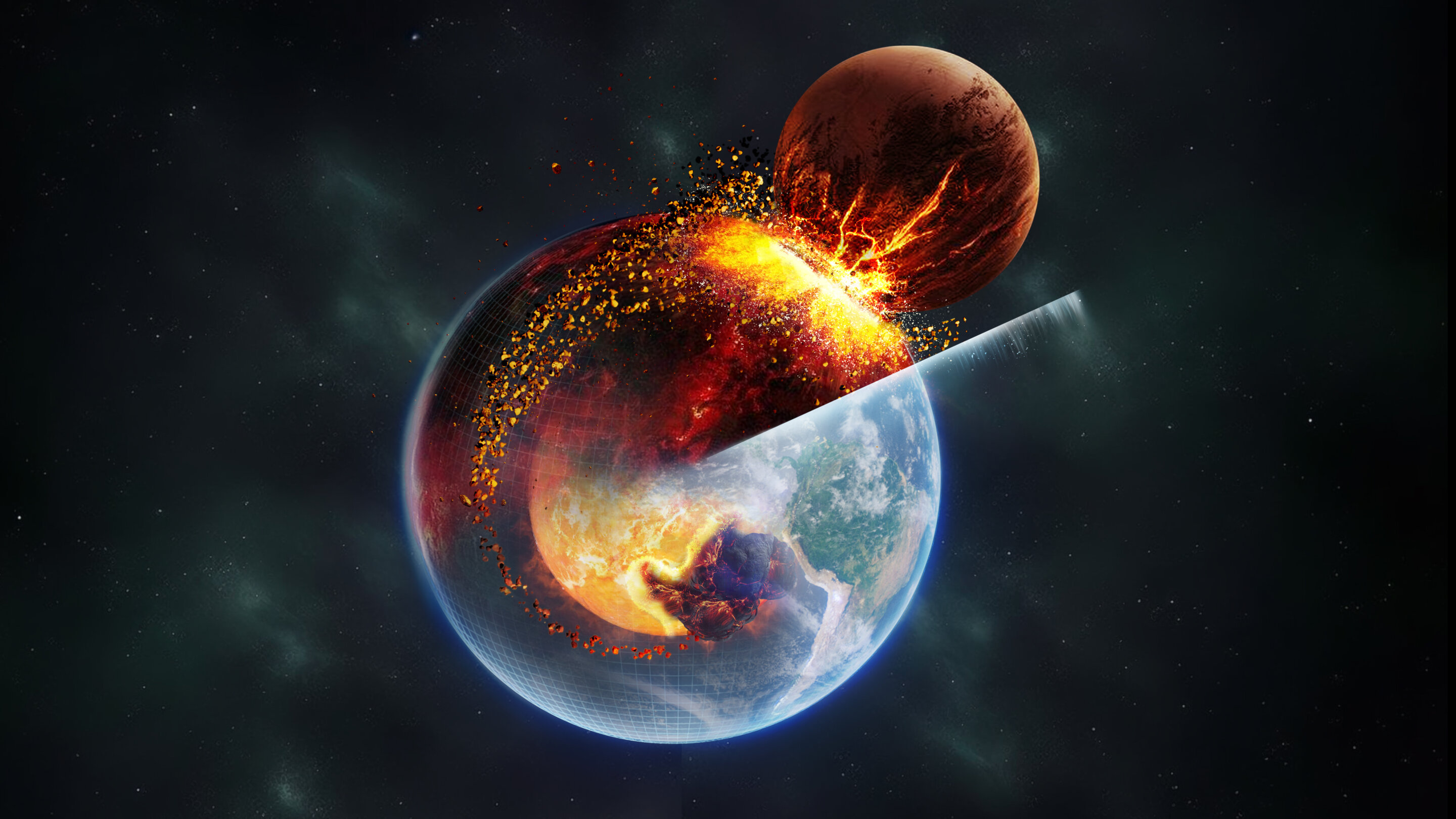
A recent study suggests that a massive anomaly deep within Earth's mantle may be a remnant of the collision that formed the moon around 4.5 billion years ago. Using computational fluid dynamics methods, researchers discovered that the early Earth exhibited mantle stratification after the impact, with the upper mantle featuring a magma ocean created through the mixing of material from Earth and the proto-planet Theia, while the lower mantle remained solid and retained the composition of Earth. This finding challenges the traditional notion that the giant impact led to the homogenization of the early Earth and provides insights into Earth's internal structure and long-term evolution. The study also sheds light on the formation of the inner solar system and has implications for understanding the heterogeneity of Earth's mantle and the origins of Large Low Velocity Provinces (LLVPs).
- Massive anomaly within Earth's mantle may be remnant of collision that formed moon Phys.org
- A 'Big Whack' Formed the Moon and Left Traces Deep in Earth, a Study Suggests The New York Times
- Scientists Detect Traces of an Ancient Alien World Beneath Earth's Mantle ScienceAlert
- Blobs near Earth’s core are remnants of collision with another planet, study says The Guardian
- 4.5 billion years ago, another planet crashed into Earth. We may have found its leftovers. National Geographic
Reading Insights
0
1
5 min
vs 6 min read
88%
1,153 → 137 words
Want the full story? Read the original article
Read on Phys.org