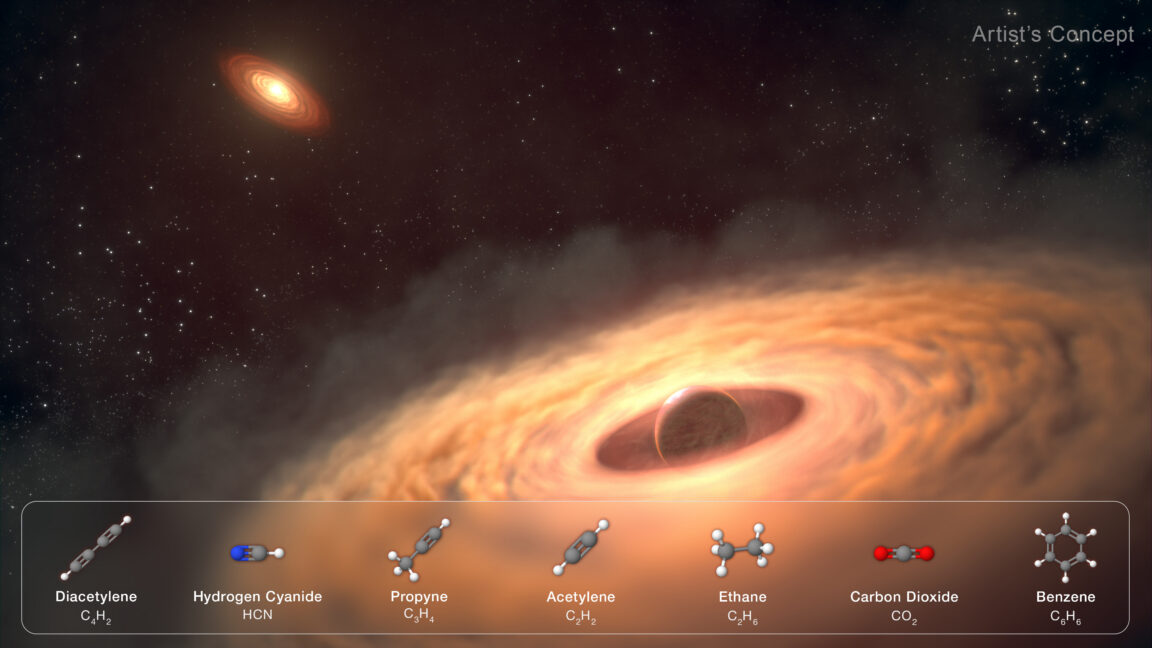
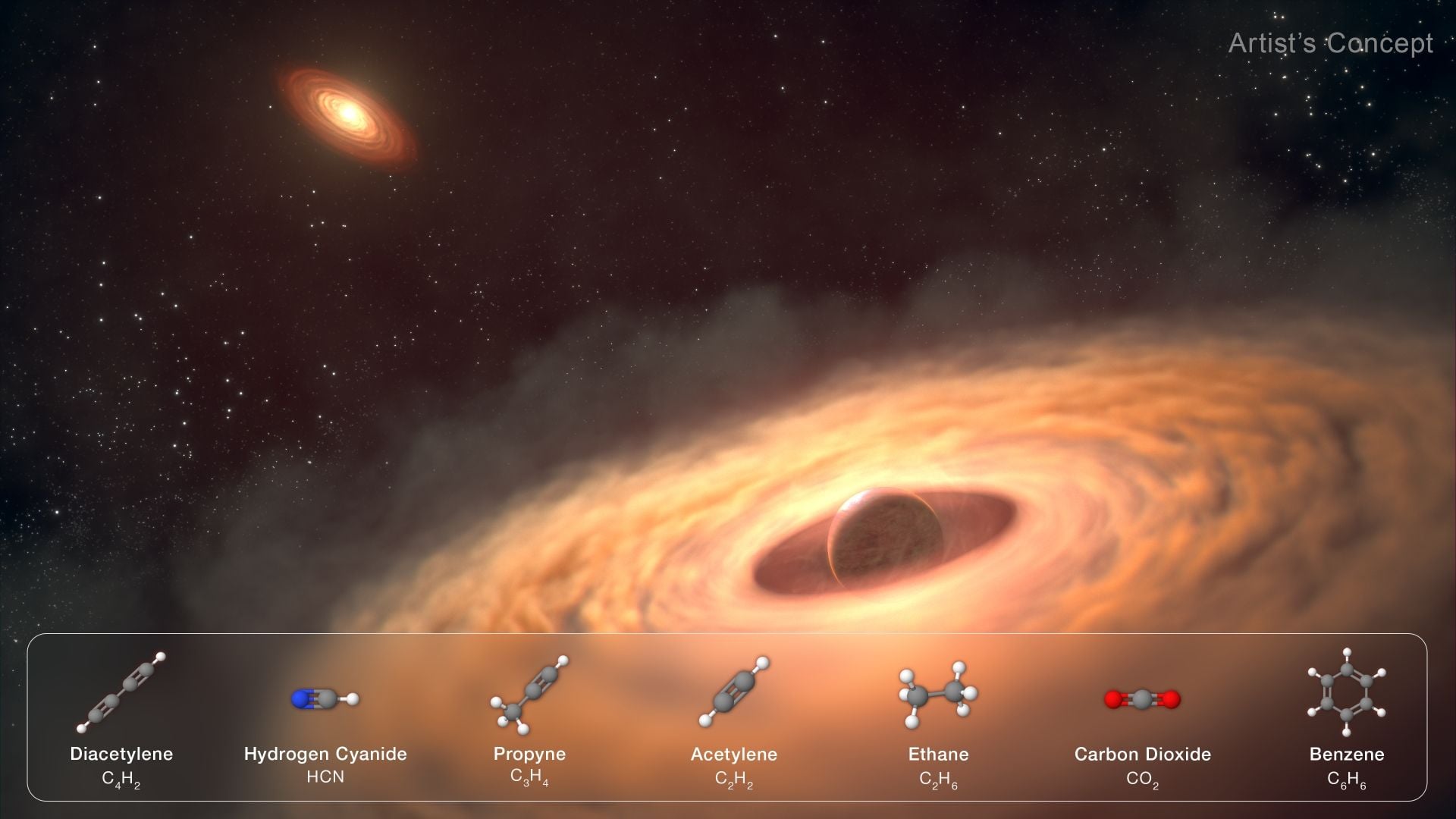
Researchers using the James Webb Space Telescope discovered a carbon-rich moon-forming disk around a giant exoplanet, with a notable absence of water, providing new insights into the materials involved in moon formation around distant planets.
The James Webb Space Telescope has for the first time analyzed the composition of a moon-forming disk around the planetary body CT Cha b, revealing a rich presence of carbon-bearing molecules that are essential for moon formation, providing new insights into how moons in our solar system and beyond may develop.
An international team of researchers has used the Swiss SLS synchrotron light source at PSI to observe and understand the formation of fullerenes in the universe. Fullerenes are sizable carbon molecules that take on shapes akin to a soccer ball, a salad bowl, or a nanotube. The researchers have shown how this reaction works and have completed an important reaction step in the formation of the molecules. The successful publication in Nature Communications is not the end of the story, as the researchers want to conduct more experiments to understand how classic buckyballs form in the universe.