Tag

Ancient Galaxies

All articles tagged with #ancient galaxies

astronomy2 years ago

Uncovering Ancient Galaxies' Rare Molecular Treasures

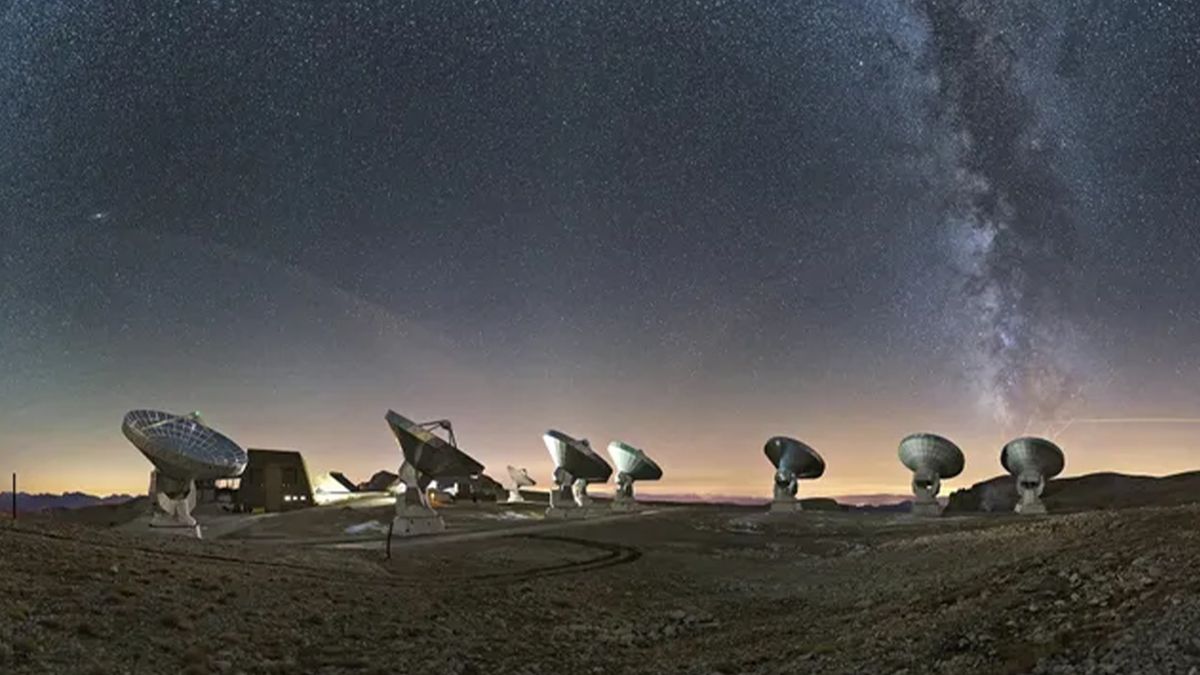
Scientists have discovered a rare collection of 13 different molecules in two ancient galaxies that existed over 12 billion years ago. Using the NOEMA radio telescope array, the team detected emissions from molecules such as carbon monoxide, water, and radicals of organic molecules. The findings provide insights into the star formation processes and environments in these early galaxies, suggesting the presence of more massive stars and a "top-heavy initial mass function." This discovery represents the largest collection of molecules ever detected in galaxies at such extreme distances.

astronomy2 years ago

"Surprising Metal Content Found in Young Galaxies"

Astrophysicists using the James Webb Space Telescope (JWST) have discovered a surprising amount of metal, including carbon, in a galaxy only 350 million years after the Big Bang. This finding challenges our understanding of metal-free population III stars and sheds light on the formation of metals in the early universe. The detection may be attributed to the first generation of supernovae or the presence of a supermassive black hole in the galaxy. Further research and larger sample sizes are needed to provide a more definitive explanation.
astronomy2 years ago

"James Webb Telescope Reveals Ancient Galaxies at the Edge of the Universe"

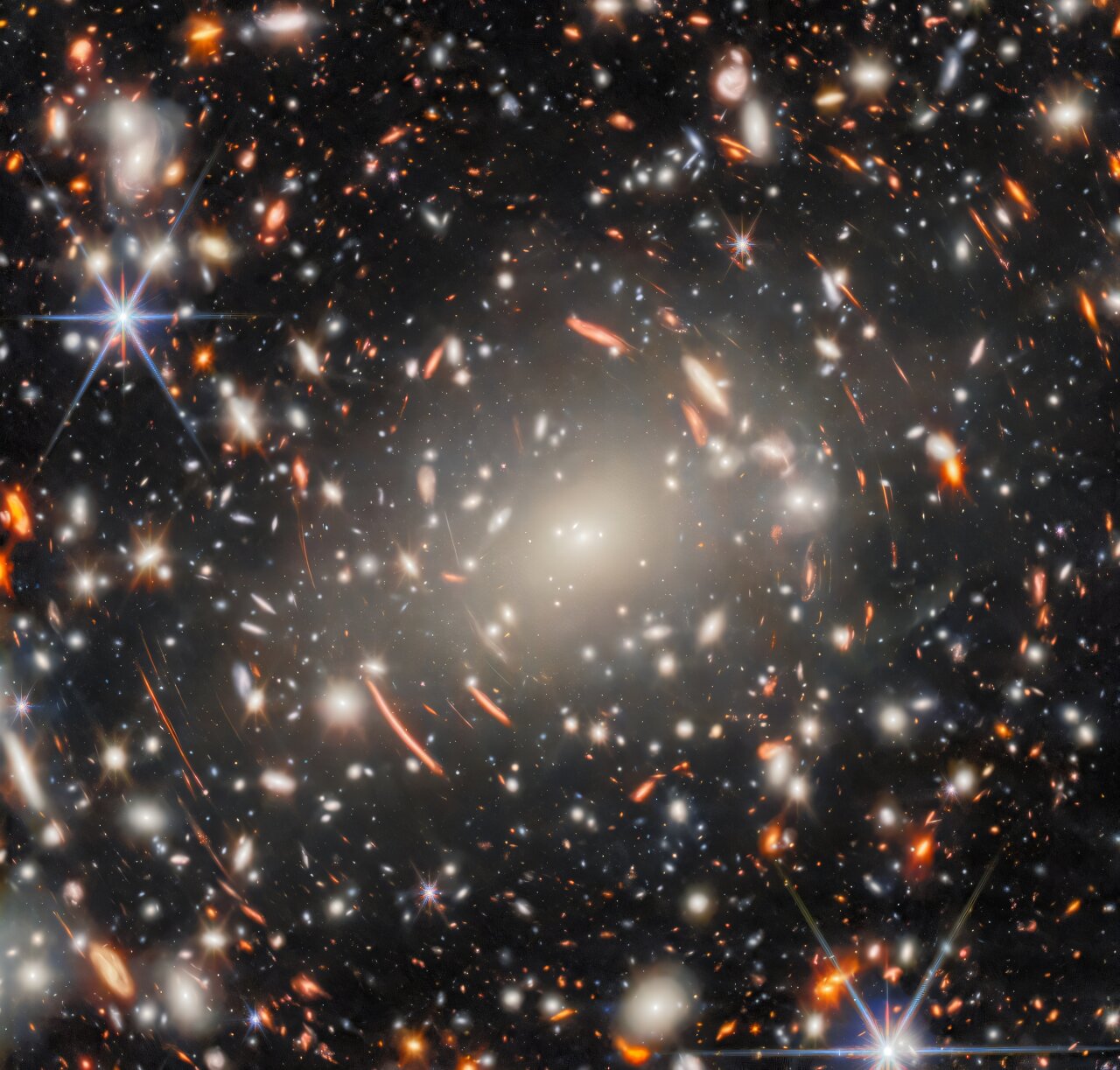
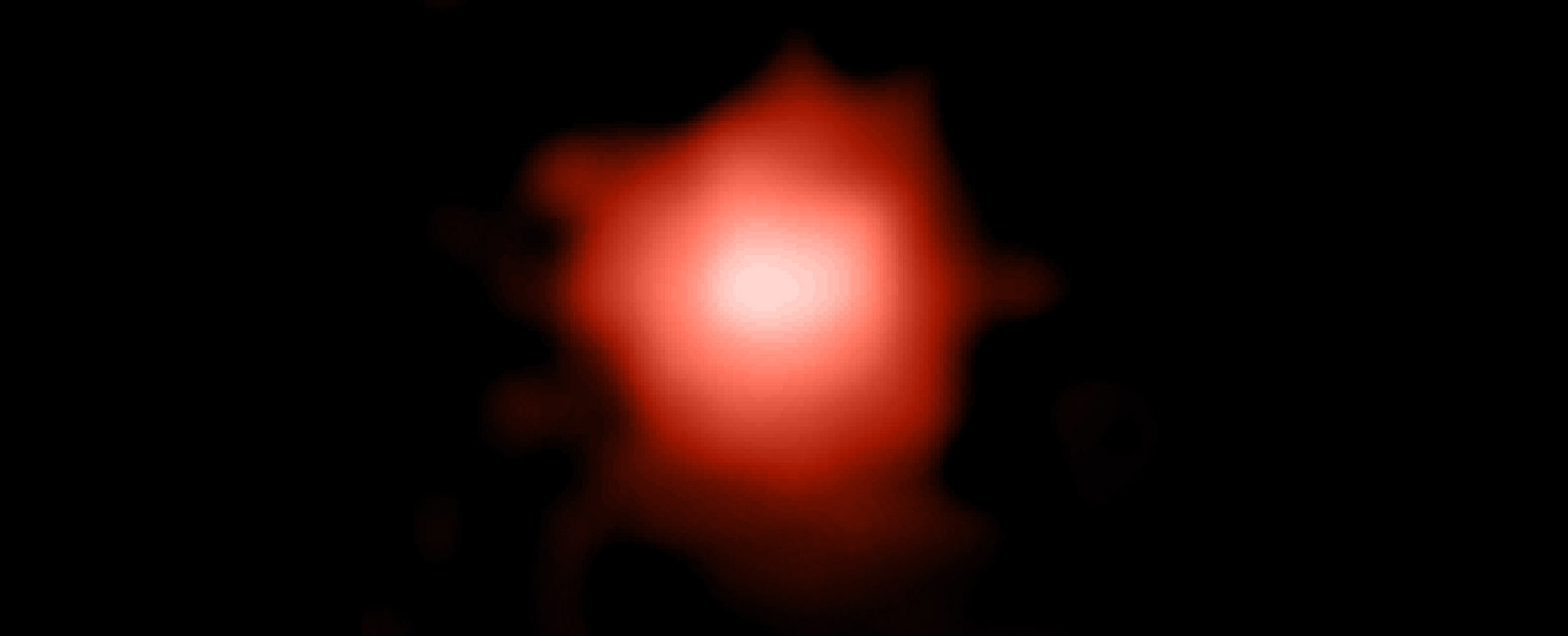
The James Webb Space Telescope has discovered two of the oldest and most distant galaxies in the universe, dating back to just 330 million years after the Big Bang. These galaxies, estimated to be the second and fourth most distant ever detected, were found behind the Pandora's Cluster through gravitational lensing. The light from these ancient galaxies traveled for over 13 billion years to reach the telescope, providing insights into the physics of the early universe. The newfound galaxies appear larger than other galaxies observed at the same cosmic point, raising questions about their formation and evolution.
astronomy2 years ago

"JWST Discovers Metal-Rich 'Teenage' Galaxies in Distant Universe"

The James Webb Space Telescope (JWST) has discovered a surprising amount of metal in a galaxy only 350 million years after the Big Bang. This challenges our understanding of the Universe's first metals and the existence of metal-free Population III stars. The detection of carbon in the ancient galaxy suggests it may be the result of the first generation of supernovae or associated with a supermassive black hole. The JWST's findings shed light on the early metallicity of the Universe and the formation of rocky planets and life. Further research and larger sample sizes are needed to provide a more definitive explanation for this discovery.
astronomy2 years ago

"James Webb Telescope: Revolutionizing Astronomy with Stunning Images of the Infant Universe"

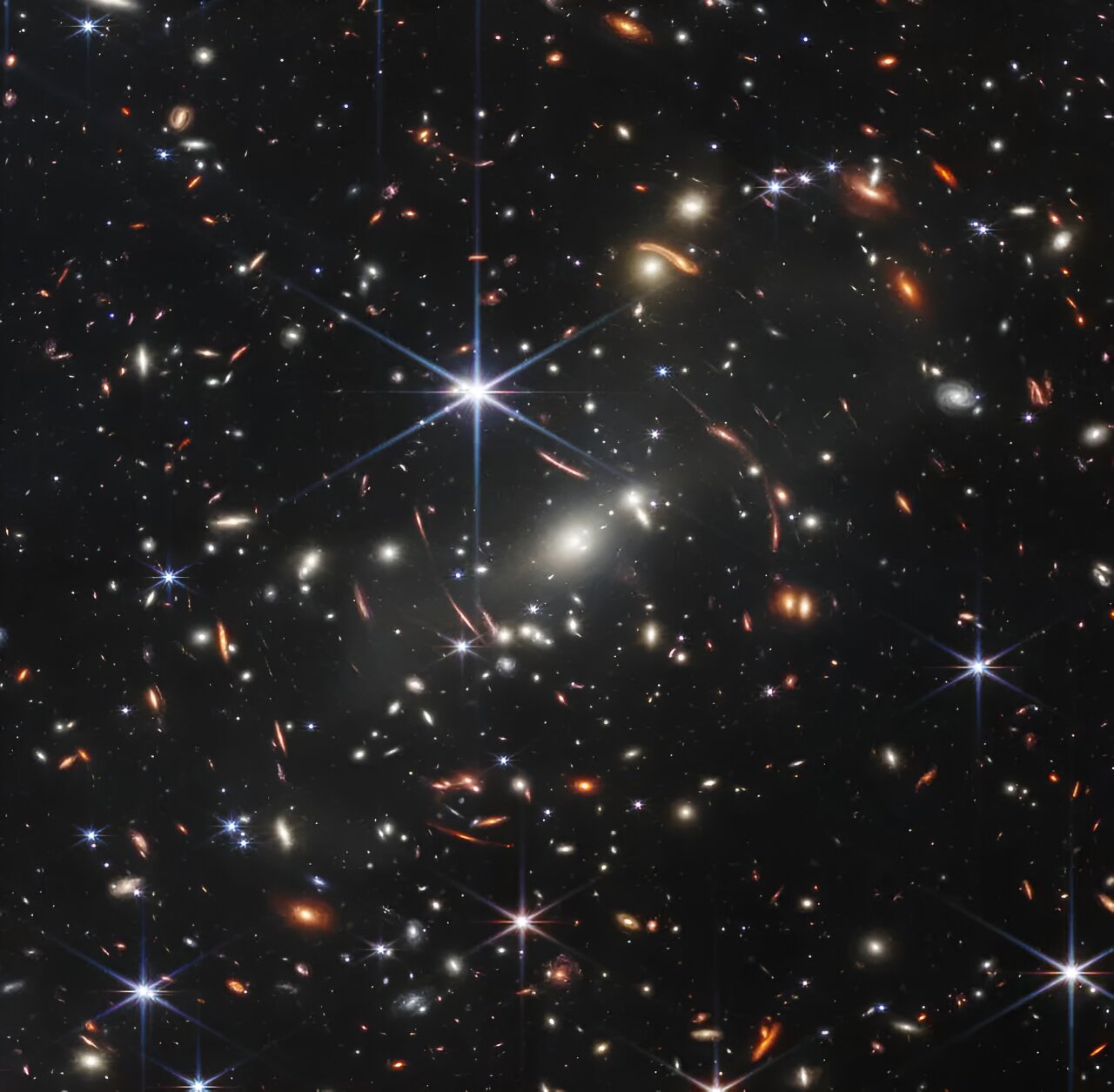
The James Webb space telescope has captured images of ancient galaxies that formed shortly after the Big Bang, revealing that the universe was already in the process of star formation at a much earlier stage than previously thought. The telescope's images show the oldest known galaxy, JADES-GS-z13-0, which appeared just 320 million years after the Big Bang and was already creating new stars at a rate comparable to the Milky Way. These observations highlight the role of dark matter in accelerating the formation of stars and galaxies. The James Webb telescope, designed to study the early universe and other celestial phenomena, operates in the infrared spectrum and has the potential to revolutionize our understanding of cosmic evolution.

astronomy2 years ago

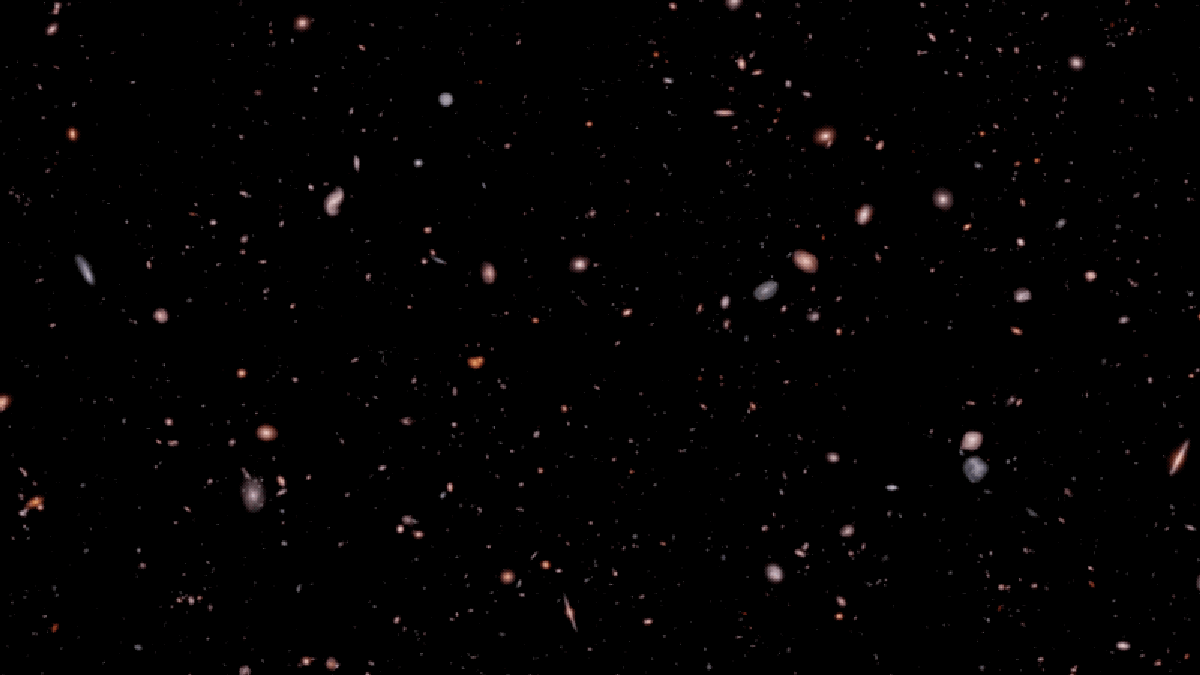
"Webb's Trippy 3D Animation Takes You on a Time-Traveling Journey to Ancient Galaxies"

The Space Telescope Science Institute has created a trippy 3D animation that takes viewers on a journey through deep space to see light from about 13.4 billion years ago. The visualization focuses on the Extended Groth Strip, a dim region near the Big Dipper, and zooms past increasingly ancient galaxies, ending at Maisie's Galaxy, one of the oldest galaxies seen by the Webb Space Telescope. Webb's ability to peer far into space allows astronomers to study galaxy evolution and the birth of stars, revealing that even in the ancient universe, galaxy evolution was more advanced than previously thought.

astronomy2 years ago

Unexplained Discoveries Unveiled by Webb Telescope

The James Webb Space Telescope has captured images of some of the oldest galaxies in the universe, revealing that these primeval galaxies emitted 10 times more energy than scientists predicted. Astronomers are puzzled by how these nascent galaxies achieved such high energy levels, speculating that it could be due to young, lively stars or supermassive black holes. The Webb telescope's ability to view infrared light allows it to observe ancient light that has been stretched and redshifted. The telescope's powerful capabilities, including its giant mirror and infrared view, enable it to peer into the early universe and study distant exoplanets.

science-and-astronomy2 years ago

James Webb Space Telescope Reveals Ancient Universe's Galactic Explosion

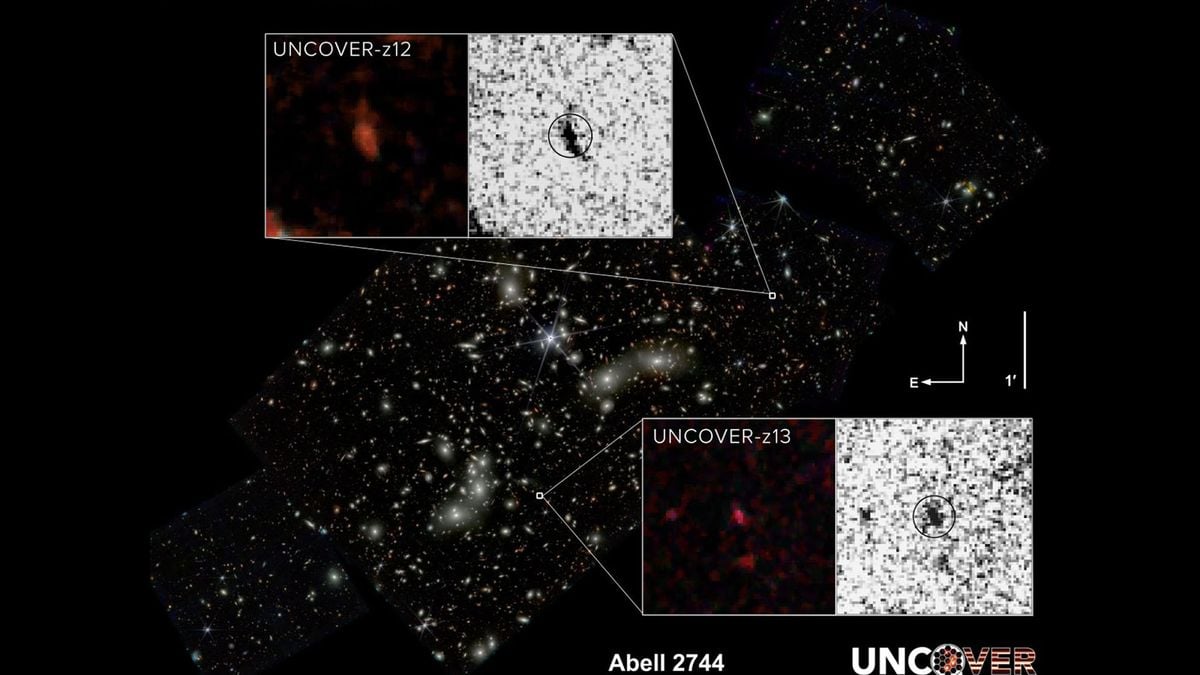
The James Webb Telescope has discovered over 700 young galaxies that could be among the first members of the universe, revealing how the first galaxies and stars formed and creating the rich catalog of elements observed in the universe today. These galaxies were found to have complex structures and clusters of star formation, and were already spanning thousands of light-years. The discovery sheds light on the early universe, and how it evolved into the transparent cosmos we see today.