Researchers discovered that two types of brain immune cells, microglia, act as internal 'accelerators' and 'brakes' to regulate anxiety levels in mice, suggesting new avenues for understanding and treating anxiety disorders in humans.
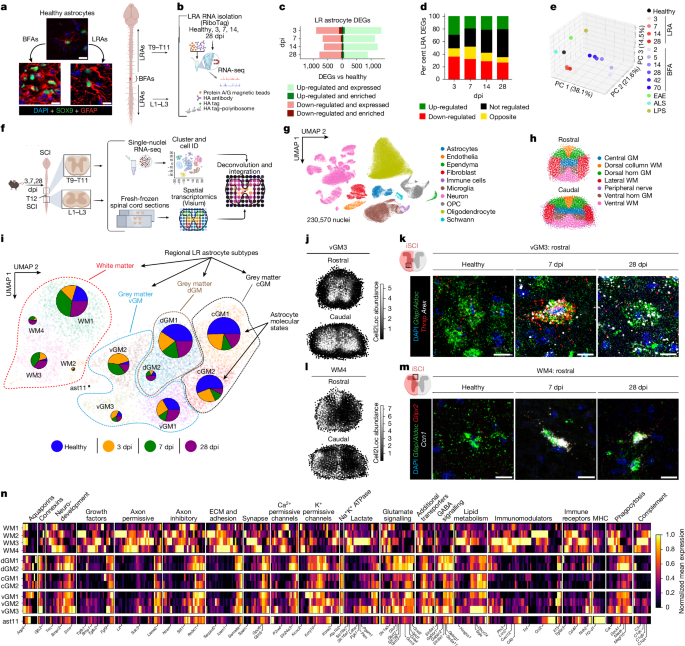
The study reveals that lesion-remote astrocytes (LRAs) in the injured spinal cord adopt distinct molecular states that regulate microglia-mediated white matter repair, primarily through CCN1 secretion, which influences microglial lipid metabolism, debris clearance, and neurological recovery. Loss of astrocyte-derived CCN1 impairs debris clearance and functional recovery, positioning LRAs as key orchestrators in CNS repair processes.
A new study suggests that specific immune cells in the brain called microglia can switch to a protective state that may prevent or slow Alzheimer's disease progression, opening potential avenues for immunotherapy. The research highlights the importance of microglia's plasticity and their role in combating harmful protein buildup associated with Alzheimer's, with implications for future treatments targeting immune cell states.
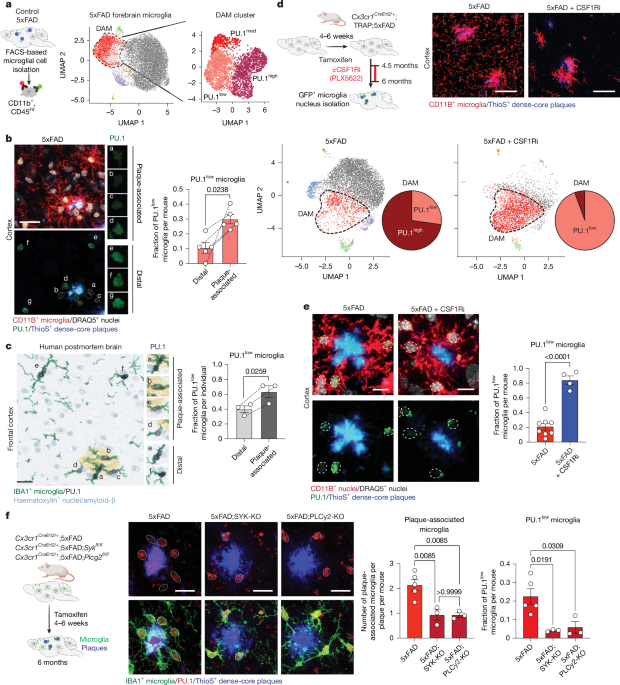
Scientists have identified a unique group of microglia with lower PU.1 levels and higher CD28 expression that can protect the brain by reducing inflammation and slowing Alzheimer's pathology, opening new avenues for immunotherapy.
The study investigates how lymphoid gene expression supports neuroprotective functions of microglia in the human brain, particularly in the context of Alzheimer's disease, using post-mortem samples, induced pluripotent stem cells, and mouse models to explore microglial roles and gene regulation.
A study in mice suggests that engineered 'young' immune cells can partly reverse Alzheimer's symptoms and improve brain health by reducing inflammation and supporting memory-related cells, although further research is needed to confirm effects in humans.
Scientists at McGill University have identified two specific types of brain cells—excitatory neurons and microglia—that show changes in individuals with depression, providing new insights into the biological basis of the condition and potential targets for treatment.
Scientists developed a new imaging method revealing that immune cells in the eye become hyperactive early in diabetic retinopathy, before visible damage occurs. The drug liraglutide normalizes this activity, offering potential for early diagnosis and treatment to prevent blindness.
A new study suggests that fat buildup in brain cells, particularly involving the enzyme DGAT2, impairs immune cell function in Alzheimer's disease, offering a potential new target for treatment by restoring microglial activity.
Replacing old microglia with new ones in the brain could offer new treatments for neurological diseases like Alzheimer's and rare genetic disorders, but current methods involve risky procedures like chemotherapy or radiotherapy, limiting their use to severe conditions.
A groundbreaking study has identified specific brain cells, including certain neurons and microglia, that show altered gene activity in depression, providing new insights into its biological basis and potential targets for therapy.
Scientists have identified that the protein TSPO, indicating brain inflammation, appears in specific brain regions at the same time as early amyloid-beta plaque formation in Alzheimer's disease, potentially enabling earlier diagnosis and intervention, with findings confirmed in both mouse models and human tissue.
Purdue University researchers have discovered that excess fat in brain immune cells impairs their ability to fight Alzheimer's disease, revealing a new lipid-based mechanism involving the enzyme DGAT2. Targeting this enzyme to reduce fat accumulation in microglia restores their function and offers a promising therapeutic approach for neurodegeneration.
German researchers have identified early olfactory dysfunction as a symptom of Alzheimer's disease, caused by microglia mistakenly destroying nerve connections from the locus coeruleus to the olfactory bulb, which occurs before memory loss and can aid early diagnosis. The study highlights the importance of smell loss as a clinical marker and emphasizes managing modifiable risk factors to reduce dementia prevalence.
A new study suggests that a declining sense of smell may be an early indicator of Alzheimer's disease, linked to immune responses in the brain that damage neuronal connections involved in odor perception, potentially allowing for earlier diagnosis and intervention.