Illumina has appointed Dr. Eric Green, a renowned genomics leader and former NHGRI director, as its new Chief Medical Officer to advance the clinical application of genomics and expand access to precision medicine. The company also announced the departure of its chief commercial officer, Everett Cunningham, who will become a CEO of a life science tools company.
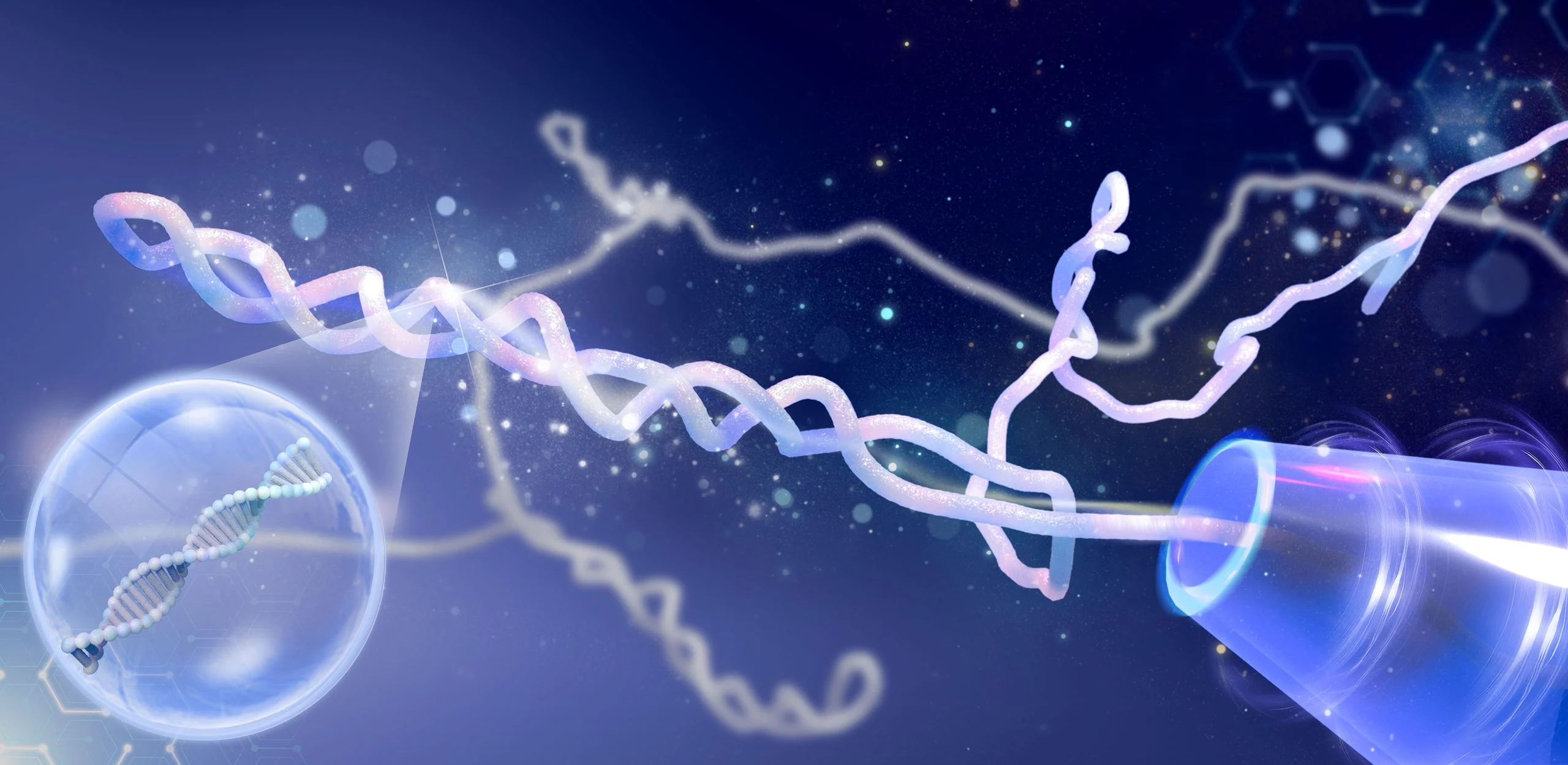
New research reveals that what was previously thought to be knots in DNA during nanopore analysis are actually persistent twists called plectonemes, caused by electroosmotic flow, which has significant implications for understanding DNA behavior and developing advanced biosensors.
Dr Christian Happi, a Cameroonian scientist, has received a $100 million grant to expand his Sentinel project, which uses genomics and surveillance to detect and prevent infectious disease outbreaks in Africa, aiming to save lives and empower local scientists despite global aid cuts.
Researchers confirmed the story from the 12th-century Sverris Saga about a man thrown into a well at Sverresborg Castle using DNA analysis, revealing details about his appearance, possible identity, and the historical accuracy of the saga, thus bridging ancient legend and scientific evidence.
A genomics study reveals that early humans reached Australia around 60,000 years ago via two distinct routes, the northern and southern pathways, with most lineages arriving through the northern route, supporting an earlier settlement date than previously thought.
This article reviews the current research on mushroom-forming fungi, covering their biodiversity, genomics, ecological roles, and evolutionary history, highlighting recent discoveries in their symbiosis, decay mechanisms, and biogeography.
Researchers at EMBL have developed an AI-powered system called MAGIC that automates the detection of chromosomal abnormalities in cells, providing new insights into the earliest events leading to cancer, with potential to accelerate biological discoveries.
The article discusses the discovery of an ancient recombination desert acting as a supergene that influences speciation in placental mammals, highlighting the role of genomic architecture and introgression in evolutionary processes.
The MHRA in the UK is planning major reforms to accelerate the development, testing, and approval of rare disease therapies, aiming to overcome current barriers and make treatments more accessible, supported by a new framework and collaborative efforts to position the UK as a global leader in rare disease innovation.
Scientists successfully revived a 46,000-year-old nematode from Siberian permafrost, revealing its survival mechanisms and potential applications in biobanking and medicine, while also identifying it as a new species, Panagrolaimus kolymaensis, with unique genetic adaptations for long-term preservation.
Scientists at McGill University have identified two specific types of brain cells—excitatory neurons and microglia—that show changes in individuals with depression, providing new insights into the biological basis of the condition and potential targets for treatment.
MetaGraph is a new search engine that indexes vast amounts of biological data, including DNA, RNA, and proteins, enabling researchers to efficiently explore and analyze petabases of genetic information across various life forms, thus revolutionizing data accessibility and biological research.
AI tools like Evo, regLM, and AlphaGenome are advancing the decoding of the genome's regulatory regions, especially the non-coding 'dark matter' DNA, by predicting functions, interactions, and impacts of genetic variants, thus deepening our understanding of gene regulation and expression.
Scientists discovered that potatoes originated from a hybridization event between ancestors of tomatoes and Etuberosum around 9 million years ago, which allowed them to adapt to high-altitude habitats in the Andes and eventually led to domesticated varieties. This hybridization provided potatoes with unique traits like tuber formation, and understanding this process could help develop disease-resistant and climate-resilient potato crops through genetic engineering.
This study explores the proteogenomic landscape of the human kidney and discusses its implications for cardio-kidney-metabolic health, providing data resources and analysis tools for further research.