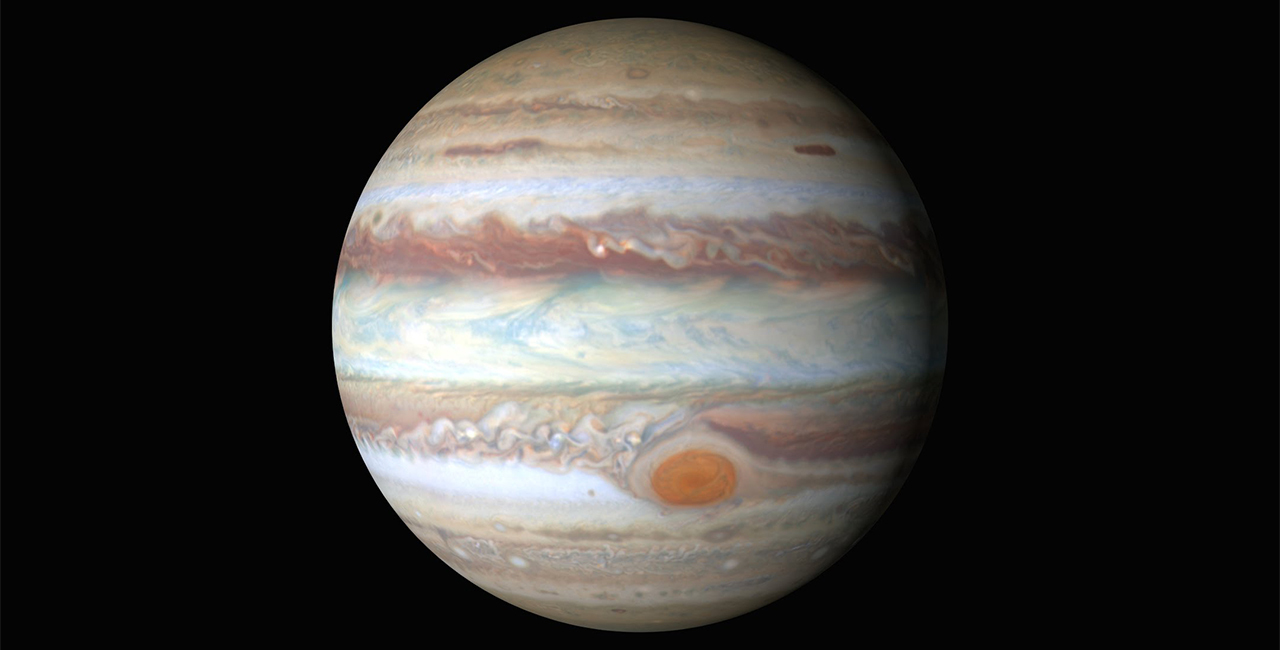
New measurements from NASA's Juno mission refine Jupiter's dimensions, revealing the gas giant is 8 km narrower at the equator and 24 km flatter at the poles than previously estimated, thanks to improved radio occultation data and wind-aware modeling.
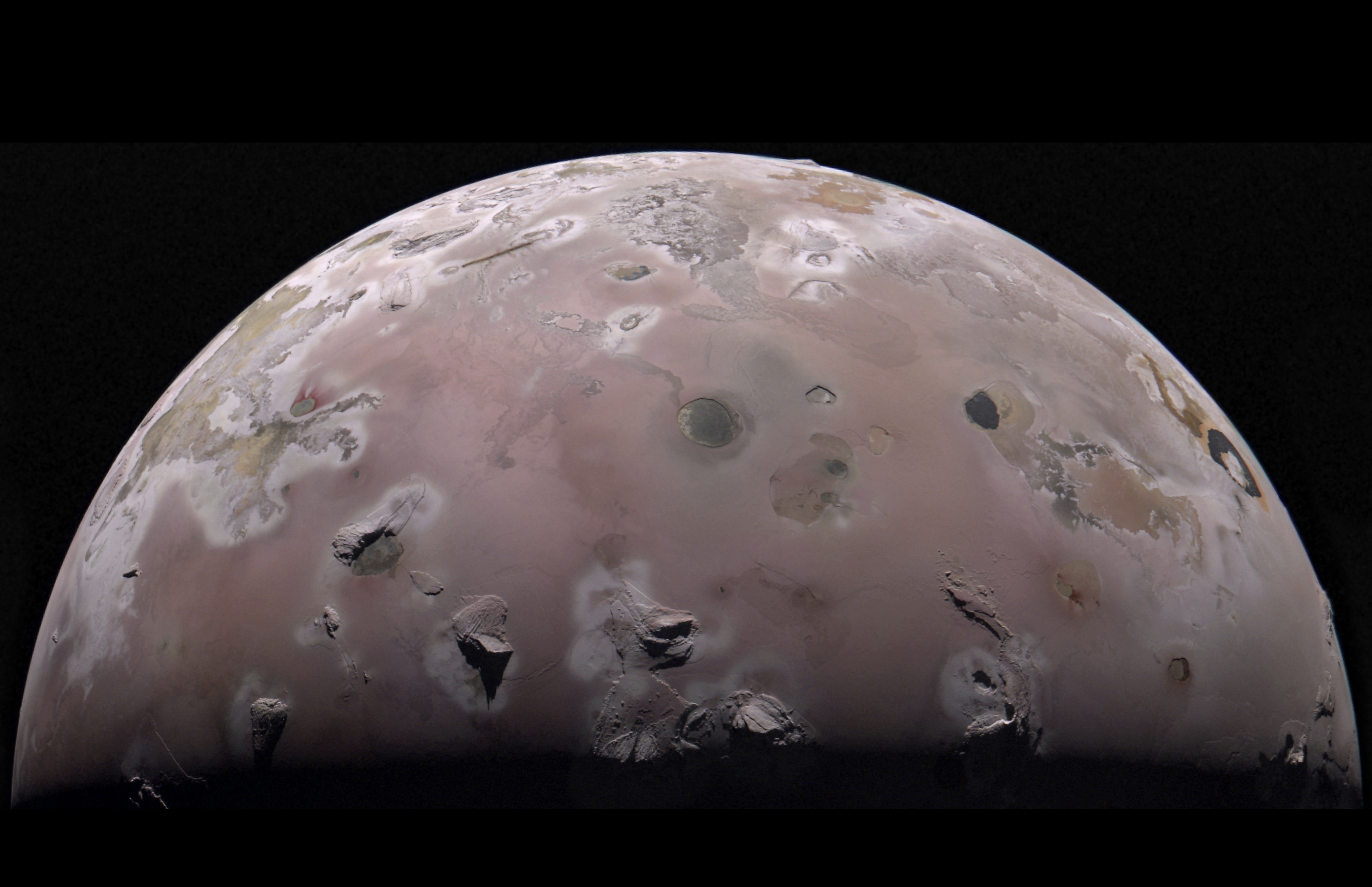
NASA’s Juno spacecraft detected the solar system’s most energetic eruption on Io—a 40,000-square-mile hotspot in the moon’s southern hemisphere emitting well over 80 trillion watts from multiple simultaneous sources, suggesting a vast interconnected magma system; observed by JIRAM during the December 27, 2024 flyby with visible surface changes near Io’s south pole, and researchers plan a March 3 flyby recheck.
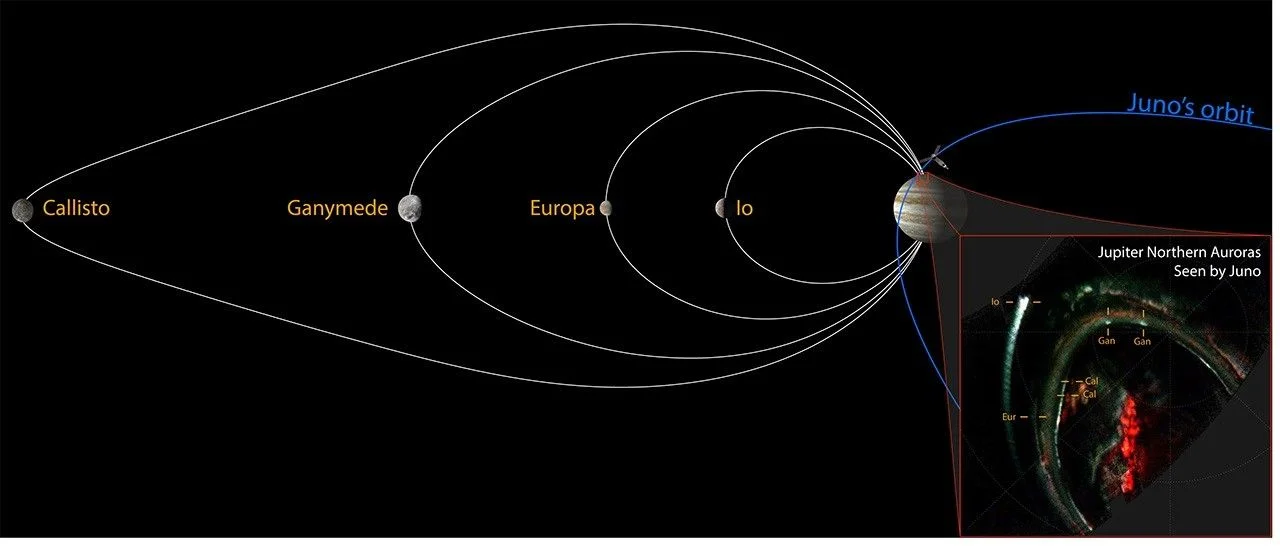
NASA's Juno spacecraft has successfully detected the elusive auroral signature of Jupiter's moon Callisto, completing the set of auroral footprints from the planet's four largest moons, and providing new insights into their interactions with Jupiter's magnetic environment.
NASA's Juno mission has revealed that the volcanoes on Jupiter's moon Io are powered by individual magma chambers rather than a global magma ocean, solving a long-standing mystery about Io's volcanic activity. This discovery, based on data from Juno's close flybys, suggests that tidal flexing from Jupiter's gravitational pull generates internal heat, melting parts of Io's interior. The findings have broader implications for understanding other celestial bodies, including moons like Enceladus and Europa, as well as exoplanets.
Jupiter, the largest planet in our solar system, is easily observable from Earth and is known for its massive size and bright appearance. With a diameter that can fit 11 Earths and a mass greater than all other planets combined, Jupiter's gravitational influence shapes the orbits of many comets and asteroids. Its four largest moons, discovered by Galileo, can be seen with modest telescopes. NASA's Juno mission, which began in 2016, has provided significant insights into Jupiter's interior and its moons, with future missions like the Europa Clipper set to expand our understanding further.
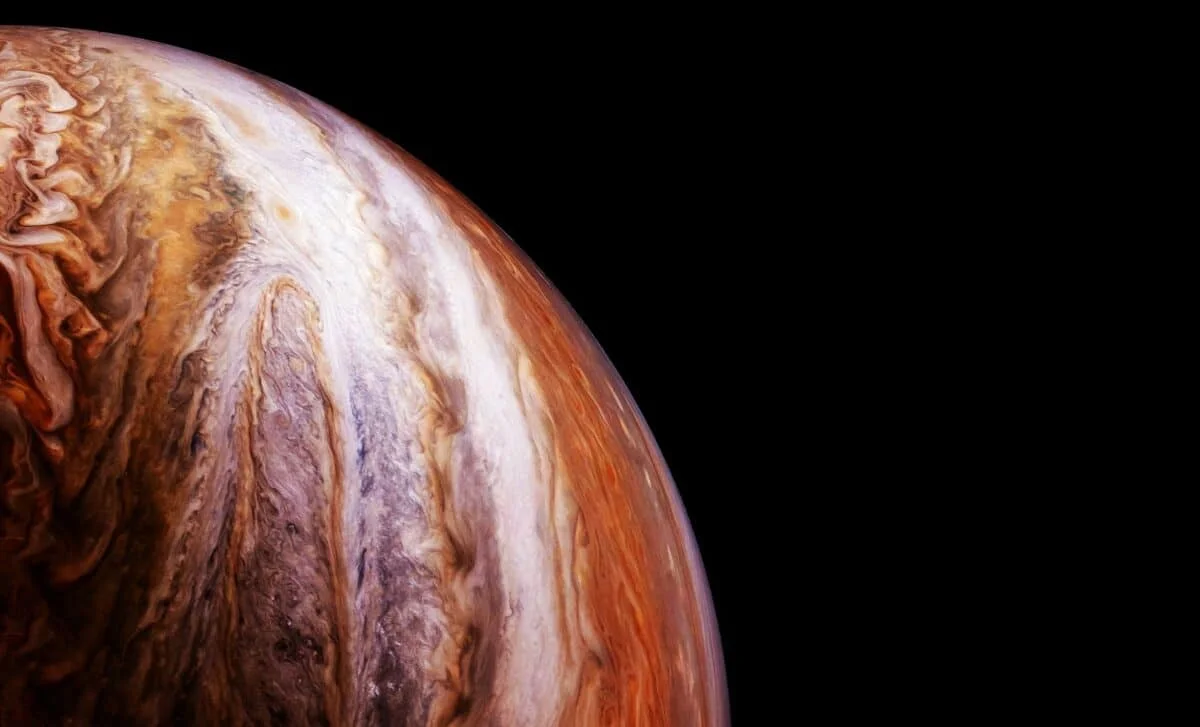
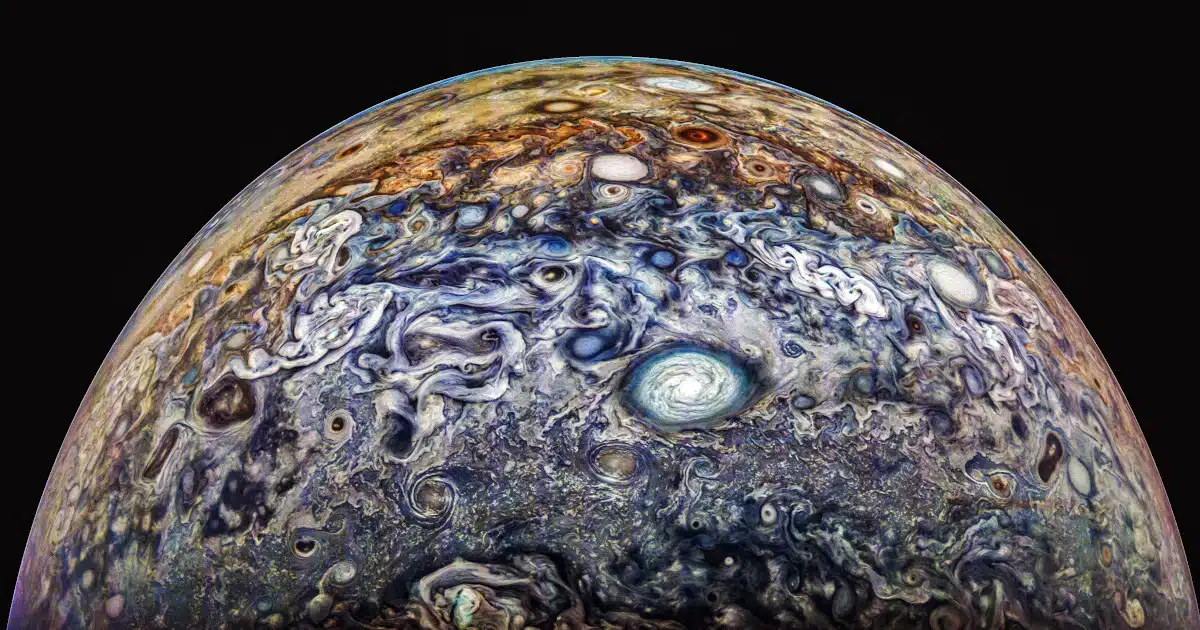
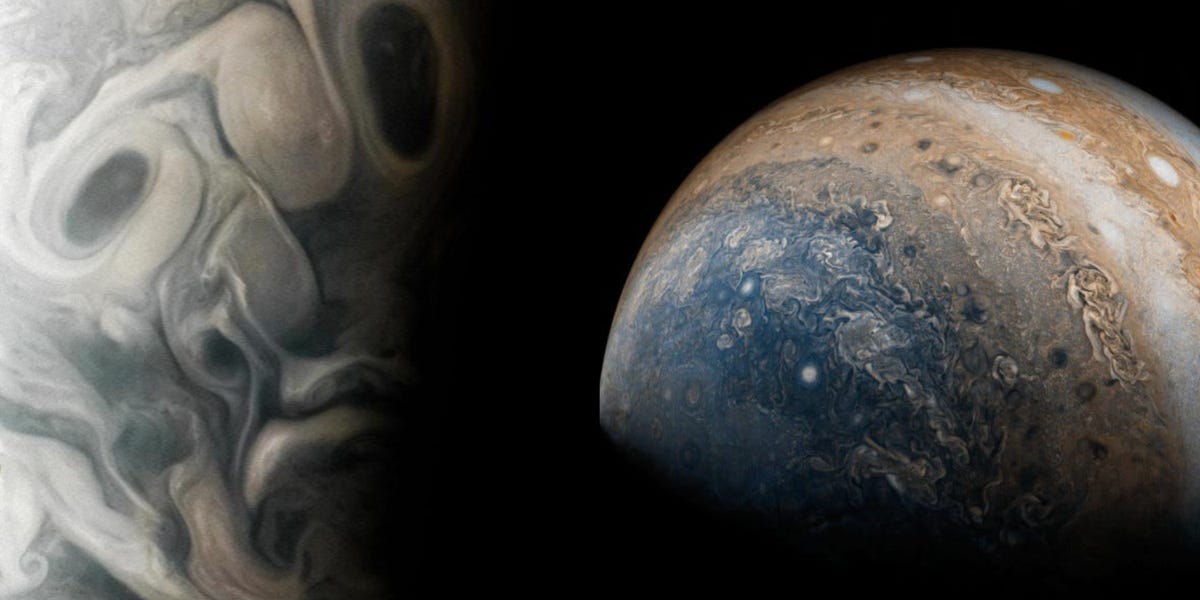
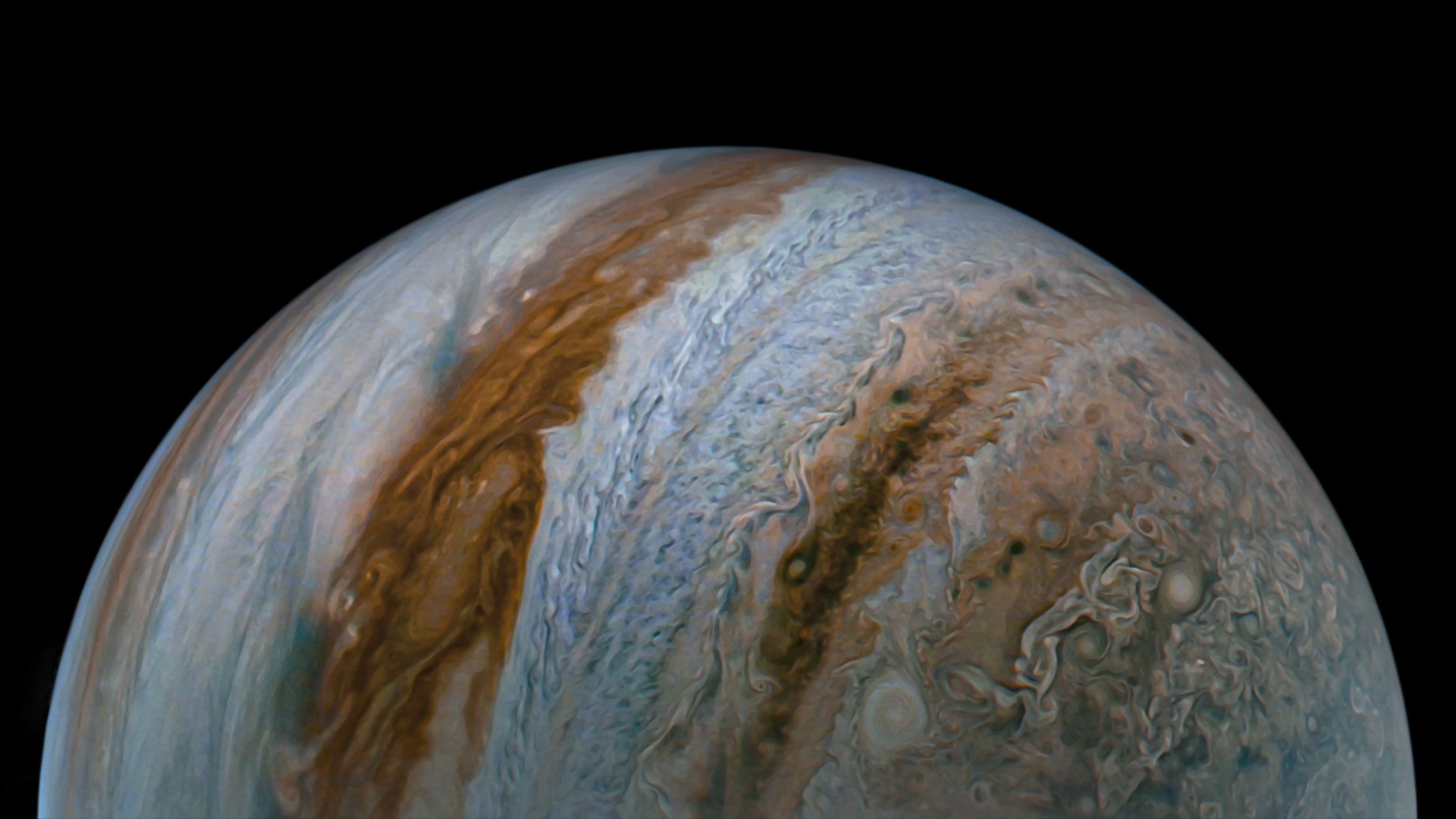
NASA's Juno spacecraft completed its 66th close flyby of Jupiter, capturing raw data and images that are processed by citizen scientists to reveal the planet's atmospheric phenomena. These images, while artistically enhanced, provide valuable insights into Jupiter's weather and structure. The mission, extended beyond its original 2017 end date, will continue until September 2025, offering more opportunities to study Jupiter before the spacecraft is intentionally crashed into the planet.
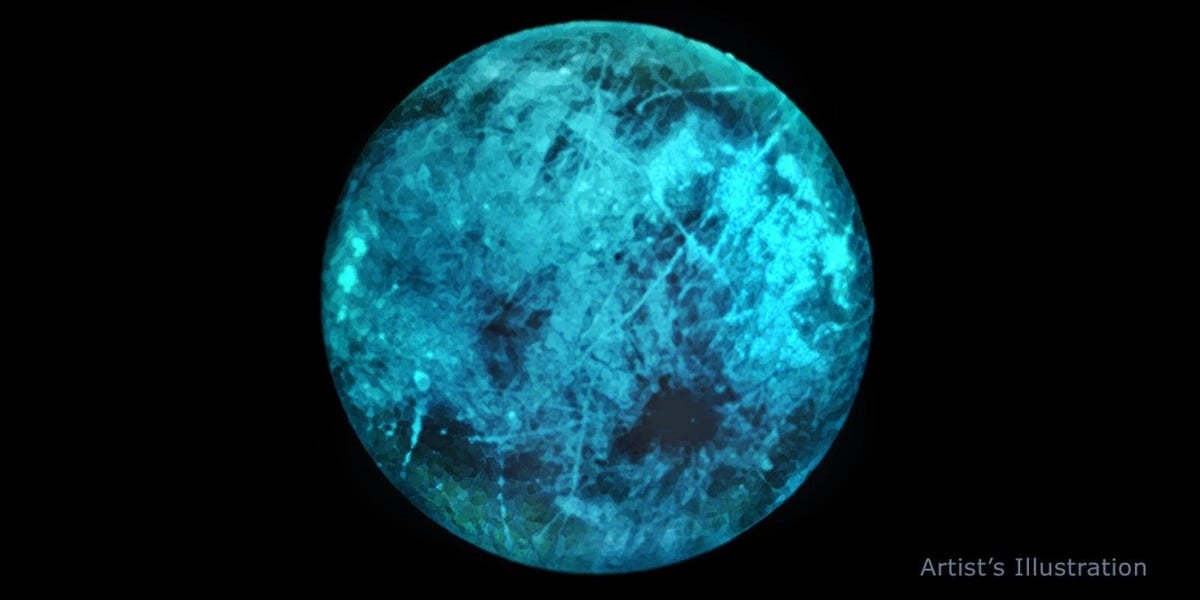
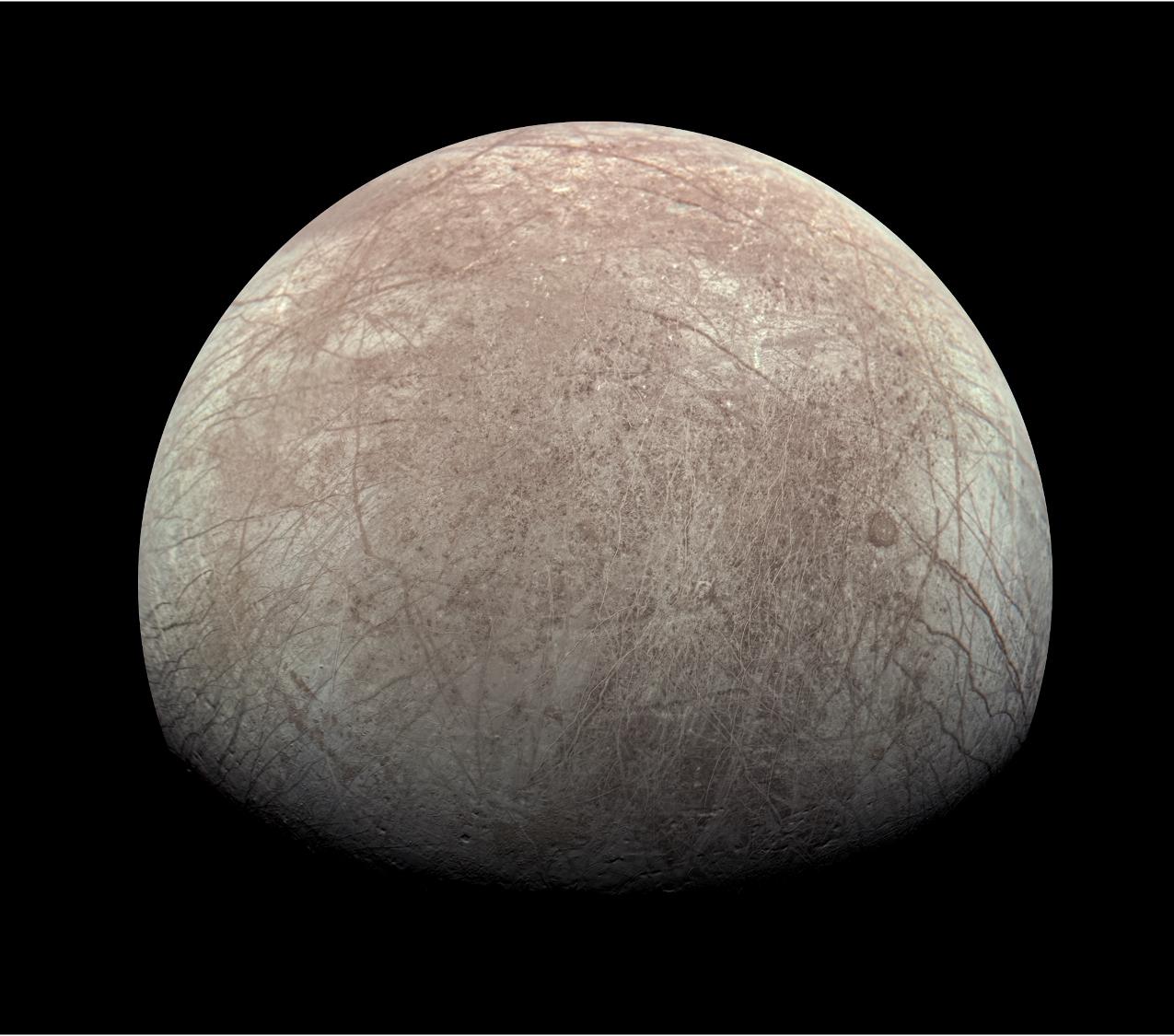
NASA's Juno mission has found that Jupiter's moon Europa produces 1,000 tons of oxygen every 24 hours, enough to support a million people for a day, but much less than previously thought. This new data may narrow the odds of Europa supporting life in its vast underground ocean, with ongoing missions like Clipper aiming to determine its habitability. The oxygen production on Europa is a result of Jupiter's radiation interacting with frozen water ice on the moon's surface, but it's still unclear how much of it reaches the underground ocean.
NASA's Juno mission to Jupiter has measured the rate of oxygen production at the Jovian moon Europa to be around 26 pounds every second, substantially less than previous estimates. The findings, published in Nature Astronomy, were derived from data collected by the spacecraft's Jovian Auroral Distributions Experiment (JADE) instrument. Europa's icy surface is bombarded by charged particles from Jupiter, which split water molecules to generate oxygen, potentially providing a source of metabolic energy for the moon's subsurface ocean. The mission's next target is the volcano-festooned moon Io, with upcoming flybys to gather more data.
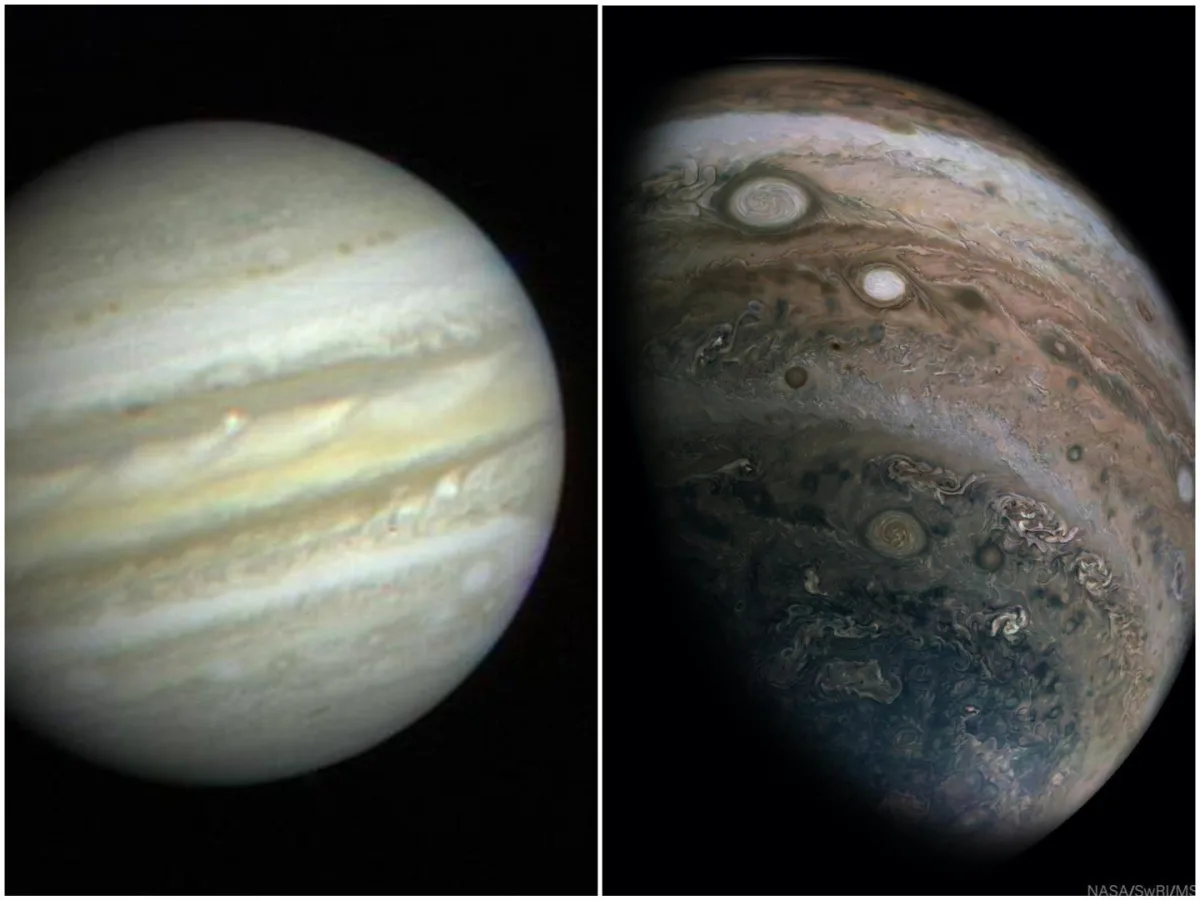
NASA's Voyager 1 spacecraft flew past Jupiter 45 years ago, capturing iconic footage of the gas giant. Comparing the images from Voyager to those captured by NASA's Juno mission today reveals a significant difference in detail and clarity. Juno's modern technology and image processing have provided stunningly detailed, colorful snapshots of Jupiter and its moons, showcasing intricate features and violent weather patterns. The Voyager spacecrafts are now in interstellar space, while Juno continues to orbit Jupiter and send back images until at least September 2025.
NASA's Juno spacecraft, which has been orbiting Jupiter since 2016, has captured stunning images of the gas giant's cyclones, moons, and atmosphere, providing a new perspective and changing our understanding of Jupiter. The mission, launched in 2011, is helping scientists comprehend the evolution of gas giants and has produced breathtaking images showcasing Jupiter's chaotic storms and distinctive bands.
Jupiter, the largest planet in our solar system, is easily observable from Earth and has a significant impact on the outer solar system due to its enormous mass. Its four largest moons, known as the Galilean moons, can be observed with modest equipment. NASA's Juno mission has been studying Jupiter since 2016, providing valuable insights into the planet's interior, and will soon be joined by the Europa Clipper mission to further explore the potential for life on Jupiter's moon, Europa.
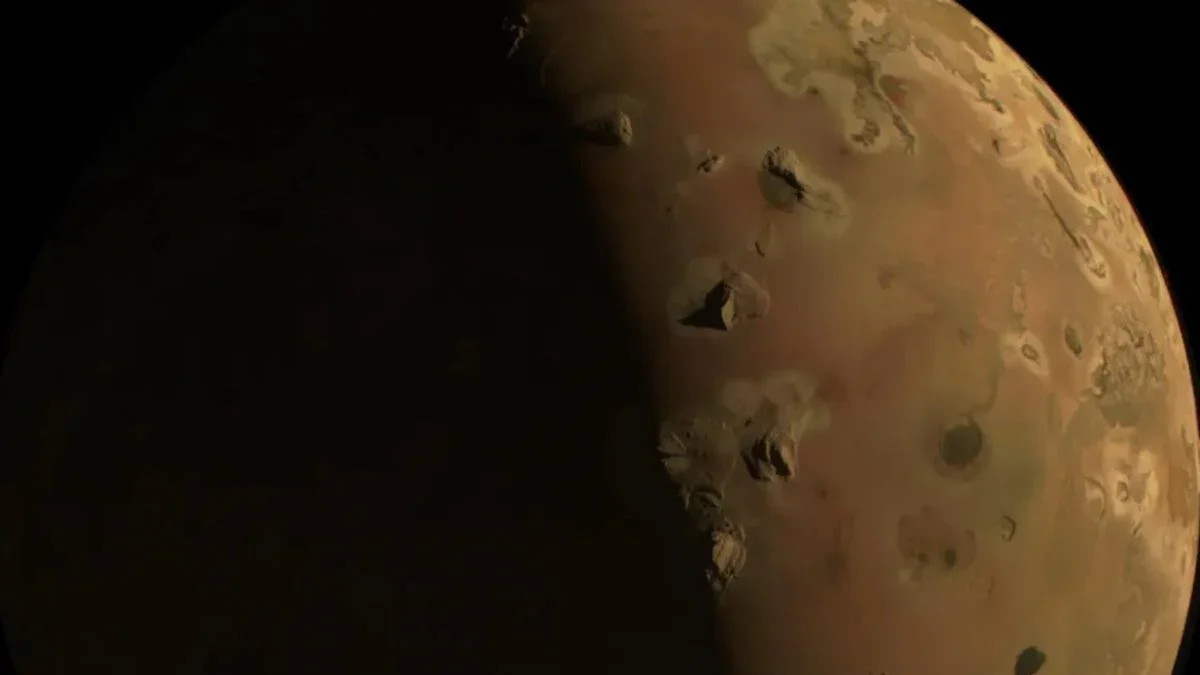
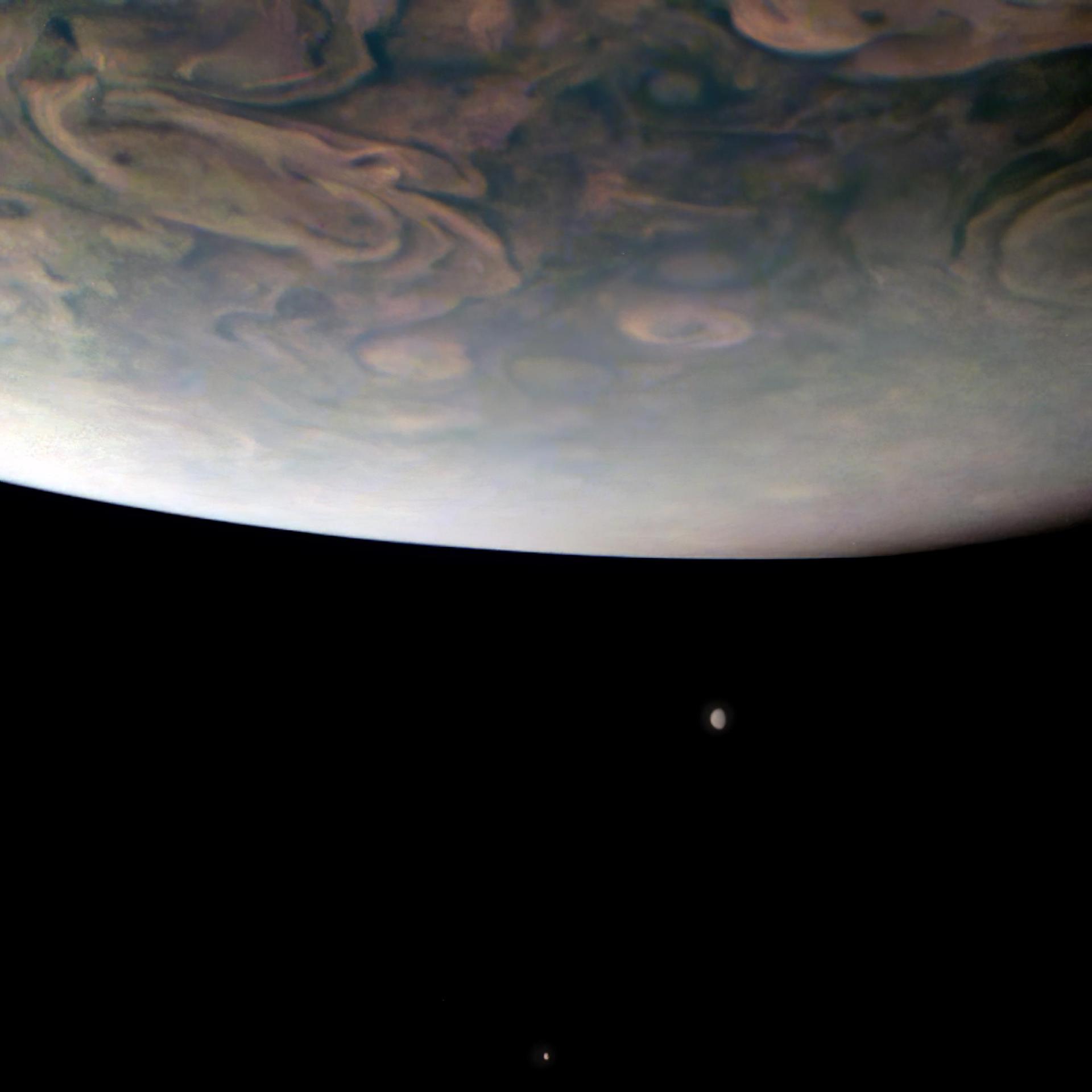
NASA's Juno spacecraft captured stunning new images of Jupiter and its moon Io during a recent flyby, providing detailed views of the gas giant's clouds, storms, and volcanic moon. The mission, launched in 2011, aims to study Jupiter's gravitational field, magnetosphere, and other elements to unravel fundamental questions about the planet. Juno has also provided close-up snapshots of moons Ganymede, Europa, and Io, with plans to continue until September 2025. Additionally, the European Space Agency's Jupiter Icy Moons Explorer (JUICE) satellite and NASA's Europa Clipper mission are set to provide further exploration and imagery of Jupiter's moons in the coming years.
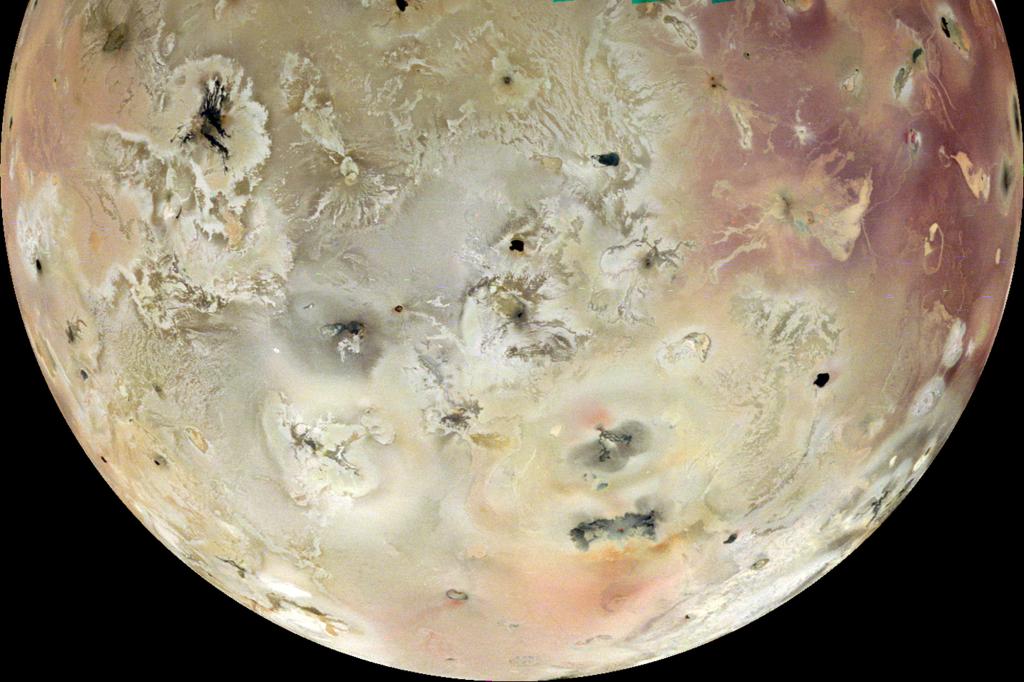
NASA's Juno mission captured stunning images of Jupiter's volcanic moon Io, showcasing its heavily cratered surface and active volcanoes spewing plumes of debris into its thin atmosphere. The spacecraft made a close approach to Io, marking its 58th circle of Jupiter, and is set to make seven more passes. Scientists are studying Io's volcanic activity, its connection to Jupiter's magnetosphere, and the effects of tidal forces from Jupiter. The mission aims to understand the moon's unique geology and its interaction with its parent planet.
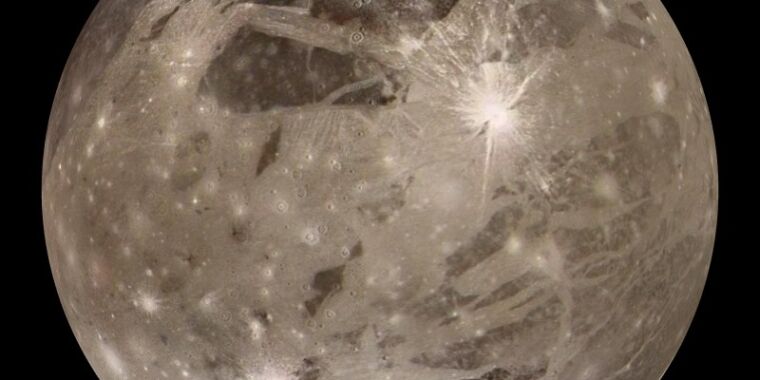
NASA's Juno mission has detected salts and organic compounds on Jupiter's moon Ganymede, providing strong evidence of a subsurface ocean beneath its icy crust. The salts and organics suggest an endogenic origin, possibly rising from the depths of Ganymede through cracks in the surface. While the presence of organics does not guarantee the presence of life, it raises the possibility of Ganymede's potential to support life. Further research is needed to determine the exact origin of the compounds and the extent of Ganymede's ocean.
NASA's Juno mission has provided new insights into the internal structure of Jupiter by revealing that the planet's atmospheric winds penetrate in cylindrical layers parallel to its spin axis. Gravity data collected by Juno indicates that the planet's powerful east-west zonal flows extend inward in a cylindrical manner, settling a long-standing debate about the structure of Jupiter's deep atmospheric winds. The findings, published in the journal Nature Astronomy, enhance our understanding of Jupiter's internal dynamics and could also provide valuable insights into the atmospheres of other giant planets.