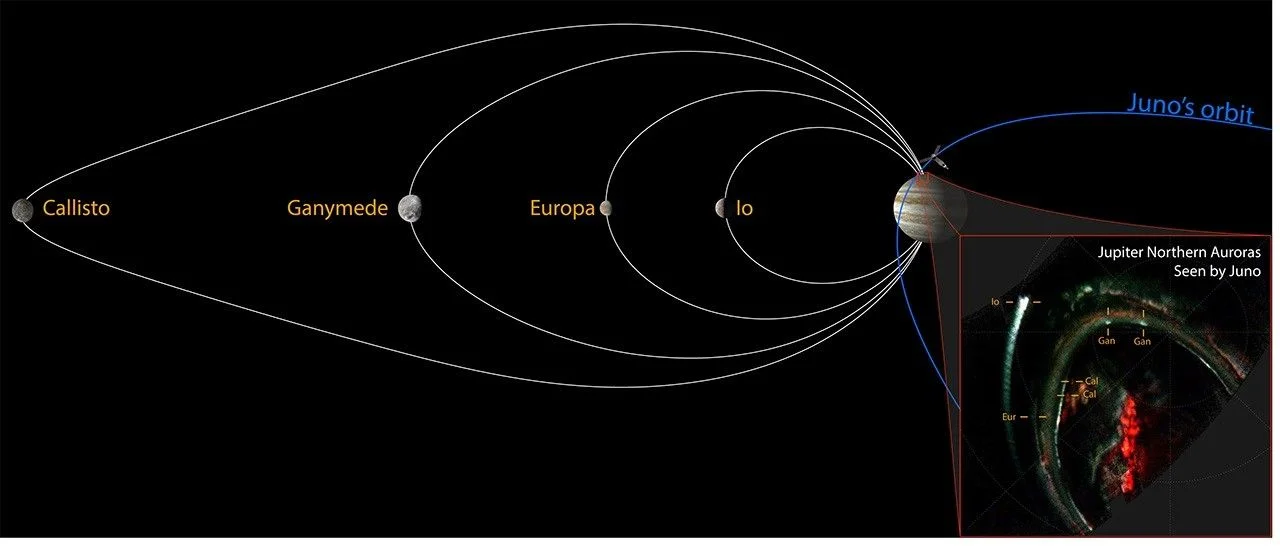
NASA's Juno spacecraft has successfully detected the elusive auroral signature of Jupiter's moon Callisto, completing the set of auroral footprints from the planet's four largest moons, and providing new insights into their interactions with Jupiter's magnetic environment.
This weekend, Jupiter will be at its brightest as Earth positions itself between the gas giant and the sun, making it visible all night. With clear skies, observers can see Jupiter's four largest moons using binoculars or a telescope. The planet will rise in the east-northeast in the Taurus constellation. Additionally, the Winter Triangle and the Geminid meteor shower, peaking on December 13-14, will be visible, though the nearly full moon may obscure some meteors.
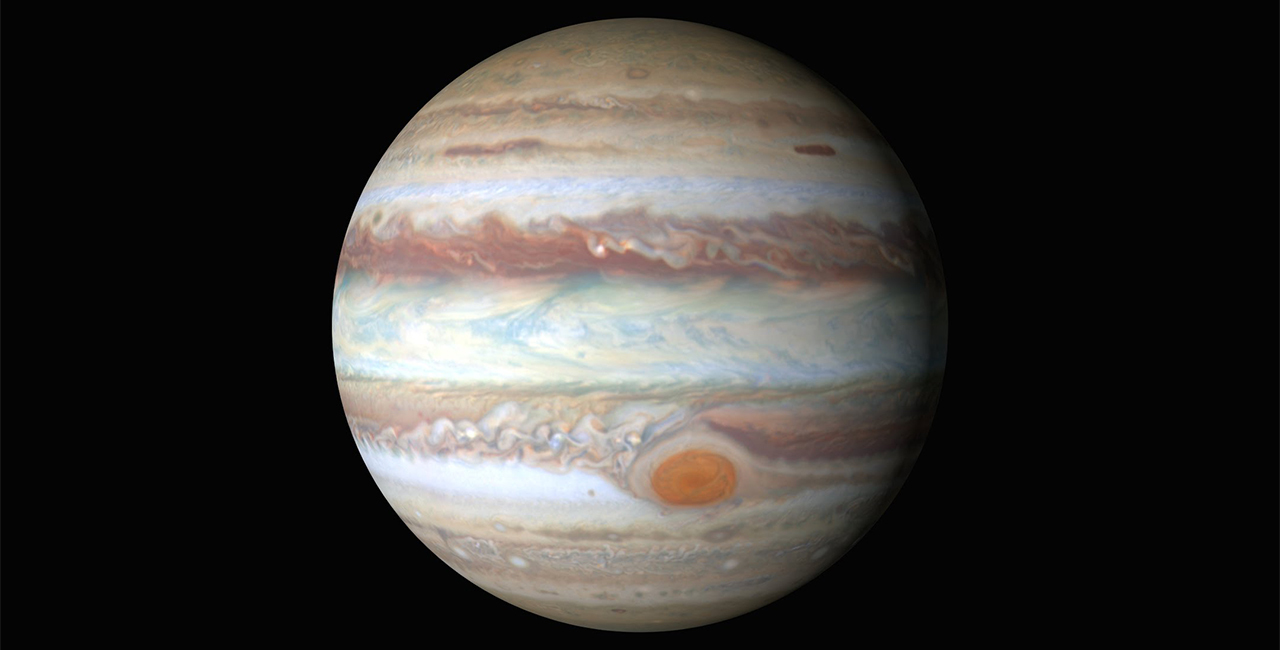
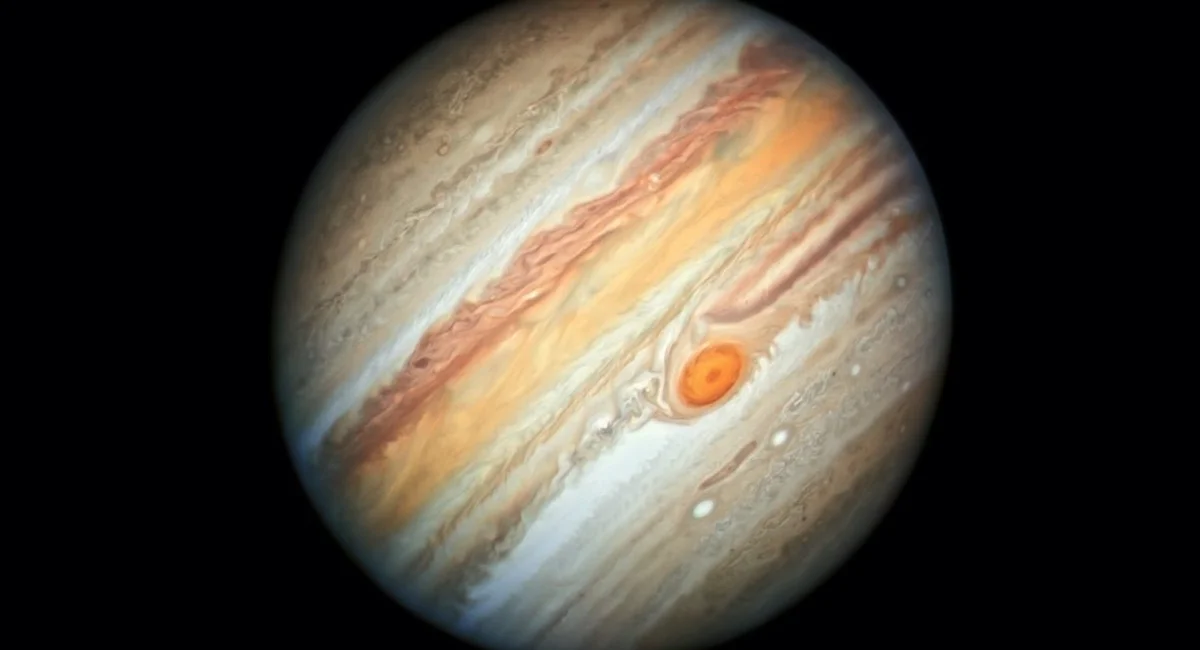
Jupiter, the largest planet in our solar system, is easily observable from Earth and is known for its massive size and bright appearance. With a diameter that can fit 11 Earths and a mass greater than all other planets combined, Jupiter's gravitational influence shapes the orbits of many comets and asteroids. Its four largest moons, discovered by Galileo, can be seen with modest telescopes. NASA's Juno mission, which began in 2016, has provided significant insights into Jupiter's interior and its moons, with future missions like the Europa Clipper set to expand our understanding further.
Jupiter, the largest planet in our solar system, is easily observable from Earth and has a significant impact on the outer solar system due to its enormous mass. Its four largest moons, known as the Galilean moons, can be observed with modest equipment. NASA's Juno mission has been studying Jupiter since 2016, providing valuable insights into the planet's interior, and will soon be joined by the Europa Clipper mission to further explore the potential for life on Jupiter's moon, Europa.
In November, sky watchers in New York City can enjoy the sight of a bright Jupiter, the Taurids and Leonids meteor showers, and the peak settings of the Perseus family of constellations. Jupiter will be at its closest point to Earth on November 1-2 and fully illuminated on November 2. The Taurids meteor shower will peak on November 5-6, followed by the Leonids meteor shower on November 17-18. Jupiter's four largest moons, known as the Galilean moons, will be visible alongside the planet. Sky watchers can also locate constellations by using the Big Dipper as a guide.
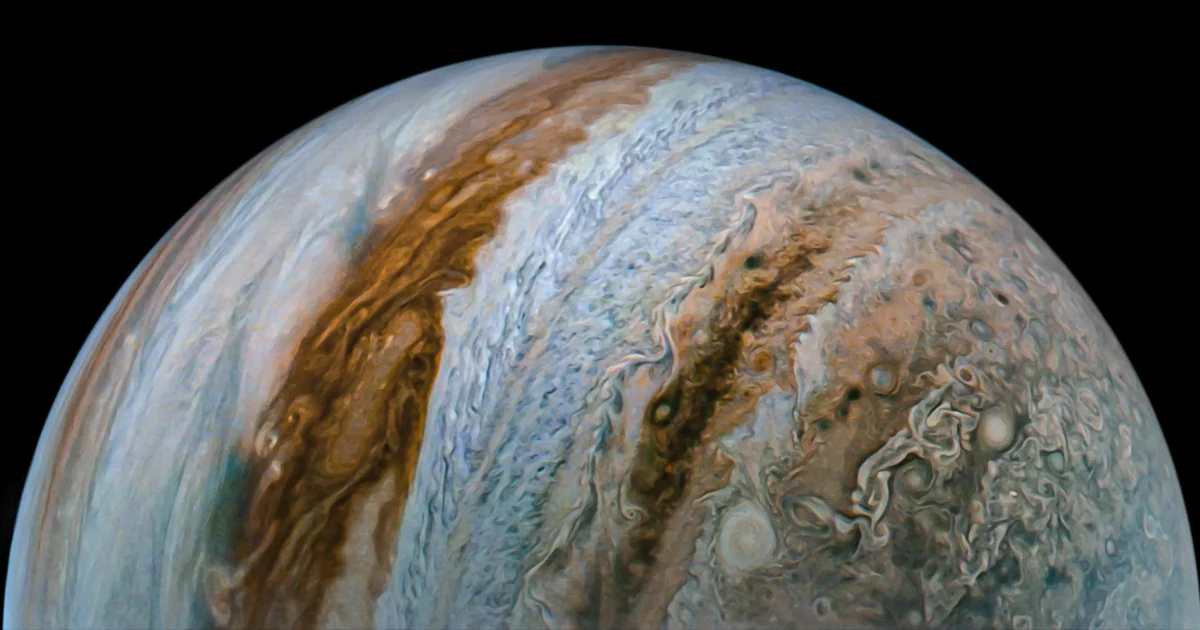
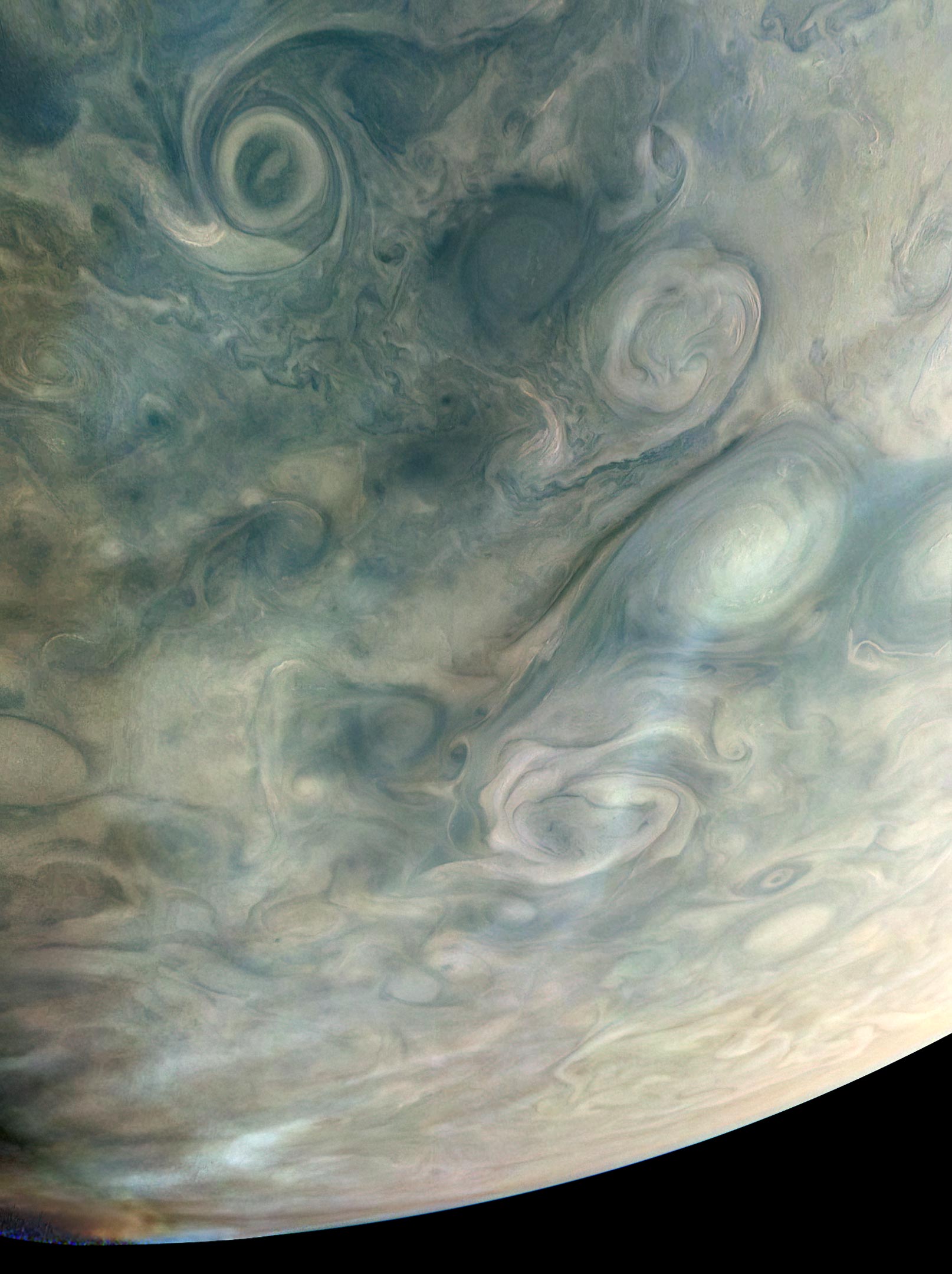
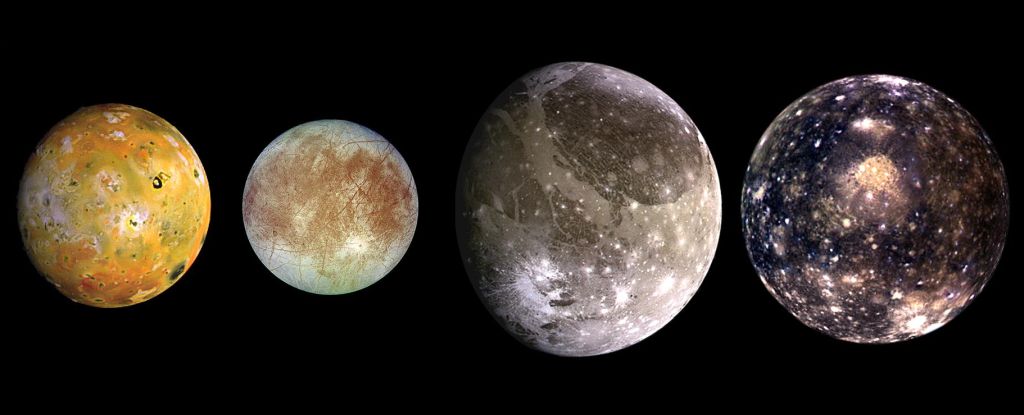
NASA's Juno mission completed its 49th close flyby of Jupiter on March 1, 2023, capturing remarkable images of high-altitude haze bands forming over cyclones in a region referred to as Jet N7. The Juno mission aims to understand the origin and evolution of Jupiter, using a suite of scientific instruments, including the JunoCam, a camera specifically designed to capture high-resolution images of Jupiter's poles. Jupiter is the largest planet in our solar system, renowned for its massive size and distinctive bands of swirling, colorful clouds, and is surrounded by at least 95 moons, the four largest being Io, Europa, Ganymede, and Callisto.
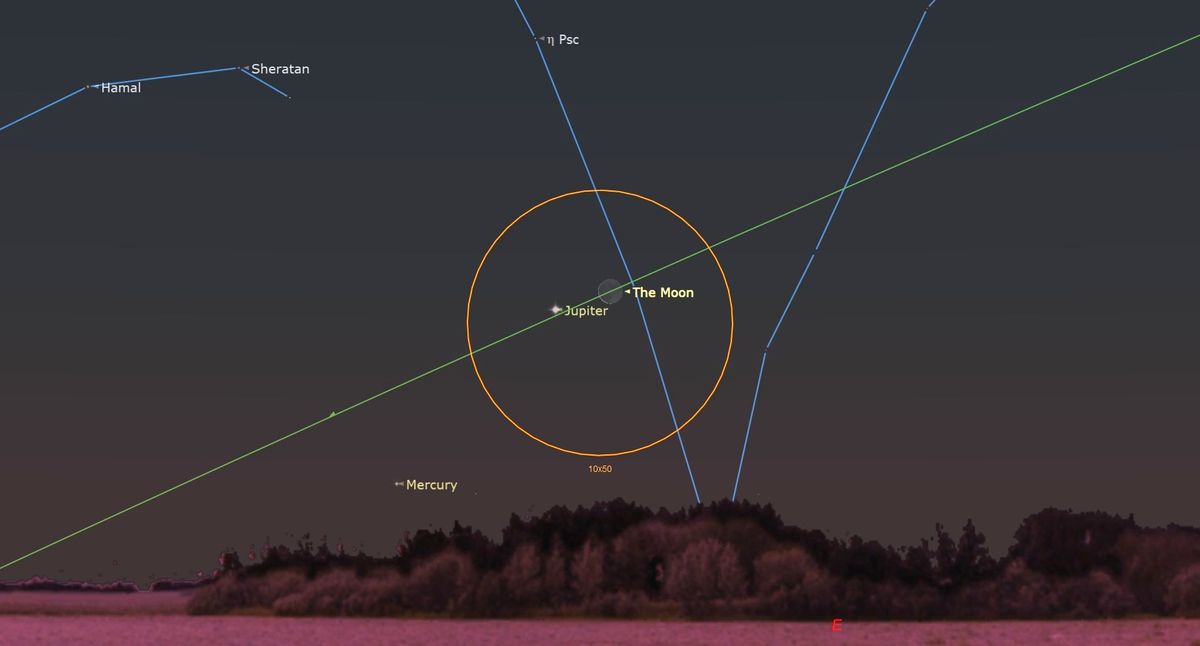
On May 17, a lunar occultation will occur where Jupiter and its four Galilean moons will pass behind a thin, 5% illuminated waning crescent moon as seen from North America. The best views of Jupiter's disappearance behind the moon will be from the western third of the United States and Canada, where at least part of it happens before sunrise. Binoculars will give a better view, and a telescope will be needed to follow its moons.
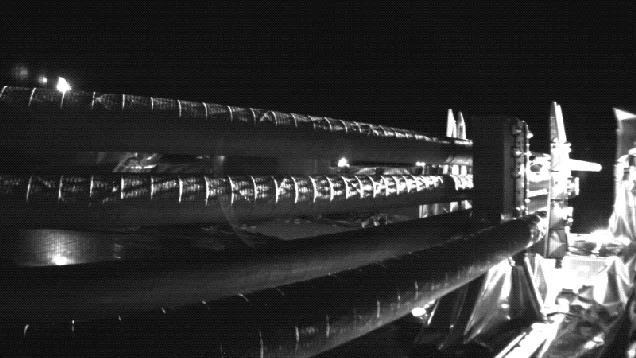
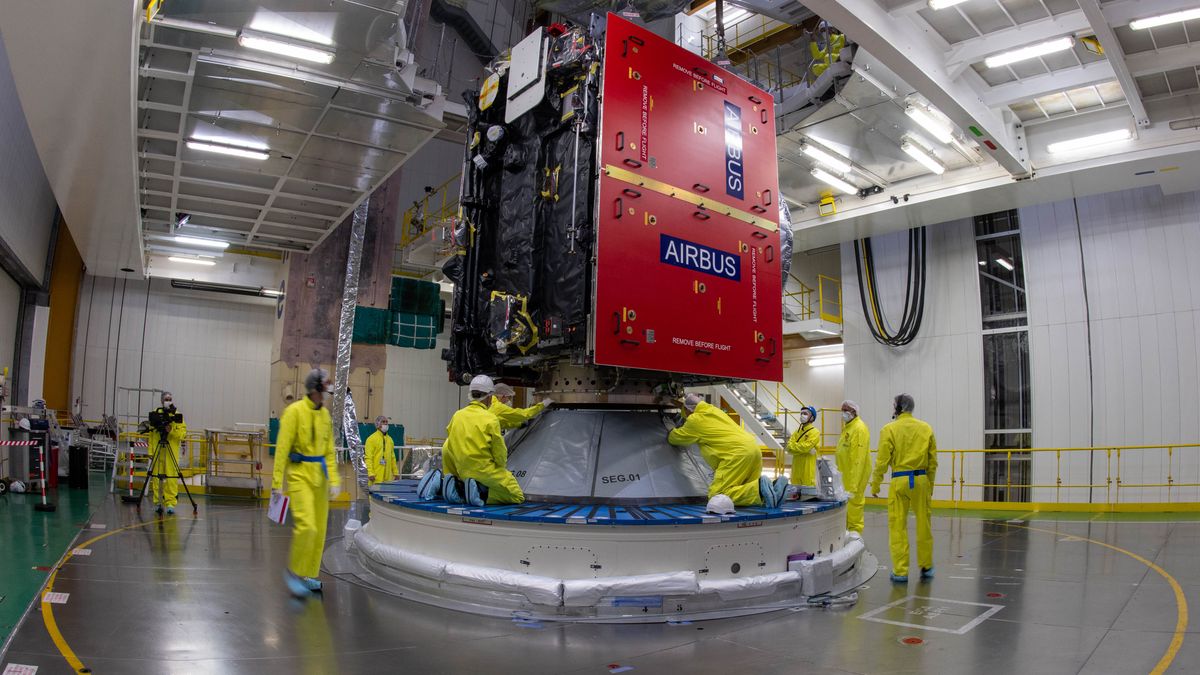
The JUICE probe, on its way to explore Jupiter's icy moons, encountered a problem when its ice-penetrating RIME antenna refused to deploy. Engineers tried several methods to dislodge the stuck antenna, including shaking and baking it in the sun, but it remained lodged. Finally, a "non-explosive actuator" was fired, which moved the pin holding the antenna in place, allowing it to fully deploy. The probe will continue its eight-year journey to Jupiter, where it will explore Europa, Ganymede, and Callisto.
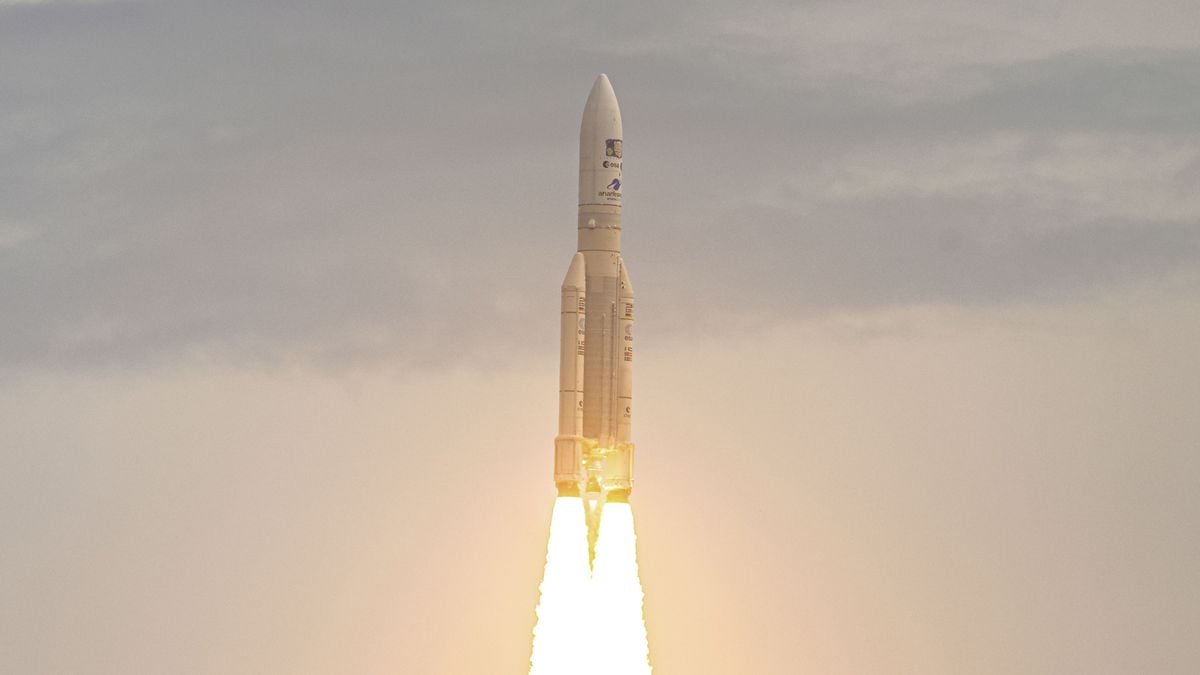
Amateur and professional astronomers captured images of the Jupiter Icy Moons Explorer (JUICE) spacecraft as it headed away from Earth on its eight-year trip to Jupiter. The European Space Agency (ESA) JUICE mission departed from the European Spaceport in Kourou, French Guiana, at 08:14 EDT (1214 GMT) journeying aboard an Ariane 5 rocket. The primary mission of JUICE will be to investigate the subsurface oceans believed to dwell beneath the icy shells of Jupiter's moons, Europa, Callisto, and Ganymede, which could help determine if any of these moons possess the conditions needed to support life.
Europe's first-ever Jupiter mission, the Jupiter Icy Moons Explorer probe (JUICE), is set to launch on April 13 atop an Ariane 5 rocket from Europe's Spaceport in French Guiana. JUICE will conduct a series of flybys of three of Jupiter's four big Galilean moons — Ganymede, Europa, and Callisto, all of which are thought to possess oceans of liquid water beneath their icy shells. JUICE will be the first probe ever to orbit a moon other than that of Earth. NASA's Europa Clipper, which will focus on Europa, is scheduled to lift off in October 2024.
A new study suggests that a young Jupiter could have irradiated its four largest moons with light so intense that it vaporized water and stripped them of volatiles. This could explain why the Galilean moons have the compositions they do, from the hellacious volcano-world Io, closest to Jupiter, to ice-crusted Europa, then giant moon Ganymede, to the most distant, the crater-scarred Callisto. The findings offer a plausible explanation for the strange compositional differences between the four Galilean moons, which are thought to have formed from the same cloud of dust circling Jupiter.