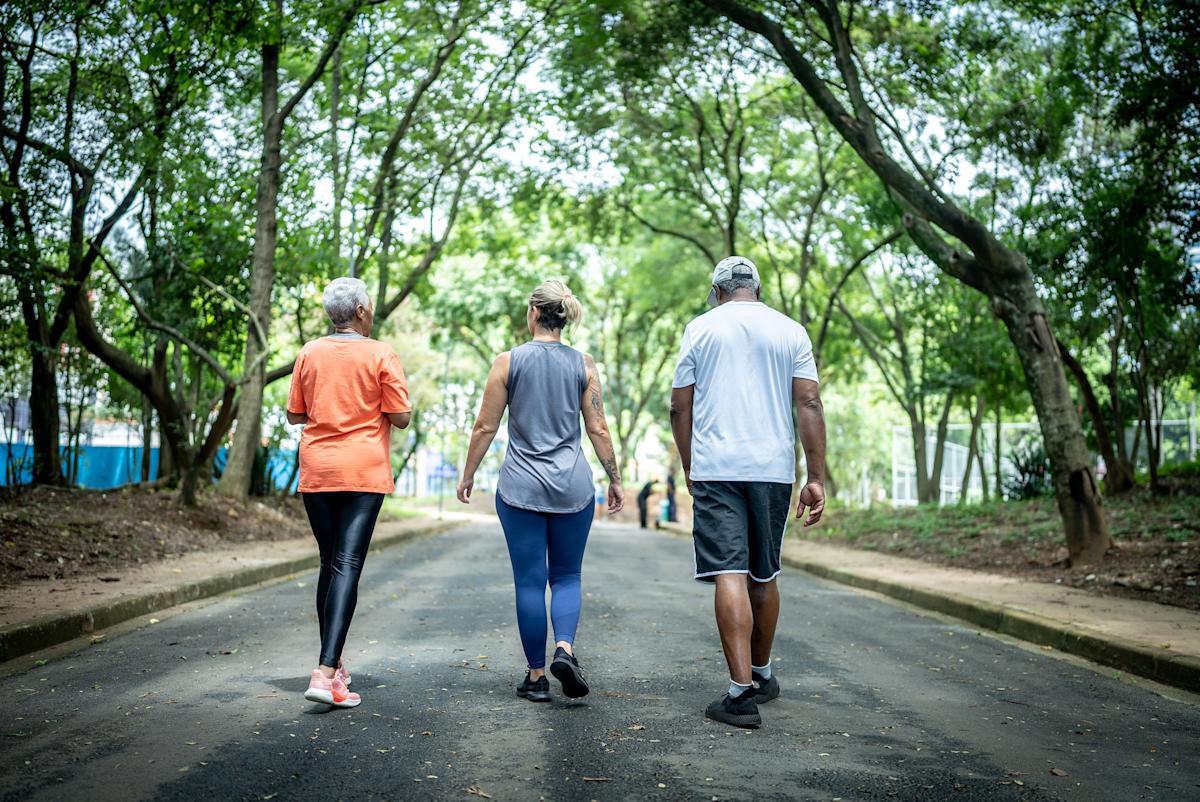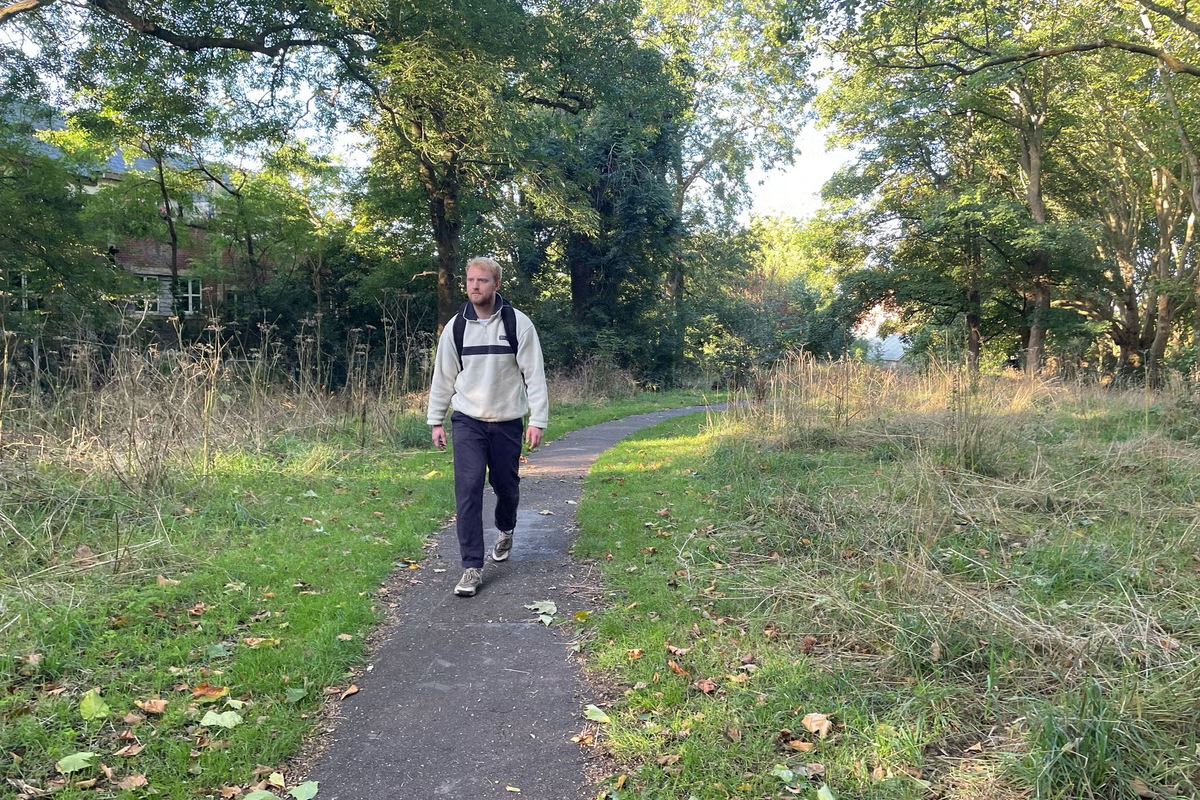
Japanese walking, a high-intensity interval walking method developed in Japan, involves alternating between brisk and slow walking to improve cardiovascular health, muscle strength, and fitness, especially beneficial for older adults and busy individuals. Studies show it can lead to significant health improvements in a short time and is easy to incorporate into daily routines, but should be done with proper precautions and medical advice if necessary.
Japanese walking, developed in 2007, involves alternating fast and slow walking for 30 minutes and has been shown to improve strength, aerobic capacity, and blood pressure, especially in older adults. While effective for many, its benefits may vary based on age, fitness level, and walking method, and more research is needed for younger or healthier populations.
Japanese walking is a simple, accessible interval walking exercise that alternates between normal and brisk walking, developed in Japan over 20 years ago to improve health among middle-aged and older adults. It can enhance cardiovascular fitness, lower blood pressure, and combat age-related muscle decline, making it an easy entry point into regular physical activity for sedentary individuals. Experts recommend starting with 30-minute sessions, gradually increasing intensity and frequency, and consulting a doctor before beginning.
A new 'Japanese walking' method involves 30-minute sessions of alternating low and high-intensity walking, claiming to offer '10 times the benefits' of traditional 10,000 steps daily. Based on a 2007 study, this approach can improve muscle strength, aerobic capacity, and blood pressure, and is more time-efficient. While it provides significant health benefits, it may be less effective than accumulating higher total step counts throughout the day and might reduce the mental health benefits of more relaxed walks. Suitable for busy individuals, its success depends on personal preference and consistency.
A new 'Japanese walking' method involves 30-minute sessions of alternating low and high-intensity walking, claiming to offer ten times the benefits of walking 10,000 steps daily. Based on scientific studies, this approach can improve muscle strength, aerobic capacity, and blood pressure, especially when combined with regular movement and higher step counts. While effective for time-constrained individuals, it may lack the benefits of spreading activity throughout the day and enjoying the mental health benefits of more relaxed walks. Overall, it’s a time-efficient way to boost health, particularly if it fits your lifestyle and preferences.
A new 'Japanese walking' method involves 30-minute sessions of alternating low and high-intensity walking, claiming to offer '10 times the benefits' of traditional 10,000 steps daily. Based on a 2007 study, this approach can improve muscle strength, aerobic capacity, and blood pressure, and is more time-efficient. While effective, it may not replace the benefits of higher step volume and regular movement throughout the day. Suitable for busy individuals, it can be a practical way to boost health, especially if enjoyed and consistently practiced.
The viral 'Japanese walking' trend involves alternating brisk and slow walking in three-minute intervals, promising health benefits similar to a 10,000-step walk. While inspired by a 2007 study and popularized by TikTok influencer Eugene Teo, experts caution that the scientific evidence is limited and the routine may be challenging to follow for some. Nonetheless, short bursts of vigorous activity like this can be beneficial, but viewers should consult healthcare professionals before adopting new exercise routines.
Japanese walking is a new interval walking trend from Japan that involves alternating brisk and slow walking for at least 30 minutes, offering health benefits like weight loss, lower blood pressure, and improved leg strength. It serves as a low-impact cross-training option for runners, helping with recovery and injury prevention without replacing running.
Japanese walking is a simple, scientifically supported low-impact exercise involving alternating fast and slow walking for 30 minutes, which can improve heart health, lower blood pressure, aid fat loss, and enhance cognitive function, making it an accessible alternative to more strenuous workouts.
Japanese walking, a new fitness trend involving interval-style bursts of fast and slow walking, was developed to help elderly people gain health benefits similar to high-intensity interval training. Research shows it can aid weight loss, lower blood pressure, and improve muscle strength and aerobic capacity, making it a more approachable form of high-intensity exercise especially for older adults or those recovering from injuries.
Japanese walking, also known as interval walking training, is a simple yet effective fitness trend involving alternating between fast and slow walking to improve cardiovascular health, leg strength, and overall aging health, supported by research from Japan and gaining popularity on social media.
A new fitness trend called 'Japanese walking' involves alternating brisk and slow walking in three-minute intervals, promising health benefits similar to a 10,000-step walk in just 30 minutes. While popular on social media and backed by some studies, experts caution that more research is needed to confirm its effectiveness and warn against overhyping the method. The trend reflects a broader shift towards accessible, low-cost ways to improve health, but viewers should consult healthcare professionals before adopting new routines.
Japanese walking, a simple interval walking method developed in 2007, involves alternating three minutes of fast-paced walking with three minutes of slower pace for 30 minutes. Research shows it improves strength, cardiovascular health, and mental well-being, and it has gained popularity on TikTok as an accessible, effective fitness trend.
A person struggling to reach 10,000 steps daily found that practicing Japanese walking, which involves alternating fast and slow walking intervals for 30 minutes, increased their average steps and made walking more enjoyable, while providing significant health benefits such as improved blood pressure and muscle strength.
Recent Japanese walking trends, involving alternating fast and slow paces, may add up to 7 years to life expectancy by reducing age-related health risks, and are a moderate alternative to high-intensity workouts like HIIT, making exercise more accessible and sustainable for many.