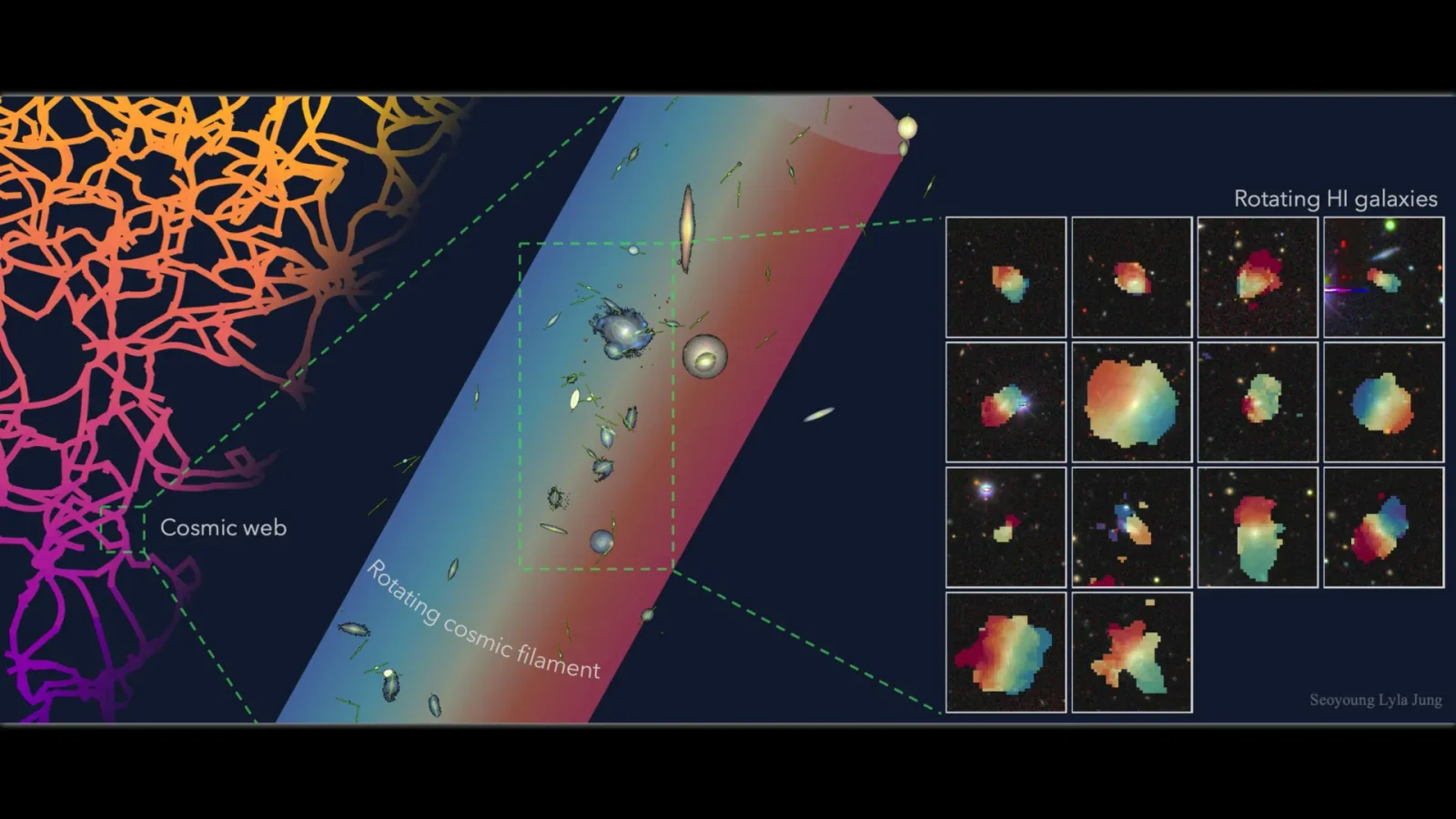
Astronomers have discovered one of the largest rotating structures in the universe, a cosmic filament about 140 million light years away, composed of a thin chain of hydrogen-rich galaxies that appear to rotate collectively, providing new insights into galaxy formation and the dynamics of the cosmic web.
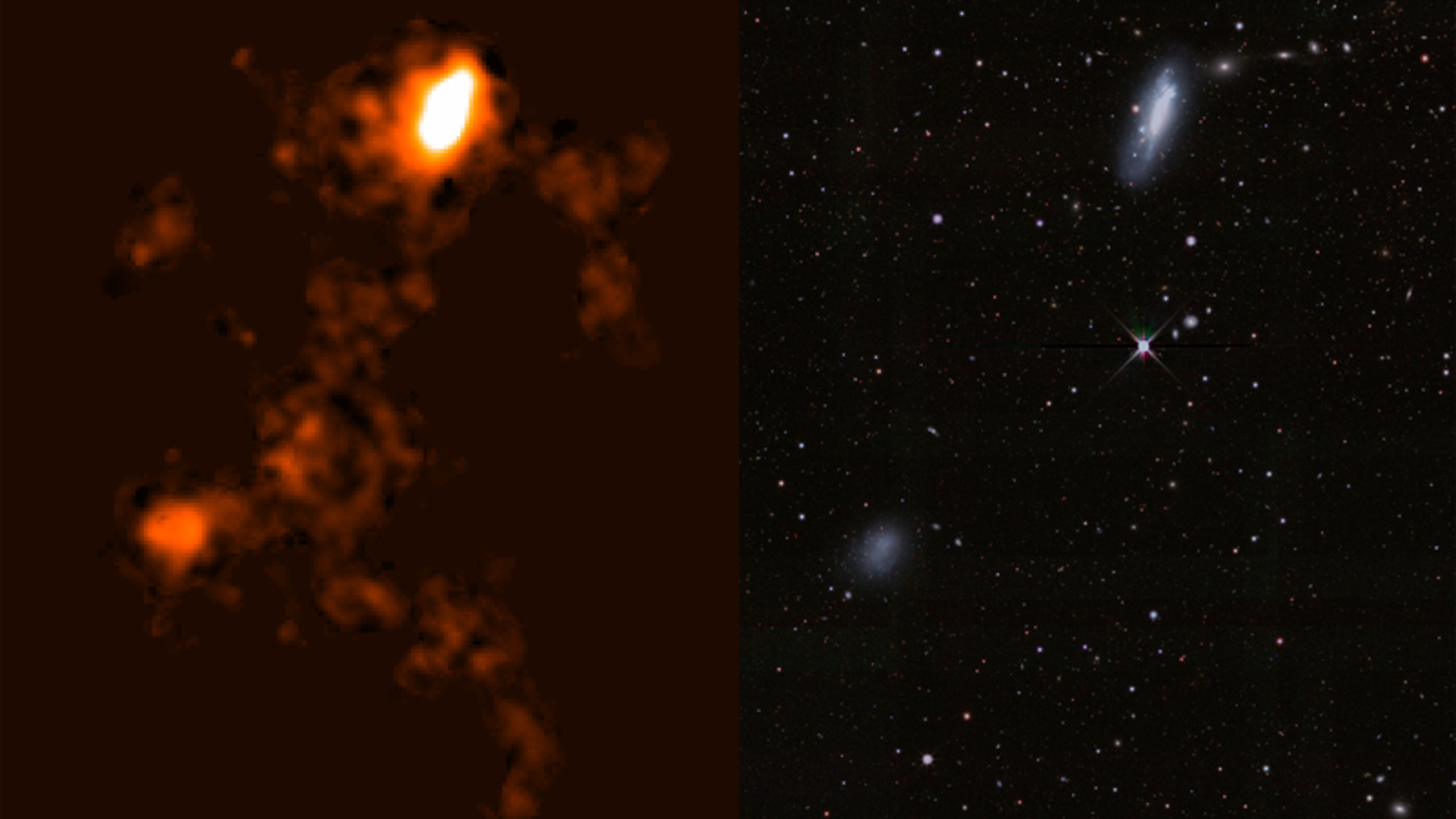
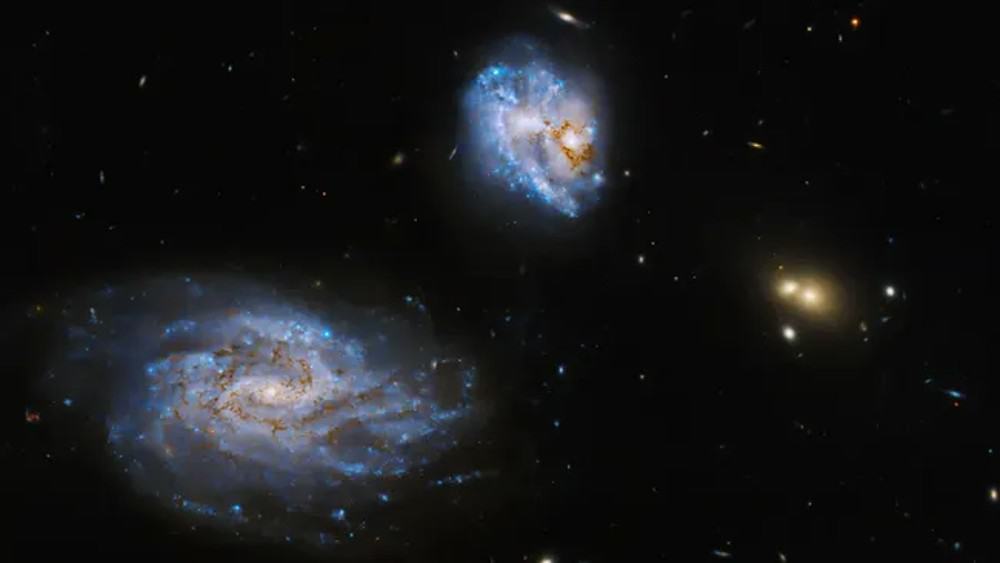
Two galaxies, NGC 4532 and DDO 137, are falling into the Virgo Cluster at 547 miles per second, creating a massive gas bridge and tail due to tidal forces and ram-pressure stripping, providing insights into galaxy evolution and star formation.
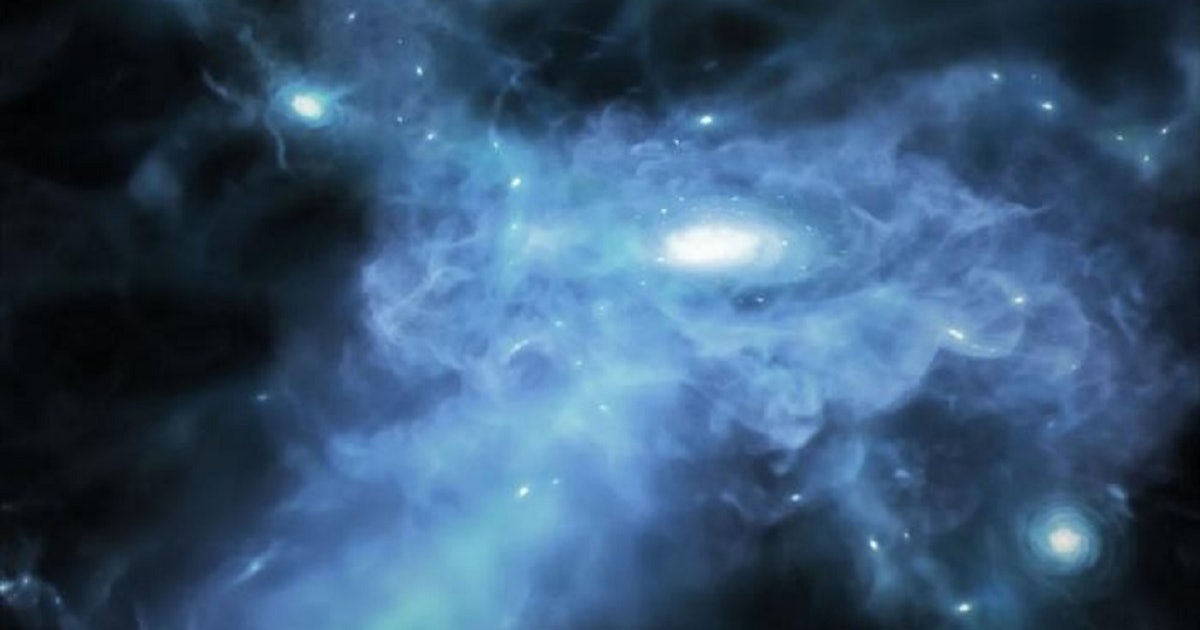
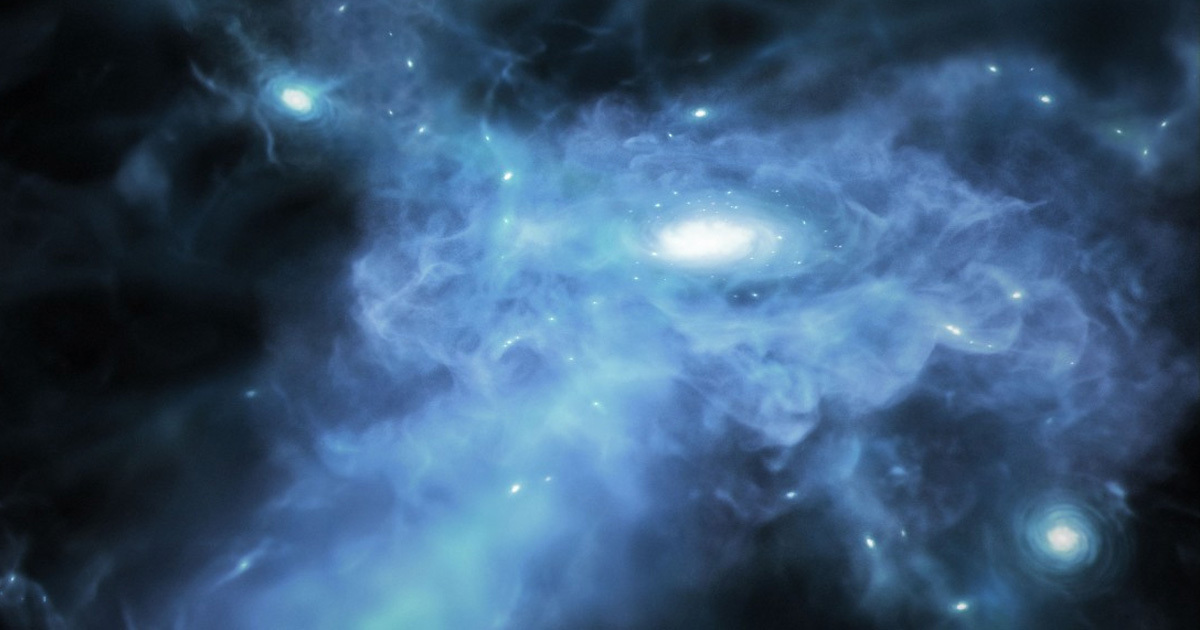
The James Webb Space Telescope (JWST) has captured images of three of the universe's earliest galaxies forming from dense hydrogen gas clouds, providing a glimpse into galaxy formation between 400 and 600 million years after the Big Bang. This discovery, published by University of Copenhagen astrophysicists, reveals a previously unseen stage of galaxy assembly during the Cosmic Dark Ages, where cold, neutral hydrogen gas is absorbed and eventually forms new stars.
Using the James Webb Space Telescope, researchers observed the formation of three baby galaxies just 400 to 600 million years after the Big Bang, making them some of the youngest galaxies ever seen. This discovery, detailed in the journal Science, provides unprecedented insights into the birth of the universe and the formation of its first star systems. The team plans to continue their observations to further understand galaxy formation and push the boundaries of how far into the universe we can see.
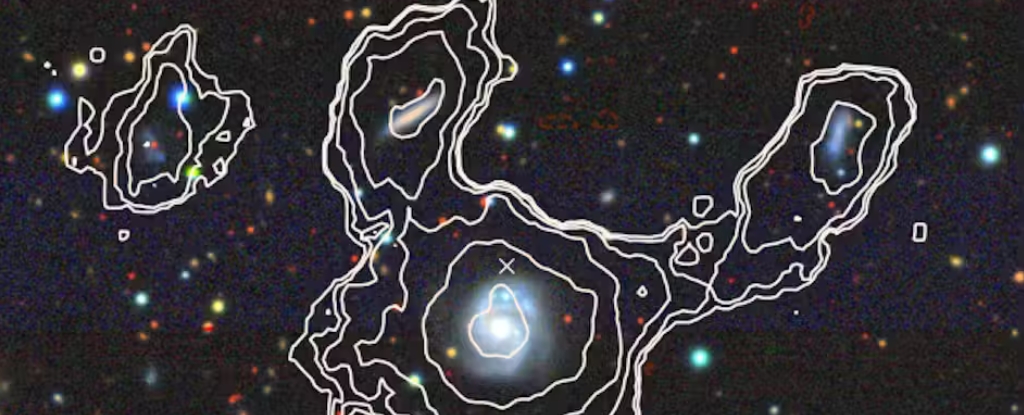
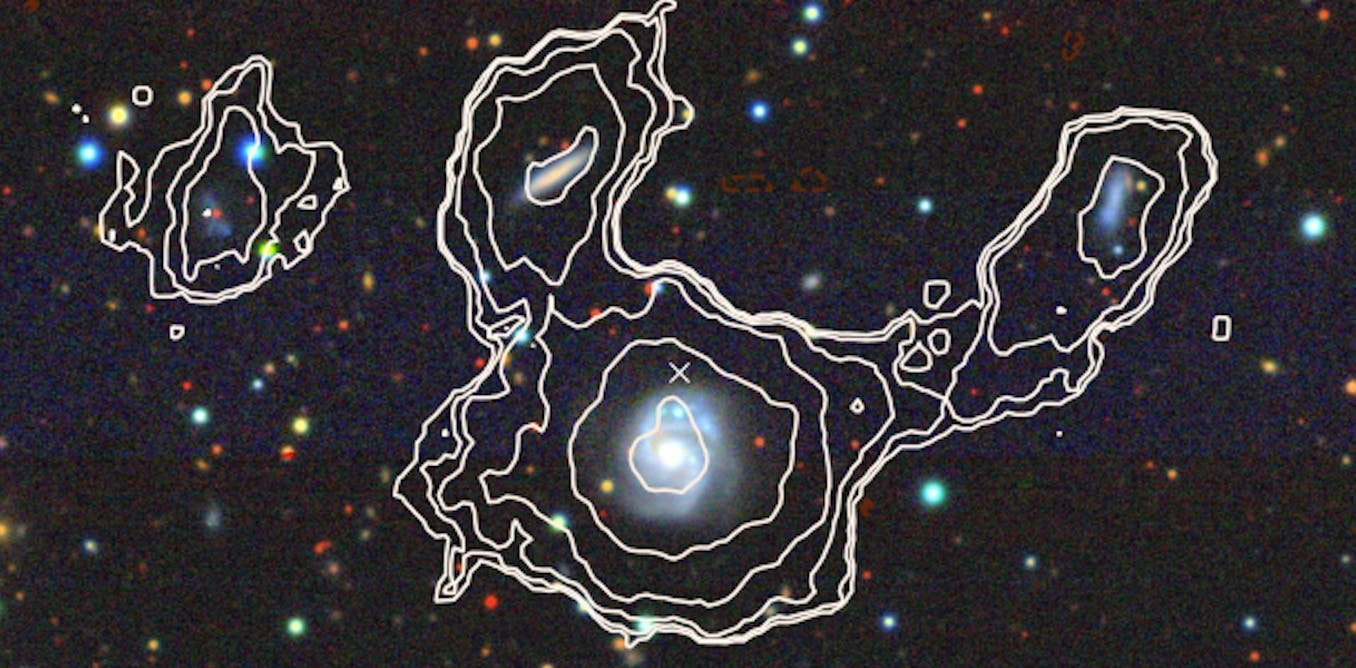
Astronomers using the MeerKAT radio telescope in South Africa have discovered 49 new galaxies while investigating the presence of hydrogen gas within a specific galaxy. The discovery provides insights into dynamic galactic interactions, with some galaxies actively siphoning gas from their neighbors. The MeerKAT radio telescope, a cornerstone in astronomical exploration, is part of the Square Kilometre Array (SKA) project and has detected radio galaxies and examined the Milky Way’s galactic center. Planned projects include surveys exploring star-forming hydrogen gas within new and existing galaxies, aiming to understand the evolutionary processes of galaxies.
Using the MeerKAT radio telescope in South Africa, astronomers discovered 49 previously unknown galaxies in just under three hours, while originally aiming to observe hydrogen gas in a specific galaxy. The findings, published in the Monthly Notices of the Royal Astronomical Society, shed light on the importance of studying gas in galaxies to understand their formation and evolution. The MeerKAT telescope, part of the Square Kilometre Array project, has proven to be a valuable tool for such discoveries and is expected to reveal more insights into the universe's mysteries.
Astronomers using the MeerKAT radio telescope in South Africa to search for hydrogen gas in a specific galaxy stumbled upon 49 previously unknown galaxies instead. The discovery, made in a short observation time, sheds light on the gas-rich environments and interactions between galaxies. The MeerKAT telescope, a precursor to the larger Square Kilometre Array (SKA), has proven to be a valuable tool for uncovering new astronomical phenomena and is expected to reveal more discoveries in the future.
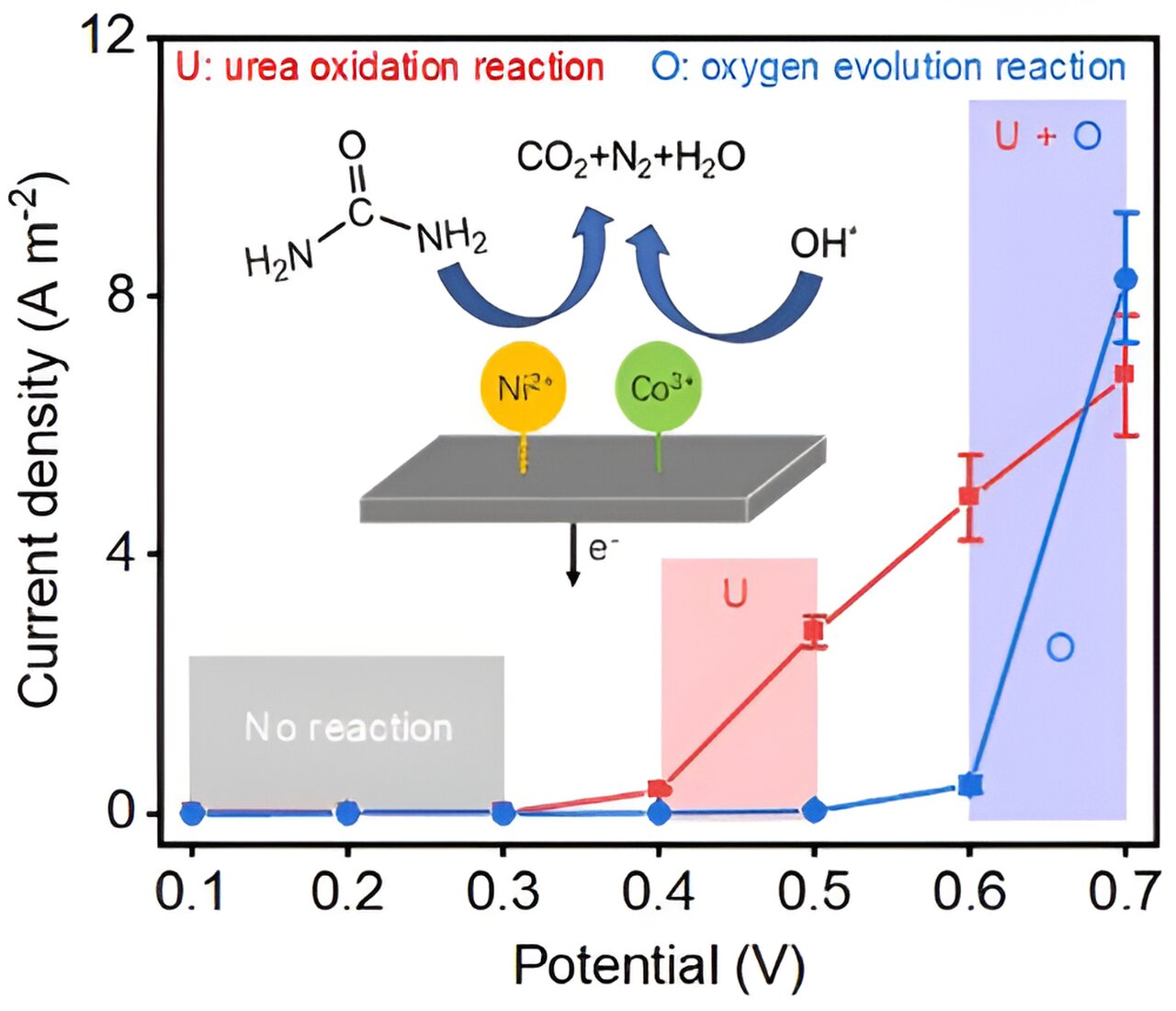
Researchers have developed a material using nickel and cobalt atoms with tailored electronic structures to selectively oxidize urea in an electrochemical reaction, potentially enabling the conversion of urea from water into hydrogen gas. This breakthrough could help address the challenge of urea-rich agricultural runoff and municipal wastewater discharge, which cause environmental harm, while also offering a more energy-efficient and economical method for hydrogen production. The study highlights the importance of tuning valence charges for designing high-performance and selective electrocatalysts, with potential applications in environmental remediation and the water-energy nexus.
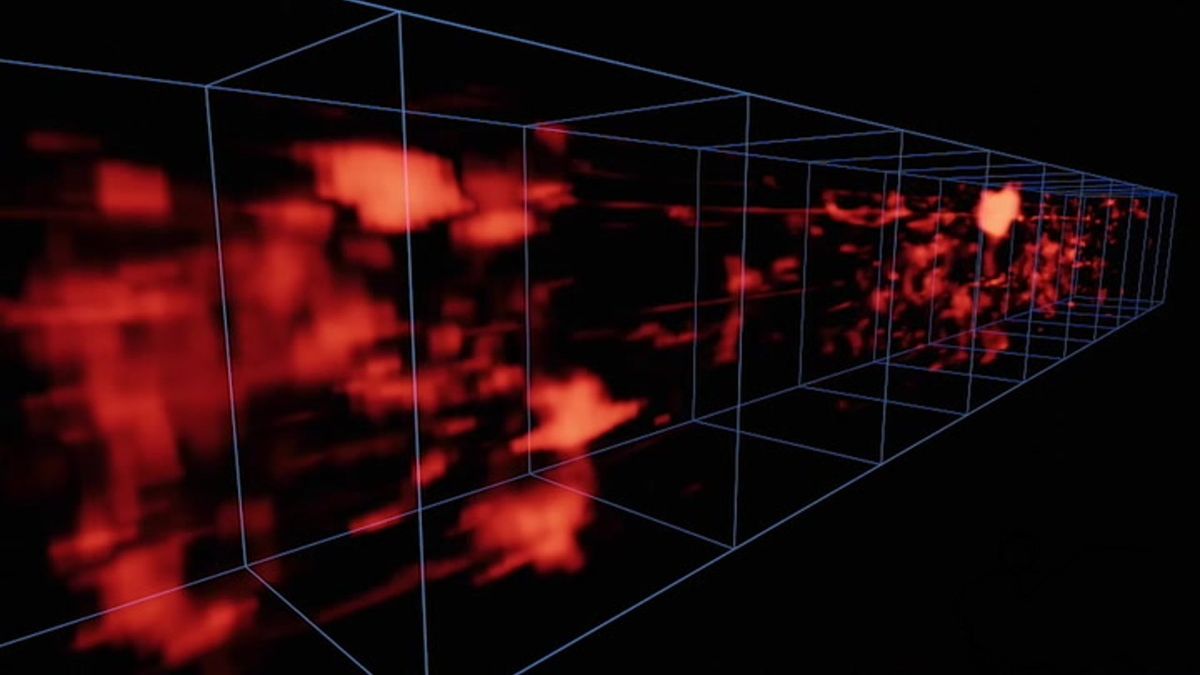
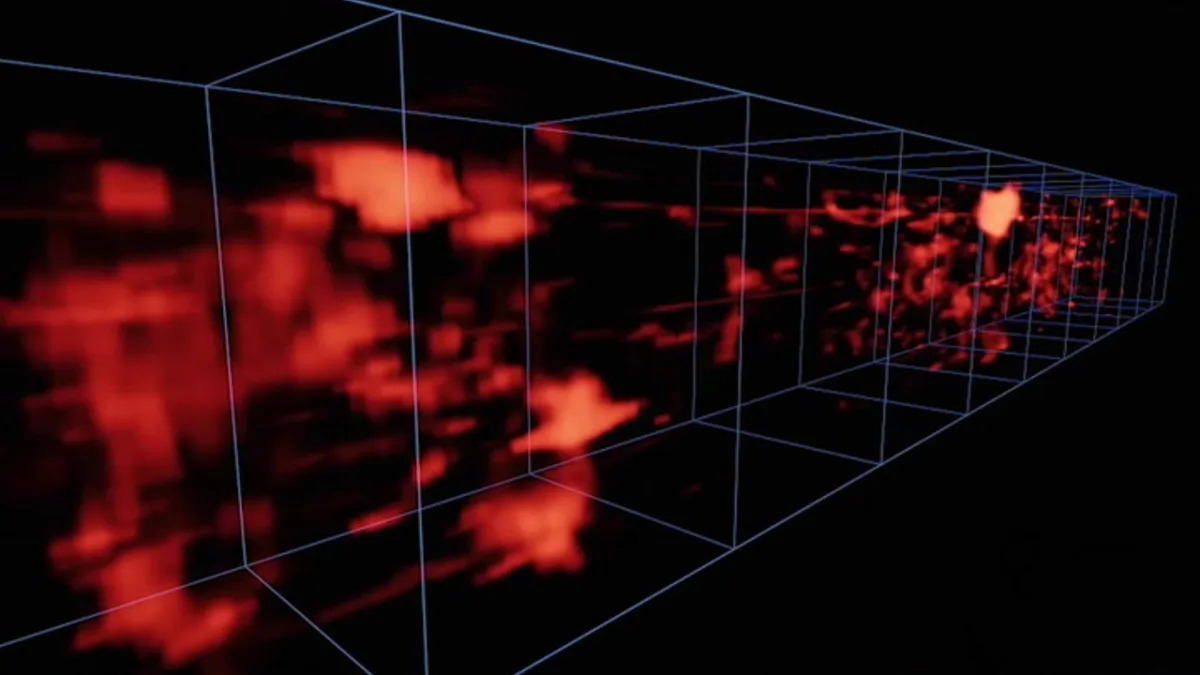
Astronomers have captured the faint glow of the cosmic web, the largest structure in the universe that connects galaxies, for the first time. This network of filaments provides valuable information about galaxy formation, evolution, and the location of dark matter. By using the Keck Cosmic Web Imager, researchers created a 3D map of the cosmic web by detecting emissions from hydrogen gas. The images help scientists understand how galaxies form and evolve, and offer a new way to study the universe.
Astronomers have captured the faint glow of the cosmic web, the largest structure in the universe that connects galaxies, for the first time. This breakthrough provides valuable insights into galaxy formation, evolution, and the elusive dark matter. By using the Keck Cosmic Web Imager, researchers created a 3D map of the cosmic web by detecting emissions from hydrogen gas. The images reveal the crisscrossing filaments of the cosmic web, which feed galaxies with gas for growth and star formation. This discovery opens up new possibilities for studying the universe and understanding its origins.
A team of chemical engineers has developed a new catalyst, carbon compound nickel-iron-molybdenum-phosphide anchored on nickel foam (NiFeMo-P-C), that significantly reduces the energy required for the electrolysis of water to produce hydrogen and oxygen. The catalyst, which is cost-efficient and easily manufactured, lowers the activation energy of both the hydrogen evolution reaction (HER) and oxygen evolution reaction (OER), making clean hydrogen production more commercially viable. The NiFeMo-P-C catalyst demonstrates excellent catalytic performance and durability, making it a promising candidate for large-scale hydrogen production.
Clusters of "fairy circles" in the North Perth Basin of Western Australia have been found to seep hydrogen gas from their perimeters, offering a potential natural source of clean energy. These circular depressions, which have been discovered on multiple continents, are gaining attention in the search for alternatives to fossil fuels. Scientists have confirmed the presence of natural hydrogen seeps in Australia and linked them to the region's geology. However, more research is needed to understand the relationship between hydrogen, circular features, and vegetation patterns. The discovery of these natural hydrogen sources could provide a viable alternative to current energy-intensive processes for hydrogen production.
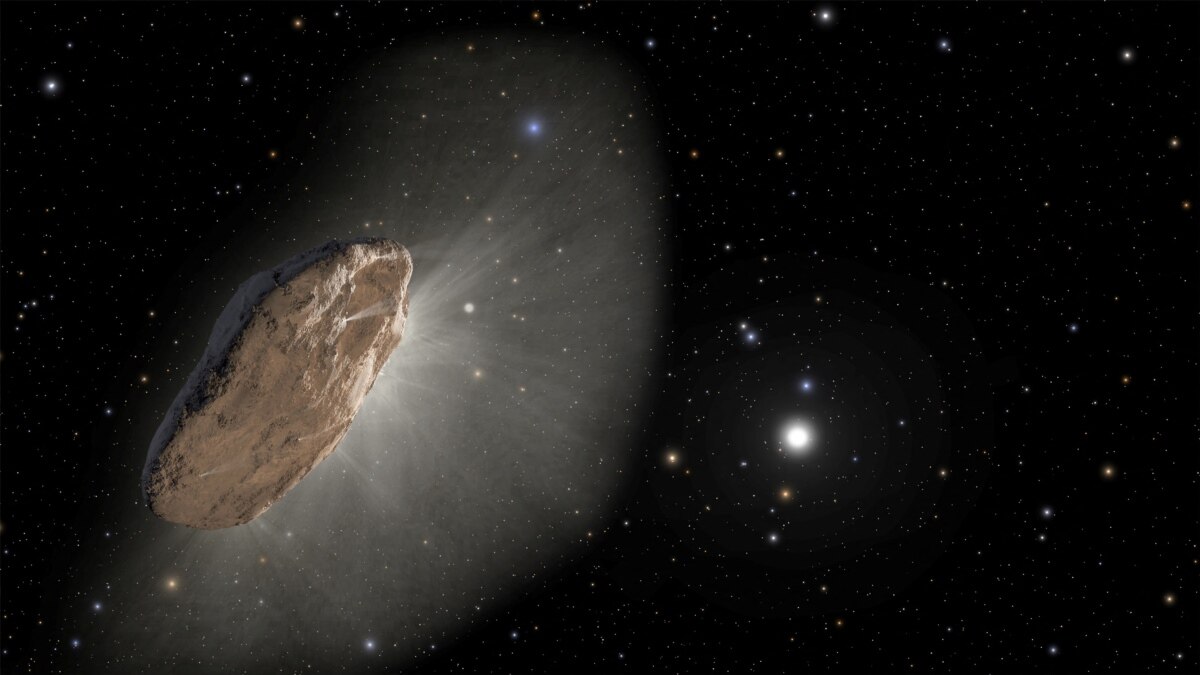
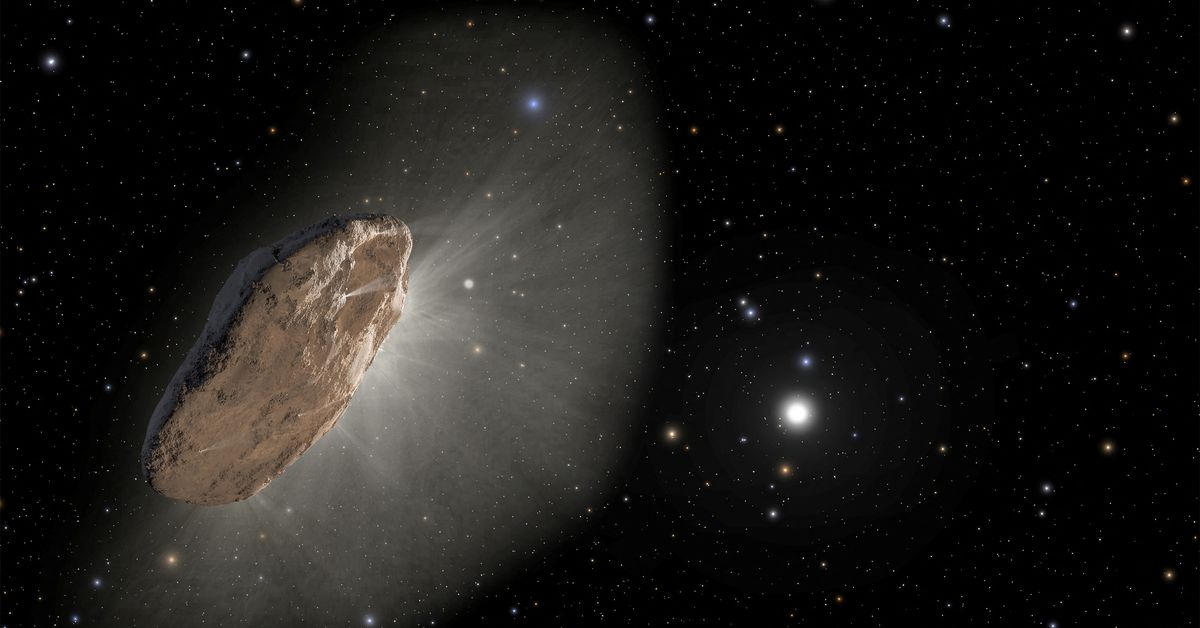
Scientists have explained the unusual acceleration of ‘Oumuamua, the first object found visiting our solar system from another solar system, as being caused by the release of hydrogen gas as the comet warmed up in the sunlight. The comet was born as a planetesimal, a small object formed in the early period of planet formation, and is described as a large, icy space rock. The release of hydrogen gas in a process called outgassing would not cause an observable tail.
A new study has explained the acceleration of 'Oumuamua, the first interstellar object found visiting our solar system, as being due to the release of hydrogen gas as the comet warmed up in the sunlight. Researchers said it appears that 'Oumuamua was born like many other comets as what is called a planetesimal - a small object formed in the early stages of planet formation - and was essentially a large, icy space rock.