Many American families are struggling with soaring energy prices, leading to increased utility debt, shut-offs, and financial hardship, amid broader debates over energy policy and infrastructure investments.
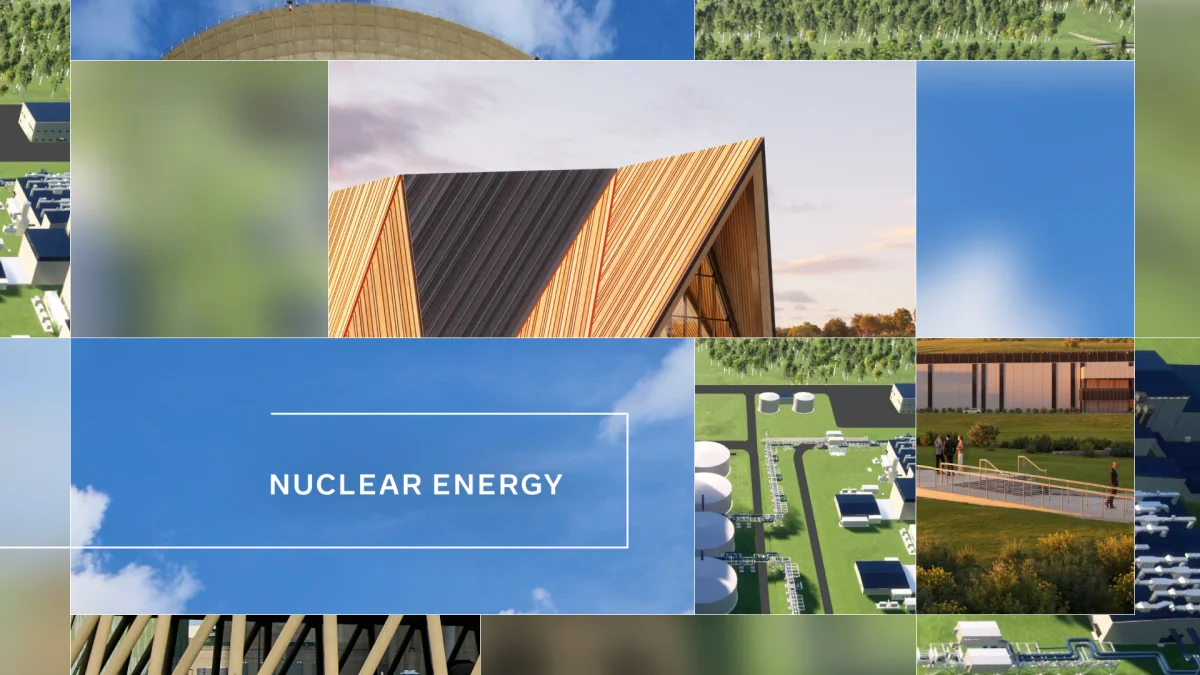
Meta has announced partnerships with three companies—Oklo, TerraPower, and Vistra—to support the development and operation of up to 6.6 GW of nuclear energy by 2035, aiming to power its data centers and AI infrastructure with clean, reliable energy, create jobs, and strengthen America's nuclear supply chain.
Constellation has completed its acquisition of Calpine, creating the largest U.S. electricity producer, combining nuclear, natural gas, and geothermal assets to provide reliable, clean energy and support America's technological and economic growth.
Pattern Energy is set to acquire Cordelio Power, expanding its renewable energy portfolio across the US and Canada with 1,550 MW of wind, solar, and storage projects, strengthening its position in North America's clean energy sector.
President Trump is redirecting nearly $625 million in federal funds, originally intended for clean energy and carbon capture projects, to revive aging coal plants, raising concerns about the deviation from the original statutory purposes and the potential undermining of clean energy goals.
The article highlights the continued growth and success of clean energy sources like solar and wind, with significant advancements in battery storage, a shift in steelmaking away from coal, and the increasing dominance of renewables in global and regional power mixes, demonstrating that the clean energy transition is still progressing strongly in 2025.
The year 2025 was tumultuous for clean energy in the US, marked by policy reversals under Trump that hindered wind and solar projects, yet the industry showed resilience with booming solar and storage sectors, advancements in nuclear and geothermal energy, and a challenging but evolving offshore wind industry, setting the stage for continued growth in 2026.
California has undergone a significant transformation into a clean energy powerhouse, with substantial investments in solar, wind, and battery storage, aiming for an emission-free grid by 2045, positioning itself as a global climate leader despite federal opposition under the Trump administration.
Trump Media & Technology Group is merging with nuclear fusion company TAE Technologies in a deal valued at over $6 billion, aiming to create one of the first publicly traded fusion firms, with plans to build a utility-scale fusion power plant by 2026, amidst the broader push for clean, limitless energy sources.
China is rapidly advancing its clean energy and autonomous transportation technologies, including flying taxis, delivery drones, self-driving trucks, and an extensive high-speed rail network, aiming to dominate global markets and transform urban mobility, despite some challenges and risks.
Scientists are exploring the Midcontinent Rift in North America as a potential source of natural hydrogen, which could provide a near-limitless, renewable energy supply by harnessing water-rock reactions in deep underground rocks, offering a promising alternative to traditional energy sources and supporting the shift towards clean energy solutions.
The UKAEA is decommissioning the world's longest-running fusion reactor, the JET tokamak, which has provided valuable insights into fusion energy, a promising clean power source that mimics the sun's process. The project achieved a record energy output and contributed to understanding reactor longevity, with future developments including a new reactor in England. Fusion energy offers a powerful, waste-free alternative to nuclear fission, potentially transforming the energy landscape alongside solar and wind power.
South Korean researchers at KIMM have developed a 20-kilowatt solid oxide electrolysis system that uses waste heat to produce hydrogen more efficiently and affordably, potentially revolutionizing clean energy production and reducing reliance on fossil fuels.
First Light Fusion has developed a new inertial fusion technology called FLARE that achieves high energy gain, potentially paving the way for commercially viable, clean, and sustainable energy, although further research is needed to confirm its unlimited potential.
More than 20 states have sued the EPA over its decision to cancel the $7 billion 'Solar For All' program, which aimed to expand solar access for low-income households, arguing that the agency overstepped its legal authority and violated congressional funding approvals. The lawsuit challenges the EPA's withdrawal of funds and seeks to uphold the program's continuation, amid broader disputes over clean energy funding under the Biden administration.