Tag

Catalyst

All articles tagged with #catalyst

Innovative Electrochemical Technique Produces Hydrogen Fuel While Reducing Energy Costs

Originally Published 16 days ago — by Live Science

Featured image for Innovative Electrochemical Technique Produces Hydrogen Fuel While Reducing Energy Costs
Source: Live Science

Scientists have developed a new, more efficient method of splitting water to produce hydrogen by adding an organic molecule and a modified catalyst, reducing energy costs by up to 40% and doubling hydrogen output, potentially advancing scalable and greener hydrogen production.


Tomb Raider Series Unites Past and Future with New Games and Retcons

Originally Published 26 days ago — by IGN

Featured image for Tomb Raider Series Unites Past and Future with New Games and Retcons
Source: IGN

The announcement of Tomb Raider: Legacy of Atlantis and Tomb Raider: Catalyst has sparked speculation about retcons to fit a new unified timeline, especially for the franchise's story-heavy games, as the series prepares for its 30th anniversary and a potential interconnected universe with a new TV series.

Tomb Raider Series Evolves to Connect Lara Croft's Past and Future

Originally Published 27 days ago — by Gizmodo

Featured image for Tomb Raider Series Evolves to Connect Lara Croft's Past and Future
Source: Gizmodo

Crystal Dynamics announced two new Tomb Raider games: a remake of the 1996 original called Legacy of Atlantis, focusing on modern gameplay while honoring the original, and Catalyst, set after Tomb Raider: Underworld, featuring an older Lara in Northern India. Both games aim to unify Lara's past and future, with shared technology and a consistent look, and are scheduled for release in 2026 and 2027 respectively on PC and next-gen consoles.

Tomb Raider: Catalyst Bridges Lara Croft's Past and Future in Series Timeline

Originally Published 27 days ago — by Eurogamer

Featured image for Tomb Raider: Catalyst Bridges Lara Croft's Past and Future in Series Timeline
Source: Eurogamer

Tomb Raider: Catalyst is set after Tomb Raider: Underworld in the series timeline and features a more experienced Lara Croft. The game is designed to be accessible to both new and returning players and will be released in 2027 for modern consoles and Steam. It follows the recent Survivor trilogy and precedes the upcoming Legacy of Atlantis remake.

Innovative Rare-Earth Coating Enhances Seawater Electrolysis Efficiency

Originally Published 2 months ago — by Yahoo

Featured image for Innovative Rare-Earth Coating Enhances Seawater Electrolysis Efficiency
Source: Yahoo

Korean scientists have developed a new catalyst using MXene and nickel ferrite that can remove chloride ions during electrolysis, enabling hydrogen production from seawater and potentially making green hydrogen more sustainable and accessible by conserving freshwater resources.

Innovative Catalyst Promises Breakthrough in Plastic Recycling

Originally Published 4 months ago — by Phys.org

Featured image for Innovative Catalyst Promises Breakthrough in Plastic Recycling
Source: Phys.org

Northwestern University chemists have developed an inexpensive nickel-based catalyst that can efficiently break down mixed polyolefin plastics, including contaminated waste with PVC, into valuable liquids, potentially revolutionizing plastic recycling by eliminating the need for sorting and reducing energy use.

"Breakthrough Catalyst Unlocks Water's Potential for Green Hydrogen"

Originally Published 1 year ago — by Tech Xplore

Featured image for "Breakthrough Catalyst Unlocks Water's Potential for Green Hydrogen"
Source: Tech Xplore

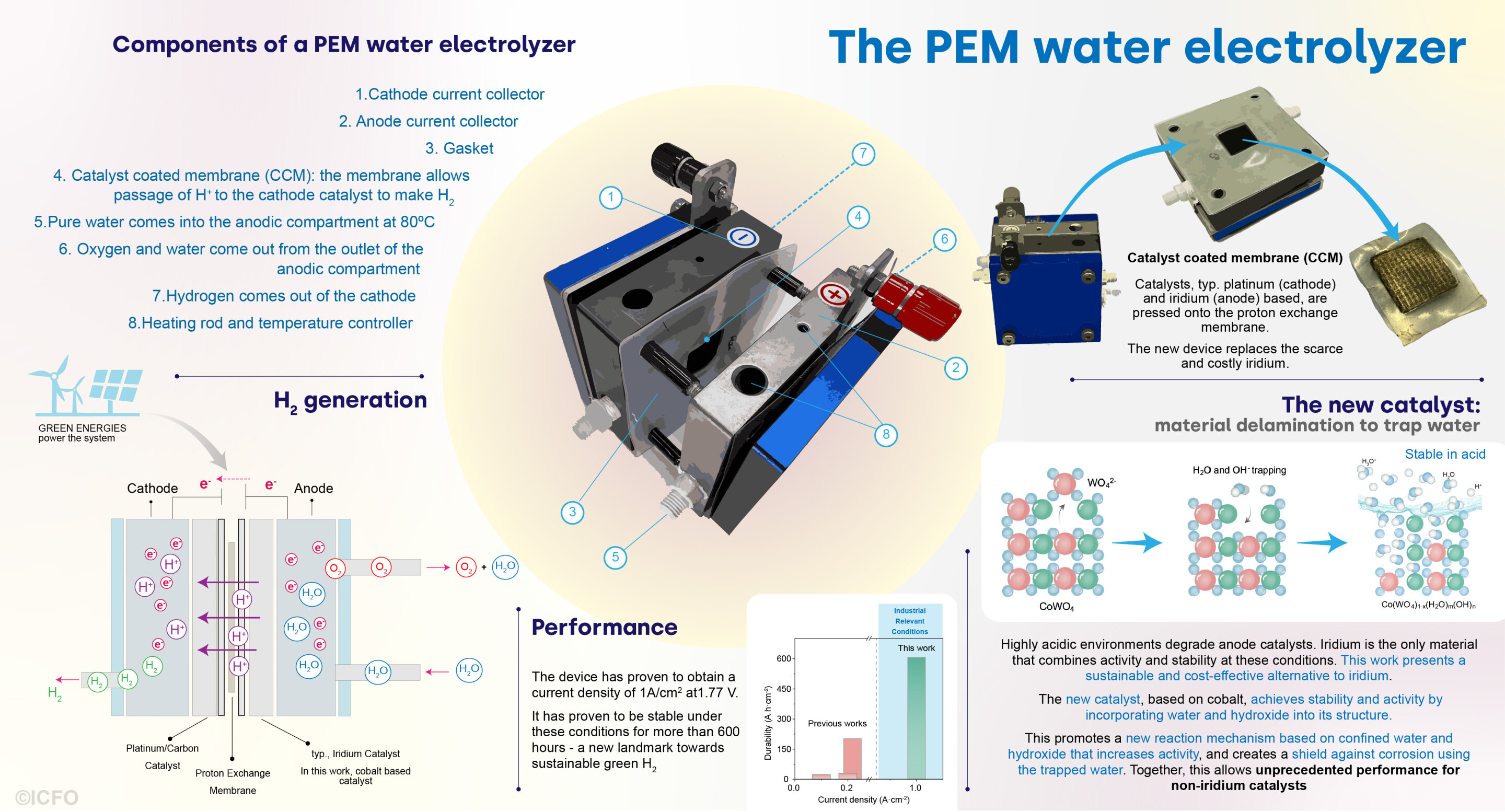
Researchers have developed a novel iridium-free catalyst for proton-exchange-membrane (PEM) water electrolysis, using cobalt-tungsten oxide and a delamination process that incorporates water and hydroxyl groups into the catalyst structure. This breakthrough achieves high activity and stability at industrial conditions, potentially reducing reliance on scarce iridium and advancing green hydrogen production.

"Transforming Metal Waste into Sustainable Hydrogen Catalysts"

Originally Published 1 year ago — by Interesting Engineering

Featured image for "Transforming Metal Waste into Sustainable Hydrogen Catalysts"
Source: Interesting Engineering

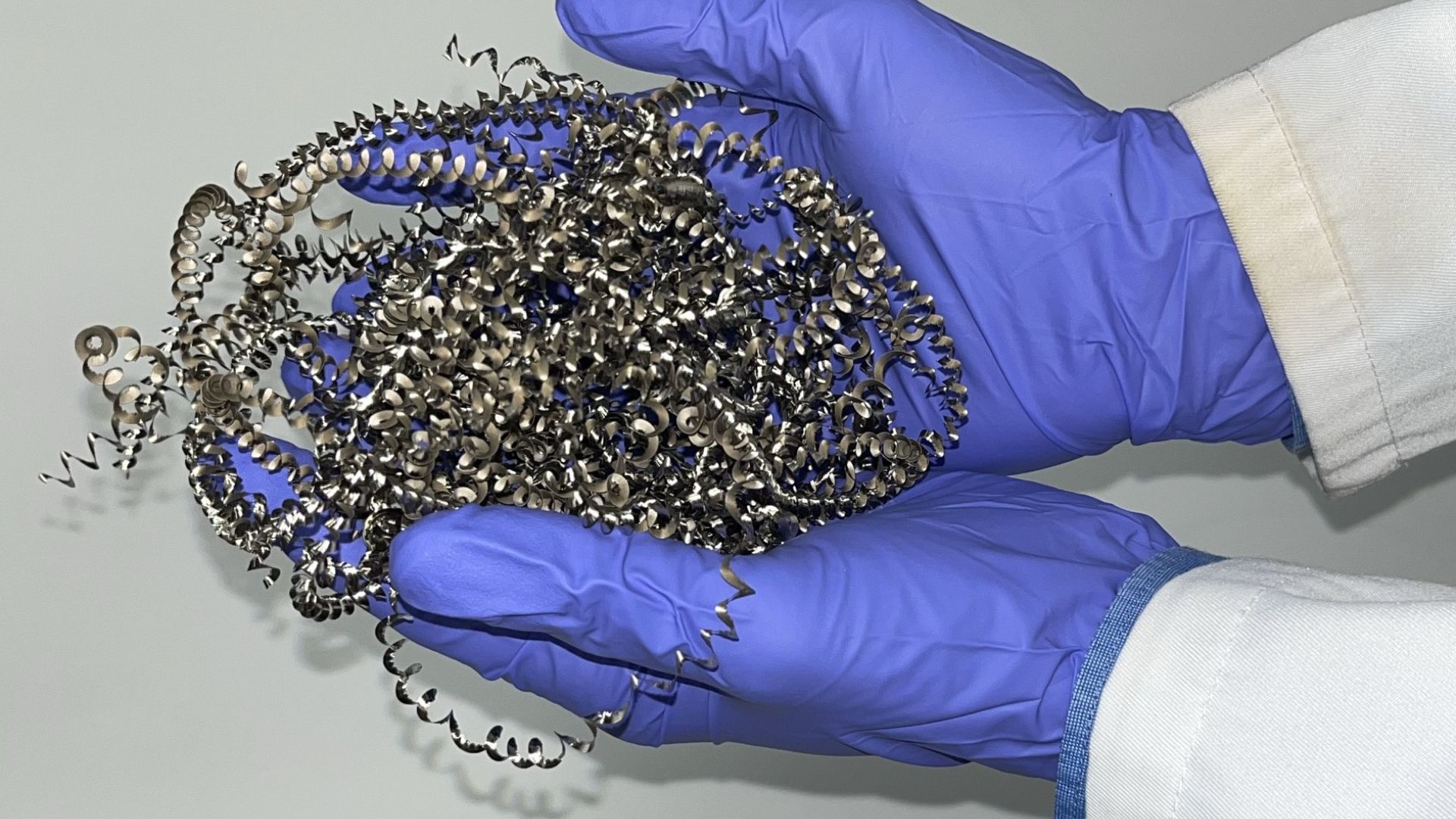
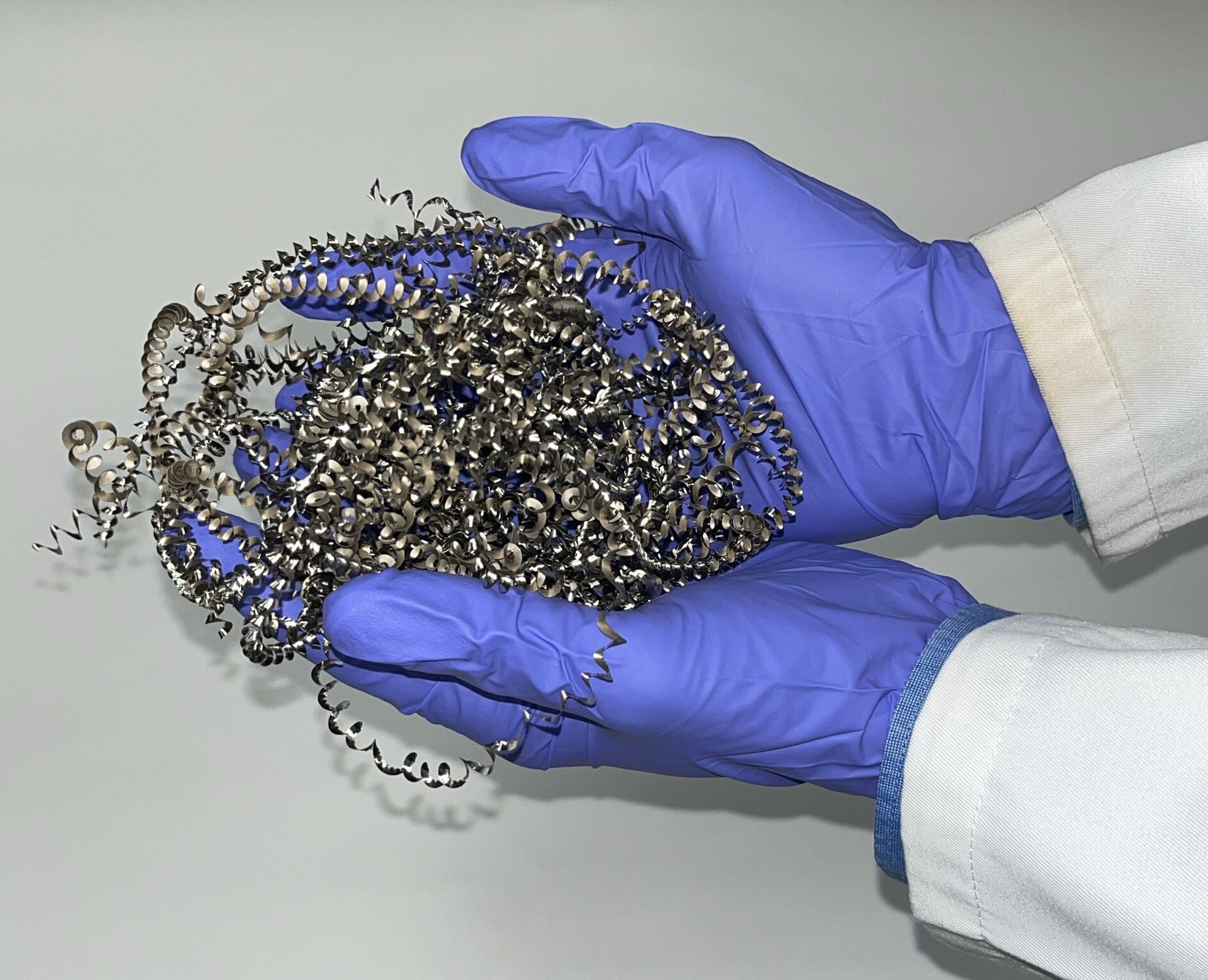
Scientists at the University of Nottingham have developed a method to repurpose metal waste into an efficient catalyst for hydrogen production, aiming to address the challenges of fossil fuel reliance and expensive precious metals like platinum in the process.

"Transforming Metal Waste into Hydrogen Catalyst: A Sustainable Solution"

Originally Published 1 year ago — by Phys.org

Featured image for "Transforming Metal Waste into Hydrogen Catalyst: A Sustainable Solution"
Source: Phys.org

Researchers at the University of Nottingham have discovered a way to repurpose metal waste, specifically swarf from the metal machining industry, into a highly efficient catalyst for producing hydrogen from water. By utilizing the nanoscale textures on the surface of swarf, the team was able to anchor platinum or cobalt atoms, creating an effective electrocatalyst for water splitting. This breakthrough could lead to more sustainable hydrogen production, addressing the challenge of limited and expensive precious metals typically used in the process.

"Rising Optimism: Micron's Unprecedented Stock Performance and Street-High Price Target Ahead of Earnings"

Originally Published 1 year ago — by The Motley Fool

Featured image for "Rising Optimism: Micron's Unprecedented Stock Performance and Street-High Price Target Ahead of Earnings"
Source: The Motley Fool

Nvidia's stock has had a remarkable year, with one of its segments poised to be the next catalyst for investors. The Motley Fool contributor Parkev Tatevosian discusses the company's performance and its potential impact on investors, highlighting Nvidia's achievements and future prospects.

"Efficient CO2 Electroreduction System for Emissions Reduction"

Originally Published 1 year ago — by Nature.com

Featured image for "Efficient CO2 Electroreduction System for Emissions Reduction"
Source: Nature.com

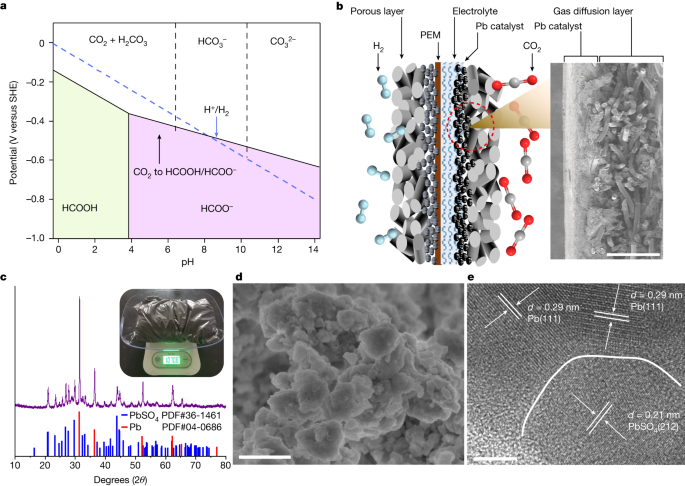
Researchers have developed a proton-exchange membrane system that efficiently reduces carbon dioxide (CO2) to formic acid using a catalyst derived from waste lead-acid batteries, achieving over 93% Faradaic efficiency when coupled with hydrogen oxidation. The system demonstrates nearly 91% single-pass conversion efficiency for CO2 at a current density of 600 mA cm−2 and cell voltage of 2.2 V, and has been shown to operate continuously for more than 5,200 h, offering a promising advancement in the development of carbon-neutral technologies.

"Revolutionizing Plasmonic Catalysis with Black Gold and Solar Light"

Originally Published 1 year ago — by Phys.org

Featured image for "Revolutionizing Plasmonic Catalysis with Black Gold and Solar Light"
Source: Phys.org

Researchers at Tata Institute of Fundamental Research (TIFR) in Mumbai have developed an innovative plasmonic reduction catalyst stable in air, merging platinum-doped ruthenium clusters with "plasmonic black gold" to efficiently harvest visible light and achieve remarkable performance in the semi-hydrogenation of acetylene. This catalyst exhibits unprecedented stability for at least 100 hours and offers significant contributions to the understanding of plasmonic catalysis, paving the way for developing sustainable and energy-efficient catalytic systems with potential applications in various reduction reactions.

"Nippon Steel's US Bet: Unleashing Japan's M&A Wave and China's Influence"

Originally Published 2 years ago — by Financial Times

Nippon Steel's investment in the US is expected to act as a catalyst for a wave of mergers and acquisitions (M&A) in Japan. The move signifies a shift in Japanese companies' strategy to expand globally and diversify their operations. Nippon Steel's bet on the US market could encourage other Japanese firms to follow suit and pursue M&A opportunities abroad.

"AI Chemist Paves the Way for Martian Colonization with Oxygen Production"

Originally Published 2 years ago — by IFLScience

Featured image for "AI Chemist Paves the Way for Martian Colonization with Oxygen Production"
Source: IFLScience

An AI chemist has made a significant breakthrough in oxygen production on Mars by identifying an efficient catalyst using material present on the Red Planet. By analyzing the composition of Martian meteorites, the algorithm determined the molecules that could be used to create oxygen evolution reaction (OER) catalysts. The resulting catalyst demonstrated excellent performance, operating steadily for over 550,000 seconds and showing no degradation at below-freezing temperatures. This development brings us one step closer to establishing an oxygen factory on Mars and achieving the dream of human colonization. The AI chemist's success opens up possibilities for applying its capabilities to other chemical discovery challenges on Earth.