The removal of US federal tax credits for residential solar panels, batteries, and heat pumps by 2026, along with tariffs and domestic manufacturing mandates, is expected to increase costs for home electrification. However, new financing models like lease-to-own and ongoing energy savings may mitigate some expenses, while tariffs could raise prices on imported components. Despite these changes, demand for solar and heat pumps is expected to remain strong due to rising electricity costs and environmental considerations.
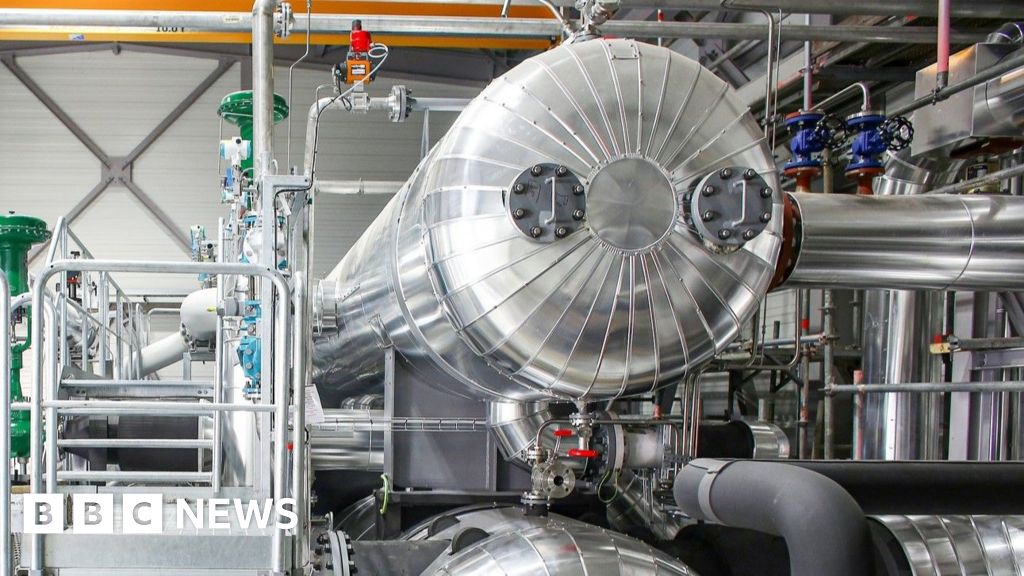
The article discusses the development of the world's largest heat pumps, including a project in Mannheim, Germany, that will use river water to provide district heating for around 40,000 homes, highlighting the technological, environmental, and economic aspects of large-scale heat pump systems for decarbonizing urban energy.
The UK is experiencing record growth in electric vehicle and heat pump adoption, driven by government policies and falling costs, as part of its efforts to reach net zero emissions by 2050. Despite progress, challenges remain in making electricity cheaper and further reducing emissions from transport and buildings, with potential solutions including removing certain costs from electricity bills to lower household expenses.
Heat pumps, powered by electricity, are being hailed as a solution to reduce greenhouse gas emissions from buildings in New York State. They work by moving heat using refrigerant and are considered more environmentally friendly than traditional fossil fuel-based heating methods. As the U.S. transitions to renewable energy sources, heat pumps are expected to play a key role in eliminating greenhouse gases.
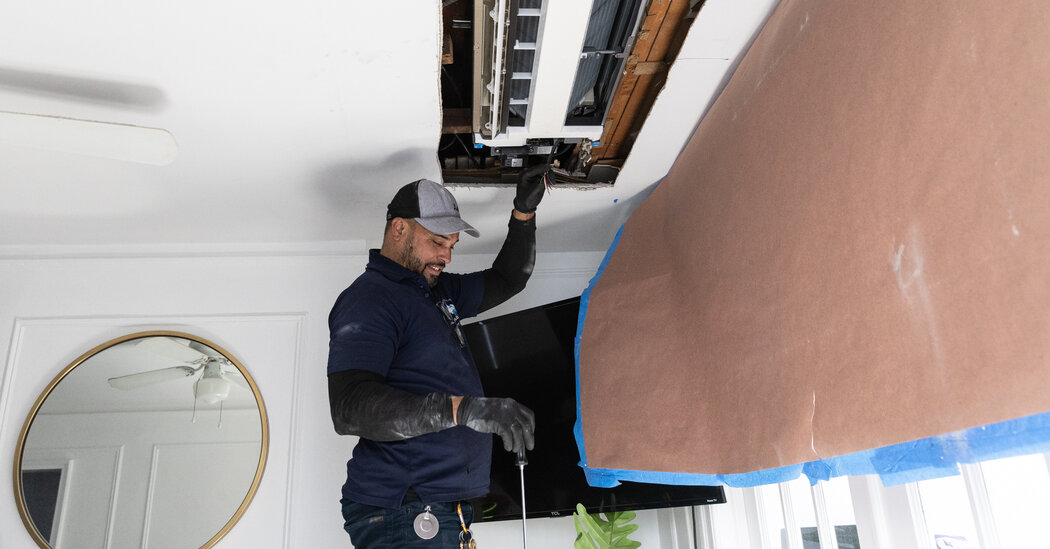
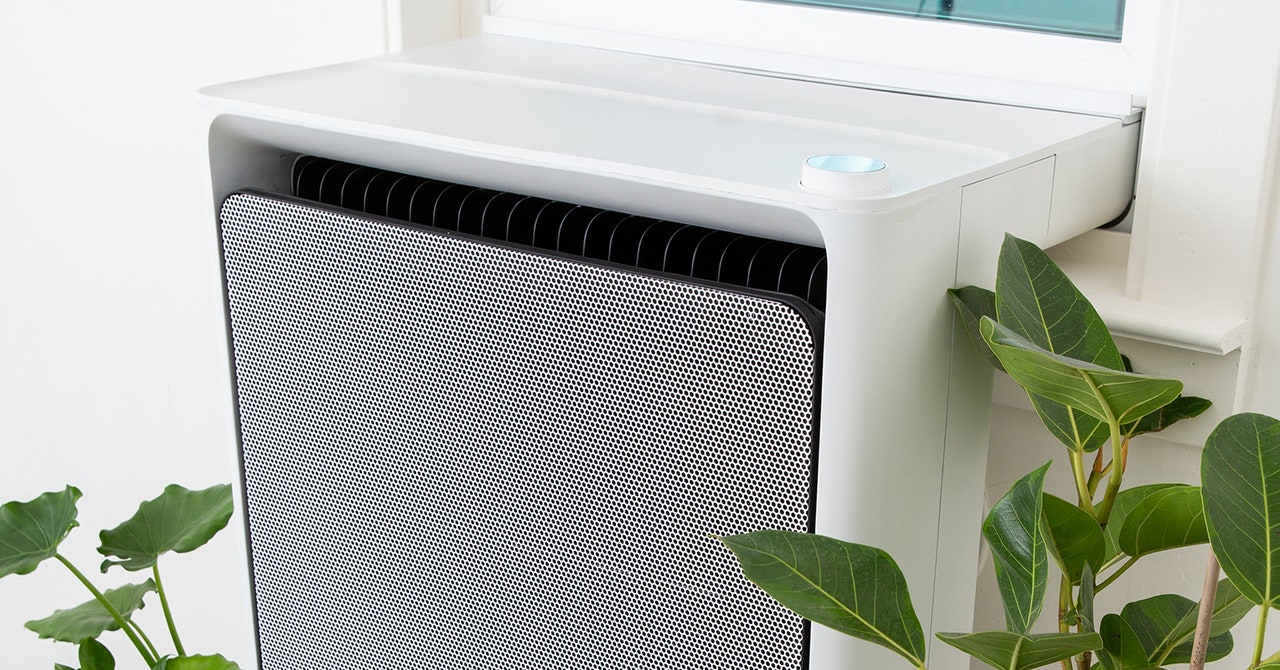
New York City is investing in the development and production of 30,000 heat pumps for its public housing, with one company, Gradient, already rolling out 36 window units and reporting promising results. These window heat pumps are designed to be more efficient than traditional heating systems, potentially reducing heating costs by significant percentages. The hope is that heat pumps can help transition away from fossil fuels, with the goal of having heat pumps account for 65 percent of residential heating, AC, and water-heating shipments by 2030. The technology is seen as a relatively affordable and simple solution that could benefit both residents and the environment, with the potential to significantly reduce energy consumption and emissions in the residential sector.
Nine states, including California and New York, have signed an agreement to promote heat pump sales, aiming for heat pumps to make up a significant portion of residential heating and cooling equipment sales by 2030 and 2040. The move is part of efforts to combat air pollution and climate change, with industry support from companies like Schneider Electric and Siemens. The states will need to develop their own policies and incentives to deploy heat pumps, but the agreement signals a collective push towards cleaner, more energy-efficient alternatives in the fight against climate change.
A coalition of nine states in the US, including California, New York, and Oregon, has signed an agreement to accelerate the transition from gas to electric heating by promoting the widespread adoption of heat pumps. By 2030, they aim for heat pumps to make up at least 65% of residential heating and cooling systems, and by 2040, this target increases to 90%. The states will collaborate on pursuing federal funding, developing standards, and workforce training to support the transition. The move is part of a broader effort to promote zero-emission residential buildings and reduce reliance on planet-warming natural gas, with the federal government also providing funding and incentives for heat pump adoption.
Heat pumps are essential for electric vehicles (EVs) in cold weather, as they can help retrieve up to 15% of the range otherwise lost in low temperatures. EVs face challenges in cold climates, such as reduced battery capacity and increased energy consumption for heating. Heat pumps, found in various EV models including Tesla, Jaguar, BMW, Hyundai, Audi, Kia, and Nissan, are significantly more efficient than traditional heating technologies, contributing to improved range and efficiency in cold weather. As the global transition to sustainable heating and cooling technologies continues, heat pumps are increasingly recognized as a critical technology for decarbonization.
The U.S. Department of Energy (DOE) has announced that four additional heat pump manufacturers have successfully developed prototypes as part of the Residential Cold Climate Heat Pump (CCHP) Technology Challenge, aiming to accelerate the deployment of heat pump technologies by supporting innovation and manufacturing. These prototypes are designed to deliver 100% heating capacity without auxiliary heat and higher efficiencies at 5 degrees Fahrenheit. The initiative aims to provide clean heating and cooling for American families, reduce carbon emissions, and support President Biden's clean energy goals. The next phase of the Challenge will involve the installation and monitoring of more than 23 prototypes in various cold-climate locations throughout the U.S. and Canada, with the goal of encouraging the adoption of efficient cold-climate electric heat pumps.
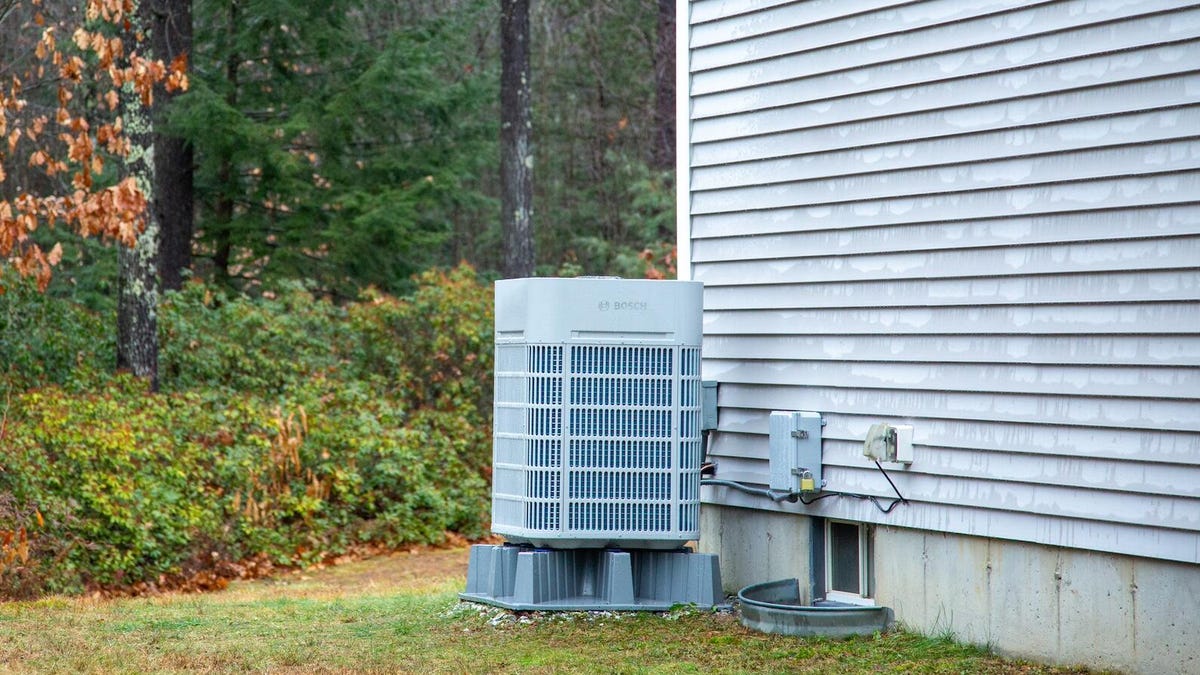
New heat pump models showcased at CES 2024, including Bosch's IDS Ultra, aim to address the inefficiency of heat pumps in frigid temperatures, making them suitable for colder climates. These advancements are crucial for America's electrification and decarbonization efforts. Heat pumps work by transferring thermal energy from the air or ground to heat or cool homes, but struggle in extreme cold due to freezing coils. Despite the initial cost, federal tax credits and rebates are available to offset expenses, making heat pumps a more viable and sustainable option for home climate control.
Four heat pump manufacturers have successfully developed cold-climate prototypes as part of the Department of Energy’s Residential Cold Climate Heat Pump Challenge, aiming for deployment programs and commercialization this year. These heat pumps can save households money on utility bills and reduce carbon emissions, with additional savings available through tax credits and rebates. The challenge is working with states, utilities, and partners to encourage cold-climate heat pump adoption, and more than 23 prototypes will be installed and monitored in various cold-climate locations throughout the US and Canada over the next year.
Hard-pressed consumers are pushing back against pro-climate measures due to the costs they impose on already stretched household budgets. While polls show that an overwhelming majority believe climate change is a problem and support policies to address it, support starts to decline once green policies come into force and people experience their costs. This resistance is evident in the waning demand for electric vehicles (EVs) and the limited adoption of heat pumps. However, delaying the implementation of net-zero measures will ultimately hit consumers' pockets harder in the long run and cost the planet dearly. Governments must ensure that the upfront costs of reaching net zero do not burden the poor, even if it means wealthier individuals paying more.
President Joe Biden will utilize emergency wartime powers under the Defense Production Act (DPA) to allocate $169 million in federal funds to nine manufacturing projects aimed at boosting US production of heat pumps. Heat pumps are more energy-efficient than traditional heating methods and can both heat and cool homes and businesses by transferring heat from one area to another. The move is part of Biden's efforts to promote clean energy technology and reduce greenhouse gas emissions. The funding has drawn criticism from the American Gas Association, a lobbying group for the natural gas industry, while the Biden administration sees it as a step towards creating jobs and strengthening energy security.
Heat pumps are more than twice as efficient as fossil fuel heating systems in cold temperatures, according to research from Oxford University and the Regulatory Assistance Project. The study found that even at temperatures approaching -30C, heat pumps outperform oil and gas heating systems. Despite their increasing use in cold climates like Scandinavia, the UK has lagged behind in adopting heat pumps due to doubts about their efficacy in low temperatures. The research, based on seven field studies, concluded that heat pumps are suitable for almost all homes in Europe, including the UK, and policymakers should implement measures to roll them out rapidly. Lobbyists associated with the gas boiler sector have attempted to delay government measures to increase heat pump uptake. The UK government is currently consulting on proposals for incentives to encourage households to adopt heat pumps.
The demand for district heating is leading to a rush for bigger and beefier heat pump systems that can power entire towns. Heat pumps work by compressing gently warmed refrigerants to raise the temperature of these fluids. Heat pumps require electricity to work but can produce around three or four kilowatts of heat for every kilowatt of power they consume, making them highly efficient. MAN Energy's biggest commercial heat pump is thousands of times more powerful - with a total heating capacity of 48 megawatts (MW).