The U.S. Department of Energy has selected TVA and Holtec to support the deployment of small modular reactors in Tennessee and Michigan, with up to $800 million in funding, aiming to deliver new nuclear capacity by the early 2030s and strengthen domestic supply chains as part of a broader effort to expand America's energy independence and security.
The Energy Department finalized a $1.6 billion loan guarantee for American Electric Power to upgrade and rebuild 5,000 miles of transmission lines across five states, aiming to modernize the grid, expand capacity, and support economic growth, with the project benefiting from recent policy changes and emphasizing the role of government in strategic energy infrastructure.
The White House and Energy Secretary Wright are at odds over $30 billion in proposed cuts to the Department of Energy, with internal conflicts over project eliminations and leadership positions, amid political pressures from Republican lawmakers and disagreements over energy policies.
The Department of Energy canceled $7.56 billion in clean energy projects, primarily affecting states that voted for Kamala Harris in the last election, including major projects in hydrogen hubs and direct air capture, amid political and partisan tensions.
The Energy Department has canceled $7.56 billion in clean-energy projects, mainly in Democratic-leaning states, citing concerns over project viability and economic return, sparking political controversy and accusations of political bias and setbacks for climate efforts.
The U.S. Department of Energy has selected four companies—Oklo, Terrestrial Energy, TRISO-X, and Valar Atomics—to develop advanced nuclear fuel lines, aiming to strengthen domestic nuclear fuel supply, support reactor deployment, and enhance national security under the Trump administration's energy strategy.
The U.S. Department of Energy launched the Speed to Power initiative to accelerate large-scale grid infrastructure projects, aiming to meet growing energy demands, support AI development, and enhance grid reliability and security, in line with federal priorities and executive orders.
The U.S. Department of Energy has announced the initial selection of 11 advanced reactor projects to participate in President Trump's Nuclear Reactor Pilot Program, aiming to advance nuclear technology deployment.
The U.S. Department of Energy has selected four sites on federal lands to develop AI data centers and energy projects, aiming to lower energy costs, boost AI leadership, and enhance grid reliability through public-private partnerships, with further details and additional sites to be announced soon.
The Department of Energy has terminated its $4.9 billion loan guarantee for the Grain Belt Express project, citing financial concerns and a review of federal support for energy projects, as part of a broader effort to ensure responsible use of taxpayer dollars and focus on energy expansion initiatives.
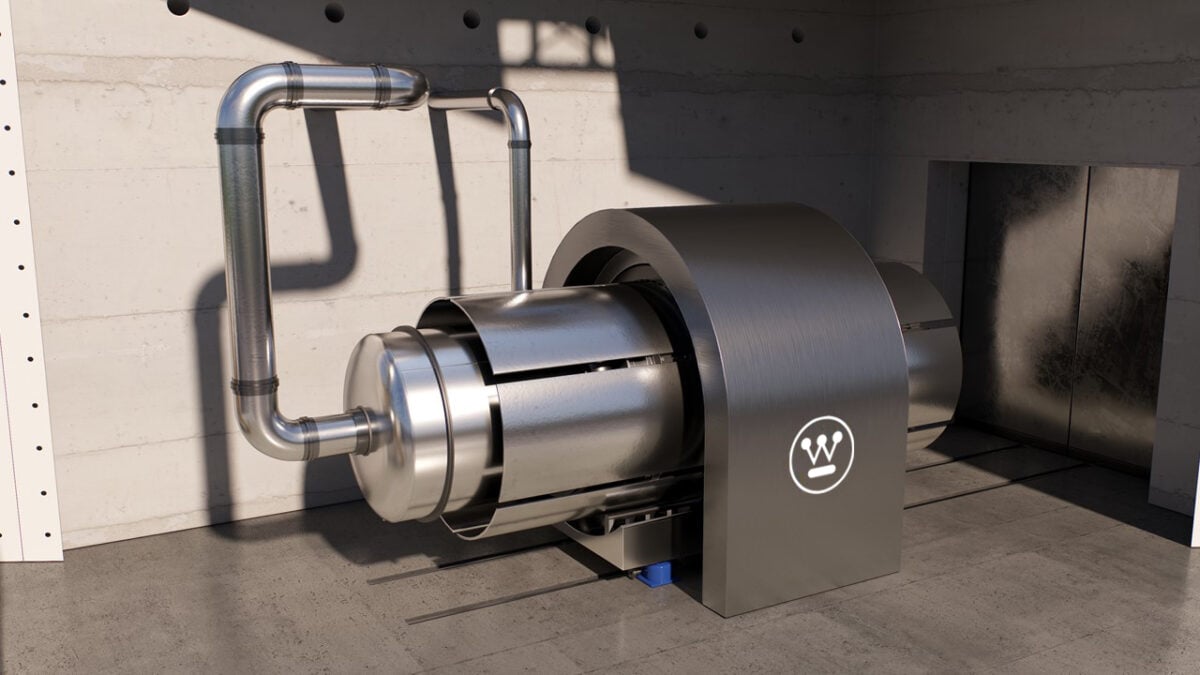
The U.S. Department of Energy is testing small, portable nuclear reactors called microreactors at Idaho National Laboratory, with plans to evaluate their efficiency and potential to provide reliable power for remote sites, data centers, and emergency situations, starting as early as spring 2026.
The Trump administration is diverting funds from the Energy Department's clean energy programs, defying congressional budget laws, amid ongoing political battles over climate and energy policies, with Democrats condemning the move as unlawful.
The DOE warns that shutting down fossil fuel power plants could increase the risk of blackouts by up to 100 times by 2030, as renewables are seen as less reliable for baseload power, prompting political debates over energy policy and grid stability.
The U.S. Department of Energy has launched a pilot program to accelerate testing of advanced nuclear reactors outside national labs, aiming for at least three reactors to achieve criticality by July 4, 2026, to boost U.S. nuclear innovation, economic growth, and national security.
The U.S. Department of Energy has ordered Constellation Energy to delay the planned retirement of 760 MW of power at the Eddystone plant in Pennsylvania to address an emergency in the PJM grid, supporting continued operation until at least August 28 to ensure grid reliability amid record demand and potential shortages.