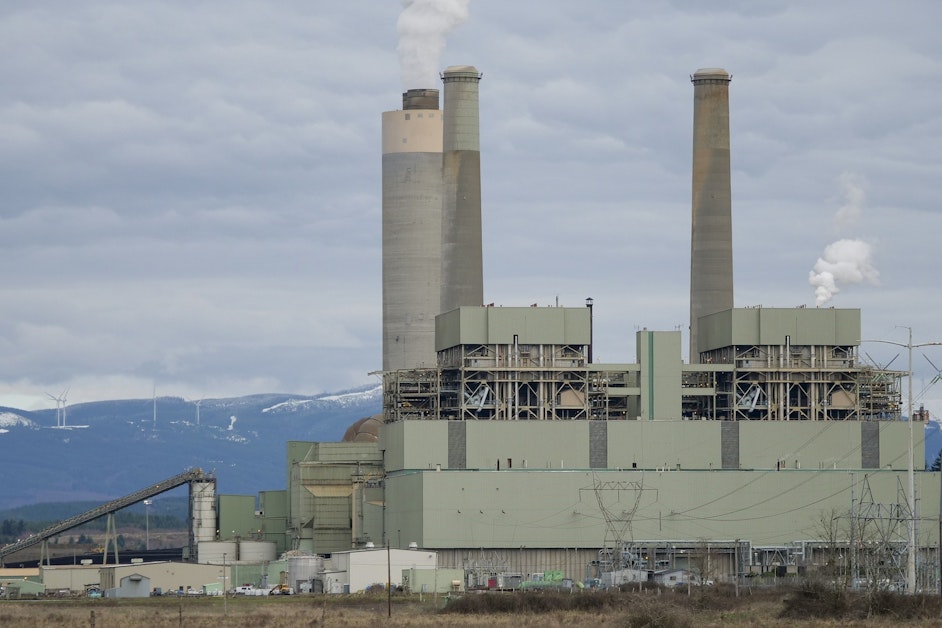
The Trump administration issued a 90-day emergency order to keep Washington's largest coal plant, Centralia, operating despite state laws requiring its closure, citing grid stability concerns amid regional power demand and winter reliability assessments, sparking criticism from state officials and environmentalists.
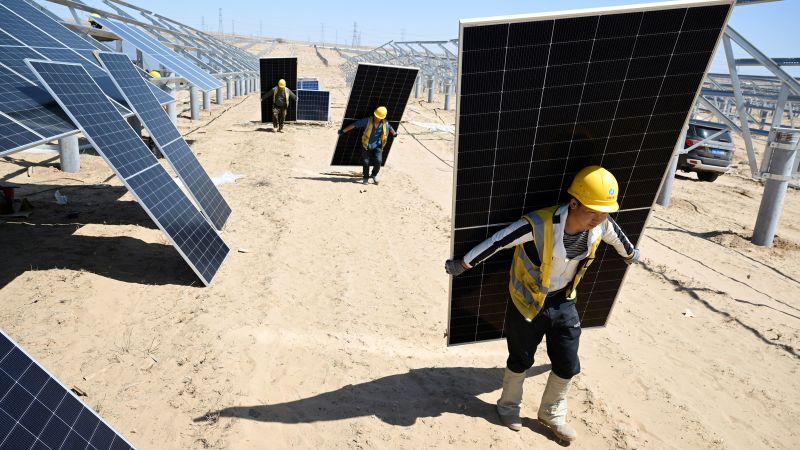
China has committed to reducing its climate pollution by 7% to 10% over the next decade, falling short of the 30% target sought by other countries, but its significant investments in renewable energy suggest it may overachieve. The move is crucial given China's role as the largest emitter and a leader in renewable energy manufacturing, influencing global climate efforts amid diverging US policies.
The Trump administration's EPA plans to revoke its 2009 endangerment finding that classifies greenhouse gases as threats to public health, potentially leading to the repeal of federal climate standards and increasing legal and regulatory uncertainty for businesses, amidst ongoing debates over climate change policies and industry impacts.
A new study warns that climate pollution is reducing Earth's upper atmospheric density, which, combined with solar-triggered geomagnetic storms, could significantly increase risks to GPS and communication satellites in the coming decades, potentially damaging satellite operations and increasing space junk.
Heat pumps are essential for electric vehicles (EVs) in cold weather, as they can help retrieve up to 15% of the range otherwise lost in low temperatures. EVs face challenges in cold climates, such as reduced battery capacity and increased energy consumption for heating. Heat pumps, found in various EV models including Tesla, Jaguar, BMW, Hyundai, Audi, Kia, and Nissan, are significantly more efficient than traditional heating technologies, contributing to improved range and efficiency in cold weather. As the global transition to sustainable heating and cooling technologies continues, heat pumps are increasingly recognized as a critical technology for decarbonization.
A group of 18 California children, ranging in ages from 8 to 17, has filed a constitutional climate case against the US Environmental Protection Agency (EPA), alleging that the agency has knowingly allowed planet-warming pollution to harm children's health and welfare. The case, Genesis B. v. United States Environmental Protection Agency, accuses the EPA of permitting pollution from regulated sources such as vehicles, power plants, and oil and gas wells. The plaintiffs seek accountability and a trial in this case, following the success of a similar climate case in Montana earlier this year. Our Children's Trust, the firm representing the plaintiffs, is also pursuing another federal climate case, Juliana v. United States, which aims to go to trial by spring 2024.
A group of 18 California children has filed a constitutional climate case in federal court against the US Environmental Protection Agency (EPA), alleging that the agency allows planet-warming pollution to continue despite knowing the harm it causes to children's health and welfare. The case, Genesis B. v. United States Environmental Protection Agency, follows a successful youth plaintiffs' case in Montana earlier this year. The plaintiffs argue that the EPA has violated the US Constitution and misappropriated its authority. The defendants include current EPA Administrator Michael Regan, who has been working to rein in planet-warming pollution. The youth plaintiffs seek a trial in this case, which is being represented by Our Children's Trust.