Tag

Fundamental Physics

All articles tagged with #fundamental physics

science2 months ago

Neutrinos and the Universe's Mysteries: Unlocking the Secrets of Matter

A joint study by the NOvA and T2K experiments has provided the most detailed observations of neutrino flavor changes, shedding light on their properties and potential implications for understanding the universe's matter-antimatter imbalance, although more data is needed to answer fundamental questions about neutrinos' role in the cosmos.
science6 months ago

Scientists Explore Fifth Force as Key to Dark Matter Mysteries

A collaborative study using high-precision atomic measurements of calcium isotopes suggests the possible existence of a fifth fundamental force, which could help explain dark matter. The research employs ion trapping and laser spectroscopy to detect tiny energy shifts that might indicate this new force, refining the search for physics beyond the Standard Model.

science6 months ago

Scientists Confirm Earth's Rotation Can Generate Electricity

American scientists at Princeton have experimentally confirmed a 200-year-old hypothesis that Earth's rotation and magnetic field can generate a tiny electric current, reviving a concept first proposed by Faraday, though practical applications remain distant due to the minuscule voltage produced and significant technical challenges.

physics1 year ago

"Loophole Discovered: Opposites Fail to Attract in Groundbreaking Physics Experiment"

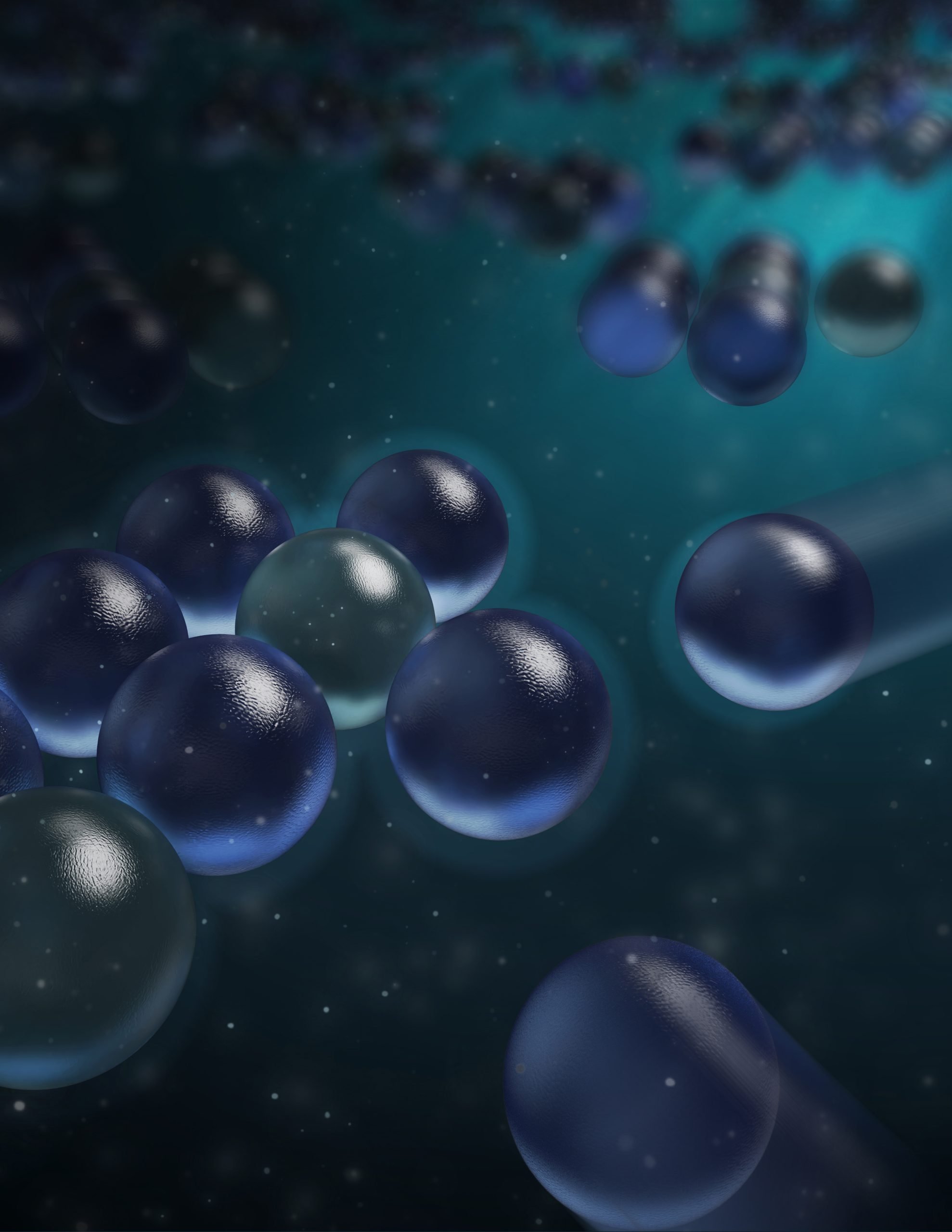
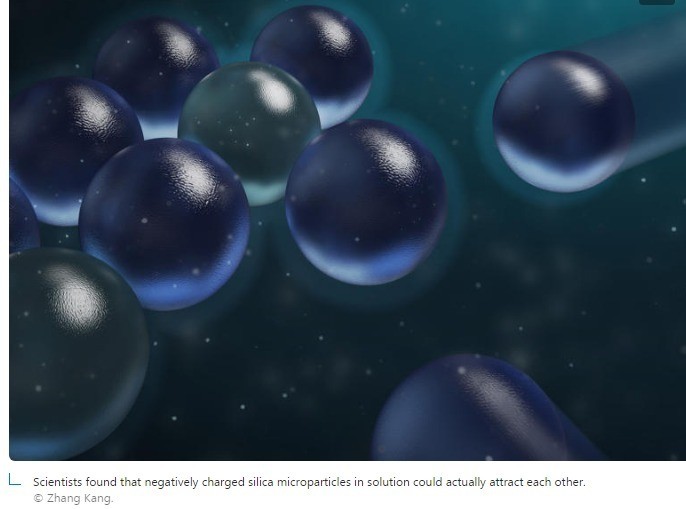
Researchers have observed a loophole in the fundamental principle of physics that like charges repel each other, finding that like-charged particles can attract each other over long distances in certain liquids. This behavior was observed in water and specific alcohols, and was attributed to the molecular nature of the liquids, leading to the emergence of an "electrosolvation force" at distinct pH ranges. The researchers believe this discovery could aid in understanding biomolecular condensates and their relevance to human diseases.

physics1 year ago

"Physics Principle Reversed: Like-Charged Particles Attract, Opposites Repel"

A study from Oxford University has challenged a fundamental principle of physics by demonstrating that similarly charged particles in solution can attract each other, with the effect varying based on the solvent. This overturns the long-held belief that like charges repel. The research has implications for various scientific processes, including self-assembly and crystallization, and suggests a need to re-evaluate our understanding of electromagnetic forces. The study also provides evidence for the ability to probe properties of interfacial electrical potential due to the solvent, which were previously thought immeasurable.

science1 year ago

"Surprising Discovery: Like-Charged Particles Attract, Challenging Basic Physics Principle"

A new study from Oxford University challenges the fundamental principle that like-charged particles repel each other, demonstrating that similarly charged particles in solution can attract each other over long distances. The study found that negatively charged particles attract each other in water to form clusters, while positively charged particles repel. The effect was found to be pH-dependent and could be switched by changing the solvent. These findings have implications for various processes involving interparticle and intermolecular interactions and provide evidence for probing properties of interfacial electrical potential due to the solvent.

science-and-technology1 year ago

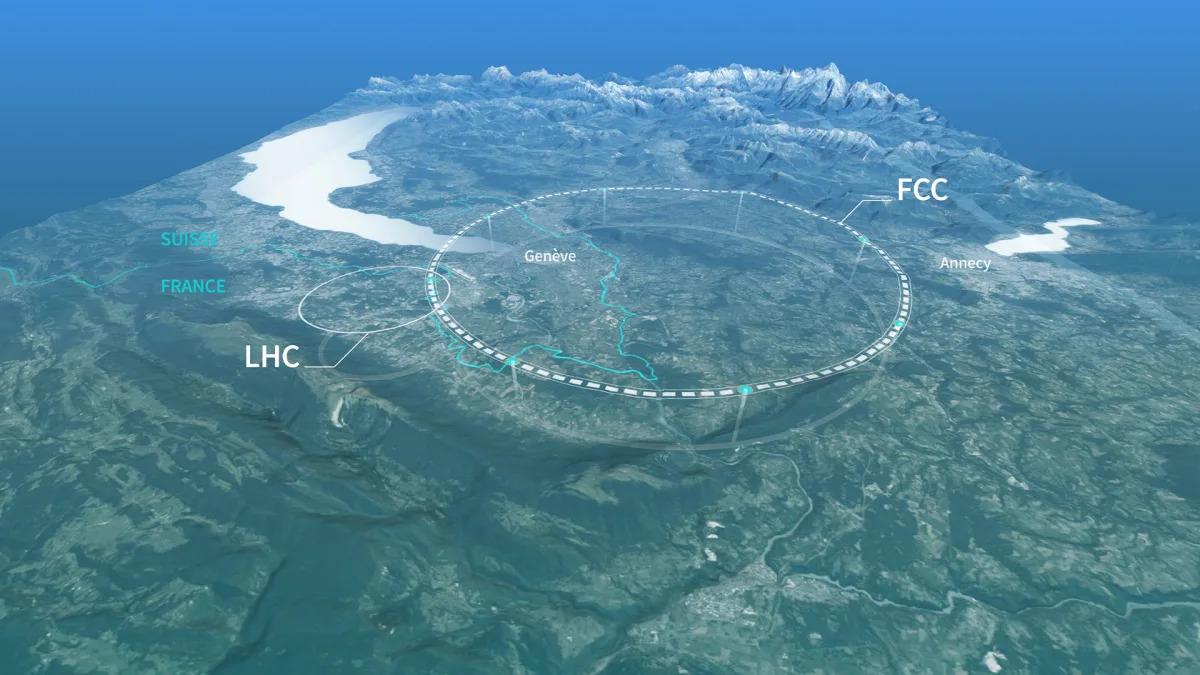
"CERN's $17 Billion Proposal: Building a Particle Smasher 3 Times Larger Than the Large Hadron Collider"

CERN has proposed the construction of a $17 billion Future Circular Collider (FCC), which would be 3 times larger than the Large Hadron Collider and aims to probe the fringes of the Standard Model of particle physics. Physicists hope to use the increased size and power of the FCC to discover unknown particles and forces, understand the nature of dark matter and dark energy, and investigate why matter outweighs antimatter. Despite high hopes, some scientists are skeptical about the project's potential return on investment. The feasibility study is set to be finished next year, and member states will meet in 2028 to decide whether to greenlight the project, with the first phase expected to come online in 2045.

science2 years ago

"Mikhail Ivanov Takes Home Prestigious 2024 New Horizons in Physics Breakthrough Prize"

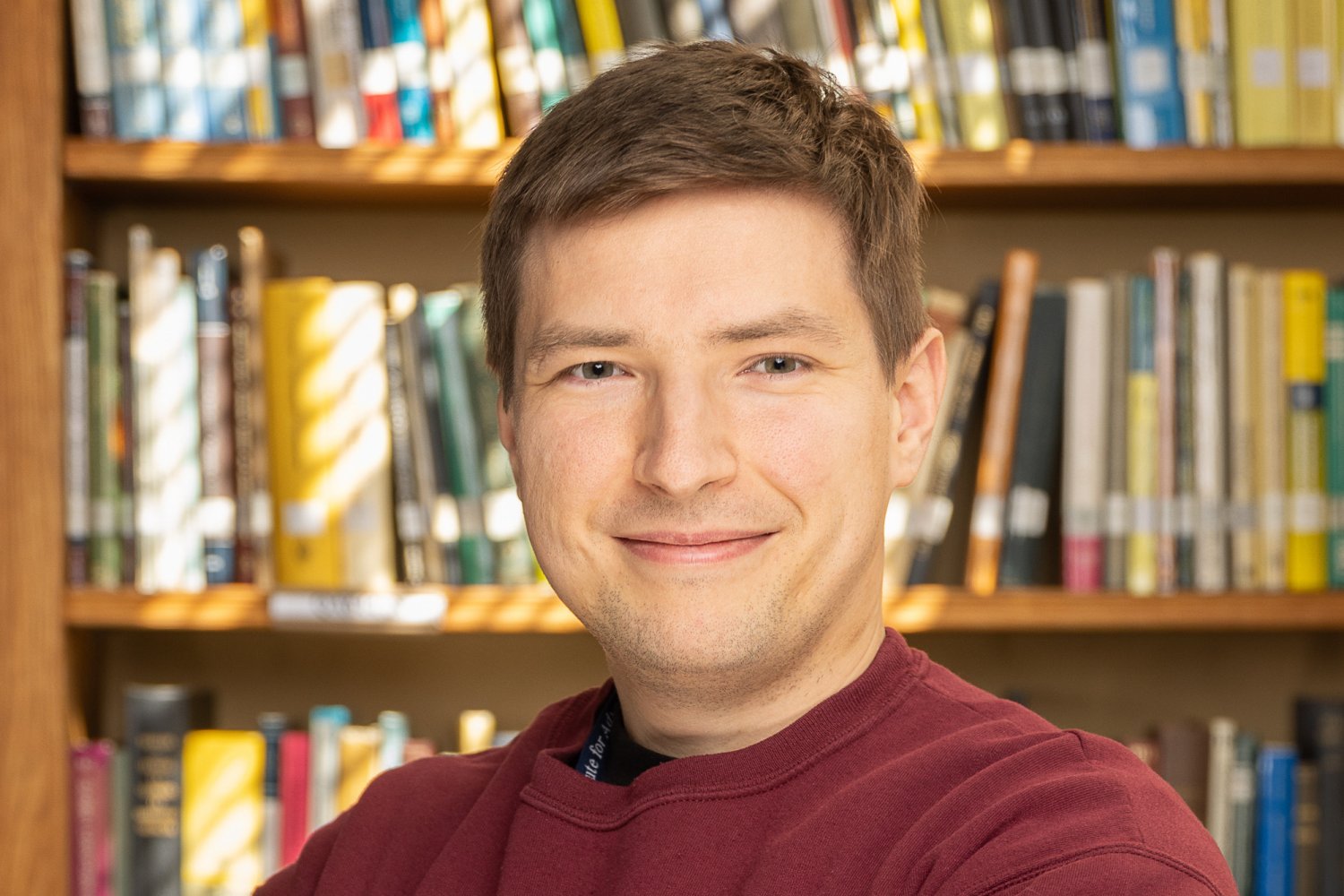
Mikhail Ivanov, an assistant professor of physics, has been awarded the 2024 New Horizons in Physics Prize for his contributions to understanding the large-scale structure of the universe and developing tools to extract fundamental physics from galaxy surveys. Ivanov shares the prize with Marko Simonović from the University of Florence and Oliver Philcox from Columbia University. Their research focuses on the structure of the cosmos at the galactic scale and its potential to provide insights into dark matter, dark energy, and the early universe. The trio created theoretical and practical tools for cosmological parameter estimation from galaxy clustering data, paving the way for new studies in fundamental physics.

science-and-technology2 years ago

"2024 Breakthrough Prize Laureates Announced in Life Sciences, Physics, and Mathematics"

The Breakthrough Prize Foundation has announced the winners of the 2024 Breakthrough Prizes in Life Sciences, Fundamental Physics, and Mathematics. The laureates include scientists recognized for their contributions to the understanding and treatment of major diseases such as cancer, cystic fibrosis, and Parkinson's disease, as well as advancements in quantum field theory and differential geometry. The winners will be honored at a gala award ceremony in Los Angeles in April 2024.

science2 years ago

"Unveiling the Universe's Secrets: Mapping the Cosmos with Neutrinos"

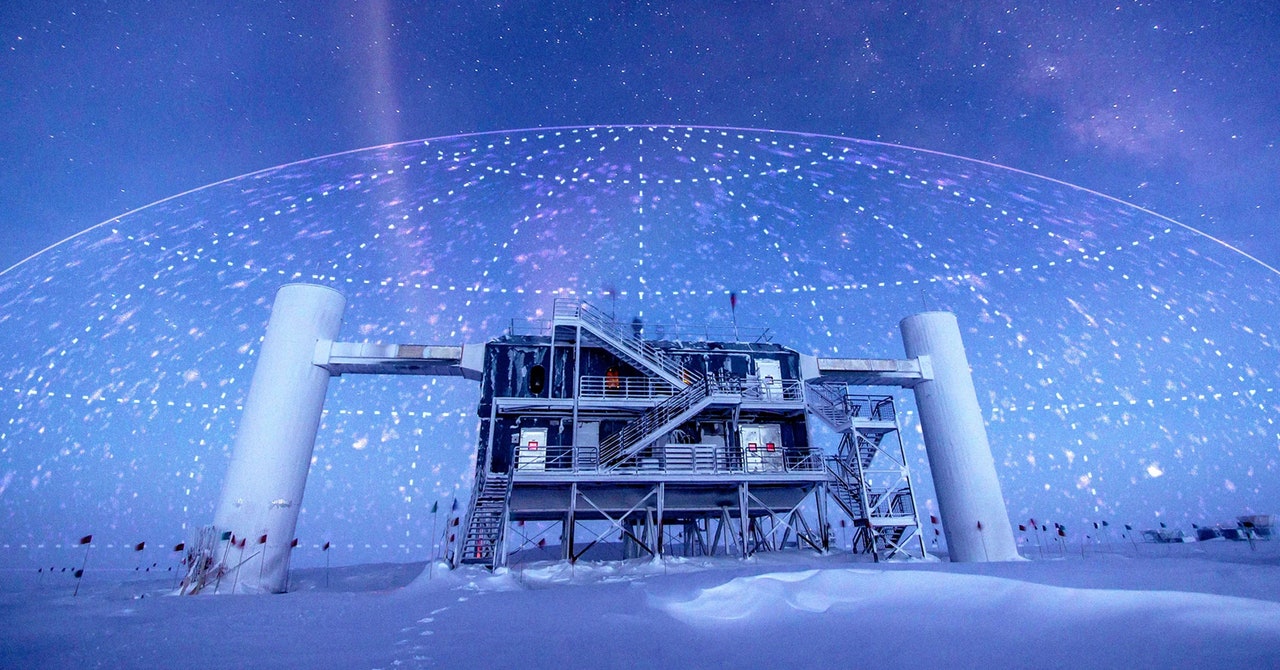
The IceCube Neutrino Observatory has collected enough cosmic neutrinos to create the first map of the Milky Way in neutrinos, revealing a diffuse haze of cosmic neutrinos emanating from throughout the galaxy. While the observatory has connected some cosmic neutrinos to individual sources, such as the heart of an active galaxy called NGC 1068, the origin of most cosmic neutrinos remains a mystery. Pinpointing these sources could provide insights into fundamental physics and help test quantum descriptions of gravity. Neutrinos offer clues to a more complete theory of particles beyond the standard model, and studying cosmic neutrinos could shed light on dark matter and the quantum structure of space-time. Upgrades and expansions to neutrino detectors like IceCube and KM3NeT are expected to provide more data on cosmic neutrinos in the future.

science2 years ago

Laser Excites First Nuclear Transition, Advances Nuclear Clock.

Researchers propose a new approach to study thorium-229, the only nuclear transition that can potentially be interrogated with lasers, by using highly charged ions that have only three electrons left in their shell. The ions are accelerated to almost the speed of light in a particle accelerator, allowing them to be excited with a conventional laser in the visible wavelength range. This opens up promising and diverse perspectives for fundamental physics research, including the possibility of testing fundamental constants of nature and searching for particles or fields that go beyond the Standard Model.

science-and-exploration2 years ago

Double Rocket Launch Sends Viper and T-Rex Soaring

Two rocket launches with ESA-led experiments are flying to the edge of space just a week apart, providing unique data to researchers eager to learn more about fundamental physics, semiconductor production, the formation of planets and how our immune cells react to spaceflight. The experiments include investigating the interaction between free-floating particles and growing crystals, simulating the first stages of planet formation, studying how flames propagate through clouds of iron particles, and looking at how the gene expression system in immune cells responds to the sounding rocket flight.

physics2 years ago

"Scientists Develop Blueprint for Lab-Created Wormhole Teleporter"

Physicist Hatim Salih from the University of Bristol has proposed an experimental blueprint for testing the physics behind a kind of exchange-free communication, a method which he calls counterportation. The proposal uses qubits to transfer information from one location to another without ever interacting. Salih's prior research involves light being separated through complex arrays of splitters and detectors, demonstrating a non-intuitive outcome of information arriving at a destination in spite of there being no particle to carry it. The research is published in Quantum Science and Technology.