New Haven received a $50.5 million state grant to support the development of a new life sciences building, quantum computing initiatives, and pedestrian-friendly infrastructure, aiming to boost scientific research, job creation, and economic growth in the city.
OpenAI collaborated with Retro Bio to develop GPT‑4b micro, a specialized AI model for protein engineering, which has successfully accelerated research in stem cell reprogramming and DNA repair, demonstrating significant improvements over traditional methods and promising advancements in regenerative medicine.
Veeva Systems' stock surged 22% after beating Q1 earnings forecasts and raising fiscal-year guidance, driven by strong financial results and expansion plans beyond the life sciences sector, though some analysts remain cautious due to industry pressures.
Danaher Corporation reported its third-quarter 2023 results, with net earnings of $1.1 billion and revenues of $6.9 billion, representing a 10.5% decrease year-over-year. The company's non-GAAP adjusted diluted net earnings per common share were $2.02. Danaher's Biotechnology segment performed as expected, while higher respiratory testing revenue offset slightly softer demand in Life Sciences. The company also completed the spin-off of Veralto Corporation and provided its outlook for the fourth quarter and full year 2023, anticipating a decline in non-GAAP base business core revenue.
Thermo Fisher Scientific has announced its plans to acquire Olink Holding AB in a $3.1 billion deal, aiming to enhance its life sciences portfolio and support drug discovery. The acquisition will provide Thermo Fisher's biotech customers with advanced protein analysis products and services, aiding in the acceleration of scientific breakthroughs. Olink's U.S.-listed shares surged by nearly 67% following the announcement, while Thermo Fisher's shares declined over 1%. The deal is expected to be completed by mid-2024 and will be funded through cash on hand and debt financing.
Thermo Fisher Scientific, a global leader in scientific services, has announced its plan to acquire Olink Holding AB, a provider of next-generation proteomics solutions, for approximately $3.1 billion. The acquisition will enhance Thermo Fisher's capabilities in the high-growth proteomics market, complementing its existing life sciences and mass spectrometry offerings. Olink's proprietary technology, Proximity Extension Assay (PEA), enables rapid and efficient protein analysis, and the company has a library of over 5,300 validated protein biomarker targets. The transaction is expected to be completed by mid-2024, subject to regulatory approvals.
Private-equity firm KKR has acquired a minority stake in Catalio Capital Management, a firm specializing in venture-capital and other medical-investment funds. This move reflects a growing trend of private-equity firms entering the life sciences sector by partnering with earlier-stage investors, aiming to capitalize on emerging opportunities in biotechnology highlighted by the Covid-19 pandemic.
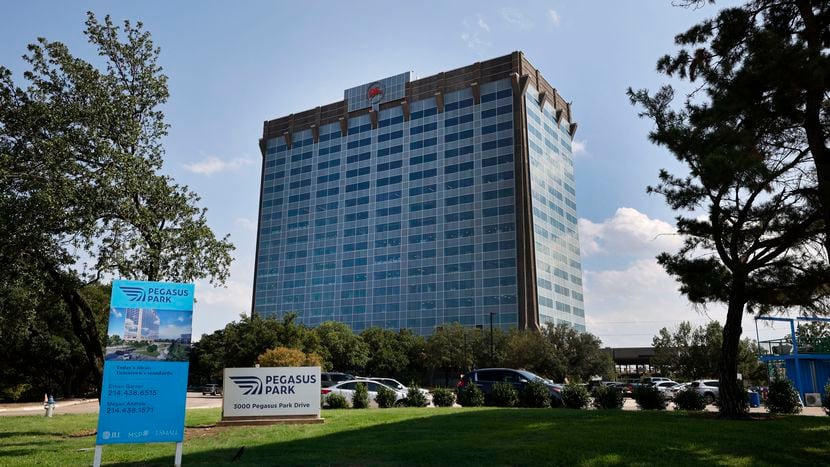
Dallas has been chosen as one of the three headquarters for the Advanced Research Projects Agency for Health (ARPA-H), a federal biotech research agency with a $2.5 billion budget. The decision comes after months of campaigning by Texas cities, universities, and science advocates. The Dallas hub, located at Pegasus Park, will focus on customer experience, access, and diversifying clinical trials for ARPA-H projects. The Texas consortium also includes Austin, San Antonio, and Houston, with stakeholders in El Paso and College Station supporting the statewide team. The announcement also introduced ARPANET-H, a "hub and spoke" model that includes spoke sites across the country. This win solidifies Dallas' position as a major life sciences hub and is expected to bring jobs and economic development to the region.
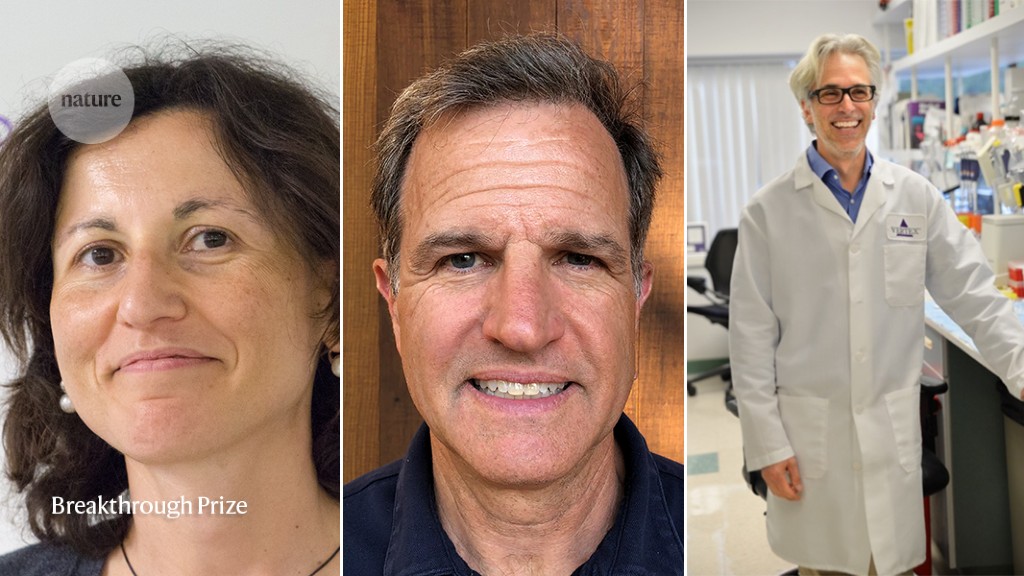
The chemists behind the development of Trikafta, a triple-drug combination that has significantly improved the lives of people with cystic fibrosis, have been awarded the prestigious Breakthrough Prize. Sabine Hadida, Paul Negulescu, and Fredrick Van Goor at Vertex Pharmaceuticals developed the treatment by combining different drugs that help a faulty protein to function. Trikafta has been hailed as one of the most remarkable achievements in biomedical research in the last 30 years. The Breakthrough Prize, which awards achievements in life sciences, physics, and mathematics, also recognized breakthroughs in Parkinson's disease research, CAR-T-cell immunotherapy for leukemia, and the study of conformal field theories in physics.
The Breakthrough Prize Foundation has announced the winners of the 2024 Breakthrough Prizes in Life Sciences, Fundamental Physics, and Mathematics. The laureates include scientists recognized for their contributions to the understanding and treatment of major diseases such as cancer, cystic fibrosis, and Parkinson's disease, as well as advancements in quantum field theory and differential geometry. The winners will be honored at a gala award ceremony in Los Angeles in April 2024.
Danaher Corporation has announced its plans to acquire Abcam plc, a global supplier of protein consumables, for $5.7 billion. Abcam will operate as a standalone company within Danaher's Life Sciences segment, aligning with Danaher's strategy to advance drug discovery and diagnostics. The acquisition is expected to close in mid-2024, subject to regulatory approvals and shareholder approval.
Gain-of-function research in the field of life sciences involves conferring new or additional traits to organisms, and it encompasses a wide range of work with potential benefits for society. While concerns about the modification of pathogens to increase their infectivity or severity are valid, focusing solely on the risks hinders progress and overlooks the potential benefits of gain-of-function research. It is crucial to strike a balance between innovation and safety, communicate effectively to address misinformation, enhance science literacy, and foster collaboration between scientists, biosecurity and biosafety communities, and policymakers to ensure that research is conducted safely and securely.
The lack of an overarching strategy for the UK's life sciences sector is throttling the growth of some of the country's most promising companies, according to Reuters interviews with 17 people with knowledge of the challenges. The dearth of state-of-the-art labs in cities such as Oxford and Cambridge is just one example of the problem. The industry figures, from biotech bosses, property developers, industry sources to investors, all spoke of a growing frustration with the lack of a coherent approach in Britain to everything from lab space to funding, talent, suppliers, affordable homes, transport, water and power.
The US Supreme Court's decision in Amgen, Inc. v. Sanofi et al. has ushered in a cataclysmic shift in the law of enablement, despite the Court's claim that it changes nothing. The decision has left innovators questioning the continued viability of broad genus claims, and while it does not categorically eliminate them, it requires a lot of examples to satisfy the enablement requirement. The decision will have repercussions for the entire community regardless of industry or technology at issue, and patent applications will likely become longer and more detailed with far more examples.
Google Cloud has launched two AI-powered life sciences solutions, Target and Lead Identification Suite and Multiomics Suite, to help biotech and pharmaceutical companies accelerate drug discovery and advance precision medicine. The tools can better understand the function of amino acids, forecast the structure of proteins, and support the analysis and interpretation of genomic data. Pfizer and Cerevel Therapeutics are early adopters of Target and Lead Identification Suite, while Colossal Biosciences is already using Multiomics Suite.