A consortium of private donors has pledged 860 million euros to support CERN's proposed Future Circular Collider, a major new particle accelerator intended to succeed the Large Hadron Collider and explore fundamental physics, pending approval by CERN Member States around 2028.
Peter Higgs, the physicist who gave his name to the Higgs boson, has passed away at 94. His groundbreaking work in particle physics led to the discovery of the Higgs boson, a crucial component of the Standard Model. The elusive nature of the particle prompted the construction of the Large Hadron Collider, which confirmed its existence in 2012. Higgs and his colleagues' discovery of the Higgs boson represents a significant advancement in our understanding of particle physics, and ongoing research aims to further explore its implications through the Future Circular Collider.
CERN is designing a new supercollider, the Future Circular Collider (FCC), which will be 8 times more powerful than the LHC and could potentially solve mysteries about the nature of the universe, including dark matter and dark energy. The first phase of the FCC could be operational by 2045, and it aims to reproduce 11 years of physics data in about 2 minutes. The FCC would consist of two phases, with the second phase aiming to uncover fundamental forces and particles that have never been observed. However, constructing the supercollider is a massive undertaking, with the first phase alone estimated to cost around $15 billion.
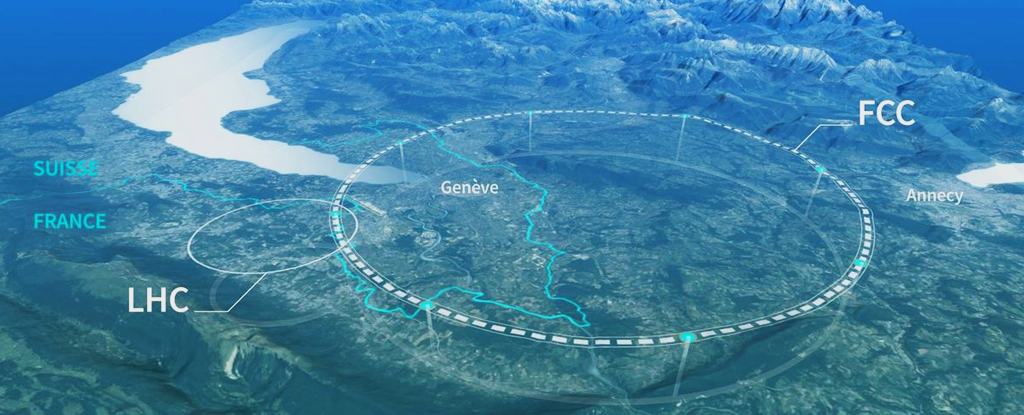
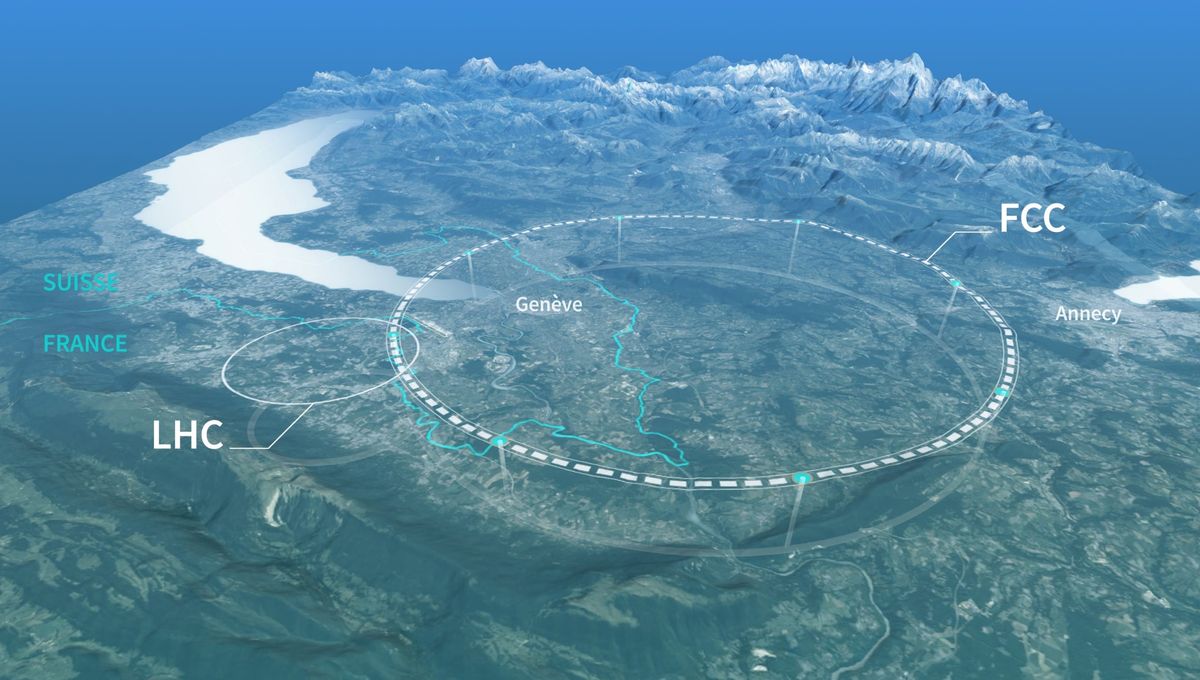
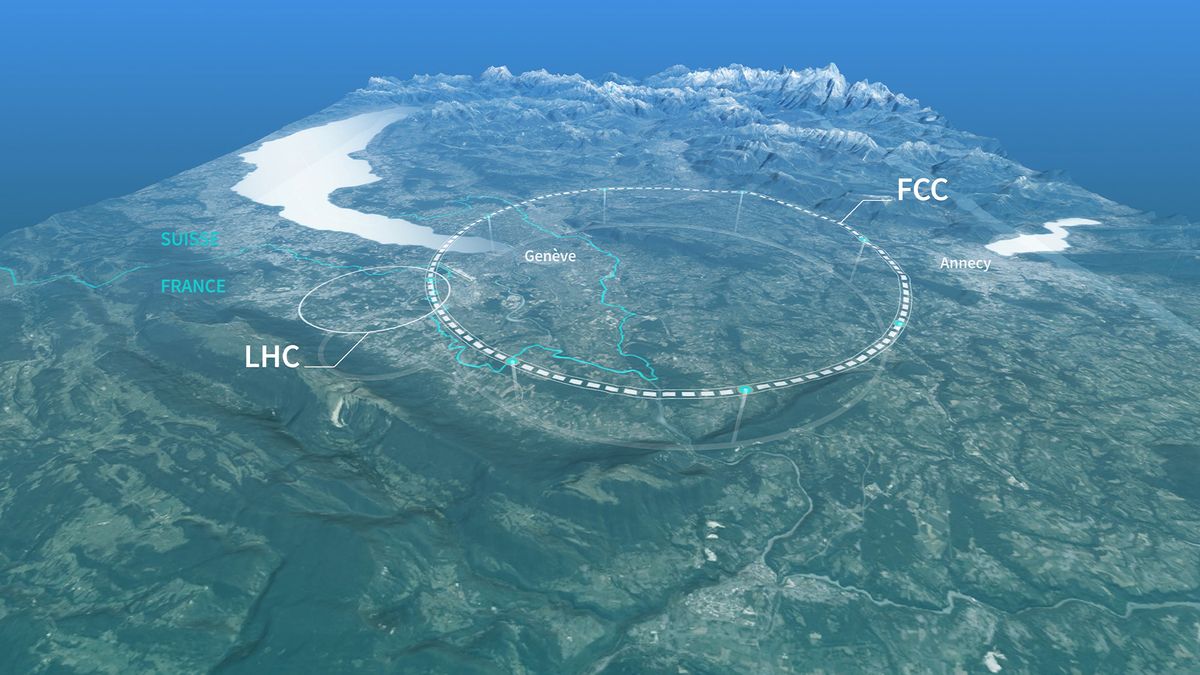
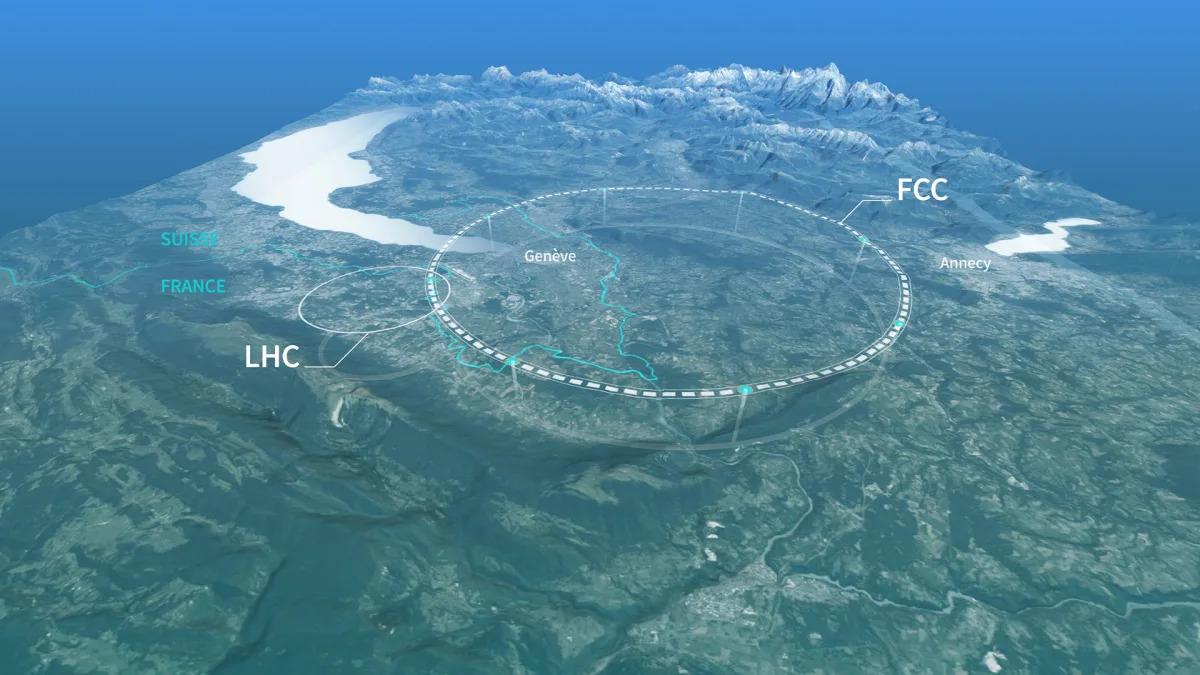
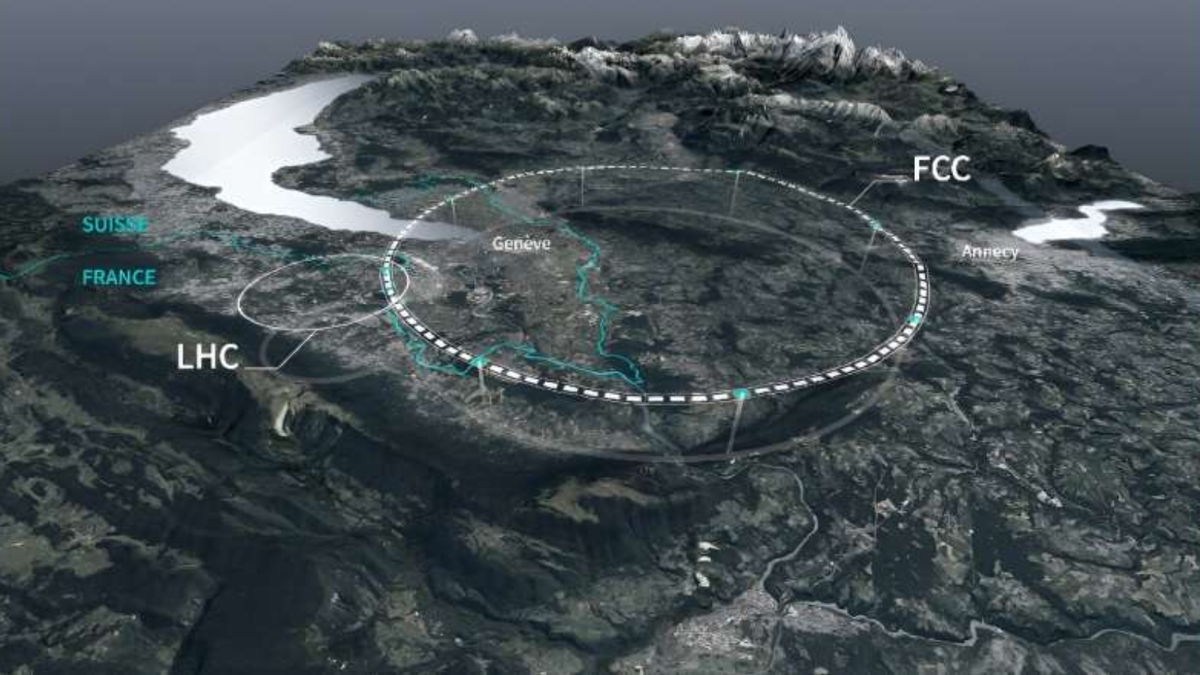
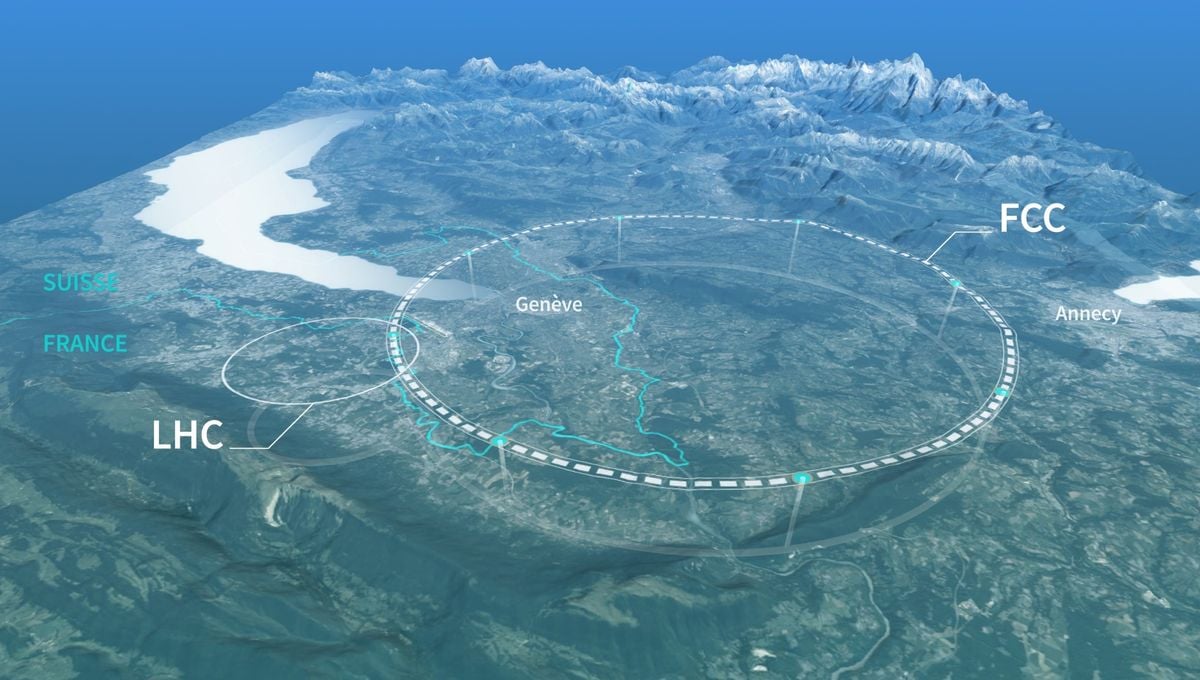
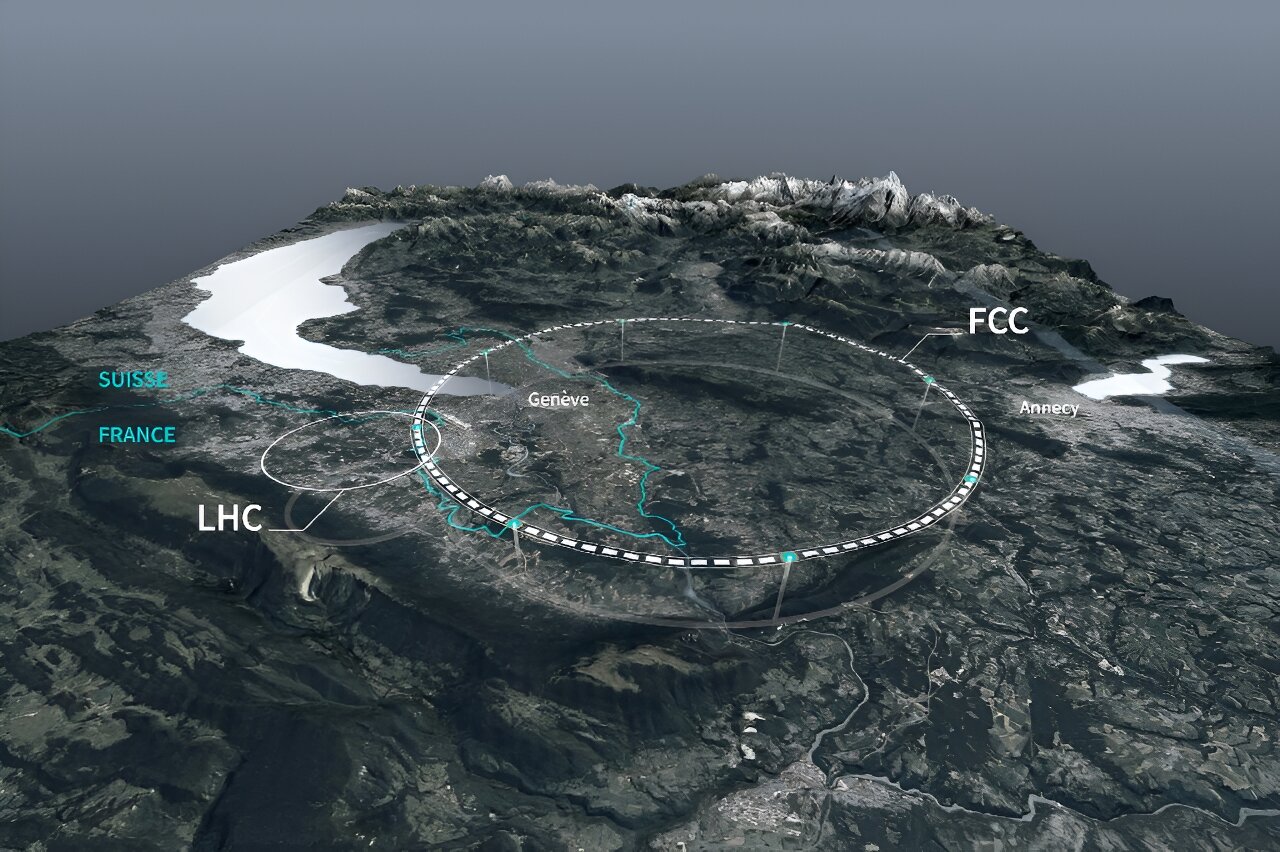
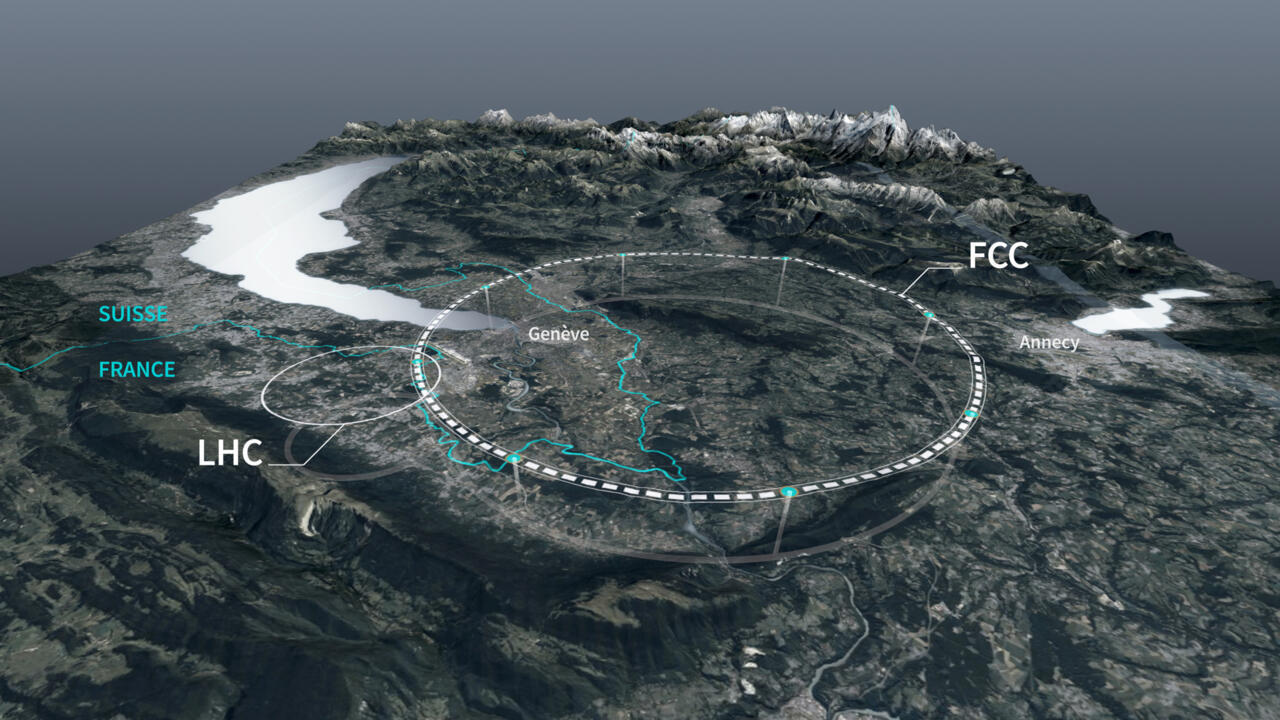
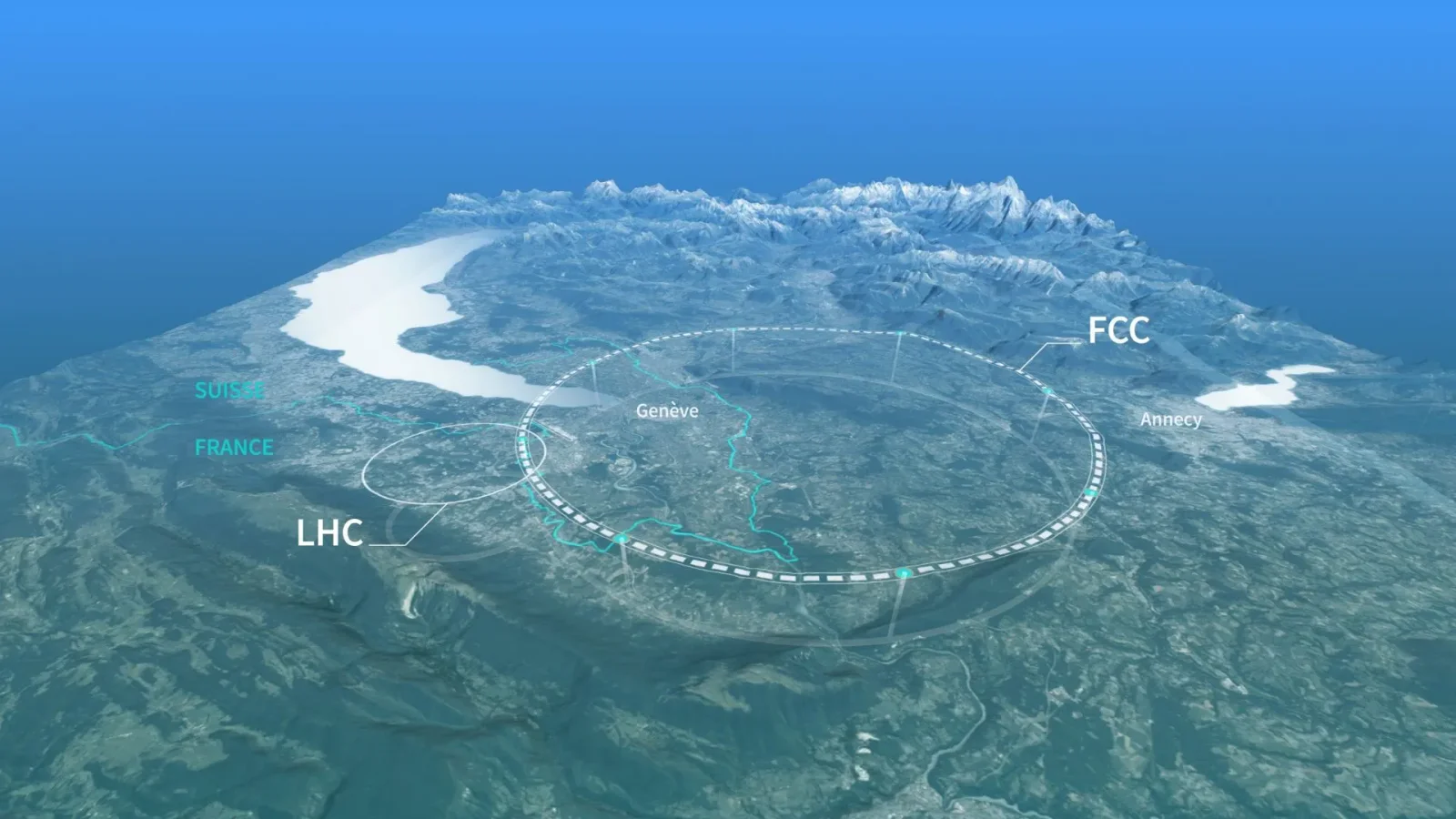
CERN is proposing to build the Future Circular Collider (FCC), a particle accelerator three times longer than the Large Hadron Collider (LHC) in a 27-kilometer tunnel near Geneva. The FCC aims to address fundamental questions about dark matter and antimatter by smashing subatomic particles together at 100 teraelectronvolts, surpassing the LHC's energy level. The project, estimated to cost $21.5 billion, has sparked debate among scientists about its potential to generate new insights. If approved, the FCC could be operational by the 2040s, coinciding with the end of the LHC's useful life.
Plans are underway to build the Future Circular Collider (FCC), a new particle collider three times longer than the Large Hadron Collider (LHC) with the potential to reach energies of 100 TeV. The first phase, scheduled for the mid-2040s, will feature an electron-positron collider (FCC-ee) followed by a proton-proton collider (FCC-hh) that will surpass the LHC's energy capabilities eightfold. The ambitious project aims to push the boundaries of high energy physics and uncover new realms of physics, requiring technological advances and international collaboration.
CERN is planning to build the Future Circular Collider (FCC), a new particle collider three times longer than the Large Hadron Collider (LHC) with the capability to smash particles together with significantly more energy. The ambitious project aims to push energy thresholds beyond current capabilities and promises a physics program that will take high energy research into the next century. The FCC tunnel will house two colliders, the electron-positron collider (FCC-ee) and the proton-proton collider (FCC-hh), with the goal of pushing particle collision to energies of 100 TeV and uncovering new realms of physics.
CERN has proposed the construction of the $17 billion Future Circular Collider (FCC), which would be 3 times larger than the Large Hadron Collider. The FCC aims to probe the fringes of the Standard Model of particle physics by smashing particles at higher energies to discover unknown particles and forces, understand the nature of dark matter and dark energy, and investigate the matter-antimatter asymmetry. While some scientists are skeptical about the project's cost and potential, member states will decide on its greenlight in 2028, with the first phase expected to come online in 2045 and full operation in the 2070s.
CERN has proposed the construction of a $17 billion Future Circular Collider (FCC), which would be 3 times larger than the Large Hadron Collider and aims to probe the fringes of the Standard Model of particle physics. Physicists hope to use the increased size and power of the FCC to discover unknown particles and forces, understand the nature of dark matter and dark energy, and investigate why matter outweighs antimatter. Despite high hopes, some scientists are skeptical about the project's potential return on investment. The feasibility study is set to be finished next year, and member states will meet in 2028 to decide whether to greenlight the project, with the first phase expected to come online in 2045.
The Future Circular Collider (FCC), set to succeed the Large Hadron Collider, is being planned to investigate dark energy and dark matter by smashing particles together with unprecedented energy. The FCC will be over three times the length of the LHC and is expected to reach energies as great as 100 TeV, compared to the LHC's 13 TeV. The FCC's feasibility study is set to conclude in 2025, with construction potentially beginning in the mid-2030s, and the first stage of the FCC-ee expected to start operations in 2045.
CERN is proposing to build the Future Circular Collider (FCC), a particle accelerator three times the size of the Large Hadron Collider (LHC) to explore energies beyond the LHC's capabilities and hunt for evidence of dark matter and dark energy. The proposed 90-kilometer-long collider aims to start smashing electrons in the 2040s and protons in the 2070s, with a price tag of $17.2 billion. Critics argue that the project is a gamble and that the funds could be better spent elsewhere, but the decision ultimately rests on the countries that fund CERN.
Cern has proposed plans for a $21.5 billion Future Circular Collider (FCC), which would be three times the size of the Large Hadron Collider and aim to smash subatomic particles together at a maximum energy of 100 teraelectronvolts (TeV). The FCC is intended to address some of the deepest mysteries of the universe, such as dark matter, dark energy, and the dominance of matter over antimatter, with the goal of being operational in the 2040s.
Europe's CERN laboratory has unveiled plans for the Future Circular Collider (FCC), a massive new particle accelerator that would surpass the Large Hadron Collider in size and power. The FCC, if approved, would start operations around the middle of the century and conduct its highest-energy collisions by 2070. With a proposed cost of $17 billion for its first stage, the FCC aims to explore the fundamental forces of the universe, study the properties of matter at the smallest scale and highest energy, and potentially confirm the existence of theorized particles. The project is set to undergo further feasibility studies and a decision on its construction is expected in 2028.
Europe's CERN laboratory has unveiled plans for the Future Circular Collider (FCC), a massive new particle accelerator that would surpass the Large Hadron Collider in size and power, aiming to continue unraveling the universe's mysteries. If approved, the FCC would start operations around the middle of the century, with the potential to confirm the existence of theorized particles and shed light on enigmas such as dark energy, dark matter, and the scarcity of antimatter. The project, estimated to cost $17 billion for its first stage, is set to be decided upon in 2028, with construction potentially commencing in 2033.
Researchers at CERN have proposed the construction of a new, larger supercollider, the Future Circular Collider (FCC), at a cost of £17bn, aiming to discover new particles that could revolutionize physics and provide a more complete understanding of the Universe. The current Large Hadron Collider (LHC) has not yet found particles to explain 95% of the cosmos, including dark matter and dark energy. While some experts question the economic sense of the project, CERN's director general believes the FCC is necessary for advancing fundamental physics. Critics argue for alternative, more cost-effective options and question the allocation of funds in the face of global challenges like the climate emergency.
Europe's CERN laboratory has begun the first steps towards building a new particle accelerator, the Future Circular Collider (FCC), which would be more than triple the length of the Large Hadron Collider (LHC). The FCC would form a new circular tunnel under France and Switzerland, 91 kilometers long and about five meters in diameter. The goal of the FCC is to push the energy and intensity frontiers of particle colliders, with the aim of reaching collision energies of 100 tera electron volts, in the search for new physics.