New results from the MicroBooNE experiment have ruled out the existence of the long-suspected sterile neutrino, narrowing the options for explaining neutrino anomalies and paving the way for future research into other exotic particles and fundamental questions in physics.
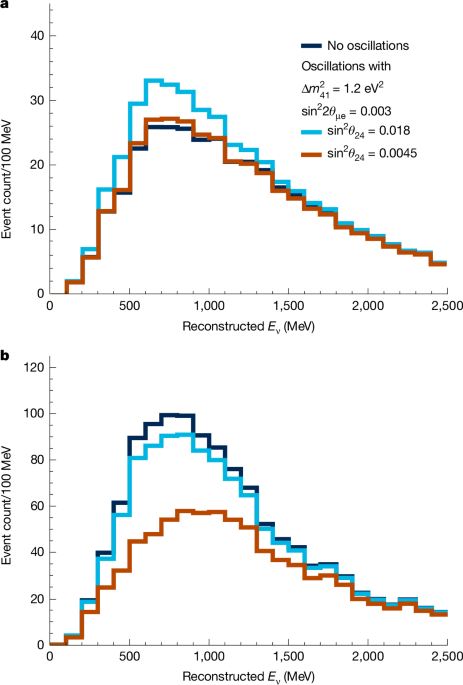
The MicroBooNE experiment searched for light sterile neutrinos using two neutrino beams and found no evidence supporting their existence, thereby strongly constraining the parameter space that could explain previous anomalies observed in short-baseline neutrino experiments.
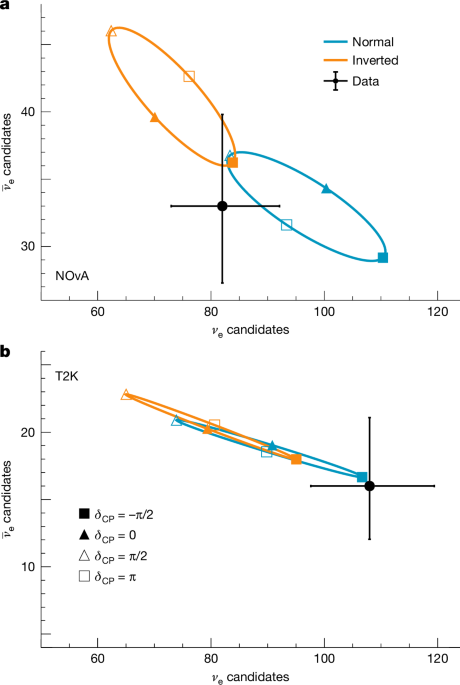
A joint study by the NOvA and T2K experiments has provided the most detailed observations of neutrino flavor changes, shedding light on their properties and potential implications for understanding the universe's matter-antimatter imbalance, although more data is needed to answer fundamental questions about neutrinos' role in the cosmos.
A joint analysis of neutrino oscillation data from the T2K and NOvA experiments provides improved constraints on oscillation parameters, including the mixing angle θ23, mass-squared difference Δm32², and the CP-violating phase δCP, with no significant preference for either mass ordering but evidence suggesting potential CP violation, especially under the inverted mass ordering assumption.
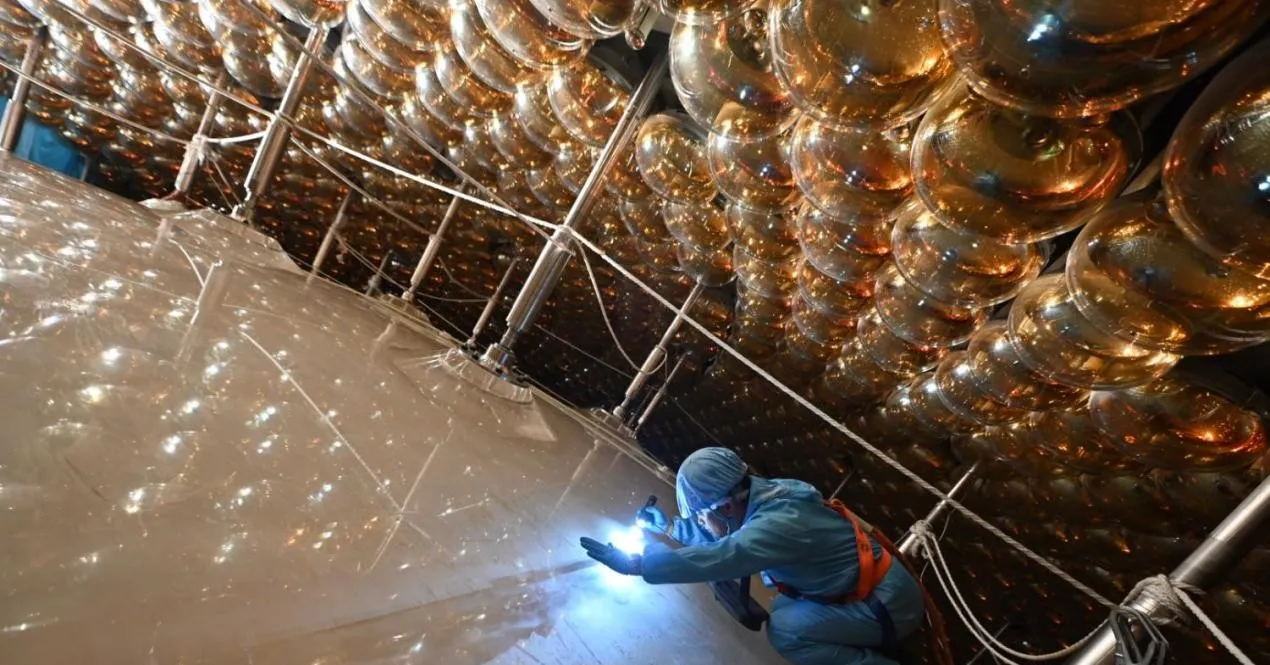
The Jiangmen Underground Neutrino Observatory (Juno) in China, a massive underground sphere filled with liquid and equipped with sensitive detectors, is set to study elusive neutrinos and their oscillations, aiming to better understand their mass hierarchy and contribute to fundamental physics research.