Tag

Core

All articles tagged with #core

Fitness Expert Tips to Counteract Sitting-Related Harm

Originally Published 3 months ago — by HuffPost UK

Featured image for Fitness Expert Tips to Counteract Sitting-Related Harm
Source: HuffPost UK

A fitness expert shares four effective strategies to counteract the negative effects of prolonged sitting, including hip stretches, strength training, regular movement breaks, and core strengthening exercises, emphasizing the importance of consistent activity to maintain muscle health and reduce health risks.

"Efficient Pilates Routines for Core Strength and Home Convenience"

Originally Published 1 year ago — by Fit and Well

Featured image for "Efficient Pilates Routines for Core Strength and Home Convenience"
Source: Fit and Well

ACE-certified personal trainer Staci Alden shares a quick five-minute Pilates routine consisting of nine movements, each to be done for 30 seconds, to stretch and strengthen the entire body from head to toe. The routine includes exercises such as seated breathing, half roll back, supine leg circles, glute bridge, side lying leg kick, swan prep, leg pull front, and cat stretch, providing a convenient way to incorporate mood-boosting movement into a busy day.

Unveiling Mars' Hidden Secrets: A Soft Core and Radioactive Magma

Originally Published 2 years ago — by Futurism

Featured image for Unveiling Mars' Hidden Secrets: A Soft Core and Radioactive Magma
Source: Futurism

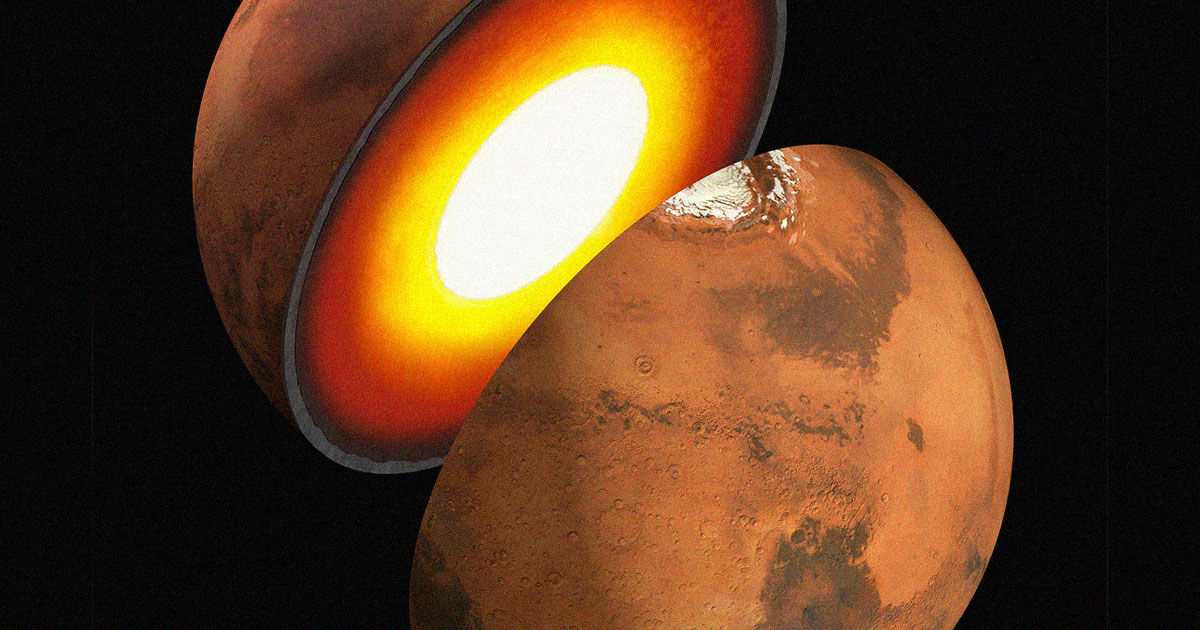
New analyses of seismic data from NASA's InSight lander have revealed the presence of a vast radioactive ocean of magma beneath the surface of Mars, reaching up to 125 miles in depth. This discovery challenges previous estimates of Mars' core size and density, suggesting that the core may be small and dense like Earth's. However, the existence of the magma sea raises questions about the history of Mars' evolution and the cause of its magnetic field, as the magma would have prevented the core from cooling.

Unveiling Mars' Hidden Molten Secrets: NASA's InSight Lander Reveals Radioactive Magma Sea

Originally Published 2 years ago — by The New York Times

Featured image for Unveiling Mars' Hidden Molten Secrets: NASA's InSight Lander Reveals Radioactive Magma Sea
Source: The New York Times

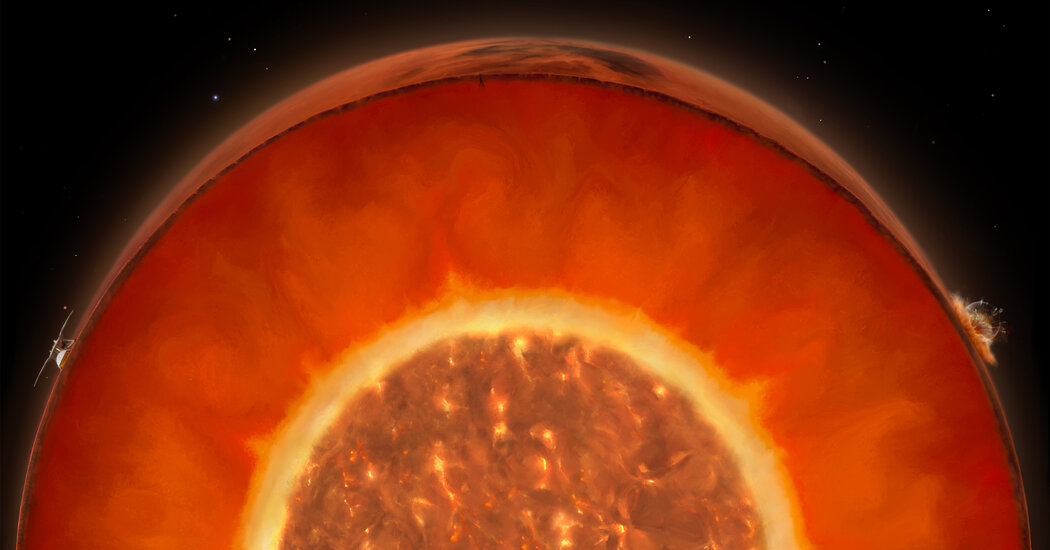
Two studies published in the journal Nature reveal that Mars's core is smaller than previously estimated, debunking earlier measurements. The discrepancy was due to the presence of a hidden 90-to-125-mile-deep ocean of molten rock, kept molten by radioactive elements, beneath Mars's solid mantle. This exotic magma ocean, which does not exist on Earth, may require a reevaluation of Mars's chaotic evolution. The discovery was made by reevaluating seismic data from the InSight lander and confirmed by a meteor impact that sent seismic waves through Mars's core. The existence of the magma ocean suggests that Mars's core is denser and iron-rich, with fewer lighter elements. This finding may necessitate a new explanation for Mars's magnetic field and its origin story.

Unveiling Mars: The Hidden Molten Layers Beneath

Originally Published 2 years ago — by Nature.com

Featured image for Unveiling Mars: The Hidden Molten Layers Beneath
Source: Nature.com

Geophysical evidence from seismic data collected by the NASA InSight mission suggests the presence of an enriched molten silicate layer, known as the basal mantle layer (BML), above Mars's core. This BML, which is strongly enriched in iron and heat-producing elements, acts as a buffer between the core and mantle, reducing heat transfer and influencing Mars's thermochemical evolution. The presence of the BML explains the observed seismic reflections occurring above the core-mantle boundary (CMB) and suggests a smaller and denser core than previously inferred. These findings challenge the assumption of a homogeneous Martian mantle and provide new insights into the internal structure of Mars.

Earth's Core Leak: Troubling Discovery Raises Concerns

Originally Published 2 years ago — by BGR

Featured image for Earth's Core Leak: Troubling Discovery Raises Concerns
Source: BGR

Researchers have discovered that ancient lava flows from Baffin Island in Canada's Arctic Archipelago contain high levels of helium-3, helium-4, and another rare isotope, suggesting a possible leak from the Earth's core. While the implications for the core are unclear, the leak does not pose any immediate danger as the remote location of the lava flows minimizes the risk of exposure.

Unveiling the Mystery: Earth's Gold and Platinum Distribution Beyond the Core

Originally Published 2 years ago — by IFLScience

Featured image for Unveiling the Mystery: Earth's Gold and Platinum Distribution Beyond the Core
Source: IFLScience

Scientists have long been puzzled by the presence of significant amounts of heavy metals like gold and platinum in Earth's crust and mantle, as existing models suggest they should have sunk to the core. However, a new model proposed by researchers from Yale University and the South-West Research Institute explains that early Earth's molten ocean and subsequent large asteroid impacts created a partially molten region beneath the local magma ocean, allowing some of the heavy metals to stay in the mantle. This model provides an explanation for the abundance of heavy metals in Earth's crust and their release in volcanic eruptions.

Unveiling Earth's Hidden Secrets: Composition and Place in the Universe

Originally Published 2 years ago — by Livescience.com

Featured image for Unveiling Earth's Hidden Secrets: Composition and Place in the Universe
Source: Livescience.com

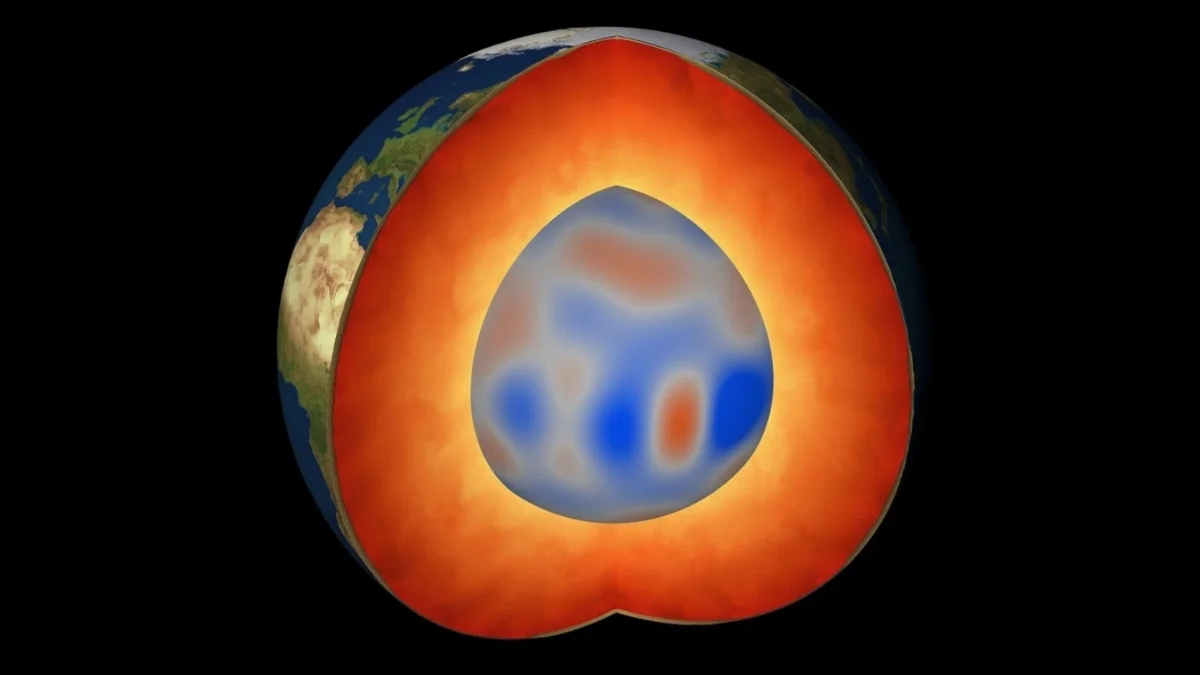
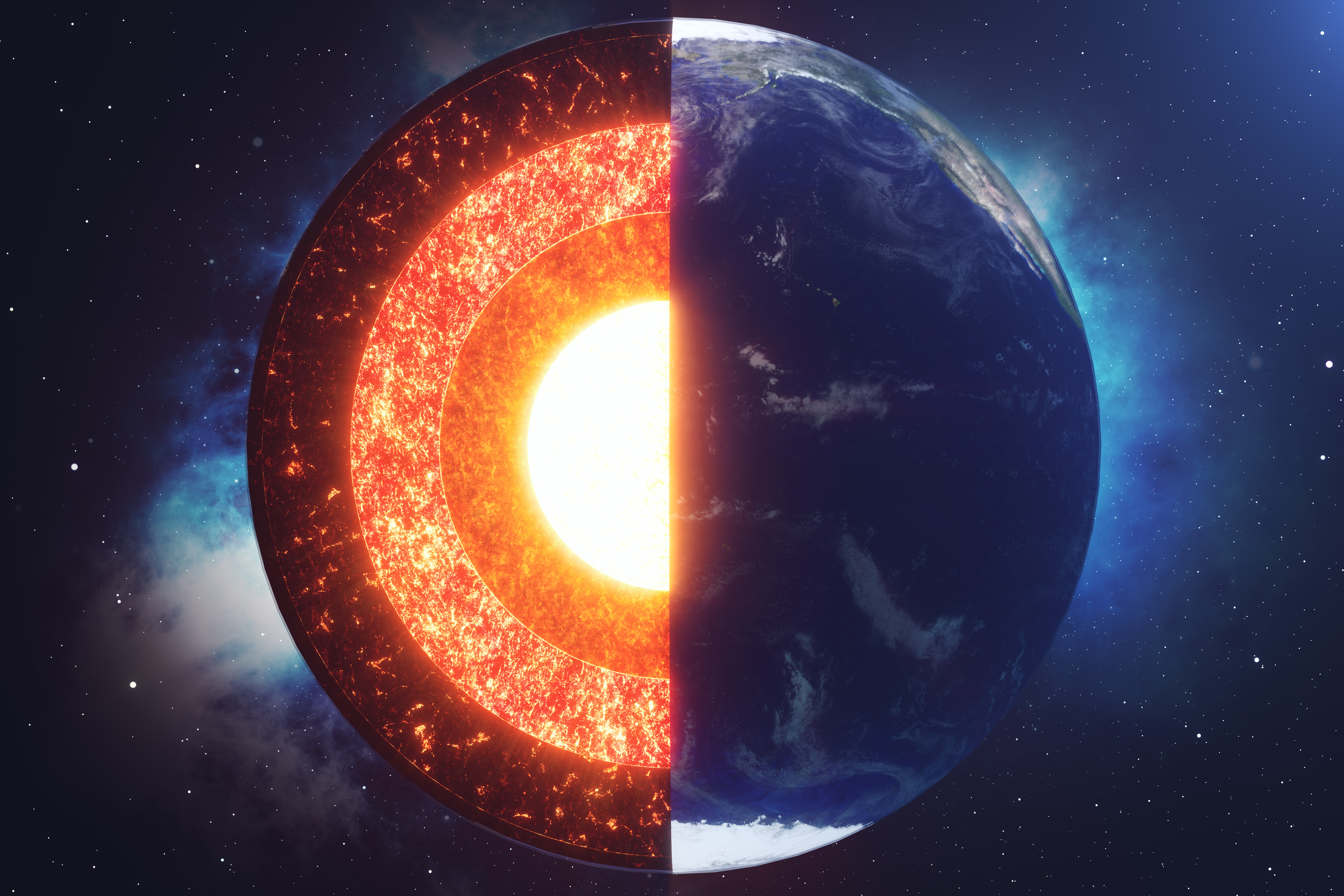
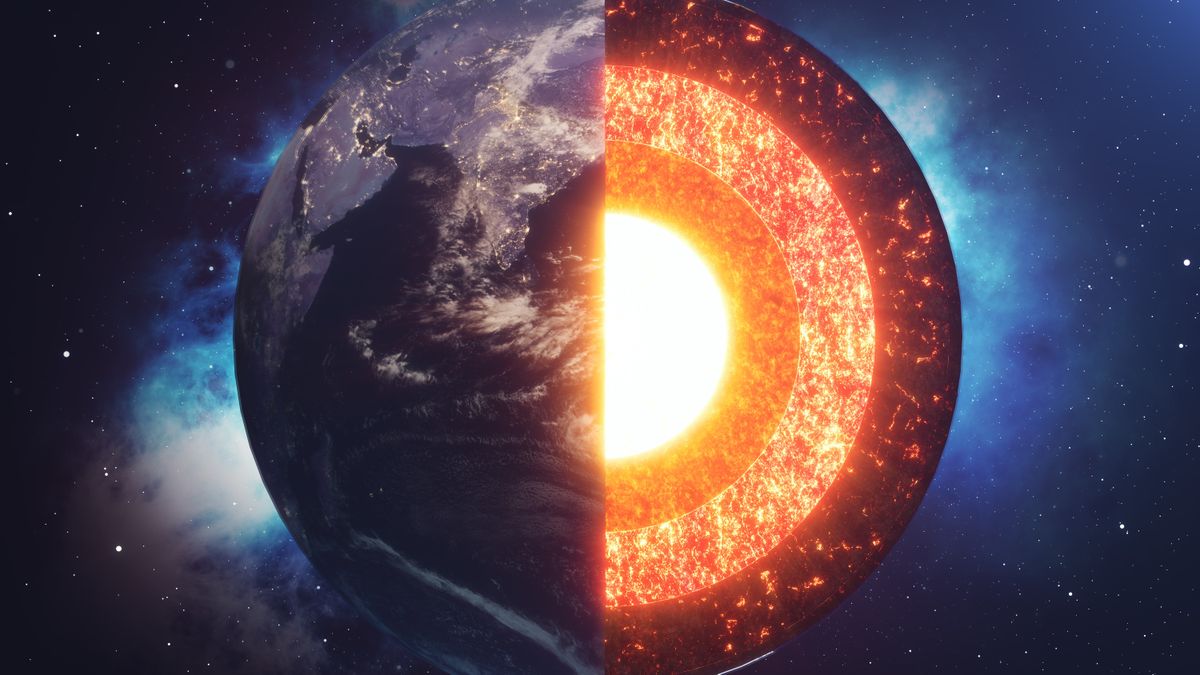
Earth is composed of a crust, mantle, and core. The crust, which accounts for only 1% of the planet's volume, is split into oceanic and continental crusts. The mantle, making up 84% of Earth's volume, is solid rock but acts like a fluid in geological timescales. The core consists of a liquid outer core surrounding a solid inner core, giving Earth its magnetic field. The inner core is slowly growing as the planet cools.

Unveiling the Secrets of the Moon: China's Discovery and Scientific Confirmation

Originally Published 2 years ago — by ZME Science

Featured image for Unveiling the Secrets of the Moon: China's Discovery and Scientific Confirmation
Source: ZME Science

Scientists have confirmed that the moon has a fluid outer core and a solid inner core, similar to Earth's. The inner core is made up of a metal with a density similar to iron and measures about 500 kilometers in diameter. The findings were based on seismic data from moonquakes and modeling with different core types. The study aligns with a previous NASA study, lending credibility to the conclusion. However, mysteries about the moon's magnetic field and other aspects of its structure remain unsolved.

NASA's Upcoming Mission to Uncover the Secrets of a Metal Asteroid

Originally Published 2 years ago — by Big Think

Featured image for NASA's Upcoming Mission to Uncover the Secrets of a Metal Asteroid
Source: Big Think

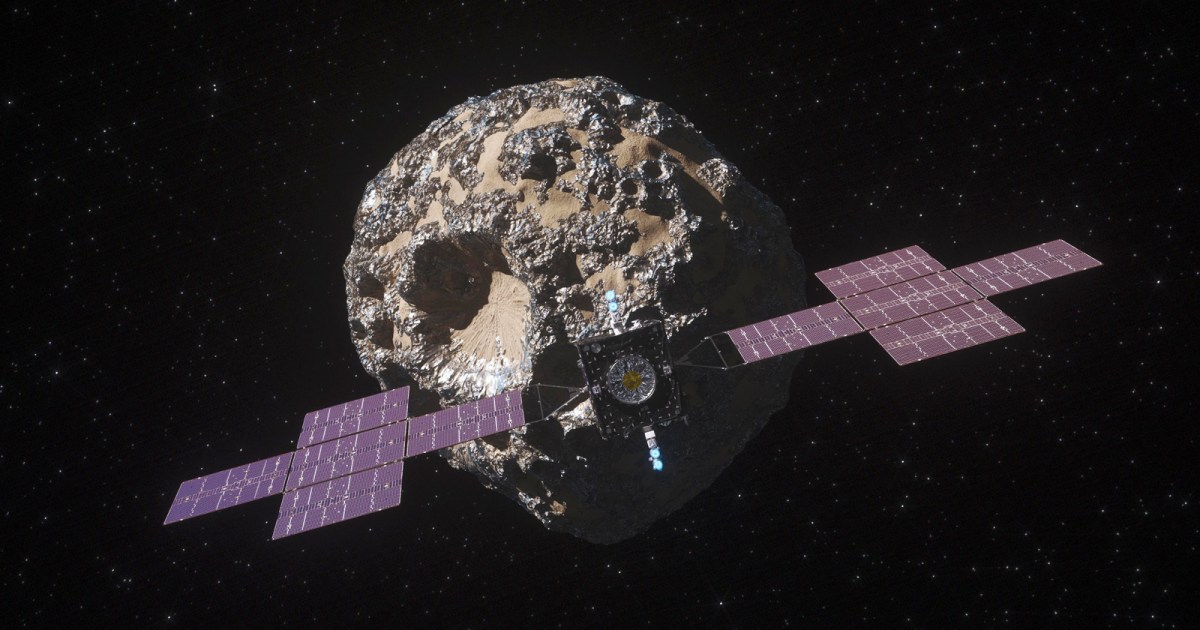
NASA is preparing to launch the Psyche spacecraft on October 5th to study the asteroid 16 Psyche, which is believed to be the partial core of a "planetesimal." By studying this metal asteroid, NASA hopes to gain insights into Earth's core and potentially discover clues about habitability and the search for extraterrestrial life. The mission will also test new communication and propulsion systems, including the use of optical communications and solar electric propulsion. The spacecraft is expected to arrive at its destination in 2026 and spend 26 months orbiting 16 Psyche to gather data and determine if it is indeed a planetary core.

Mars' Mysterious Accelerated Rotation: Insights from NASA's InSight

Originally Published 2 years ago — by NASASpaceflight.com

Featured image for Mars' Mysterious Accelerated Rotation: Insights from NASA's InSight
Source: NASASpaceflight.com

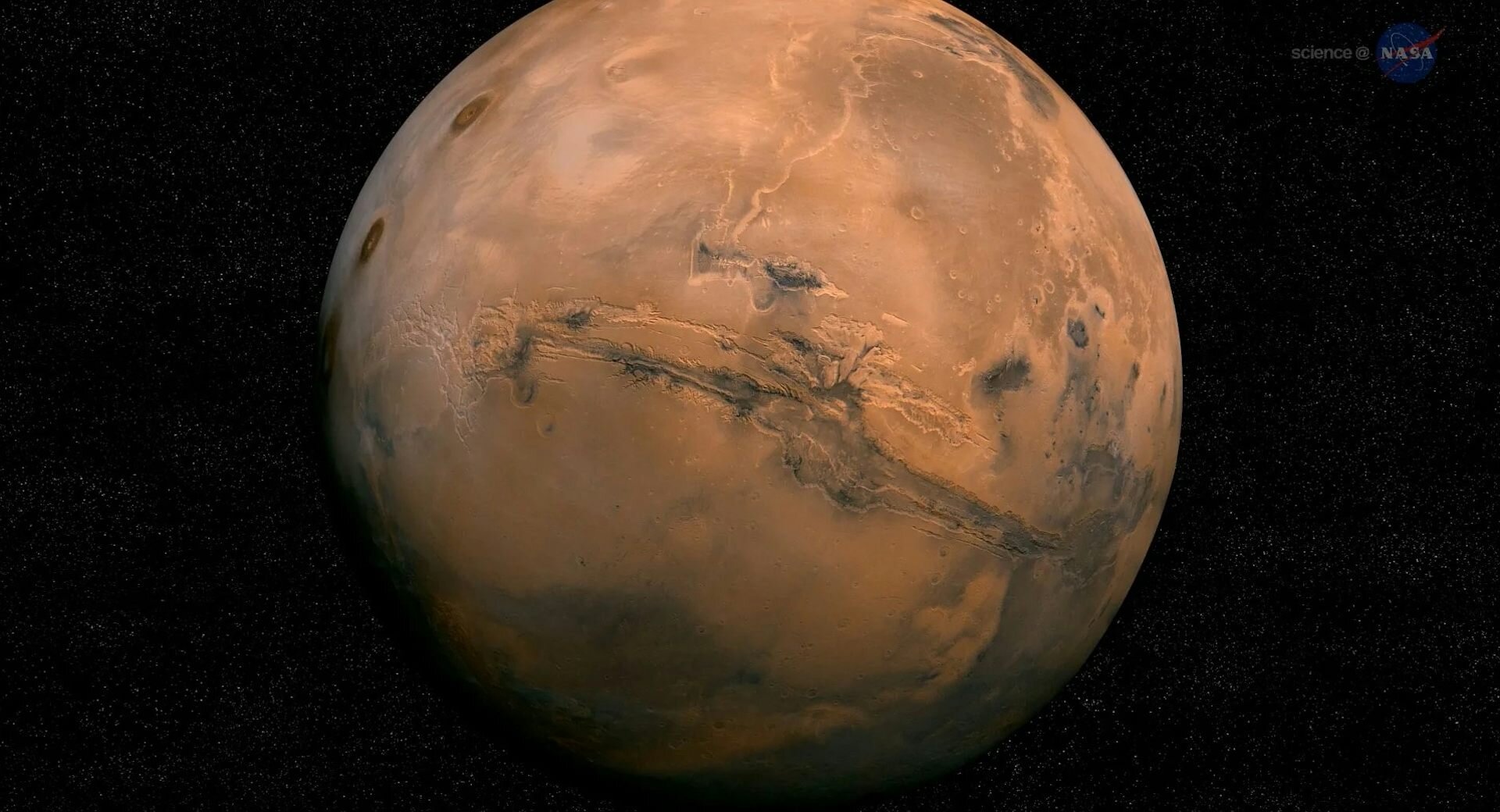
Scientists analyzing data from NASA's InSight Mars lander have discovered that Mars is rotating faster, with its rotational speed increasing by approximately four milliarcseconds per year squared. The measurements, made using InSight's Rotation and Interior Structure Experiment (RISE) instrument, also revealed the planet's wobbling motion caused by its molten metal core. The data allowed scientists to estimate the size of Mars' core and revealed regions of slightly higher or lower density buried deep within the mantle. The findings provide valuable insights into Mars' rotation, core, and other planetary characteristics, contributing to groundbreaking discoveries in planetary science.

NASA Discovers Mars' Rapidly Increasing Rotation Speed

Originally Published 2 years ago — by KSL.com

Featured image for NASA Discovers Mars' Rapidly Increasing Rotation Speed
Source: KSL.com

NASA's InSight lander has collected data indicating that Mars is rotating more quickly than before, shortening the length of a Martian day by a fraction of a millisecond per year. The increased acceleration, about 4 milliarcseconds per year², is still being investigated, but it may be due to ice accumulation at the Martian poles or the rise of landmasses after being covered in ice. The findings, based on InSight data, suggest that Mars has a molten metal core with a radius of about 1,140 miles. Although the mission has ended, the data collected by InSight has significantly contributed to our understanding of the red planet.

Mysterious Increase in Mars' Rotation Speed Baffles Scientists

Originally Published 2 years ago — by CNN

Featured image for Mysterious Increase in Mars' Rotation Speed Baffles Scientists
Source: CNN

NASA's InSight lander has collected data indicating that Mars is rotating more quickly than before, shortening the length of a Martian day by a fraction of a millisecond per year. The increased acceleration in rotation is believed to be caused by ice accumulation at the Martian poles or the rise of landmasses after being covered in ice. The findings, based on an analysis of InSight data, also revealed that Mars has a molten metal core with a radius estimated to be between 1,112 and 1,150 miles. Although InSight is no longer operational, its data has significantly contributed to our understanding of the red planet.

NASA's Mission to a $10,000-Quadrillion Metal Asteroid Nears Launch

Originally Published 2 years ago — by Freethink

Featured image for NASA's Mission to a $10,000-Quadrillion Metal Asteroid Nears Launch
Source: Freethink

NASA is preparing to launch the Psyche spacecraft on October 5th to study the asteroid 16 Psyche, which is believed to be the partial core of a "planetesimal." By studying this metal asteroid, NASA hopes to gain insights into Earth's core and potentially discover clues about habitability and the existence of extraterrestrial life. The mission will also test new communication systems, including optical communications using lasers, and utilize a solar electric propulsion system featuring Hall thrusters for deep space travel.