Tag

Earths Formation

All articles tagged with #earths formation

science1 year ago

"Graphite's Role in Forming Earth's Prebiotic Molecules"

Graphite, likely formed from giant impactors hitting Earth 4.3 billion years ago, may have triggered the creation of prebiotic molecules essential for the onset of life. Laboratory simulations by planetary astrochemists at Cambridge University suggest that graphite offers a potential route towards prebiotic chemistry, with heating of organic tar likely producing molecules for life's building blocks. The process involves the formation of nitriles, which can lead to the creation of adenine, a base for RNA and DNA, and eventually sugar. However, achieving chemical diversity while minimizing unwanted reactions remains a challenge, and further experiments are needed to validate the model's predictions.

science1 year ago

"Comparing Early Life to Modern Times"

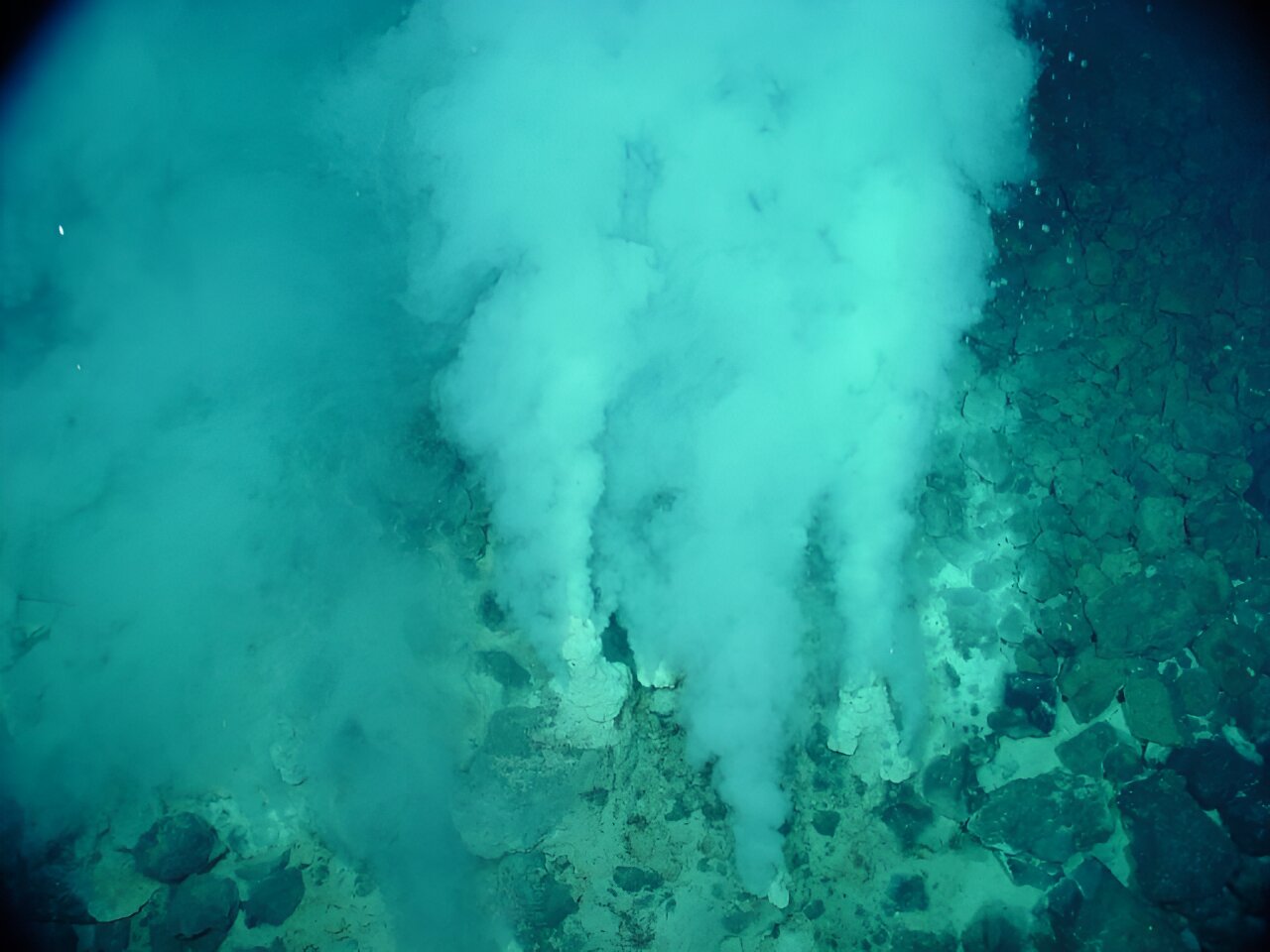
The central question of abiogenesis, the generation of life from not-life, remains unanswered, but astronomers have detected organic molecules and amino acids scattered throughout space, suggesting that Earth's organic compounds were delivered after the planet cooled and solidified. The earliest undisputed fossil evidence for life dates back 3.5 billion years, with more speculative evidence suggesting life started as early as 4.5 billion years ago. It is believed that life may have arisen in deep-sea hydrothermal vents, tidal pools, hot springs, or underground, and it appears that as soon as life could arise, it did arise.

science2 years ago

Unveiling the Mystery: Earth's Gold and Platinum Distribution Beyond the Core

Scientists have long been puzzled by the presence of significant amounts of heavy metals like gold and platinum in Earth's crust and mantle, as existing models suggest they should have sunk to the core. However, a new model proposed by researchers from Yale University and the South-West Research Institute explains that early Earth's molten ocean and subsequent large asteroid impacts created a partially molten region beneath the local magma ocean, allowing some of the heavy metals to stay in the mantle. This model provides an explanation for the abundance of heavy metals in Earth's crust and their release in volcanic eruptions.

science2 years ago

Caltech Reveals Earth's Formation Secrets

A study from Caltech reveals that the early Earth formed from hot and dry materials, suggesting that water arrived late in the planet's formation. By analyzing magmas from different layers of the Earth's interior, researchers found that the early Earth lacked volatiles, including water. This discovery challenges previous theories of terrestrial planet formation and has implications for understanding the building blocks of other planets in the solar system. The study highlights the importance of exploring inner planets like Venus and Mercury to better understand how terrestrial planets, including Earth, were formed.

science-and-technology2 years ago

Unveiling Earth's Mysterious Inner Core: Liquid Iron Swirls and Complex Texture

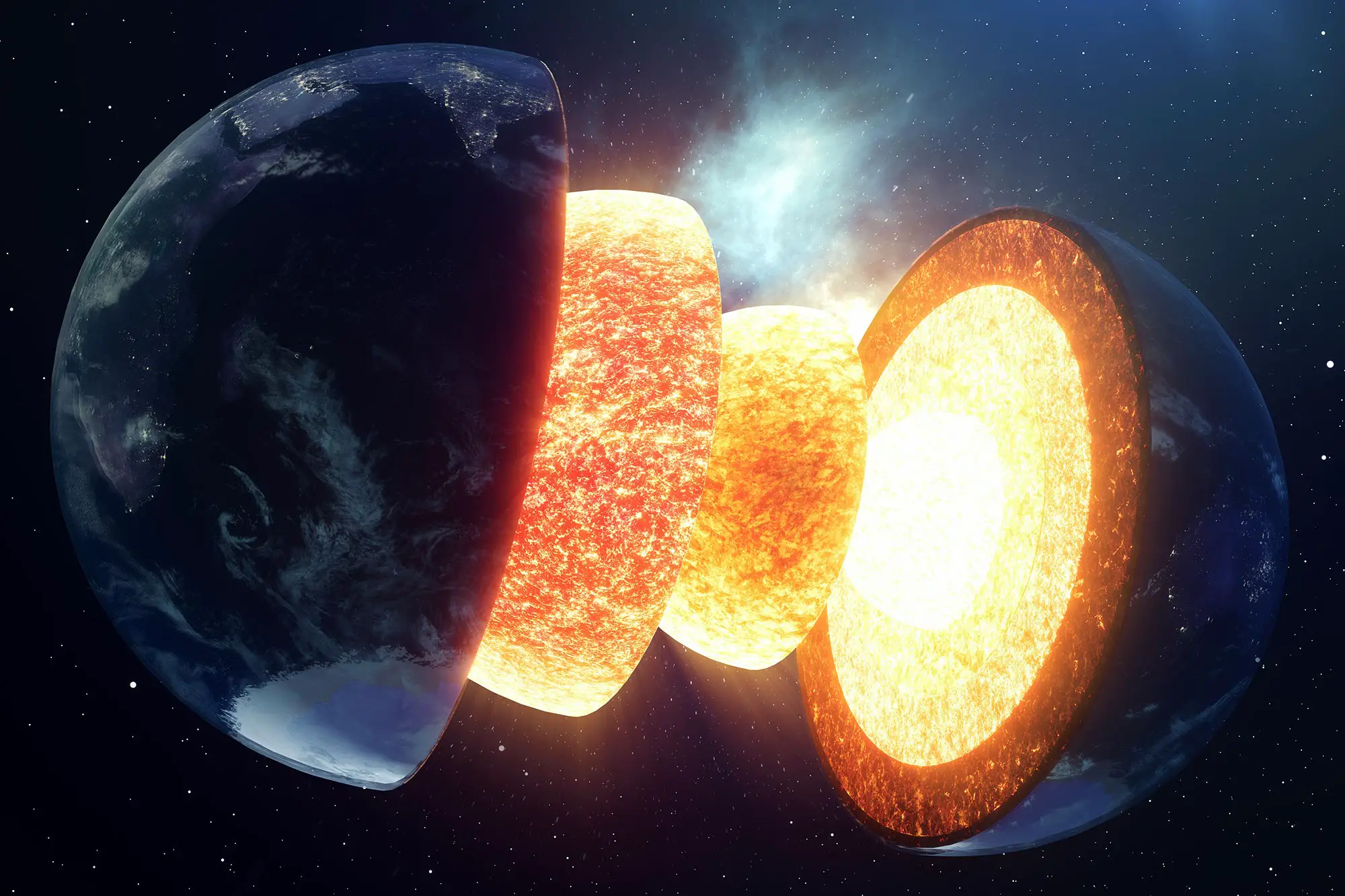
Seismologists from the University of Utah have discovered that Earth's inner core is not a homogenous mass but rather a complex tapestry of different fabrics. Using seismic data from earthquakes and CTBTO's sensing instruments, the researchers found that the inner core initially grew rapidly, slowed down over time, and may contain trapped liquid iron. This new understanding provides insights into Earth's formation, evolution, and the creation of its protective magnetic field.

science2 years ago

New insights into the origins of Earth's oceans and water

A new study from the AETHER project proposes that Earth's oceans could have formed from interactions between a hydrogen-rich early atmosphere and oxygen within the planet's magma. The research also demonstrates why Earth's core is lighter than it should be, owing to the presence of gaseous hydrogen. The authors propose that one of the protoplanets involved in the formation of Earth was heavier than thought. The calculations show that interactions with atmospheric hydrogen could produce enough water to fill the current volume of our oceans three times over.