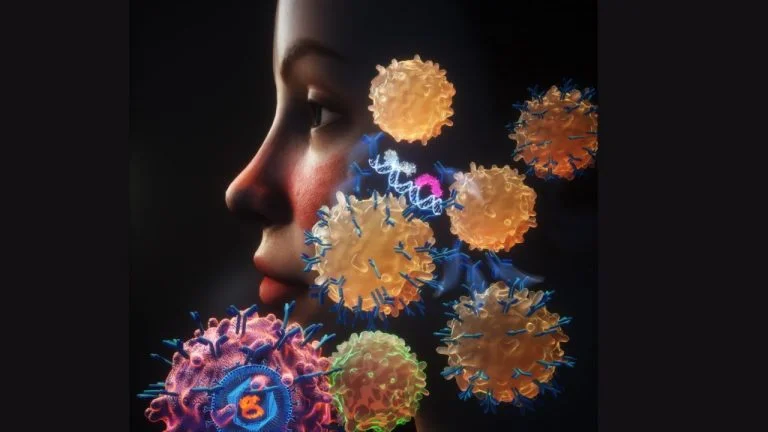
Groundbreaking research suggests that the Epstein-Barr virus (EBV), common in childhood, may be the trigger for lupus by causing immune cells to attack the body's tissues, potentially leading to new treatments and vaccine development.
Stanford Medicine researchers have linked the Epstein-Barr virus (EBV), which most people carry, to the development of lupus by showing how infected B cells can trigger autoimmune responses, potentially opening new avenues for treatment and prevention.
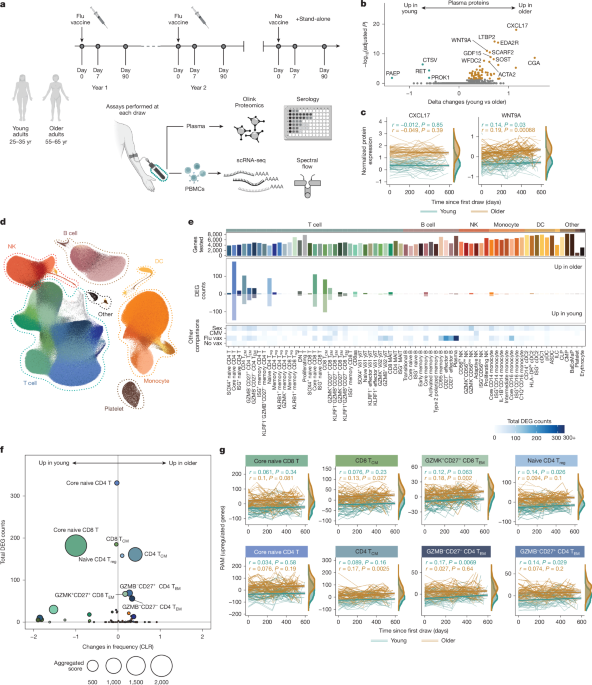
This study uses multi-omic profiling over two years to reveal that in healthy adults, immune system changes with age are characterized by stable, transcriptional reprogramming of T cells, a progressive TH2 bias in memory T cells, and altered B cell responses to influenza vaccination, with minimal influence from chronic CMV infection or systemic inflammation prior to advanced age.
Recent research suggests that adaptive immune cells like T and B cells play a complex role in Alzheimer's disease, sometimes worsening and sometimes protecting against brain damage. This new understanding highlights the potential for therapies that rebalance immune responses, moving beyond traditional focus on protein plaques and tangles to include immune system modulation for more effective treatment options.
A study shows that Ocrevus rapidly depletes B-cells in MS patients and causes gradual changes in T-cells, including increased regulatory T-cells after six months, which may contribute to its long-term effectiveness.
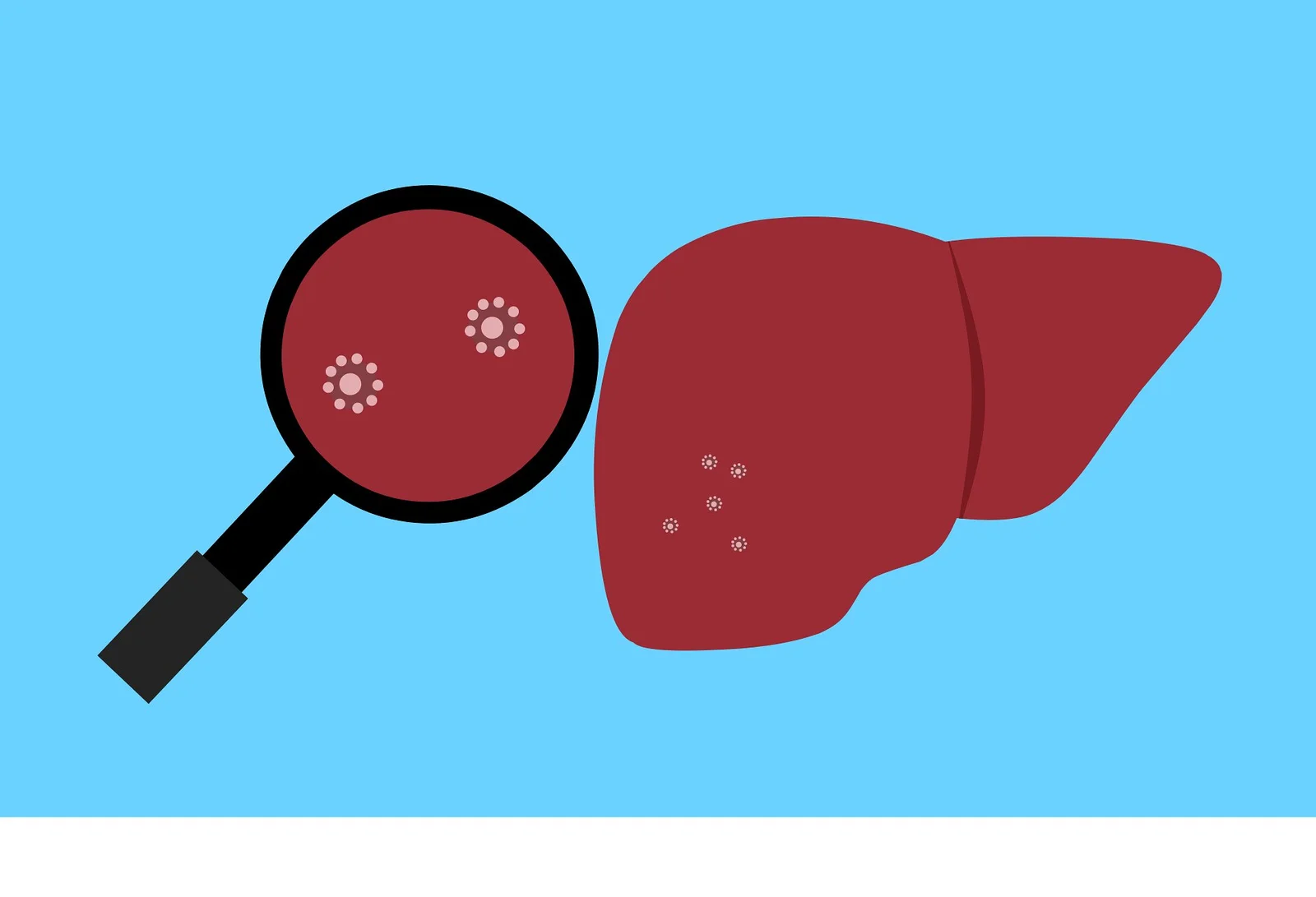
Researchers at McMaster University have developed a drug called EVT0185 that inhibits an enzyme involved in fat metabolism in liver cancer cells, which not only reduces tumor growth but also activates B cells to attack the cancer, offering a promising new approach for treating liver cancer associated with fatty liver disease.
CAR-T therapy, initially used in a lupus patient, has shown promising results in treating other autoimmune diseases such as systemic sclerosis and inflammatory myositis. In a small study, 14 autoimmune patients treated with CAR-T therapy remained in complete remission without the need for immunosuppressive drugs. While these early results are encouraging, further research is needed to determine the reproducibility, long-term safety, and efficacy of CAR-T therapy in treating autoimmune diseases.
Researchers at the National Human Genome Research Institute (NHGRI) have found that children with mitochondrial disorders have a weaker and less diverse antibody response to viral infections due to altered B cell function. The study, one of the first to examine how B cells are affected in mitochondrial disease, analyzed gene activities of immune cells and discovered that B cells are less able to survive cellular stress. This weakened immune response puts children with mitochondrial disorders at a higher risk of life-threatening infections. The findings aim to guide future treatments for patients with mitochondrial disorders.
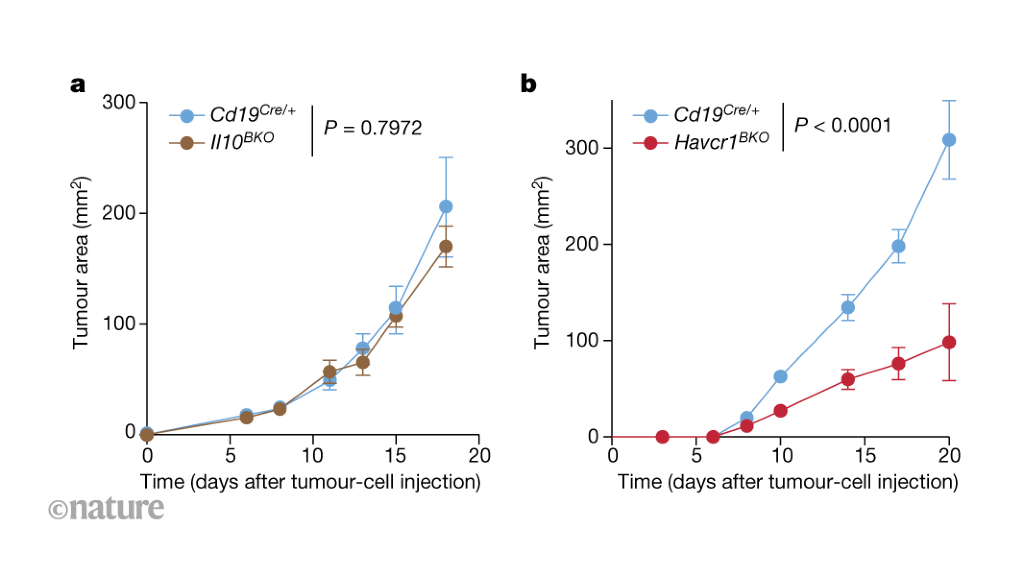
A new study has identified a subset of B cells that express a protein called TIM-1 and multiply in response to melanoma tumour growth. Deleting the gene that encodes TIM-1 in these cells unleashed an antitumour immune response, suggesting a potential role for B cells in antitumour immunity.
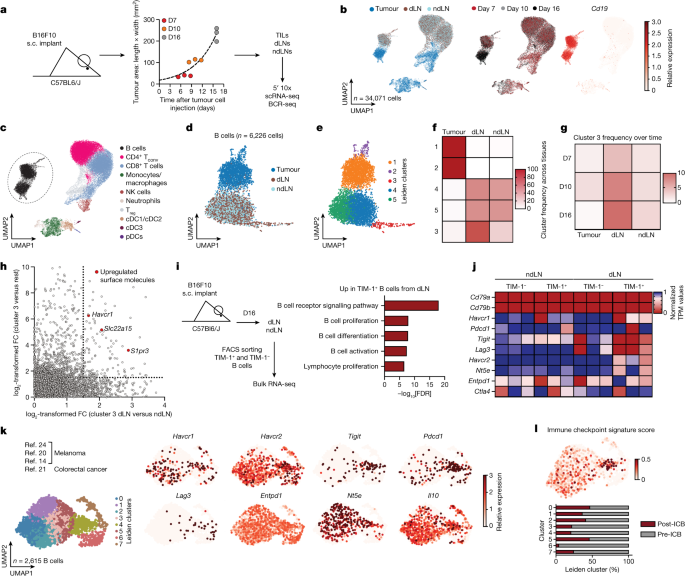
Researchers have identified B-cell-specific checkpoint molecules that regulate anti-tumour immunity. The study found that B-cells play a key role in sustaining inflammation and predicting response to immune checkpoint blockade in human melanoma. The researchers also identified several B-cell-specific checkpoint molecules, including TIM-1, TIGIT, and LAG-3, that could be targeted to enhance anti-tumour immunity. The findings were based on single-cell analysis of tumour samples from patients with melanoma, breast cancer, and colorectal cancer.
Tingible body macrophages (TBMs), a subtype of macrophages within our lymph nodes, have been found to devour antibody-producing B cells, a function essential in defending our bodies against harmful pathogens. Researchers utilized genetically engineered mice and advanced microscopy to observe the TBMs’ eating habits and diet, illuminating their essential role in preventing the production of harmful antibodies. This discovery may offer a key to the treatment of currently incurable autoimmune diseases.
Scientists have found that endogenous retroviruses, remnants of ancient viruses that remain in human DNA, can be awoken in cancer tissue and evoke an immune response from B cells, which can help fight lung cancer. This discovery puts scientists closer to creating more effective treatments for lung cancer, including a cancer treatment vaccine made up of activated ERV genes to boost antibody production at the site of the patient's cancer and improve the outcome of immunotherapy treatment. Lung cancer is the second most common cancer in both men and women in the United States.
Higher blood levels of Ocrevus, a medication used to treat multiple sclerosis (MS), is associated with a significantly lower risk of confirmed disability progression during treatment in people with relapsing and progressive forms of MS, according to an analysis of data from three Phase 3 clinical trials. The lower disability progression rates reported in people with higher Ocrevus exposure were independent of reductions in relapse rates or MRI activity, suggesting the medication worked to prevent progression independent of relapse activity. Higher Ocrevus exposure also was not linked to more side effects.