A mouse study demonstrates that an experimental mRNA treatment can rejuvenate immune cells, specifically T cells, potentially improving immune response in aging, but further research is needed to assess its applicability in humans.
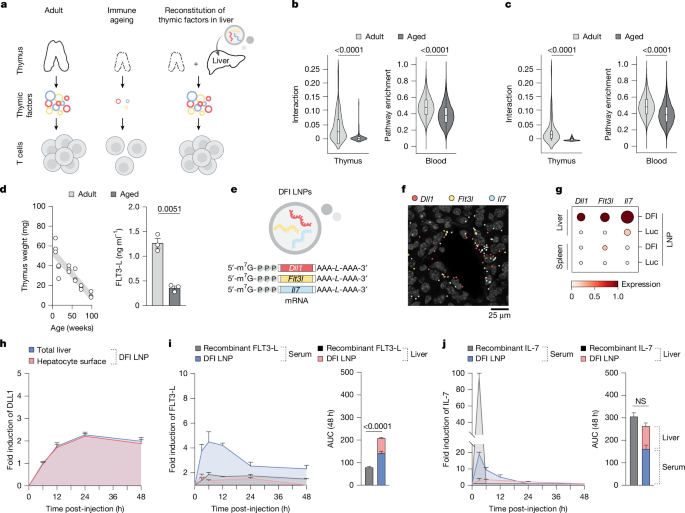
The study presents a novel approach to counteract immune decline in aging by using mRNA delivered to the liver to produce key immune factors (DLL1, FLT3-L, IL-7), which rejuvenates T cell production, enhances vaccine responses, and improves tumor immunotherapy efficacy in aged mice, without adverse effects or autoimmunity.
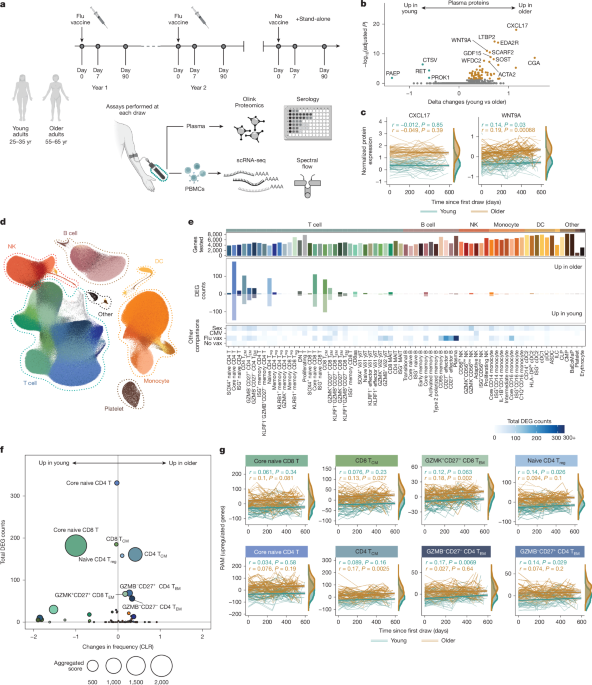
This study uses multi-omic profiling over two years to reveal that in healthy adults, immune system changes with age are characterized by stable, transcriptional reprogramming of T cells, a progressive TH2 bias in memory T cells, and altered B cell responses to influenza vaccination, with minimal influence from chronic CMV infection or systemic inflammation prior to advanced age.