Tag

Yield Curve

All articles tagged with #yield curve

finance3 months ago

Fed's Rate Cut Sparks Bond Market Volatility and Yield Curve Steepening

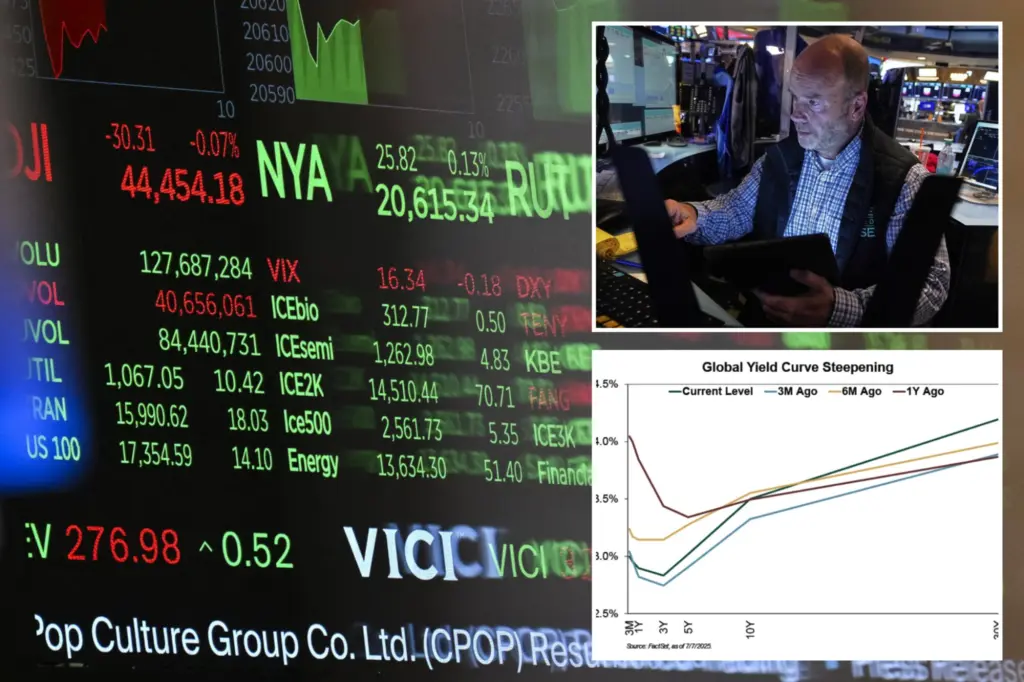
Longer-term Treasury yields and mortgage rates increased following a Fed rate cut, with the bond market reacting more to inflation expectations and bond supply than to the policy rate itself. The 10-year Treasury yield rose to 4.14%, and mortgage rates jumped to 6.35%, reflecting concerns about inflation and bond supply issues, while the yield curve steepened, indicating market anxiety about future economic conditions.


finance1 year ago

"Assessing the Reliability of Yield Curve as a Recession Indicator"

The Federal Reserve Bank of New York's recession probability tool, which uses the spread between the 10-year Treasury bond and three-month Treasury bill yields, suggests a 61.47% likelihood of a recession by or before January 2025. While not infallible, this leading indicator has a strong track record, with every recession since World War II being preceded by a yield-curve inversion. If accurate, a recession in 2024 could lead to a significant stock market pullback, but historical data shows that economic downturns and stock market corrections are typically short-lived events, ultimately offering opportunities for patient investors.

finance2 years ago

"Traders Await Normalization of Treasury Yield Curve Amid Seismic Bond Shift"

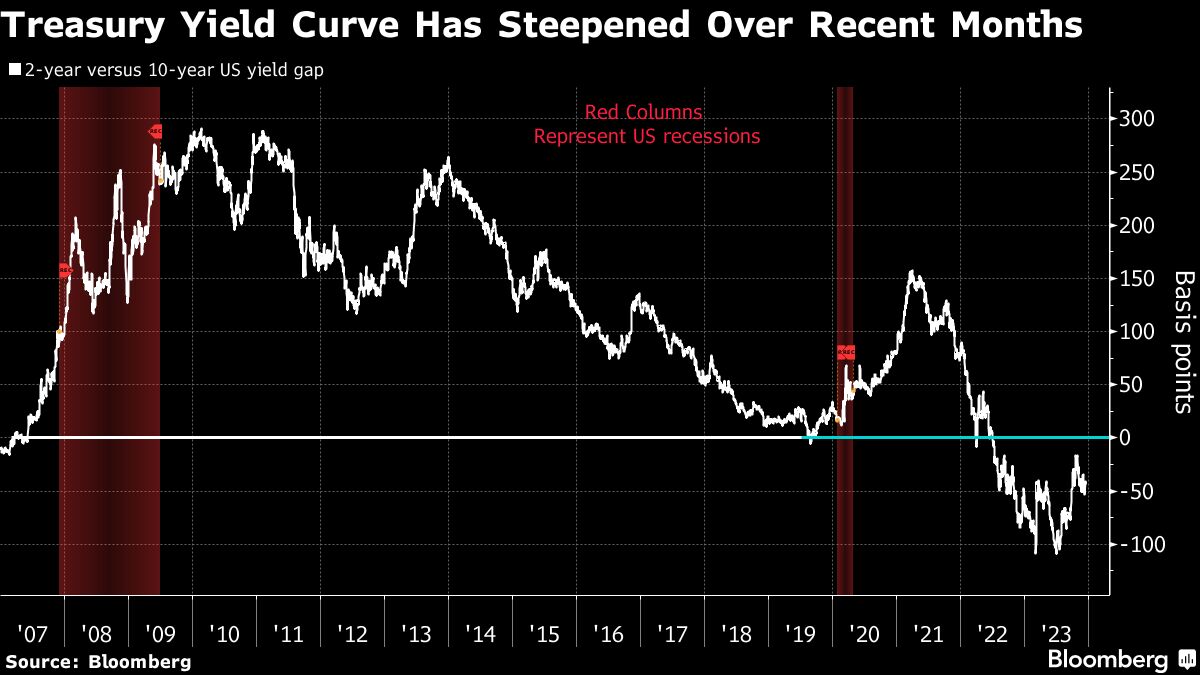
Bond traders are anticipating a return to the traditional trading pattern of US Treasury yields, with the interest rate on 10-year Treasuries expected to surpass those on US two-year notes, resulting in a steepening of the yield curve. This shift would align with historical norms and provide greater rewards for the risk of lending money for longer periods.

finance2 years ago

"Yield Curve Un-inverts, Easing Recession Concerns"

The yield curve between the US2Y and US30Y has un-inverted, but concerns remain about the high-risk market, negative money supply, and the creation of a new "Bank Term Lending Facility" category by the FRB. This category has seen exponential growth, raising questions about transparency and potential market impact. Additionally, the prolonged market uptrend since 2009 and the presence of financial bubbles in areas such as cryptocurrency and private credit add to the overall market risk.

finance2 years ago

Wall Street's Shift to Short-Dated Debt Amidst the Fed's Pivot

Wall Street is turning to short-dated debt as the best way to trade the Federal Reserve's pivot towards monetary easing. With the Fed expected to lower rates and support a soft landing, investors are loading up on shorter maturity debt that still provides a yield of over 4%. This sentiment is driven by the fear that rates on cash-like investments could soon plunge, prompting investors to move into Treasury notes. Additionally, there is a consensus that the economy may avoid a recession, leading to a lack of appetite for longer-term securities. The two-year Treasury is seen as the sweet spot on the yield curve, offering an attractive yield higher than any other maturity.

finance2 years ago

The Fed's Misleading Message: Markets Brace for Powell's Speech

The Federal Reserve's projection of three rate cuts for 2024 is not an attempt to stimulate the economy but rather a response to projected lower inflation rates. The Fed believes that financial conditions will naturally adjust and tighten as the economy weakens. The bond market is also indicating a potential slowdown in the economy, as the yield curve is expected to steepen. The Fed's message suggests that it is confident in the progress of inflation and expects economic data to support its projected policy direction.

finance2 years ago

"Market Indicators Point to Potential Economic Slowdown in the US"

The bond market signaled concerns about a potential swift economic slowdown in the United States as investors sought the safety of government debt, causing long-term yields to drop. Factors contributing to this shift include expectations of a rate cut by the European Central Bank, the removal of term premium from longer-term debt, and the possibility of an unexpectedly faster U.S. economic slowdown. The spread between the benchmark 10-year yield and the 2-year yield remained negative, indicating prevailing pessimism. While the market is still hoping for a soft landing, further evidence of a slowdown could lead to a more severe outcome.

finance2 years ago

Navigating Inflation: The Appeal of Long-Term Treasury Bonds and Short-Term Bond ETFs

Two veteran analysts, Gary Shilling and James Grant, offer contrasting views on the 30-year Treasury bond. Shilling, a bull on bonds, argues that inflation will subside and believes in the long-term value of Treasury bonds. Grant, on the other hand, is bearish on government bonds and the dollar, favoring gold as a store of value. Both analysts anticipate a recession, but for different reasons. Shilling cites an inverted yield curve and other statistics, while Grant blames artificially suppressed interest rates. Shilling's historical analysis shows that holding long-dated bonds has performed well, despite recent bond price crashes. Grant warns of the potential for politicians to impose an inflation tax and advises caution for bondholders.

economy2 years ago

"Stock Market Crash: 3 Clear Signs of an Impending Recession"

Jon Wolfenbarger, a market veteran, believes that the labor market is on the verge of collapse, leading to a recession and a stock market downturn. He points to three pieces of evidence: shrinking employment growth, a steepening yield curve, and pessimistic hiring plans by small businesses. Wolfenbarger warns that the unemployment rate is likely to rise soon, causing stocks to fall further. While some economists have revised their recession calls, indicators such as tightening lending standards and growing bankruptcies among small businesses suggest a downturn may be ahead.

economy2 years ago

Recession Indicators Near Flashing: Insights from Claudia Sahm

Two recession indicators, the Sahm Rule and the yield curve, are on the verge of flashing, but stock market investors can still rest easy as the drivers behind each indicator are different than they were in the past. The rise in unemployment is being driven by an increase in labor supply, not economic weakness, and the yield curve is narrowing due to stronger-than-expected economic growth prospects. These factors suggest that the potential flashing of these indicators might not be enough to cause a recession or significantly impact the stock market and broader economy.

finance2 years ago

Hedge Funds' Ill-Timed Treasury Shorts Reach Record High

Hedge funds have increased their short positions on US Treasuries to a record level just before weaker-than-expected bond sales and jobs data triggered a rally. Leveraged funds have ramped up net short Treasury futures positions to the highest level since 2006, despite the previous week's rally in cash bonds. The recent decline in yields on 10-year Treasuries can be attributed to a combination of factors, including more benign US refunding needs, weaker jobs data, and signs of the Federal Reserve becoming less hawkish. Traders are now pricing in over 100 basis points of rate cuts by the end of next year.