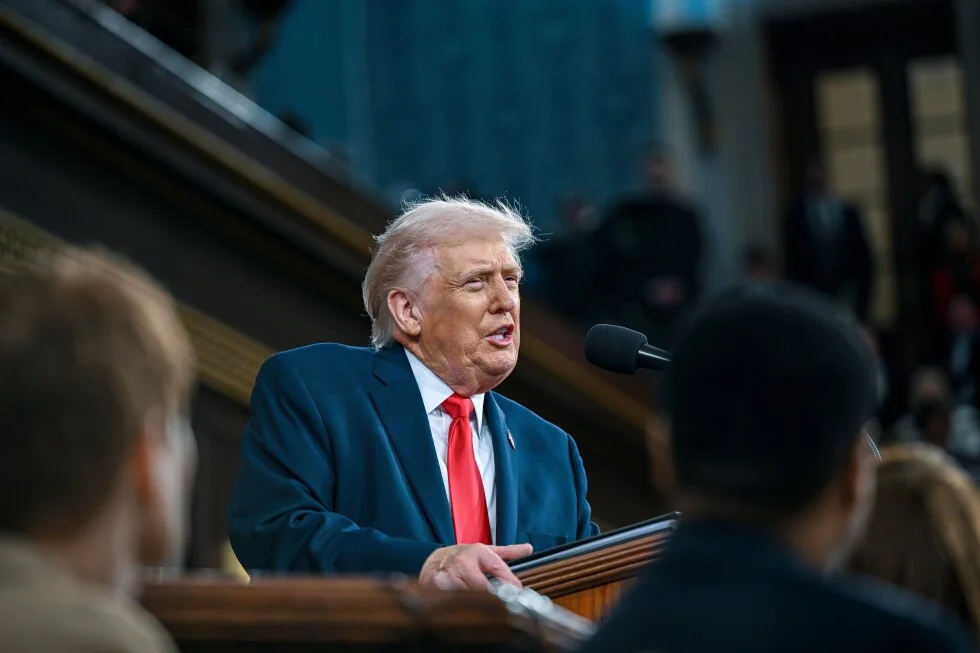
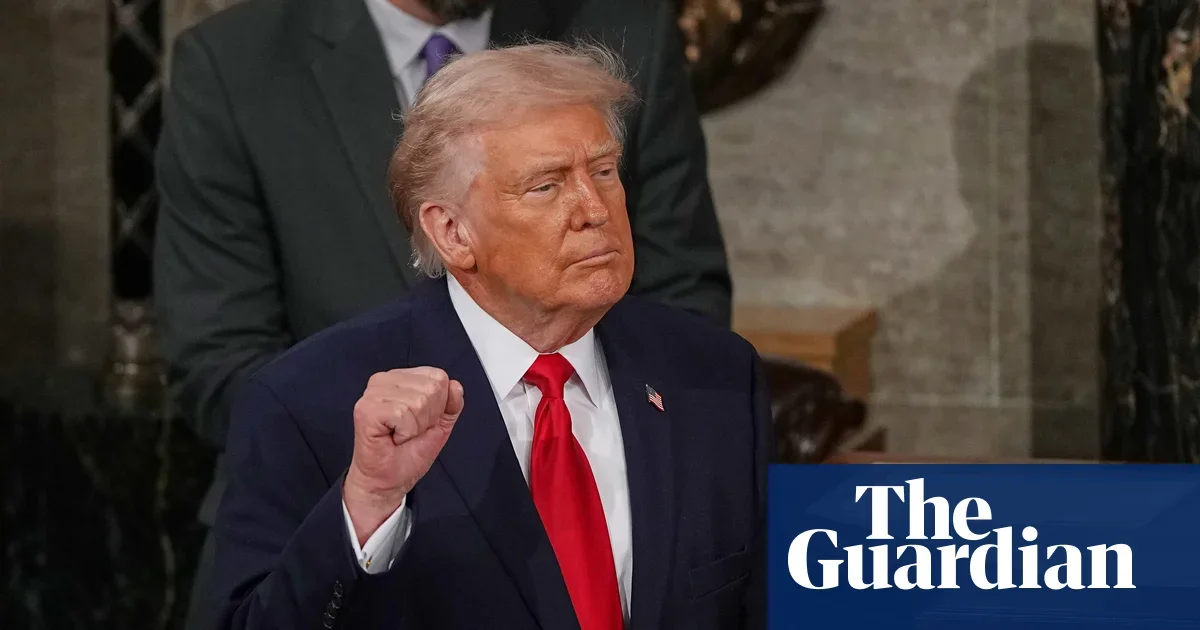
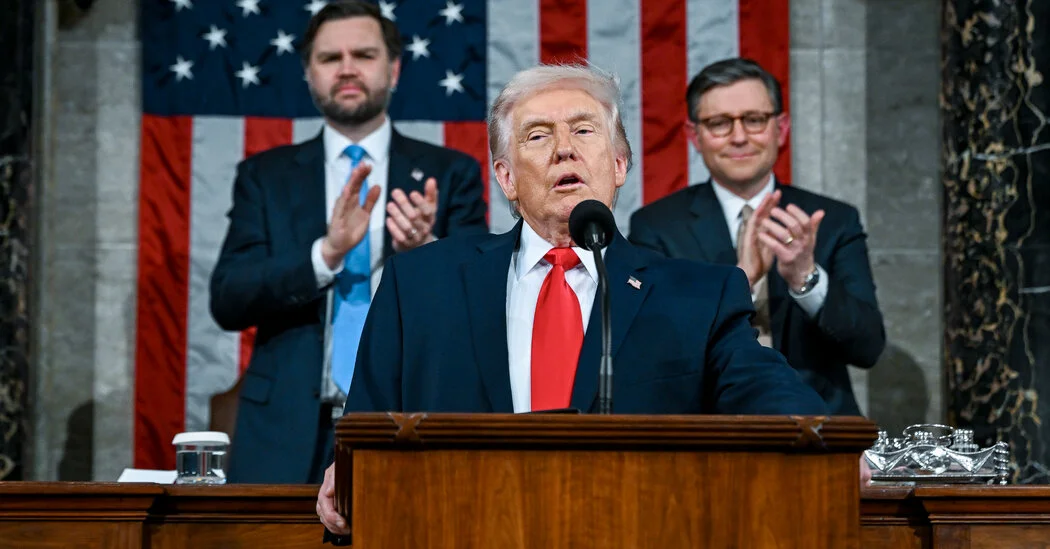
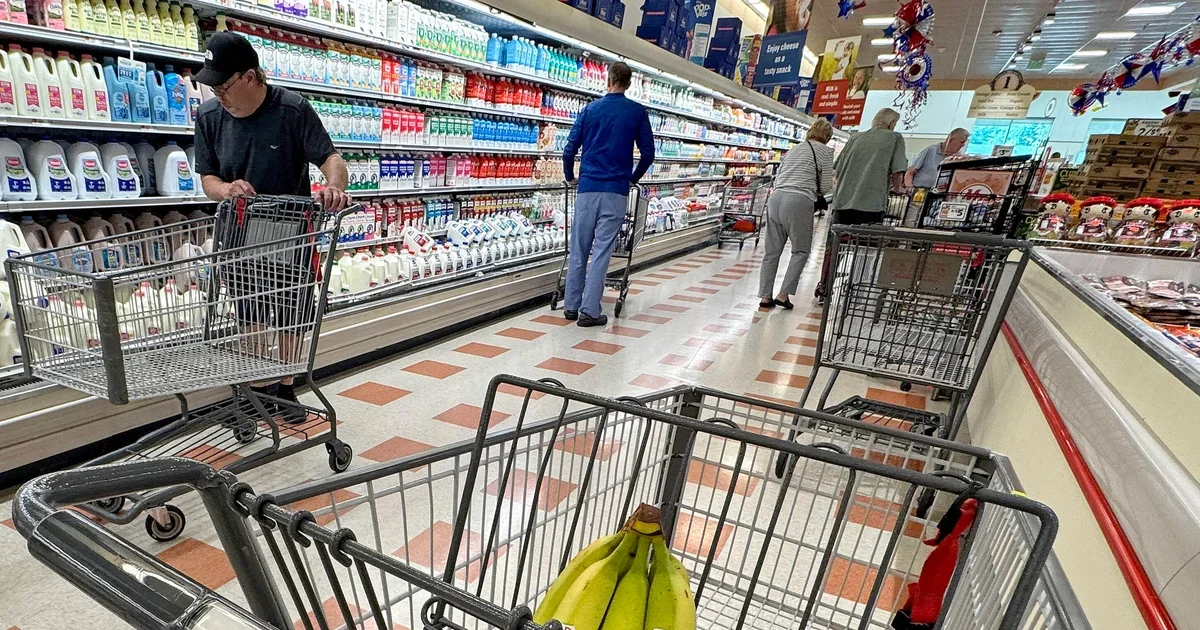
Trump framed a nostalgic, patriotic vision of a booming economy in his address, but polling shows most Americans remain worried about inflation, wages, and job security, highlighting a gap between his narrative and the public mood.
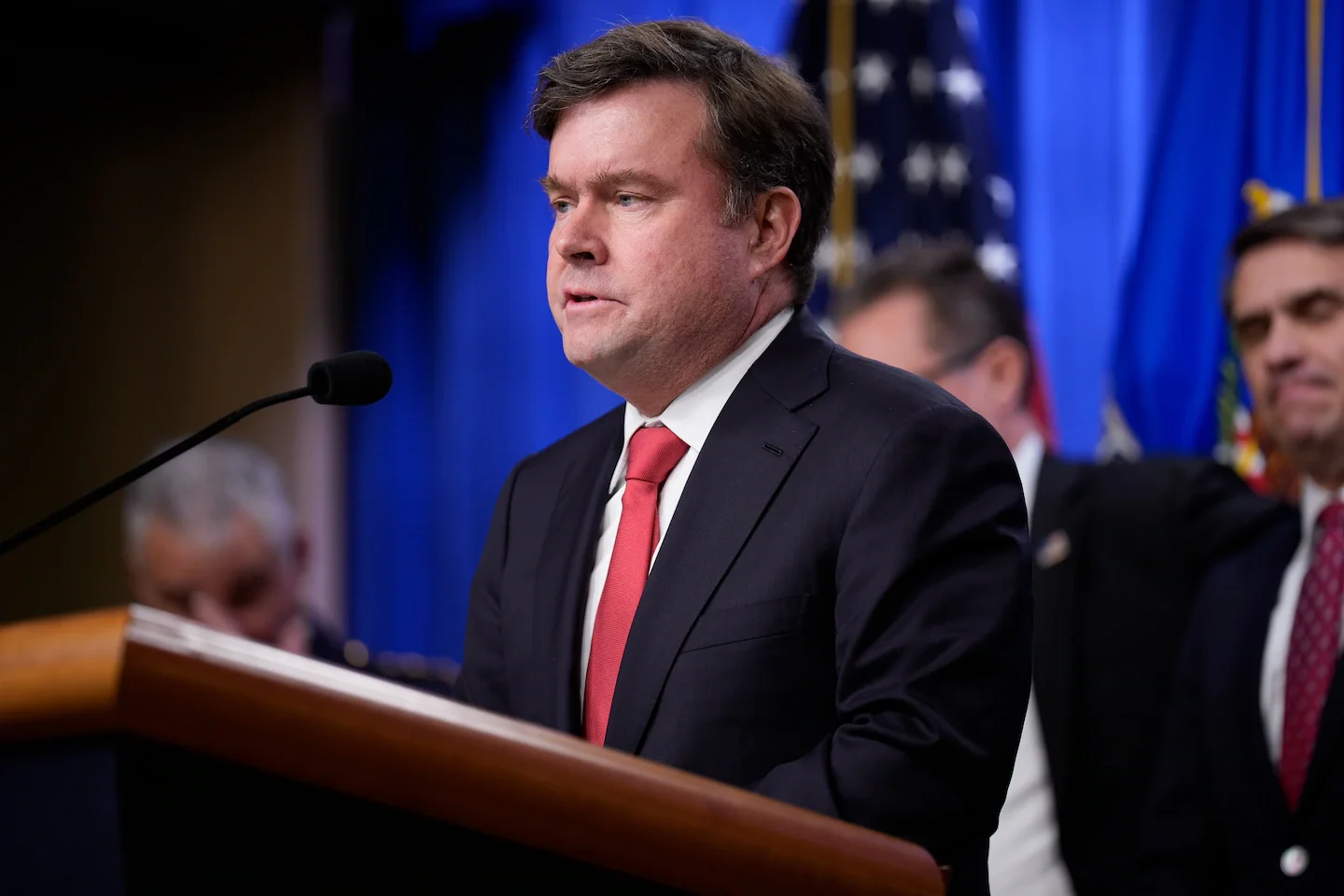
John Hurley, Undersecretary for Terrorism and Financial Intelligence at the Treasury Department, is leaving his post after privately opposing White House-backed plans to crack down on alleged fraud within Minneapolis' Somali immigrant community, according to seven people familiar with the matter.
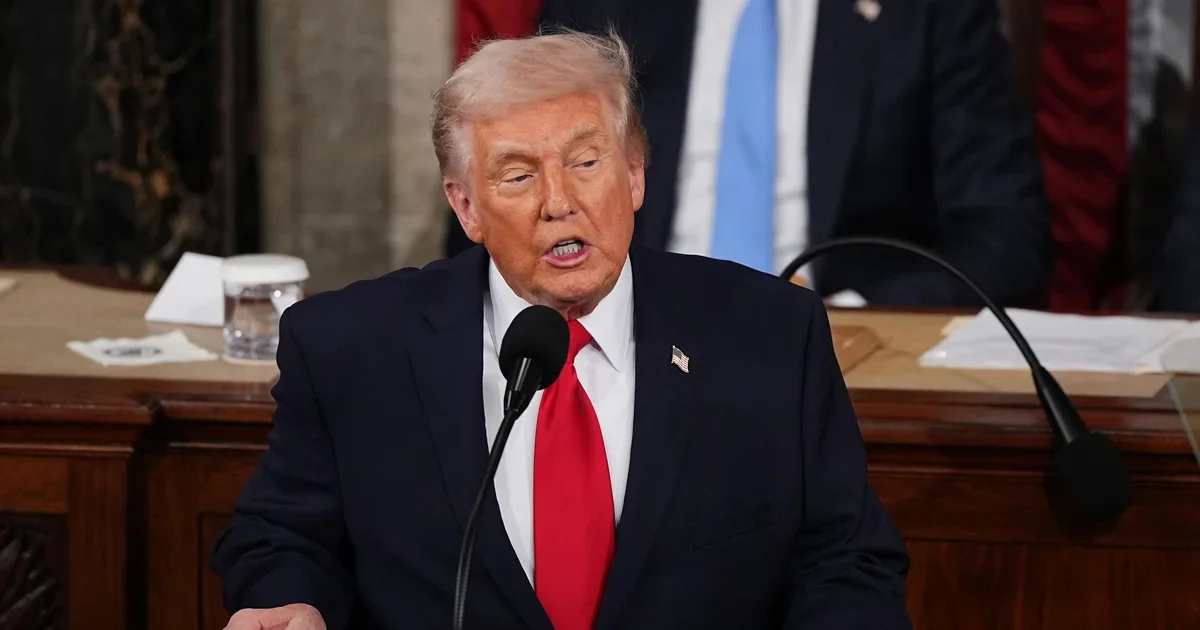
Donald Trump delivers a lengthy State of the Union focused on the economy, tariffs, and a hardline immigration stance, while Democrats stage counterprogramming and Virginia Gov. Abigail Spanberger delivers the official Democratic rebuttal centered on affordability. The night includes dramatic personal anecdotes, interruptions from lawmakers such as Omar and Tlaib, a protest on the National Mall, discussion of a stock-trading ban, and the presence of a designated survivor (Doug Collins) as Trump touts policy priorities and a path forward ahead of the 2026 midterms.
U.S. consumer confidence rose to 91.2 in February, led by gains among younger and higher‑income households, but concerns about jobs linger as the share saying jobs are hard to get jumped to a five‑year high and the labor‑market differential suggests unemployment could rise. December housing prices edged up 0.1% with a 12‑month rise of 1.8%, while mortgage rates remained a factor in housing demand.
A Citrini Research note warning that AI could cause mass unemployment and a stock-market plunge sparked a sell-off and debate among investors and policymakers, though many analysts dispute the conclusions and view AI disruption as a risk to monitor rather than an inevitable catastrophe.
A post-State of the Union fact-check finds Trump’s claims overstated or inaccurate on several fronts: 2025 job gains were only 181,000 (far below typical Trump/Biden years), investments cited are largely pledges rather than actual dollars, a cited killer’s immigration status was misrepresented, energy costs have risen and could rise further due to policy changes, gas prices are not universally low, and Trump’s assertion that he ended eight wars is an overstatement with ongoing or unresolved conflicts and ceasefires not clearly attributable to him.
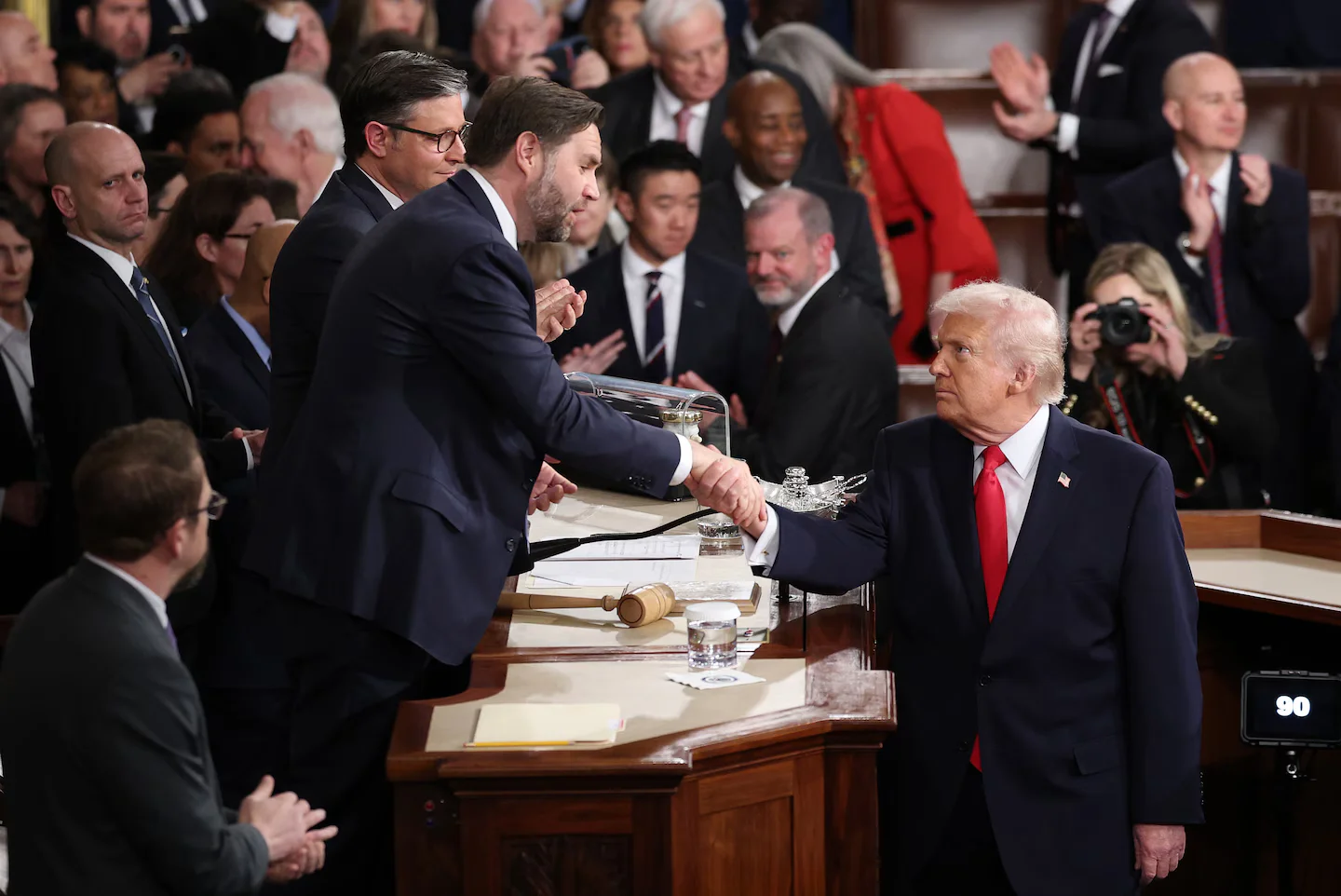
Trump delivered the longest State of the Union, touting a booming economy while attacking Democrats as 'crazy' and framing the midterms as a partisan battleground; the speech leaned on dramatic moments and guest appearances rather than policy details, touched briefly on Iran, and spotlighted fraud accusations while avoiding discussion of his own business entanglements.
U.S. stocks rose as investors renewed bets on AI’s potential upside, with a tech-led rally lifting broader indices and sparking optimism about AI’s impact on earnings and productivity.
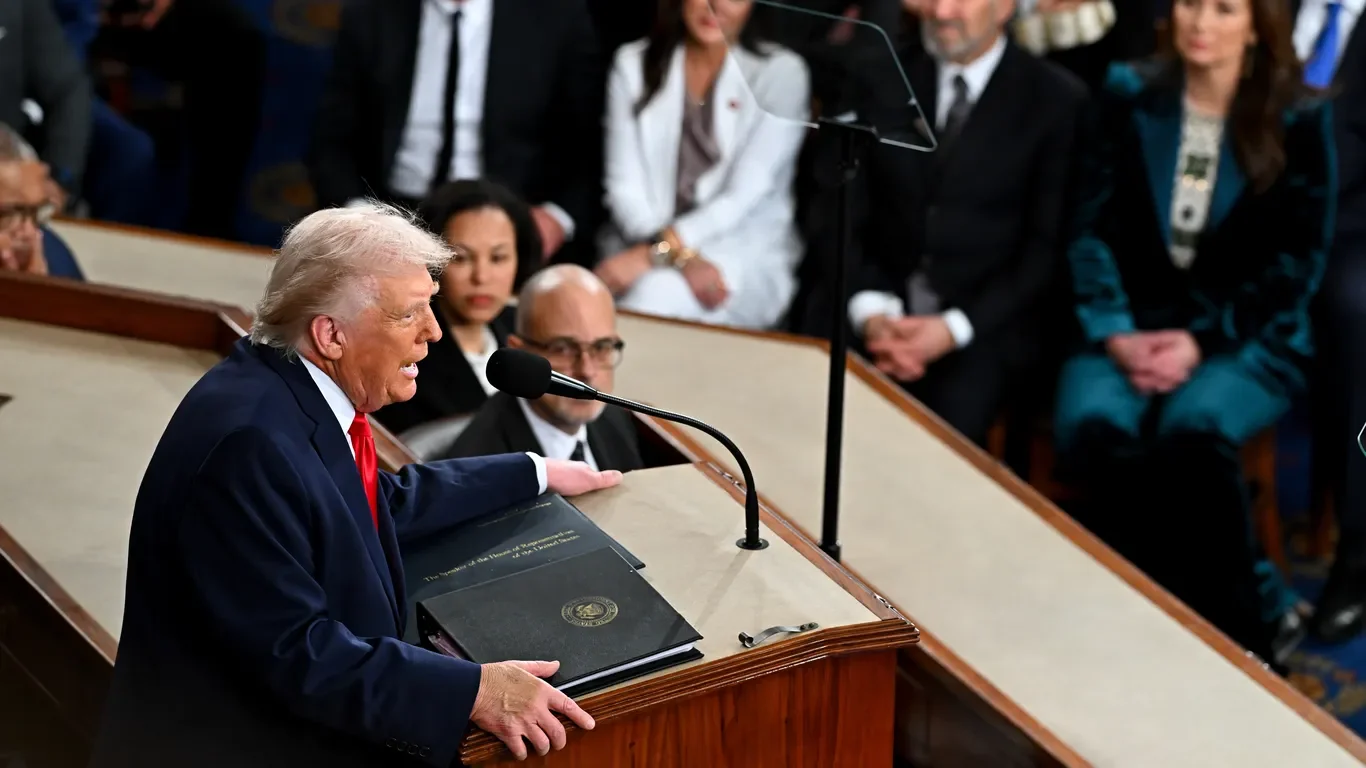
Live coverage shows a polarized night: Democrats stage counter-programming with Virginia Gov. Abigail Spanberger delivering a cost‑of‑living focused rebuttal, highlighting affordability as a contrast to Trump’s agenda, while Trump sticks to a disciplined, long program that pairs personal crime stories with a push for tougher immigration enforcement, tariffs, and economic wins. The evening features GOP and Democratic talking points, disrupted by some Democrats in the chamber, a nationwide counter‑protest on the National Mall, and a push to ban stock trading by lawmakers. Trump’s address runs 1 hour 47 minutes—a new length record—framed by questions from allies about policy specifics, references to tariff plans, AI data-center costs, and a guest-filled optics strategy in the guest box.
In his second-term State of the Union address, Trump highlighted a strong economy, pushed hard-line immigration policies including mass deportations, and signaled a tough stance on Iran while recounting foreign and military actions and awarding medals; Democrats pressed concerns on affordability and health care, Rep. Spanberger delivered the Democratic rebuttal on economics, and the night featured political theater and guest appearances as the speech stretched to a record 1 hour 48 minutes.
CNN argues that the U.S. economy looks solid on paper—2.2% growth in 2025, a strong job market, wage gains, and inflation easing with a stock market near record highs—yet consumer confidence remains near historic lows, affordability problems in housing and child care persist, and rising delinquencies plus a widening wealth gap paint a more mixed, politically charged picture ahead of the State of the Union.
CBS News’ live updates portray President Trump’s 2026 State of the Union as a lengthy, broad defense of his economic and national-security agenda, while Virginia Gov. Abigail Spanberger delivers the Democratic response focusing on affordability. The night includes moments like Medal of Honor recognitions, clashes over immigration, and ongoing DHS funding talks during a partial shutdown, with side notes on Ukraine, Iran, and other policy moves.
BEA data show 2025 real GDP rose 2.2% (Q4 at 1.4% annualized), a slowdown from 2024, with the Oct–Nov 2025 shutdown subtracting about 1 percentage point from Q4 growth. Job growth was weak in 2025 (~15,000 payrolls per month), though January 2026 added 130,000, and unemployment stood at 4.3%; federal employment fell 327,000 since Oct 2024. A Supreme Court ruling curtailed Trump’s tariffs, which now face exemptions and hinge on a new 10–15% rate; the average tariff is about 9.1%. Public opinion remains skeptical (about 39% approve the economy vs 59% disapprove), suggesting the data undercut the president’s boast about the economy.
Trump floated using tariffs to replace the income tax, but tariffs have never generated near enough revenue to substitute for tax income (roughly $195B in customs duties vs about $2.6T in income tax). Higher tariffs would shrink imports and push buyers to domestic substitutes, limiting revenue gains. Complicating the plan: IEEPA tariffs were overturned by the Supreme Court, and officials describe tariff revenue as a melting ice cube, making full replacement of income tax unlikely and potentially costly for consumers and the broader economy.
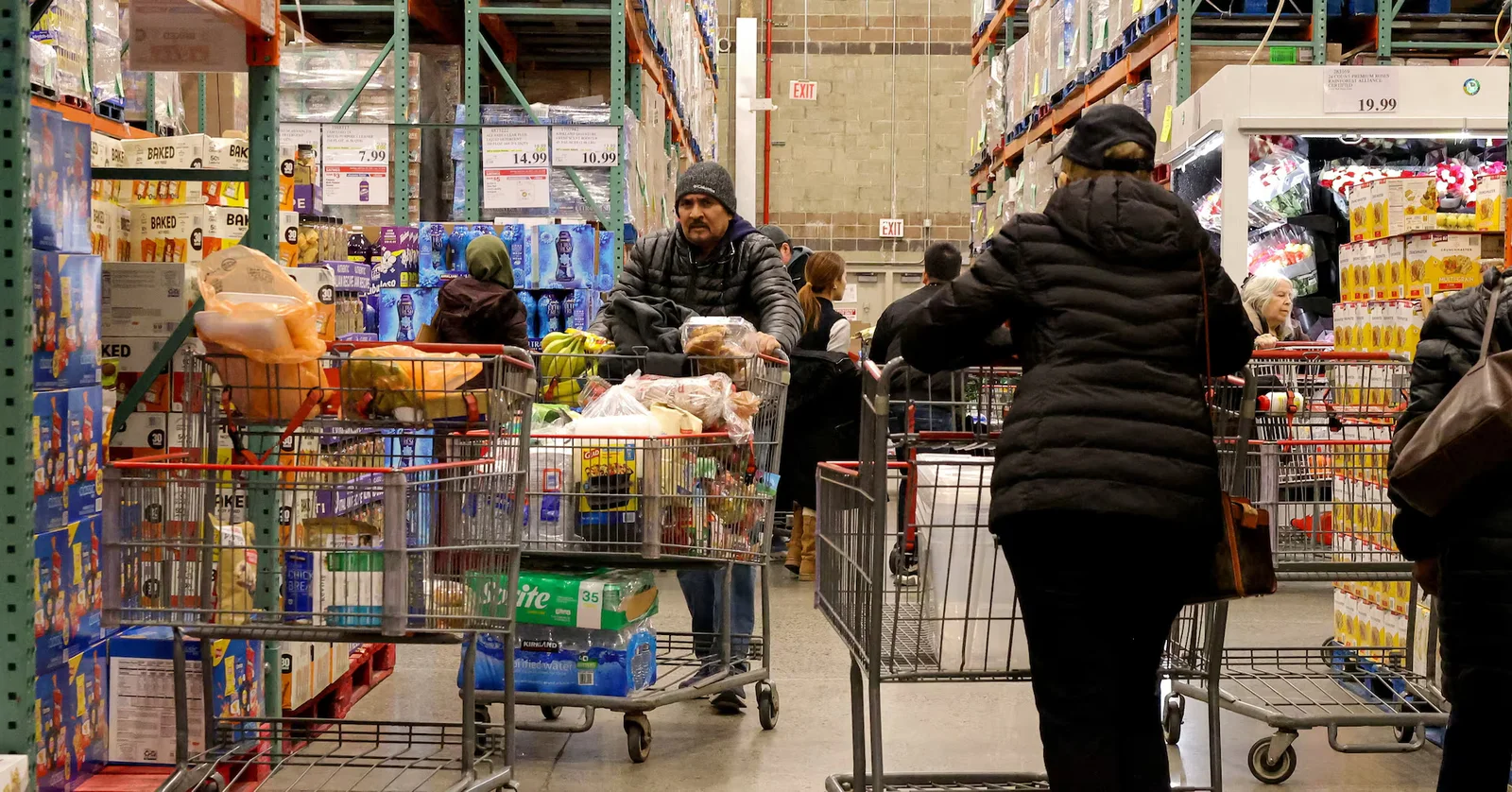
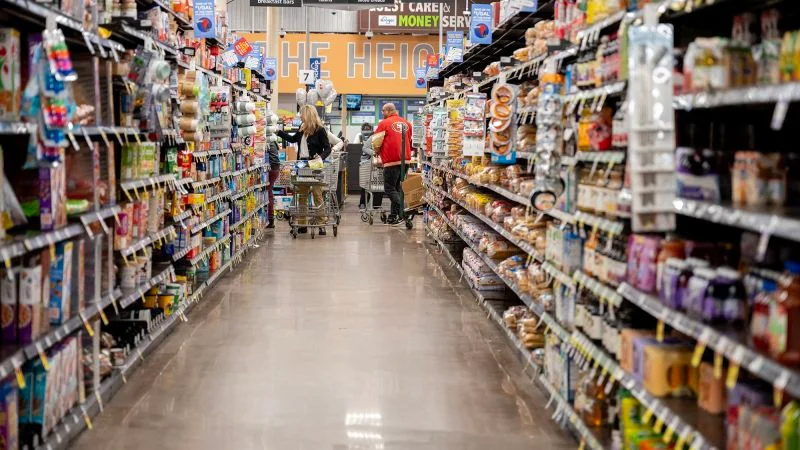
Despite a resilient economy and cooling inflation, CBS News reports Americans’ top economic concern remains affordability, driven by rising food costs, a tight housing market and higher health-care premiums. Pew data place food, housing and health care at the forefront of worries ahead of President Trump’s State of the Union. While the administration touts measures like housing-market reforms and drug-price initiatives, economists caution that a lasting relief requires addressing a persistent housing shortage and ongoing health-insurance costs, with staples such as ground beef and coffee up significantly and 2026 health insurance premiums rising about 6–7%.