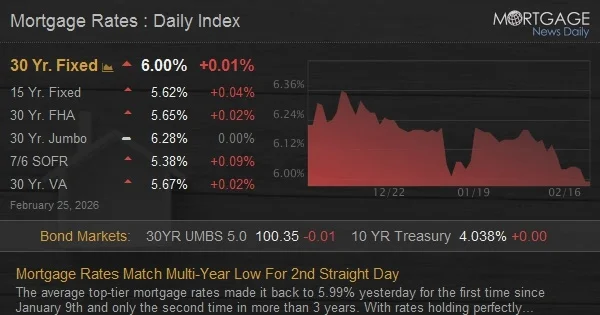
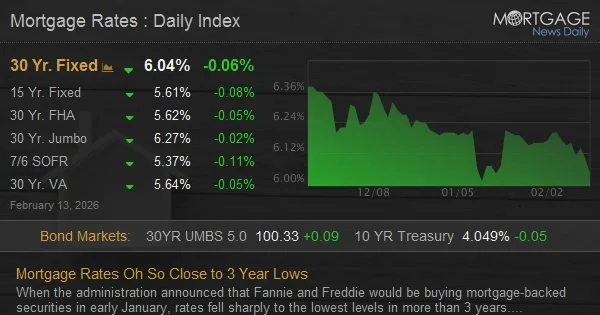
Mortgage rates hovered near multi-year lows, with the 30‑year fixed around 6.00% (5.99% the previous day) and the 15-year at 5.62% as rates held steady for a third straight day; MBS prices and Treasury yields showed little movement, signaling a cautious stance in a data-light session.
Mortgage rates for the 30-year fixed dipped to 5.99%—the first sub-6% reading since 2022—driven by falling Treasury yields as investors seek safety amid renewed fears of a 15% universal tariff, signaling risk-off sentiment rather than a move to lower medium-term rates.
U.S. consumer confidence rose to 91.2 in February, led by gains among younger and higher‑income households, but concerns about jobs linger as the share saying jobs are hard to get jumped to a five‑year high and the labor‑market differential suggests unemployment could rise. December housing prices edged up 0.1% with a 12‑month rise of 1.8%, while mortgage rates remained a factor in housing demand.
The White House asserts its government-wide housing plan is lowering costs and expanding access to homeownership, noting mortgage rates have fallen to multi-year lows, affordability indices and buyer activity are improving, rents are down, and refinancings are surging. It highlights actions such as directing Fannie Mae and Freddie Mac to purchase $200 billion in mortgage-backed securities to reduce borrowing costs, curbing large institutional purchases of single-family homes, restricting taxpayer-backed mortgages to U.S. citizens, and scrapping the Affirmatively Furthering Fair Housing rule to streamline local housing decisions. The administration says these measures will strengthen the housing market for American families and advance the dream of homeownership.
Mortgage rates have sunk to their lowest level in about four years as the Fed keeps rates on hold, suggesting the bottom may be in for now. Borrowers could benefit from locking in rates, though future moves by the Fed and shifts in inflation or Treasury yields could influence volatility and the trajectory of rates going forward.
The average 30-year fixed mortgage fell to 5.99%, tying the lowest level since 2022 and helping refinancing applications surge about 130% year over year. Lower rates could widen loan eligibility and bolster spring homebuying, with a $400,000 home at 20% down costing about $1,916 per month in principal and interest vs. $2,105 a year ago.
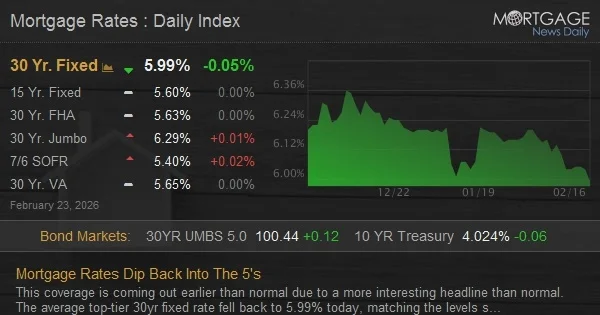
Mortgage rates dipped back into the 5s, with the 30-year fixed at 5.99% today (down 0.05) as the broader bond market and MBS benefited from Fannie/Freddie bond-buying plans; no new news sparked the move and today’s improvement is modest compared with January’s brief visit to similar levels. Lenders’ quotes vary based on upfront costs and borrower specifics, so 5.99% is a top-tier average rather than a universal rate, and rates remain vulnerable to intraday reversals if the bond market moves against them.
The White House touts a housing-market upturn under President Trump, citing Freddie Mac data that mortgage rates are at a multi-year low and affordability is improving, with rising refinance activity and demand for home purchases. Rents have declined, and starts are up, while policy moves—such as $200 billion in mortgage-backed-securities purchases, limiting large investors in single-family homes, barring certain non-citizens from taxpayer-backed loans, and rolling back the Affirmatively Furthering Fair Housing rule—are framed as expanding access to homeownership and lowering costs for American families.
Mortgage rates on conforming 30-year loans fell to 6.17%, the lowest in a month, spurring a 7% weekly rise in refinance applications (132% higher than a year ago) while purchase applications slipped 3% as buyers stay cautious amid tight supply and broad economic concerns. Overall mortgage demand rose 2.8% for the week, with rates hovering in a narrow band around 6%–6.25% this year.
The FT Unhedged column argues that the US housing market is still the economy’s weak spot: existing home sales dropped 8.4% in January as affordability remains the dominant hurdle, with price gains of roughly 20% during the pandemic not fully offset by wages and ongoing high mortgage costs. Policy ideas like limiting institutional investors or boosting mortgage-backed securities are viewed as unlikely to meaningfully move prices. Meanwhile, inflation remains persistent rather than decelerating, implying few near-term rate cuts and continued policy caution.
Mortgage rates remain near three-year lows after early-January MBS purchases by Freddie Mac and Fannie Mae spurred a drop; a softer-than-expected January CPI helped push yields a bit lower, keeping rates in a tight range around those long-term lows.
Russia’s economy is slowing sharply as high mortgage rates push housing developers toward bankruptcy, with Deputy PM Marat Khusnullin warning that up to 30% could fail if conditions don’t improve; about 20% already face serious risks. The Central Bank’s rate has remained elevated (peaking at 21% in 2024 and around 16% by late 2025), while government programs fund roughly 80% of mortgages and only 20% are on market terms. Some developers have collapsed or are near collapse, and sales of new housing fell 26% year-on-year in January–June, with value down 2.1 trillion rubles.
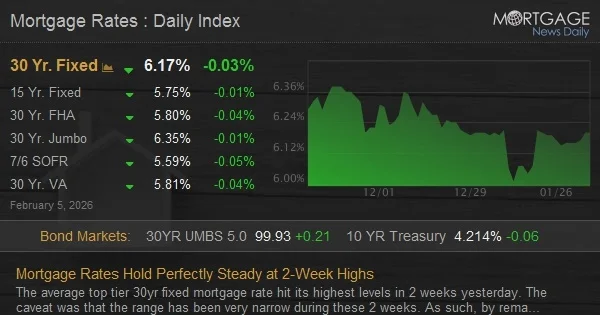
Mortgage rates held steady around 6.17% for the 30-year fixed, staying in a tight 6.15%–6.20% range after a two-week high; traders weighed two economic reports and a Treasury borrowing outlook that hinted at higher issuance (which could push yields up), but a tame services-sector release helped bonds stabilize and keep rates from moving much today.
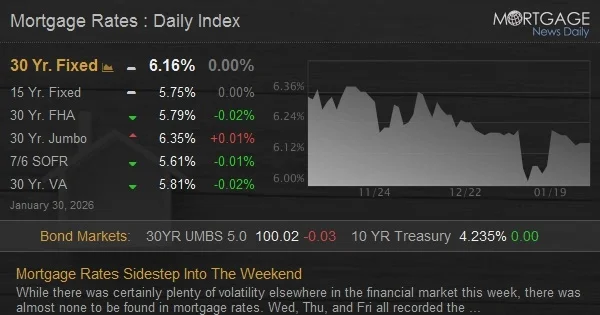
Mortgage rates held steady this week, with the 30-year fixed around 6.16% and the 15-year at 5.75%, as bonds consolidate after early-week volatility while markets await upcoming economic data.
US policymakers deploy jawboning, a yen-rate check, and MBS buybacks to push down the 10-year yield and mortgage rates amid global bond-market stress linked to Japan’s turmoil; while these tactics provide a temporary pullback, inflation, deficits, and debt burdens suggest underlying risks remain and market volatility could persist.